Category: Hunting accounts

  • Teaching and Learning

    Teaching and Learning

    Eyes, movement, trust

    [This is a re-post of a post from 2017]

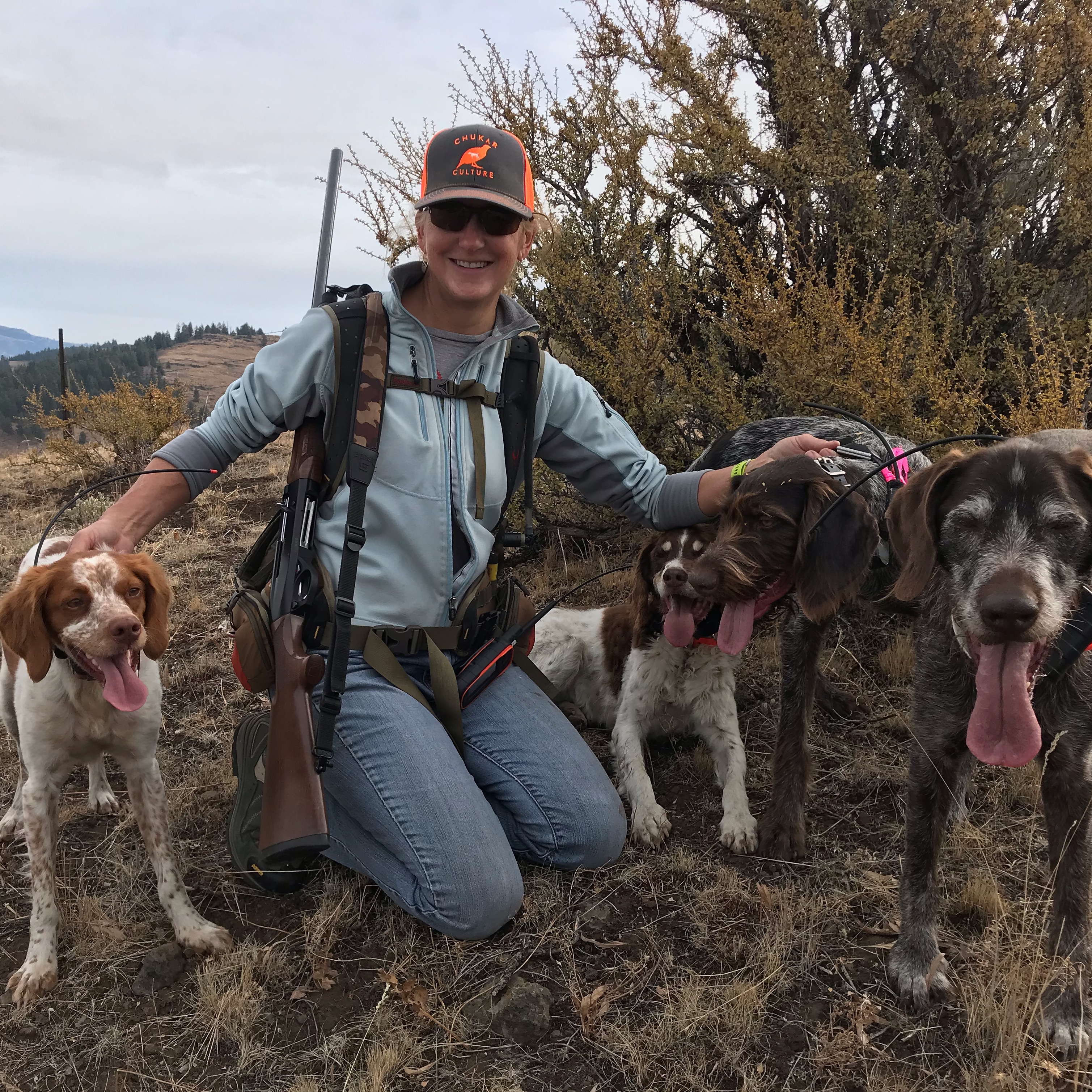
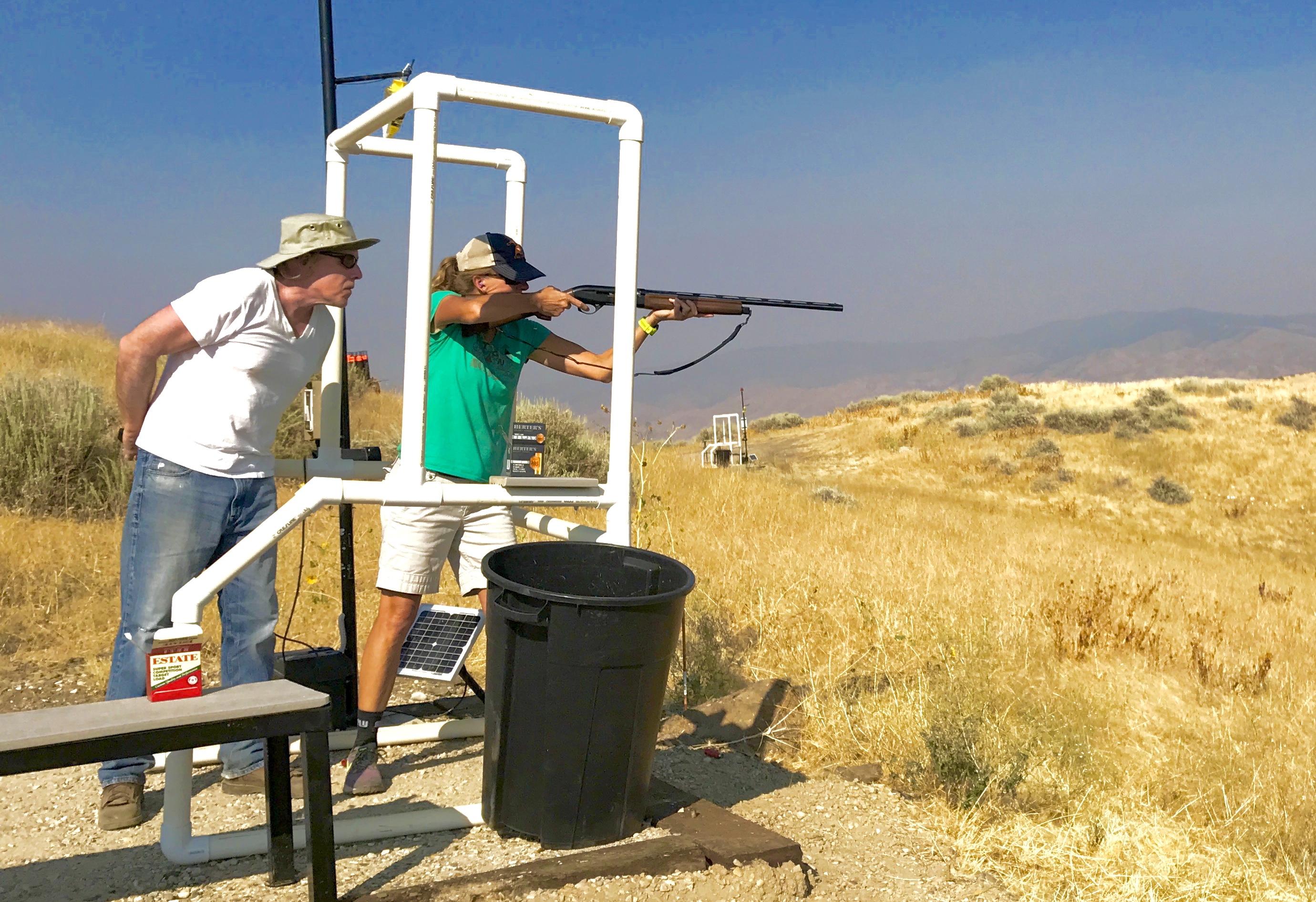
    After hunting chukar for the past 17 years I decided it was about time to take my first shooting lesson. The irony is not at all lost on me, I assure you. As a teacher who tries to espouse and model lifelong learning to my students, not because it will necessarily translate into wads of cash but because it will absolutely make your life better (and who doesn’t think that’s a good thing?), the fact that I’ve followed my dogs into the field for 17 seasons while never having attempted to learn anything to improve my shooting just seems stupid. And I admit that I probably would have gone another 17 or more years doing the same thing had Leslie not decided she wanted to carry and use a gun this season. This scenario has given me some things to think about in terms of the importance of motivation in learning: I think one reason I never tried to learn to shoot better was that I already loved chukar hunting and it was good enough fun for me; I killed enough birds, and my dogs hunted well enough to suit me. Of course I always wished I would make more of the shots, and wondered how other hunters always seemed to bag more birds than I, but that’s pretty much where it stopped. The thing was enough fun that I lacked the motivation to improve on it.

    A kind reader of this blog (thanks, Mark) suggested we check out the new Rock Creek Shooting facility above Horseshoe Bend, and try to get a lesson with Joel Loftis. So I pulled the trigger (ha ha) and set up a lesson and we drove down there. I haven’t been to many ranges, and have never shot sporting clays, so I don’t really have anything to compare Rock Creek Shooting to, but I was impressed. It’s on a 300+ acres chunk of land that looks like good chukar and Hungarian partridge habitat. Their 14 stations replicate a wide variety of “typical” chukar shot opportunities, with a bunch of below-the-feet presentations. The course appears to have been designed primarily with chukar hunting in mind. I wish it were closer to us (it’s a 5-hour round-trip drive). The clubhouse is simple but cozy, with a big outside covered deck overlooking the course (with the afternoon sun to your back), and the folks who run the place are very friendly.

    Dime-sized spot on the beak

    And then there’s their instructor, Joel. He’s intense. We had a two-hour lesson (it actually went a bit over that), and it was all business. No chit-chat, small-talk, or off-topic stuff. Some of my students criticize me for being this way in class, but — maybe because I feel every moment needs to be useful and there’s never enough time — I appreciated this right off the bat. He worked every second of that lesson to have each of us learn as much as we could, and we ran out of time before we covered all the things on his agenda. It was not an inexpensive outing, however, so we can’t afford to do this very often. But we got plenty to work on and practice, and I’m confident that from this one lesson I’ll make many more shots than usual, and — more importantly — increase my enjoyment of chukar hunting. Leslie said as we drove away, “It’s good that I did this at the beginning so I don’t have to undo any bad habits.” Yeah, I should have done this a long time ago. But, better late than never.

    My key take-aways from the lesson are:

    • Eye dominance: I’m not exactly cross-dominant (left-eye dominant/right-handed shooter), but mixed. He did a more elaborate vision test on us than the simple one I did on myself a couple years ago. On right-to-left crossing shots (by far my toughest shot), Joel had me closing my left eye; this will take practice to fix and improve.
    • Vision: the transition from peripheral to specific focus vision is important. He demonstrated this very dramatically by first having us trace with our left hand a clay pigeon from the thrower to the kill zone, which was nearly impossible because of the sudden acceleration of the target (just like a covey of chukar flushing ten yards away), and instilled a visceral sense of panic in us. Then he had us soft-focus on a general area in the anticipated flight path of the target from the same thrower, and then trace its path to where we should trigger the shot. It seemed as though we had twice the time to lock onto the “bird” with this approach. When dogs are on point and a flush is imminent, and you don’t know where the birds are precisely, you have to soft-focus on the area you think they’ll jump into and be ready to transition to hard-focus on the one bird you select to shoot. This eliminated the panic and allowed an easy kill. Of course, when 20 birds flush instead of one clay pigeon coming from the same place every time, it’s a tougher task, but the idea’s the same.
    • Focus: I’ve known for a long time that flock-shooting almost never results in any mortal shots, and so I’ve always tried to remind myself before the flush to pick out one bird, and often I’m unsuccessful at doing that one “simple” thing; I have a much higher percentage on singles or doubles as opposed to large coveys. Joel emphasized not just picking one bird, but focusing on a “dime-sized area on the beak.” At our last stand, a below-the-feet left-to-right crossing shot (probably the most archetypal chukar presentation) I was missing everything despite feeling like I was correctly doing all the stuff we’d worked on. He reminded me about the beak, and then I was able to focus on the leading edge of the clay and hit four in a row. There’s more to this, though (see next one)…
    • Trust: because of the brain and its complexity it’s easy to allow distracting information to interfere with trusting your vision and triggering the shot when it’s optimal. For me, knowing my eye dominance is a bit screwy often makes me want to perfect the alignment after I’ve passed through the optimal shot spot. One of Joel’s mantras was, “Eyes, movement, trust.” On that low, right-to-left shot I was really struggling with confirming the alignment and consistently missed; I’d get on the target and then close my left eye to verify I was on it, not trusting my initial impression, and letting the bird get out of the optimal place to kill it. Once I started trusting my gun mount and vision I couldn’t miss. Doubt is a bitch.
    Slow is smooth, smooth is fast
  • Gun mount: this might be the biggest take-away for me. I have never known how to mount the gun properly. The first thing we did in the parking lot was mount the gun. I’m sure what Joel saw horrified him. So we worked on this first, and at the end of the lesson I realized that when a flush is imminent, consistent mounting of the gun is key to properly getting on birds. Since I began hunting 17 years ago, the extent of my preparation for a flush has been, “I hope I hit something when they fly.” Really. I can’t even tell you what my body or gun would do once I’d spot the dogs locked on point. I’d walk up, try to get in front of them so when the birds flew I’d have a chance at a shot before the dogs got in the way. Now, just from one lesson, I have some things to normalize that preparation for the flush into what Joel referred to as “field craft.” There’s a proper ready position for above- or below-the-feet presentations that I can get in which — because I know how my dogs work — should apply to more than half my exposure to birds in the field. It’ll be interesting to look at videos from last year when the dogs are pointing and see how I prepared for the shot. I’m sure I’ll see lots of jerking the gun around (and lots of misses). The mantra for this part of the lesson came from a British instructor of Joel’s: “Slow is smooth and smooth is fast” (I think I remembered that correctly); the idea is that mounting the gun should be one smooth movement from the ready position to the shooting position, and if it’s slow and smooth you’ll be fast at locking onto the target and hit more birds. Joel also determined there was too much drop on my gun, so I just this morning adjusted that quickly with the shim kit that came with my Benelli Ultra Light. We didn’t get into gun fit too extensively, partly because until a shooter has a fairly well established gun mount (which neither Leslie nor I do), it’s tough to determine a precise fit. At this point, Leslie’s new Montefeltro seems to fit her quite well.
  • Funky elbow, but good posture

    After the lesson, we chatted for a while over a beer in the air-conditioned clubhouse, and learned that Joel — a long-time chukar hunter — also knows a hell of a lot about these birds, their history here, and has some first-hand knowledge of where they came from. If you’re a chukar hunter and want to learn more about how to shoot them more proficiently from someone who gets it, I can’t think of anyone better qualified than this guy.

    I could go on but realize this is a pretty long post. The bottom line, I think, is that it’s never too late to learn something new and make doing what you love even better. The test will come when the season opens in a couple of weeks, but I’m more excited than usual because of what I learned yesterday. Stay tuned.

  • Open for Business

    Open for Business

    It is early, and we are feeling it.

    It’s on. Unusually cool weather for the opening weekend of chukar season made things more comfortable than normal, if “comfortable” is even legal to use in describing anything related to chukar hunting.

    Waterdogs

    We took the boat out on one of the many nearby reservoirs and found a spot that beckoned. I didn’t open with a triple on the first point as I did last year, but my shooting was better than normal; I’m not sure if it was superior focus, the bottled eagerness from having to wait 8 months to do this again, better positioning on the point (more on that below), unskilled elusive maneuvers by the young and unhunted birds, the new load I’m trying (more on that, below as well), or some of all of that. Or it could just be inexplicable. That would be fine. I like mystery.

    The Aged Warrior of the Chukar Hills. 12+, going strong, kicking ass and taking names and chukar.

    Leslie also made a nifty shot on a grouse-sized chukar, off of a swell point by Peat, the latter of whom chose to bypass Leslie and run over a ridge with the bird to bring it to me. I’m pleased he remembered our little chat about how I’d love it if he could help pad my stats this season: birds in the bag divided by shots fired = shooting percentage. Good boy!

    Peat trying to pad my stats
    Nifty, after a little reorganizing of the bag

    Sunday we decided to try somewhere away from the water, and it held birds, too. I ended up with my first three-species bag of chukar, Hun, and quail. The wet spring and not-so-hot summer seemed to have been as easy on the birds as we’d hoped, and I was very pleased with the numbers of birds we saw in both places.

    No birds in sight: notice the little things when you’re out there

    This is not a complaint, because to do so would be stupid, but the percentage of first-year birds in my bag was very big and the birds were very small. Idaho did move the opener a week later this year (sort of), but in my humble opinion, even another two weeks would allow the birds to mature. I think Oregon’s season makes more sense than Idaho’s. But you don’t see me protesting by sitting out the first couple of weeks of our season. Not sure what to do with that.

    Most of you probably already do this, but the last couple of seasons I’ve really been trying to make sure I’m below my dogs’ points by a good margin. If we’re climbing that’s obviously not that hard to do, aside from fighting gravity and the curse of aging cardiovascular and musculoskeletal systems. But when working a ridge or draws, and the dogs move down and find birds, I try to go really wide and down below the dogs by at least 10 or 15 yards and then slowly (and quietly if possible) close the gap. This has yielded far easier shots at birds than when I didn’t do this: downhill, curling shots with dogs in the way are nearly impossible, at least for me (and please don’t suggest the solution is to train steady to wing; we’re not going to agree on that). Ironically, when I was younger I’d obsess about not losing elevation, even on a point, so I’d go straight down to a pointing dog, and — at least 75% of the time — miss. Giving up an additional 50 feet of elevation in exchange for more humane and makable shots is very much worth it in my book. And I’m spending less on shells as my shooting percentage improves simply because of positioning.

    I’m actually not spending less on shells, but buying fewer, more expensive shells. I’ve always shot cheap, lead 1-1/8 oz. 7-1/2 shells, all season, for all birds. My improved cylinder choke also never leaves the gun (except maybe for turkey season). I’ve never claimed to be a ballistics expert, or even that well educated on the matter. I’ve just used what I thought worked for me. A lot of people have suggested that #6 would be better on chukar, so I decided finally to give it a shot, but the only #6 shells I had were steel duck loads, 1-1/8 oz. I’ve only given it two days, but they worked well for me, and I’m going to try this for a while. I’ve wanted to move away from lead if possible, mainly for environmental reasons (not interested in a debate on this, either), but just haven’t done it for whatever reason. I might not stick to it, but I’m happy with the results so far. I also haven’t really done my due diligence and done the patterning and balanced load tests that Joel Loftis, the author and shooting coach (stay tuned for a post very soon on his Chukar Hunter’s Wingshooting Guide, which will be available on our website), recommends; once I do that I might have a completely different take. Still, in two days with lots of shooting I basically doubled my shooting percentage over last year, despite not shooting clays once this summer or pre-season.

    So there you have it: an excellent beginning to the long-awaited season. We saw more chukar hunters in boats than I ever remember seeing, and plenty more on and around the hills, which is a good thing if we want to keep this thing going and the public land it happens on accessible. May each of you get out there as much as possible, enjoy the pursuit and your (and your friends’) dogs, and remember that it’s not just about the birds!

    Someone tell Peat it’s not just about the birds
    Post-opener conference in Hells Canyon Beer/Chukar Culture pub with the legend Sam
  • Looking Back

    Looking Back

    I admit it, I’m a sucker for trying to take a good shot or even a bad shot. A snapshot, that is. I always swear I’ll leave my camera or phone tucked away while I’m hunting but end up breaking my own rule. Bob even went out a couple of times without his gun and got some beautiful shots.

    Tomorrow is season opener for chukar and grey partridge in Idaho. This will be our 10th year sharing stories and photographs of hunting wild birds in addition to sharing just a small taste of the culture of upland life in our neck of the woods.

    A lot the hunts from last year were challenging, but we always have a fun and wonderful time when hunting alone or with family, friends, and good dogs. These are some of our favorite moments from the 2018/2019 season.

    Thank you for following along on our journey each year. Maybe we’ll cross paths with some of you out there reading this right now. If we do, we look forward to meeting you.

    Enjoy your season, happy hunting.

    Leslie and Bob

    Looking back
    Sun and sagebrush
    The low creep
    In the bag
    A walk for chukar with some Virginians
    The wall
    Double point
    Finn
    Four pointing dog day
    Pot of gold
    New friends and old friends
    The color of the season
    Fence line
    Favorite shade of blue
    Hungry
    Hoarfrost
    Charge
    Afternoon traverse
    The long descent
    Sam
    Nose to the ground
    Covey rise
    Into the clouds
    Focused
    Aged warrior
    Wallowa view
    Snowballs
    Sunburst brothers
    Wings
    A young dog learns a new scent
    Liftoff
    Huntastic
    Post hunt recovery
  • Landmarks

    Landmarks

    I’m seduced by landscapes. I’m enthralled by them.

    Camping next to the Missouri River in Montana for most of the summer, Bob quietly tied fly-fishing flies while Angus slept near. A book sat on the table, a gift that arrived in our mailbox shortly before we left Idaho, given to him by a close friend. Not planning on looking at the book because I had brought along other things to read, I picked it up, thumbed through it, and immediately became obsessed with it. The beautifully written Landmarks by Robert Macfarlane is a gorgeous book on the language of landscapes and nature. It’s a collection of words drawn from dozens of languages and dialects of the British Isles to describe land, nature, and weather. It’s a passionate defense of nature as well as the importance of reflecting nature in language.

    The book’s epigraph resonated with me and I’ve been unable to get it out of my head. “Scholars, I plead with you, Where are your dictionaries of the wind, the grasses? ” Norman MacCaig (1983)

    There are too many definitions of words in the book to pick my favorites, but one that I like is zwer, “the whizzing noise made by a covey of partridges as they break suddenly from cover. “

    Robert Macfarlane writes, “Without a name made in our mouths, an animal or a place struggles to find purchase in our minds or our hearts.”

    The Oxford Junior Dictionary chopped words when reprinting its latest edition. Words like beaver, heron, minnow, dandelion and willow are now gone and they added chatroom, cut & paste, voicemail, and biodegradable instead. According to recent studies from The Nature of Americans, children are spending less time outdoors and in wild places.

    We need to keep the words for the wild things. We need to make sure we never forget these words.

    The swirls in the snow made by grasses blown by wind: anemographia.

    While out upland bird hunting up and down the steep mountains, I get easily distracted. I’ll take my gloves off to touch with my bare hands the rough surface of the basalt rocks covered in patches of lichen shaded rusty orange and bright chartreuse green. I’ll gaze up into the sky to watch the bald eagles or red-tailed hawks catching the wind currents. I’ll push my way through the wild sunflowers with their brilliant yellow and delicate petals. I’ll slalom through the sea of sage with their three-lobed silvery green leaves, grabbing them in handfuls and pressing them up to my nose to inhale the bitter and earthly fragrance. I’ll stop to look at the knee-high dry grasses in the late autumn that show signs of new life as blades of green poke up through the dirt. In the winter, I’ll stop and look down at fresh snow and examine the swirls that the grasses made on the surface on a very windy day or admire the hoarfrost on a cold morning hunt.

    During these moments of admiring the wild things, sometimes I forget I’m hunting and trying to keep up with the dogs to look for birds. Maybe I’m hunting for the wrong reasons or maybe I’m hunting for the right reasons? Maybe I’m hunting something other than birds.

    Magical point. Hoarfrost: deposits of ice crystals on objects exposed to the free air, such as grass blades, trees, or leaves
  • New Kid on the Block

    New Kid on the Block

    The culture of chukar hunting in our neck of the woods is pretty evident all-year-around. Go to one of our fall 8-man home football games or a local cross country meet and you’ll see your share of Chukar Culture hats on the sidelines. We’re wearing them, parents are wearing them, the out-of town Virginians who come here every fall to hunt are wearing them, and the kids who think their English teacher Mr. McMichael is pretty cool and want a Chukar Culture hat just like he wears are wearing them.

    We’ve given more hats away than we’ve sold; it’s okay, we’re not selling hats to make money anyway. The students are curious about chukar hunting and have gone through four years of high school living vicariously through the adventures of Peat and Angus.

    One kid, a local 12-year-old, who completed the hunter education course a couple of years ago asked us to take him bird hunting this past weekend after hearing stories about Peat and Angus from his older brothers. We’d taken kids hunting before and the theme it seems when we pick them up at their home is that they’re usually not wearing terrain-appropriate footwear. We’ve had kids tag along with us wearing anything from colorful moon boots, rubber rain boots with no traction, or sneakers. The new kid yesterday, was wearing his Mom’s old running shoes.

    We hauled the new kid up and down steep hills yesterday in the pouring rain looking for dusky grouse in the big stands of pine trees next to the sea of fragrant wet sagebrush. We all got drenched, and Peat and Angus were soaked to the bone and covered with stickers. We found lots of birds down in a deep draw but the uphill climb back to the pickup was challenging even for me in this early season. All of us were tired and wet but the kid never complained, despite the fact that his feet were soaked and he’d been slipping up and down the hills in them all morning. Like his older brother before him, he was a bonafide trooper. He asked lots of good questions about bird hunting, and hopefully he’ll want to tag along when the chukar season opens soon.

    Grouse tree and the kid
    Looking for a way up through the thick brush

    On the drive home, we asked him what size shoes he wears, but kids’ feet grow like weeds. This week they’re a size 6. We’ve got a crap-ton of old boots on our shelves in the garage, sizes men’s 9 and women’s size 10. We save our old boots as back-ups just in case, but usually they just gather dust until we eventually donate them to the thrift store. I wish some of our boots would fit the kid. We can take care of getting him a hunter orange hat to wear in the field but if any of you out there have any smaller sized, old boots also gathering dust could you send them our way?

    The kid was still smiling at the end