
“God gave Noah the rainbow sign,
No more water, but the fire next time.”
–A.P. Carter, “God Gave Noah The Rainbow Sign“
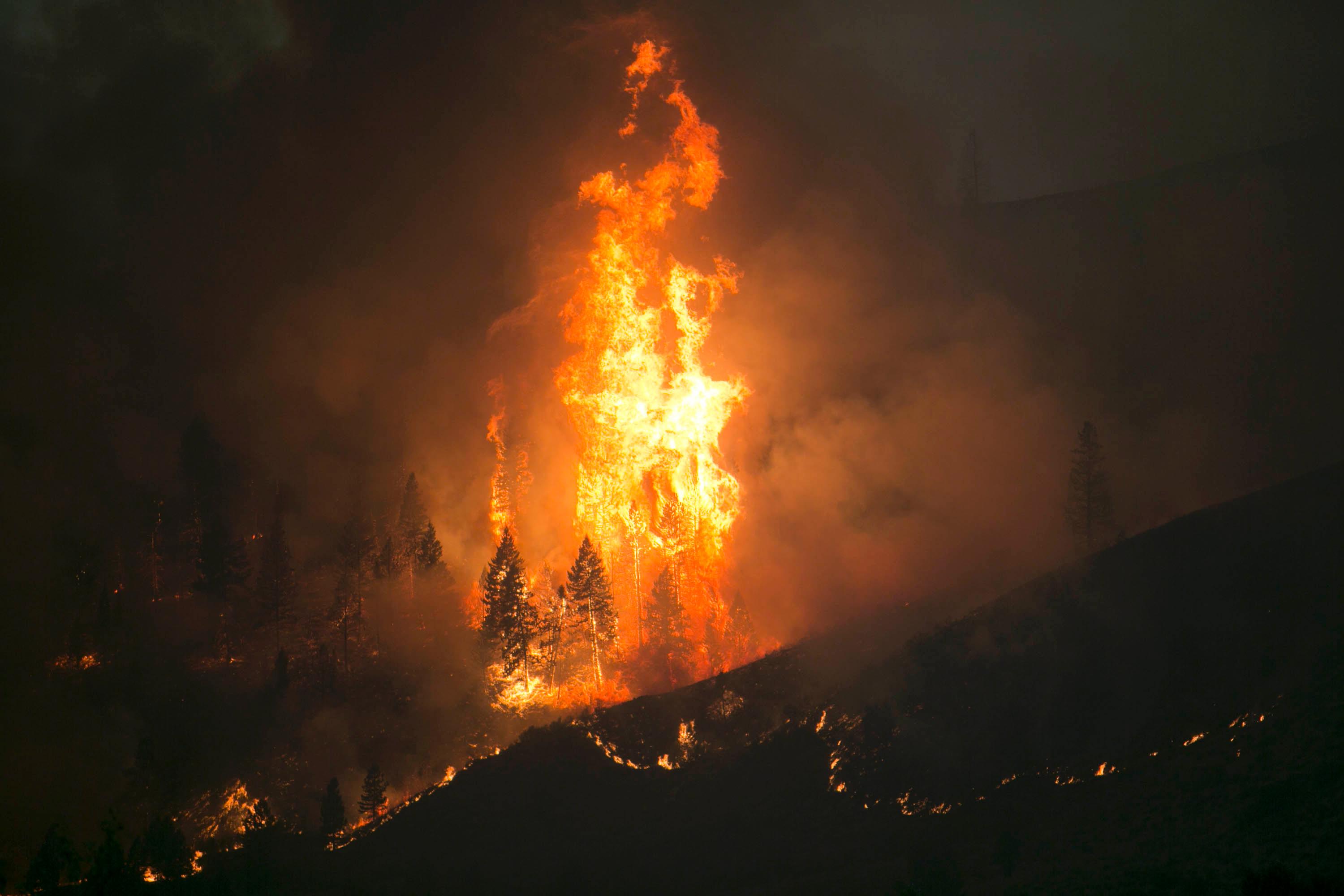
This summer, chukar country was on fire. All of the places, and more, that we hunt have been burned. North, south, east, and west of us. Like most chukar hunters, I wondered about the birds, how they were faring, if this year’s chicks were old enough to run or fly to pockets of safety. Bird numbers have been mostly good this season, but a huge chunk of our favorite spots are now toast.
Most of the fires started from lightning. Much of the fuel that allowed them to spread, and to continue growing, is invasive annual grasses: cheatgrass, medusahead rye, and ventenata. The “range,” composed largely of extensive tracts of public land (mainly BLM), is now “currently defined by ecosystem dysfunction, social upheaval, and a warming climate.”
We want to point fingers, but that does little good. In many of these places, it’s too late to stop the takeover of these destructive annual grasses, brought here from far-away places by feed for cattle. The pre-livestock perennials that kept the range “healthy” (a relative term) can’t compete and — in many places we hunt — are already gone forever. Bitterbrush and sagebrush, two of the most important perennials for a host of creatures endemic to the range, can’t survive the increased heat, frequency, and duration of today’s range fires. Same with the native bunchgrasses. In some of my favorite former chukar haunts what once plumed vibrant seas of multi-shaded green and gold now is a monochromatic moonscape of charred earth. Yesterday we happened to find ourselves descending into a bowl that once was filled with sagebrush and numerous partridges but now, four years after a big fire there, was choked solely with 4-foot-tall dried grass that completely hid our dogs. Sage and bitterbrush rarely come back once they burn hot. The invasive grasses all but guarantee more frequent fires on the range.
The obvious irony is that chukar love the fresh, abundant shoots of these invasive grasses. The fall rains that bring “greenup” signal good bird numbers in lots of places. Doubling this irony, of course, is that this beloved bird is itself invasive. So why do we care?
The answer is obvious and needn’t be stated. Less obvious, maybe, is that an even bigger threat to these public lands is the continuous attempt by robber barons to transfer them to the western states. We’ve been able to continue indulging our chukar hunting passion, despite the fires, because of the abundant choices of BLM and NFS land in Oregon, Idaho, Nevada, Washington, Wyoming, Montana, and Utah. Closest to our home, thanks to Idaho’s repugnant trespass law of 2018, hundreds of thousands of acres adjacent to NFS and BLM land have been purchased and closed off, including (illegally) some public roads, by the notorious Wilks Brothers from Texas, a state with almost no public land. (Look on onX, for example, up the Middle Fork of the Weiser for “DF Development LLC” land, which is one of the Wilks Brothers’ land businesses.) The Wilks Brothers acquired much of their holdings by purchasing Idaho State lands, which the state is required to sell, which is what everybody knows they’ll do with any federal land that gets transferred to the state. Do you want to be like Texas, where you have to be rich in order to hunt?
The latest legislative assault on public land is happening in Utah, in which a small faction of sycophants to the American Lands Council (funded largely by the Koch Brothers) is using unconstitutional boilerplate arguments paid for by taxpayers to argue that all federal land in Utah should be transferred to state control. The only way they’ll succeed is if the state’s constitution is amended, which is their aim. Most western states have an almost identical constitution which stipulates that citizens of those states “forever disclaim all right and title to the unappropriated public lands” in the state. Courts have, until now, rejected these lawsuits as unconstitutional, but with the shift in the composition of the U.S. Supreme Court, along with numerous federal courts throughout the U.S., it’s possible that one successful challenge — maybe it’ll happen in Utah soon — will lead to a domino effect vaporising federally held (i.e., truly “public”) land in the west. For anyone who uses these public lands, that would be worse than any fire. If you believe in contacting your state representatives to express your opinion, Idaho Wildlife Federation has made a snazzy form for sending an editable comment to Crapo, Little, Risch, and Fulcher that encourages them to disavow Utah’s current effort to transfer its public land to the state. I did it, and am sure I’ll get the typically condescending response from Risch’s office. Can’t say I didn’t try…
For an excellent, recent overview of where we are and how we got here, see the video below, in which Walt Dabney, former National Park Service Superintendent and Texas State Park Director, discusses the history and future of America’s public lands.
Finally, with regard to the Hercules project near Cambridge, which is now being called, by Hercules, the Barrick Project, foreshadowing a transition from exploration to actual mining, there’s more information. I personally haven’t been able to stomach going back to the area after my visit last year, but Leslie and I hunted across the canyon from it and were stunned by how many new roads they’ve carved into the publicly owned land there, mostly on the Andrus WMA but extending now into USFS land higher up. Perhaps even more dire than increased fire vulnerability or transfer of public lands to state ownership, mining rights threaten the actual earth itself. The Idaho Conservation League just released a comprehensive report on mining in Idaho, which details current projects and past environmental impacts of mining in the Gem State (click the image below to load the report). Like fire itself, which is both real and metaphoric, verb and noun, mining is something everyone who values public land should know something about and not take for granted.


Chirp away