
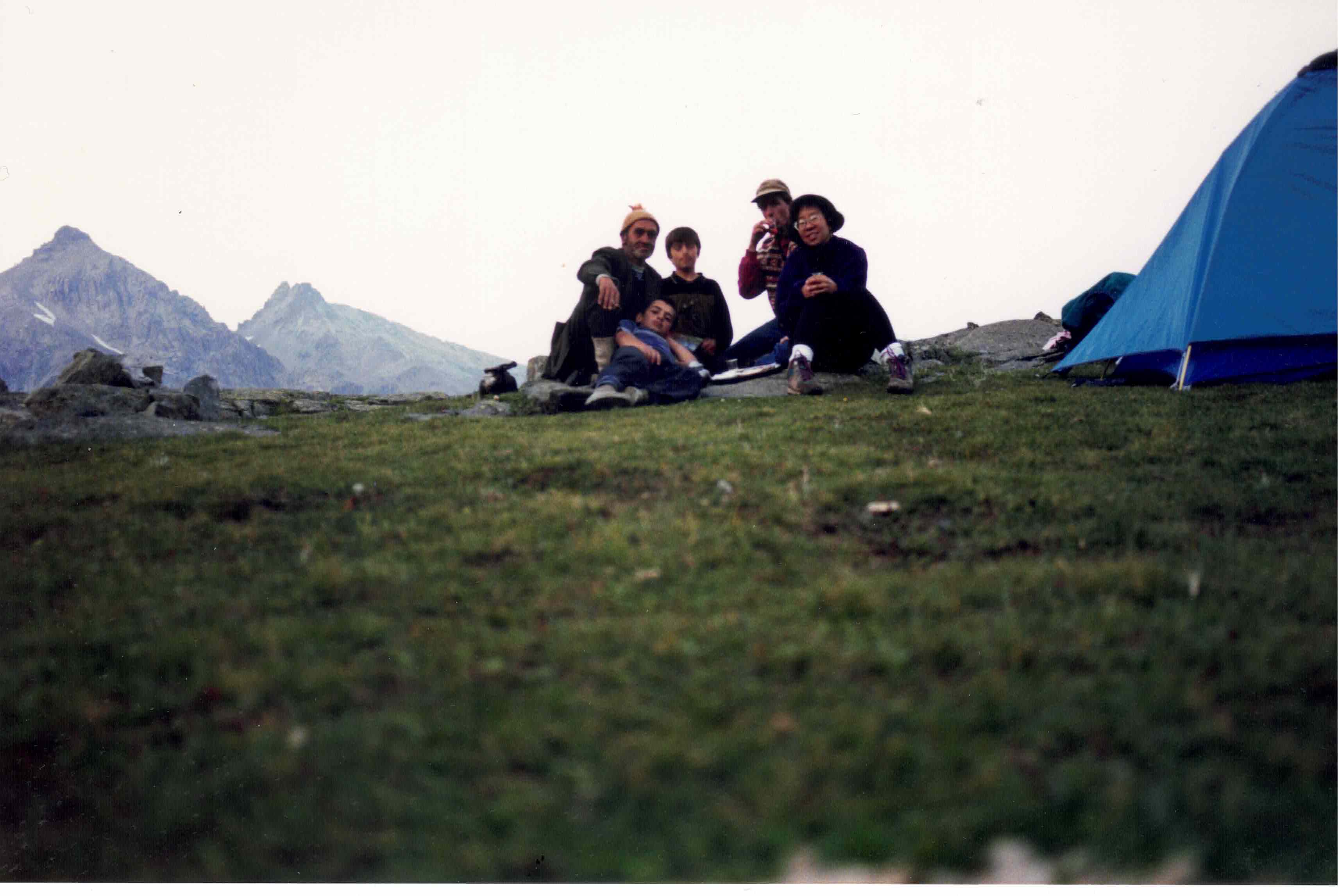
Thirty years ago I spent a month in Turkey. Erika had invited me to join her, and initially I thought it was a bad idea. I’d been chronically depressed and my therapist worried something bad might happen and trigger a personal catastrophe way over there. But I decided to go, and the thought of being in a different place began feeling more and more exciting.
Erika and I shared the same birthday, hers being a year after mine. My oldest friend introduced us, thinking we might like one another. We dated for a while, but by the time she invited me to join her in Turkey things had cooled into a state I thought was undefined. Plus, she’d been gone a while.
Hardly a day has passed since then that I haven’t thought of that trip. Talk about formative. Talk about memorable. I’ve been blessed with more than my share of stellar travels, and I think about many of those a lot still, too. But the trip in Turkey with Erika has stuck with me more than any other, and I’m not sure why.
I’ve been thinking about it lately in terms of chukar, probably because the season’s almost here. Erika and I traveled to the eastern part of Turkey, at one point taking a fairly large risk traveling in an unmarked Turkish Army van into Kurdish territory near Armenia. Traveling through landscapes that — later — Hells Canyon would remind me of, I had never heard of chukar but am sure — now — that I had to have been looking at their native habitat.
That van ride sticks with me. Over-filled with soldiers, who chatted nervously the entire several-hour trip, I understood nothing of what they said and was almost glad about that. Kurds had bombed a number of Turkish military vehicles on that road in the previous couple of weeks. Erika, the only female on board, was nearly fluent in Turkish and talked with some of the men. Straight-faced. I sat on someone’s lap and watched.
But we got to our destination safely and spent a couple of nights with a group of Kurds near Mt. Nemrut. Music and dancing at sunrise on a mountain top built by a vainglorious king in 62 BC.


Nearly everything we experienced on that trip was suffused with intensity for me. A hair-raising “cab” ride to a medieval ghost town on roller-coaster roads littered with sheep, one of which our frustrated Indy driver plowed into at high speed. A complicated, multi-person negotiation by Erika in a little town over what we needed to do to get to our hostel a few miles away. Having tea brought in a samovar to us on a silver tray by shepherds at a high mountain lake after they set up our tent for us, realizing we were beyond exhaustion. Getting lost in dense fog on a mountain peak the next day, afraid we’d perish there until we ran into a French mountaineer on a mission. Listening to Arif Sağ for hours and hours over the PA on a cross-country bus trip, not believing my ears. Somehow I got Erika to find out whose music that was. Some of my chukar videos on YouTube use Sağ’s music. Erzurum.


Language has a lot to do with this intensity, with the adhesive quality of this trip’s memory. Communication. Until that trip I’d never been — and haven’t since — in a situation where I couldn’t communicate easily most of the time. English wasn’t common in Turkey, especially in the east, and Erika spoke five languages. I relied on her for everything. Movement. Nutrition. Lodging. Fun. Analysis.
Which suggests something that looks like a trend, a fortunate one, in my life: trust in women more capable in important ways than me. I was raised from age five by a single mother who’d become a schoolteacher after her first marriage so that she could provide for her two boys. She wasn’t affectionate or textbook nurturing, but she was solid and I relied on that (she’s grown to be more affectionate with age, which I feel lucky to witness). In graduate school, I chose the one woman among my four advisers to direct my dissertation because I trusted her the most in terms of communication. The best boss I’ve ever had — my principal for the first three years I taught high school in Cambridge — was a woman, by far the most competent, fair, and reliable professional I’ve ever had the luck to work with.
And so Erika. Soon after we met she revealed to me that a few years earlier she’d been hit by a car during a century ride on her bike, and that the majority of major bones in her body had been shattered. She’d spent a long time in the hospital. She said this matter-of-factly as she showed me some scars and her gnarled collar bones. After our trip to Turkey, we became better friends than lovers, and she continued developing her career as an agricultural economist, traveling all over the globe but also coming home frequently, often from the other side of the world, to do her share of care-taking for her cancer-stricken mother. I visited her in Mexico City, where she’d moved for a while and had a comfortable apartment. She spent a week or two with me and another friend at our cabin in eastern Idaho, fly fishing, hiking, and mountain biking.
For years afterward, every August 26th she’d call me to wish us both a happy birthday. She did most of that kind of friendship tending, I’m ashamed to say. Once, for my birthday, she sent me a “Fly Fish Mongolia” hat from Ulaanbaatar where she was studying wheat farming. And she’d call me on that day no matter where she was, her voice joyous and always winningly sly, a soft laugh ready to pounce. Then, a year or two went by and I realized I hadn’t heard from her in a while. I did an Internet search sometime around 2010 and learned she’d passed away in 2008 from a long battle with ovarian and breast cancer. In all those phone calls she’d never once mentioned she was sick. Aside from the shock, reading her obituary was strange for a lot of reasons but one was how little I’d known about her. She was much more accomplished than I’d ever realized, which is saying a lot because — despite her definitive modesty — I always felt lazy and unremarkable around her, not from anything she did or said but simply from comparing our calendars. She was always heading somewhere far away to do something important. I was just hanging out, trying to pull my head out of my ass and finish my Ph.D.
44 is too young. I can’t help but feel Erika was cheated. I’m still alive and have the tremendous luck to feel grateful our paths crossed. We all take too much for granted, but it seems that at least one measure of greatness in someone might come from an ability not to take much for granted. It exhausts me to imagine how that’s possible, how such people not only exist but prosper.


Leave a Reply to Mehmet Dee ErceCancel reply