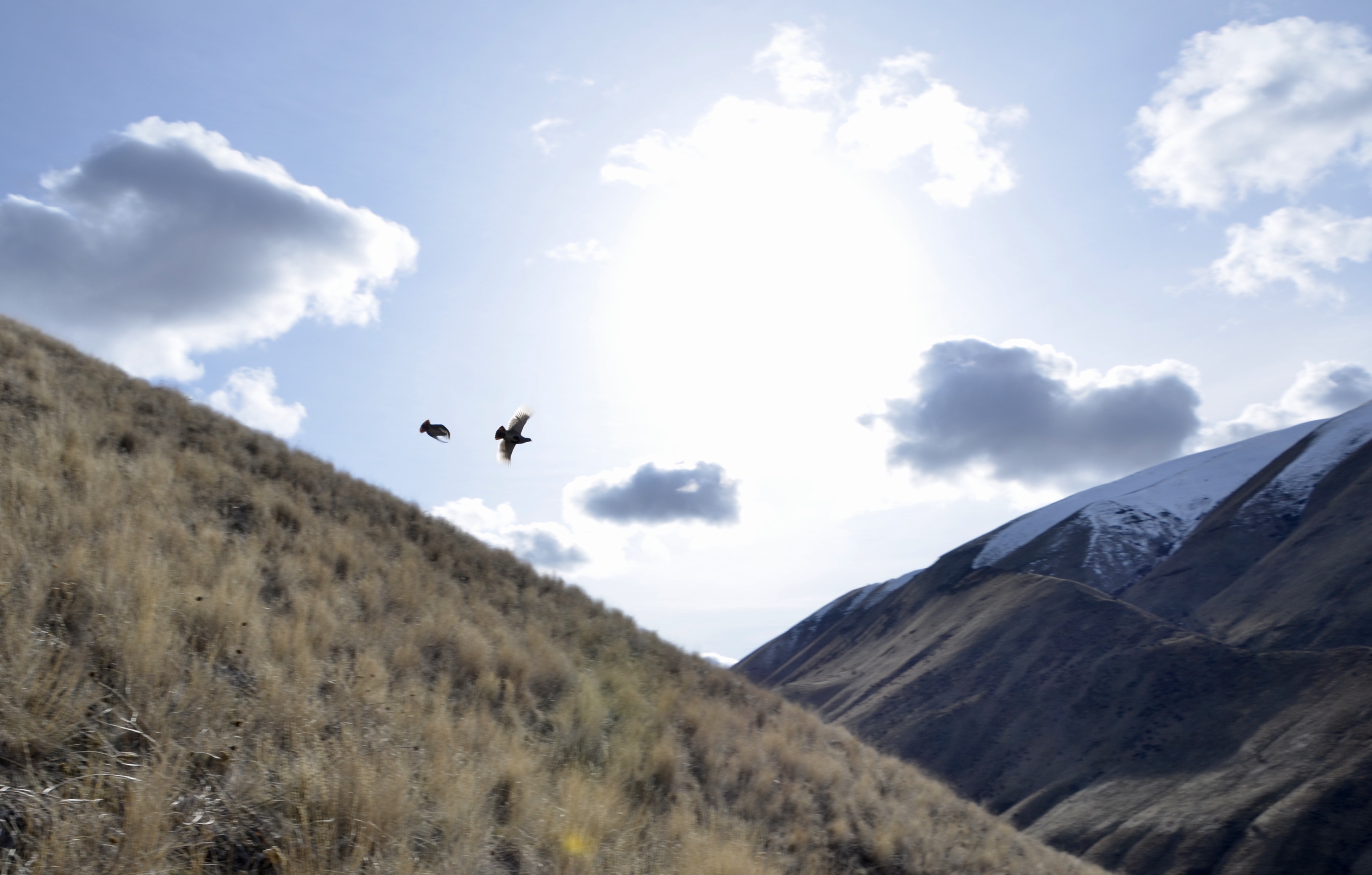
Tag: chukar hunting

  • Remote

    Remote

    “As for me, I am tormented with an everlasting itch for things remote.” – Herman Melville, Moby Dick.

    So far this season, Bob and I have been only hunting at higher elevations where the earthy golden grasses and light green sage colored hills meet up with the forested mountains. These are places to take advantage of now. Soon these places will be almost impossible to reach when the winter snows start falling, which will be any day now. Intrepid hunters that don’t mind post-holing for miles can get to these spots when the snow is really deep in December and January. We’ve done it before but it’s really hard on the dogs. It’s hard on us. And you wouldn’t see birds anyway.

    Five years ago in Mid-November, Bob and I hunted on top of a higher elevation plateau covered with big basin sagebrush and antelope bitterbrush. It was remote and far from any roads or two-tracks and undulated like a rollercoaster and required a steep downhill hike first, then a climb up to the top of the plateau, then back down again before climbing back out. It had all the things you would want for good habitat for chukar: steep slopes, rocky outcrops, water, plenty of things for the birds to eat, and cover from predators.

    A couple of weeks ago, waking up to almost perfect health for my age and the sweetness of early morning darkness, I suggested we make the drive back out there. I’m not particularly fond of hunts that start with the downhill first, unless we’re doing a shuttle, but I’d thought of that place often and really wanted to go back. The motivating force was, besides being incredibly scenic, especially in October, was that historically chukar were there before, so they should still be there, right? I do know that every year things change, every month and even day changes your odds of finding them, but it’s the eternal hope that really drives us.

    We left home and after about an hour drive on a gravel road, we arrived to the place where we wanted to start our hunt. We put on our heavy packs, mine weighed down by what felt like gallons of water, and took our shotguns out of the cases. Before letting the dogs out, we put their orange Garmin hunting collars on, which is never an easy process when they are excited and know what’s about to happen and behave like wiggle worms or house cats not wanting to be held.

    The early morning sun was still behind the horizon as we started our descent and the air was cool and frost coated the short green up. In the distance, a rosy alpenglow lit up the hills to the west. At the start of the 1,000-foot descent on a game trail meandering through a dark and shadowy ponderosa pine-lined draw with a tiny dribble of a creek running down it, Bob insisted that I go in front, so I took the lead, which was unusual. I prefer to follow because I’m usually slower and don’t read the terrain as well. I try to make a mental map of the landscape but I’m prone to daydreaming and I once got us temporarily lost in a snow storm, a few seasons ago, in a maze of game trails and rocks and ridges that all looked the same.

    I felt excited to be back and descending on this trail again after five years. A trail that’s been used by wild animals for time immemorial that leads to a place that hasn’t been destroyed by humans. It had rained the day before and prints of deer and dents by bigger and heavier hoofs of ungulates still wandering the area were on the trail. Some tracks were going uphill and some downhill. Peat’s petite little prints and Bloom’s bigger ones were freshly impressed into the earth heading away from us. I looked back up the trail and saw my own tracks. The sound of a grouse busting got our attention and we both removed our shotguns from our shoulders and looked into the direction of the sound. Peat tracked it down across the creek and found it up on a limb of a tall pine tree and starting barking. This is what he does whenever grouse are in trees. He usually barks his head off until we can’t stand it but I don’t like shooting grouse out of trees and Bob really doesn’t either so we buzzed Peat back and decided to continue walking and leave it be.

    I stopped and examined scat of a black bear which was berry- and seed-filled. I pressed it with my boot, and thankfully it was dry. We kept going, more scat, maybe a coyote or fox, turds full of fur. The front of my thighs and ankles started to feel the terrain and I was cursing at myself for suggesting such a strong and steep place this early in the season in when not really knowing my fitness.

    We got closer to the bottom of the damp draw and near the creek the banks were all muddy and eroded and the gooey mud stuck to the bottom of our boots. The creek was a welcome relief for the dogs as they paused to drink water before crossing. Bob took the lead in front of me and stopped and swished the soles of his boots in the water as he crossed, to get the mud off. He said, “I don’t want the extra weight for the long climb.” I did the same but stepped into a slightly deeper section of the creek and water splashed inside one of my boots and got my wool socks wet.

    I followed Bob up the other side of the draw as we zigzagged our way out of the bottom of the creek bed. Five years ago, we flushed chukar out of this spot. This year, nothing. I finally caught up to Bob taking a quick break to catch his breath. He said, “I’m taking 61 steps before stopping to rest.” We continued. I tried 61 steps for a while, hoping to find my rhythm but couldn’t. Mind games to get you to the top where sometimes your mind is your worst enemy and the relationship between walking and thinking and the movement of memory when you don’t have what I call “chukar legs” yet in this early part in the season.

    Almost to the top of the plateau after two hours of hiking, we heard chukar calling in the distance but couldn’t pinpoint exactly where it was coming from, but it sounded like they were on the opposite side of the ridge, the one we just came from.

    I truly believe that some of the chukar up there have never seen a human or hunting dog before. This could be a good thing or bad? Some chukar hunters say birds bust wild and the dogs can’t hold them in the early season because they’re not used to being hunted, or just that they’re young birds. Others say towards the end of the season in January when they’ve had tons of pressure from dogs and people, that’s when they really bust wild. From years of experience doing this, I believe it’s a total crapshoot and there is no rhyme or reason for their jumpiness.

    Once up on top, we split up to cover more ground and to increase our odds of finding old deer or elk sheds. Bob and Peat went one direction, and Bloom with me. Peat stopped ahead and pointed solidly, then three or four dusky grouse busted from the ground one by one near some ponderosa pines just ahead of us. The grouse were too far for me to get a shot. Bob tried to hit one but missed. Bloom, with his strong prey drive and inexperience, saw one flying in the sky and took off like a high speed freight train to pursue it. I buzzed him to come back, which he did. We continued hunting, keeping each other in sight as we headed down a ridge, Bob in front of me.

    The dogs methodically covered the terrain doing circuits and periodically returning to get some water. We noticed Peat was favoring his front right leg and wouldn’t put any weight on it. We examined it and didn’t find any cuts on his pads, and after palpating still didn’t find anything. We kept going down the ridge. A few minutes later, we watched Peat, who we’ve dubbed “The relocation specialist,” find one of the grouse from earlier hunkered down in a sagebrush as it suddenly busted wild before he had a chance to point it.

    The descent down the open ridge felt like it went on forever, and it was covered with loose rocks. I didn’t remember it being that way before. It’s funny how you don’t remember certain things about past hunts. They always seemed easier. Once back down, we crossed over a different section of the creek before heading back up. The climb from the bottom was hard and it was hot. We used as many game trails as we could find and I pulled myself upward using bunchgrass to hold onto, but I felt wimpy for getting sick of it and stupid for complaining about side-hilling and being afraid of traversing one particular loose scree vein on my hands and feet. I had to remind myself that this is part of the game and that every hunt after this will be easier.

    Bloom, our workhorse, continued to cover tons of ground all the way up which took about an hour. Peat kept stopping and laying down in the shade of sagebrush. I worried about him and the possibility of having to carry a lame dog up the rest of the 1,000 foot climb. In the 16 years of hiking these chukar hills with Bob, this was the first time I thought about getting a dog sling for emergencies.

    Almost towards the top of the climb we entered another small forested area. My Garmin handheld beeped that Bloom was on point above me. Bob said, “He’s your dog; you better go.” I picked up the pace, climbing uphill and looking for him and busting through the thick hawthorn and bitterbrush. Then suddenly a grouse busted above me, flew past, I shot, and missed. I felt defeated. It was an easy shot on a big bird.

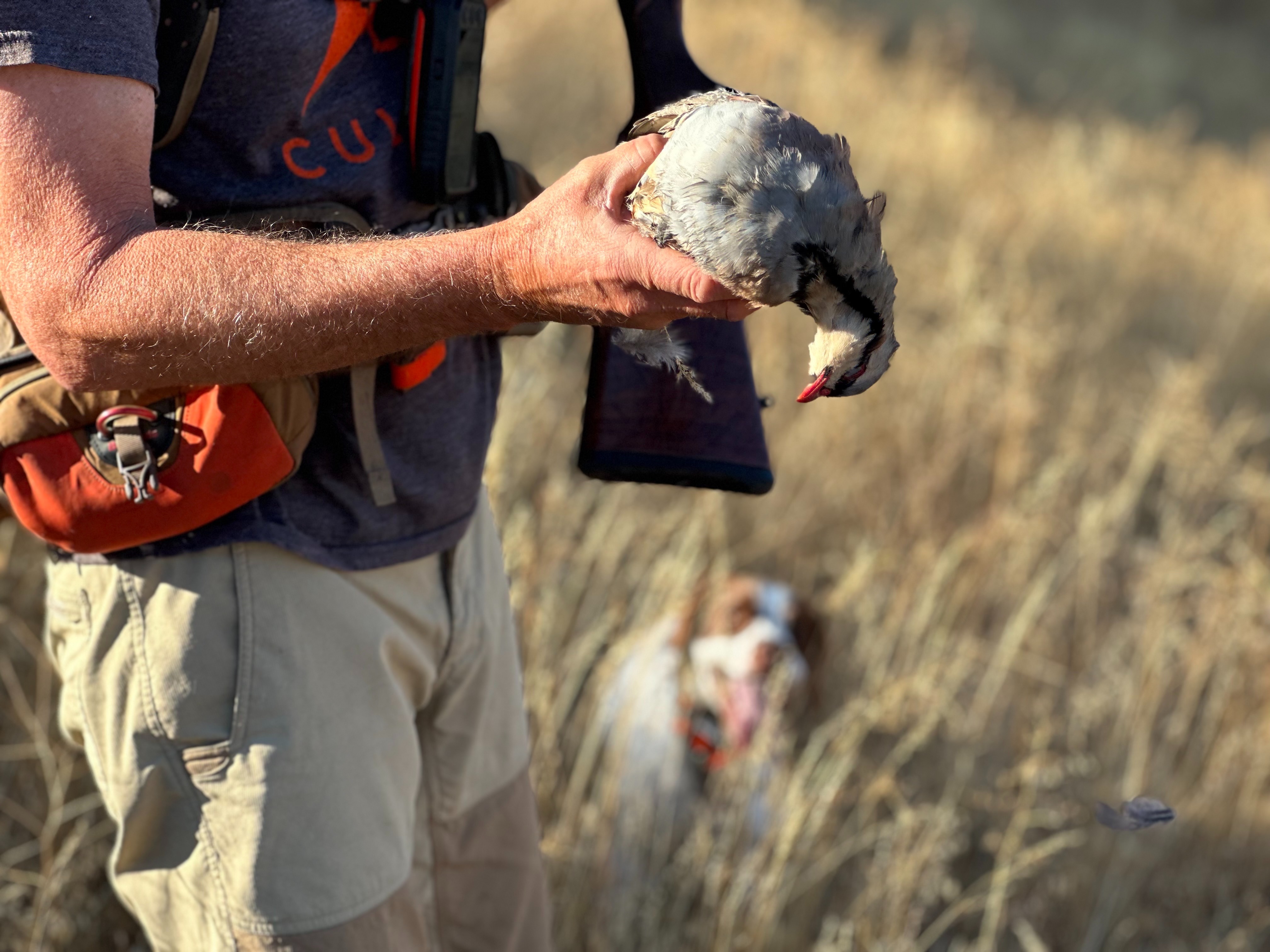
    On top of the last ridge, the final point of the day was Peat finding a covey of chukar just below the rocky ridge with Bloom backing him. Just as we were carefully navigating downhill getting into position in front of Peat, they busted. We both shot and Bob hit one. The chukar landed on the ground and started running. Peat chased it down and did the most remarkable retrieve despite his handicap. The only bird bagged in our five hour hunt was pointed and retrieved by a three-legged dog.

    When I get nostalgic about the past, which seems more often these days, there are things I’ll remember on this beautiful autumn day engrossed in the intimacy of this remote landscape, and I will love them all.

    Peat is now fine if anyone is wondering.

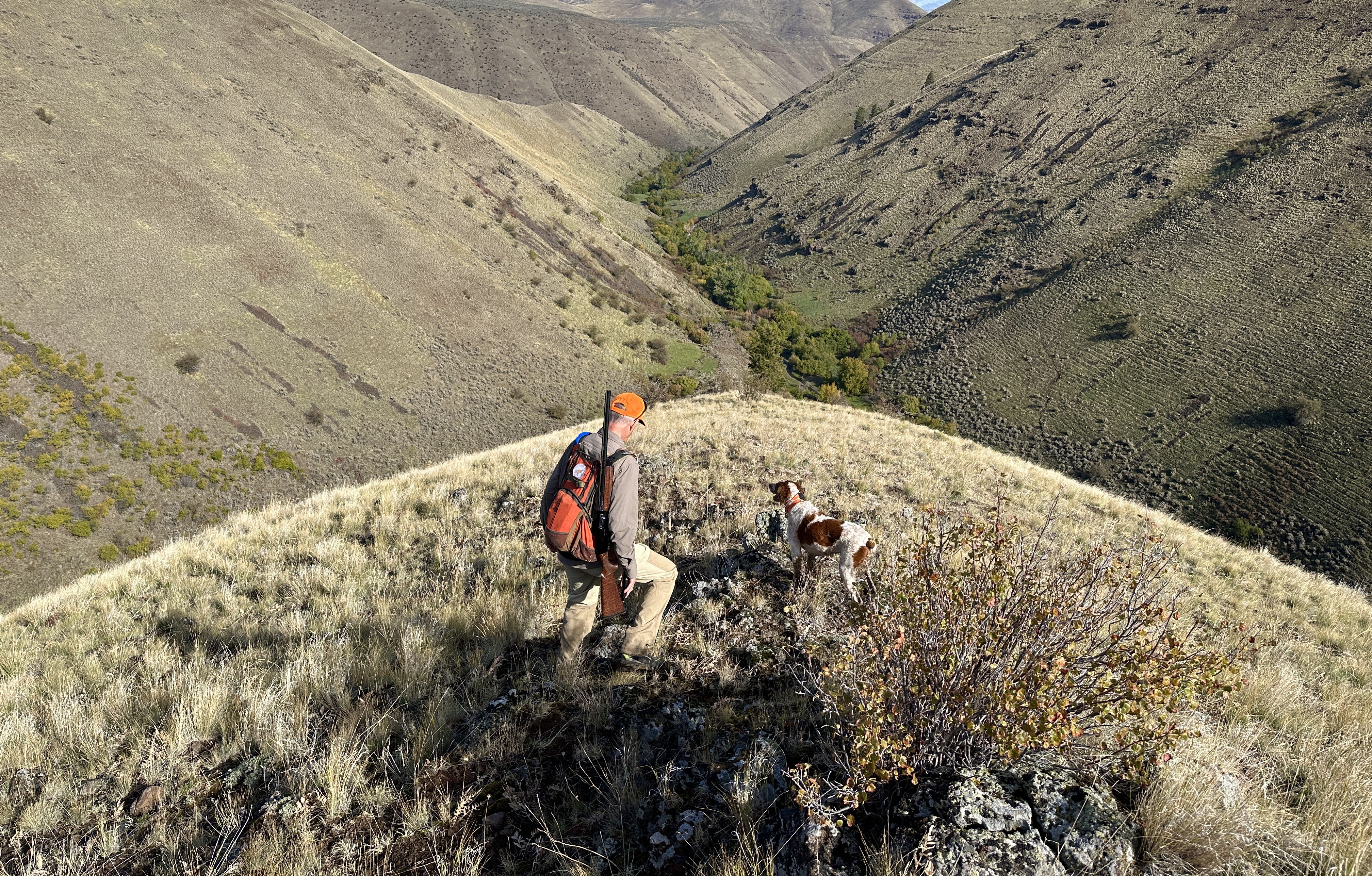
    On the descent.
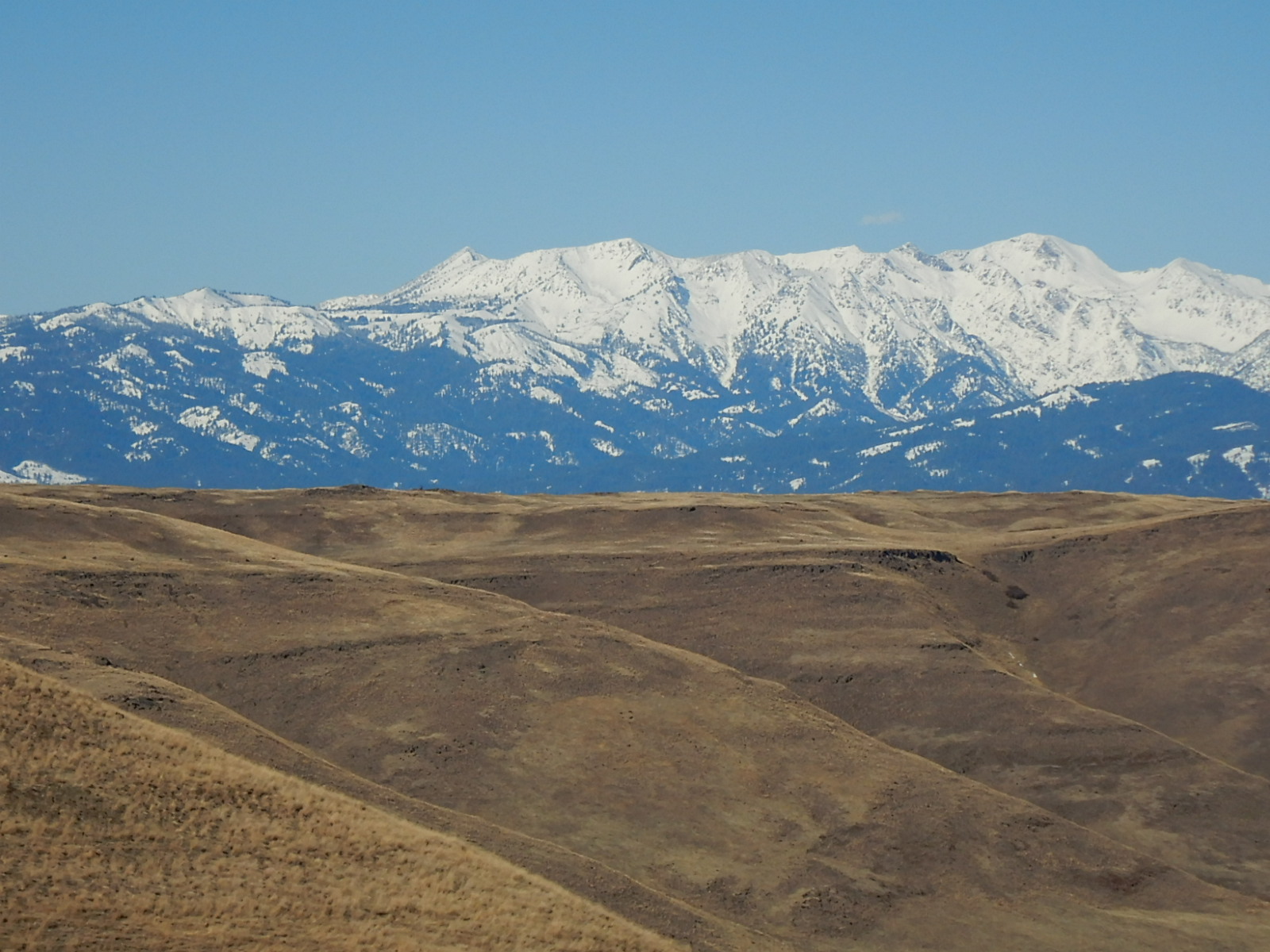
    The wall in the distance for the final climb.
  • Liminal

    Liminal

    “The short man followed, limping, terrific, crablike.”

    Nearly through reading 900 pages of Faulkner short stories, and can’t get rid of the sentence above. For some reason. Yesterday, while doing research for a story I’m writing, I came across a Cree word that any bird hunter would appreciate: “Papêtikwâskopaniow.”

    I wish I could pretend I knew how to pronounce it. But it means the thundering sound a partridge makes with its wings when it takes off.

    We’re always, all of us, until we die, in between things. Words and sentences stick with us, for some reason or reasons (often inexplicable), that mark a point in time and place that’s there as a kind of anchor. I’m sure I’m driving Leslie crazy by randomly repeating (usually as she’s about to fall asleep at night) that sentence from Faulkner’s story “Death Drag.” I can’t explain why I like it so much, but I know I do and am fine with leaving it at that. Then there’s the Cree word, which I might say a lot about. Each of these linguistic landmarks will bookend a moment in my life later on that will remind me I was in the middle of something intense here, in this case not really the kind of intensity I would choose, but just one of those life things that we’re always in the middle of. My stepmom likes to say, after an emotional response to something, that she was “in the middle of being moved.” It’s like that. But it seems, probably for everyone, that we’re always in the middle of something, whether it’s being moved or not. For me, this marked moment has to do with moving. And it’s moving, too. But see, that’s another story.

    The Cree word, for obvious reasons, struck me. When I came across it I was simply looking for the Swampy Cree (“N Dialect”) word for “hello” on an online Cree dictionary. Hello? Maybe you can think of the thunderous surprise of a grouse busting right at your feet as a kind of greeting. More likely, the word came up because of a coding glitch. But I’ll take the connection; it makes some sense. The bird flipping you the bird? There are all kinds of ways to say, and all kinds of ways to interpret, “hello.” Lookout, idiot! Nice to see you again. Is anyone there? The word itself is liminal, and the context and how we see it gives it its meaning. One of my favorite lines from Hamlet nails it: “There is nothing either good or bad, but thinking makes it so.”

    Papêtikwâskopaniow. Good: it’s beautiful to me, enviable even, that the Cree have a single word that captures such an incredible, shocking, powerful, complex experience, especially if you’re a bird hunter. Bad: English doesn’t. But then, these judgments are of course culturally contingent and biased. Liminal. Can we say it matters who we are and where we come from? Who gets to say that? And who gets to say how we feel about killing a bird?

    We do. We must. So what do you say?

    One thing I love about the Cree word is the agency it gives to the partridge. Some of us talk about “fair chase,” so this matters. For Cree, and most First Nation people, “prey” are so much more than that. This word makes it clear it’s the bird who makes the sound with its wings, and it’s a specific kind of sound. One word. You’ve experienced the sound. When you replay that moment reflected by that word I would bet your brain slows it down so you can see it, so you can get in the middle of it. Liminal. The bird is leaving one place and going to another, and anyone who’s watched a big dusky grouse do this in dense woods or even in grassland knows that even that bird doesn’t know for a while exactly where it’s going. And when it’s a covey of chukar, or waves of a super-covey, what then? The sensations. And where does this leave you? Do you shoot? Can you?

  • All Imperfect Things

    All Imperfect Things

    I got a sick queasy feeling deep in my stomach as we detoured and drove into rural Council, Idaho. The curbside spot right out front of the local veterinary office was the exact spot where we’d parked the bright red Jeep two years before and it was empty and waiting for us. Just like the white crosses along the highways in Montana marking highway deaths, that spot reminded me of the death of Angus that occurred at that exact spot when we drove him there when his cancer could no longer be stopped.

    Nothing bad happened to the dogs to prompt the detour and vet visit that day; we went there to get rattlesnake vaccinations since we had heard reports from other chukar hunters that they have been seeing a lot more rattlesnakes than normal. Despite the controversy whether or not they work or not, the vaccinations might buy us valuable time to get our dogs to the vet in an emergency. Peace of mind if you want to call it that.

    Bob and I each took turns taking one dog at a time into the vet exam room. I took Bloom first. A specimen of pure athleticism and muscles pulled me on his leash and dragged me into the tiny exam room. He’d only been inside this small room one other time, when he was 8 weeks old, so he wasn’t afraid of this place like dogs that make repeat visits.

    I lifted Bloom onto the exam table. He shrieked loudly as Dr. Gardner suck the tiny needle into the area where he’d pulled up the skin on his neck and injected the rattlesnake vaccination. I was embarrassed by his behavior and apologized and blamed his genetics and reminded Dr. Gardner that Angus did the same thing whenever we took him there after several barbed wire injuries needed stitched up, his yearly vaccinations, and nail trimmings. Dr. Gardner remembered, and Bloom — just like Angus during nail trimmings — required all hands on deck including the receptionist to hold him down and try to keep him from clawing his way off the exam table. Bob was outside on the sidewalk waiting for it to be Peat’s turn and heard Bloom screeching at the top of his lungs. He told me later that he wondered if they’d decided to do open heart surgery on him without anesthesia. Peat’s turn wasn’t much better but we were both glad to get that out of the way.

    The next day we decided to hunt in a place we’d gone several years ago. The pullout where we parked near the river to begin our hunt was scattered with old dried up goat heads. Nasty little things, and before we even started we were pulling several of their spiked seeds from the dogs pads as they stood on and hopped around on three legs. Cruel and imperfect plants. In the ecosystem where all flora and fauna have a purpose, I’m not sure what good they do?

    We headed up the rocky slope while there was still shade on this part of the mountain and before the October sun peeked over the ridge. The soil was parched and cracked, and the grasses and end-of-season arrowleaf balsamroot crunched underneath my boots. We both thought it was ridiculous and pointless hunting so early in the season where there wasn’t any green-up and it hasn’t rained for months. About an hour into the climb both dogs seemed to sense birds but had trouble pinpointing them in such dry conditions. A covey of Hungarian Partridge that was probably walking uphill busted wild way above us and flew down the ridge out of sight. It was a good sign despite the dryness and not being close to the water that we managed to see some birds. It was a long way down to where the huns flew so we kept going up and hoped to find them on the way down.

    Half way up

    Bloom with his long legs and spanning gait ranges bigger than Peat but he’s still inexperienced, young, and insecure and will check back constantly for my whereabouts, and when he doesn’t we have to second guess if he’s onto birds. He’s got his faults and is a strange dog still figuring out the world. It will sure be exciting when he does.

    Beep!

    I scanned the tall grass looking for Bloom who I’d just seen ahead of me but couldn’t see him. My Garmin handheld strapped to my hunting pack beeped again, I squinted at the screen which was hard to read with the glare of the sun: Bloom on point 35 feet. I looked around and still couldn’t see him. Bob who was just above me yelled “Can you see him?” I answered back ,”No.”

    I spotted something white buried deep down in the golden grass, I couldn’t even tell what it was. Bob yelled again “He’s right there! Can’t you see him, get up there, get ready!”

    I hesitated. My mind was playing tricks on me and I wasn’t even actually sure that he was pointing birds because Peat, who normally backs Bloom, was still running around. As I got closer, he was sprawled on his stomach in an awkward position flat on the ground. I didn’t know what to make of what I saw and I couldn’t tell if he was breathing and thought maybe he’d been bitten by a rattlesnake or caught in a trap, or something else bad happened.

    I moved even closer and could see that Bloom was shaking. I thought to myself, surely if he’d been bit or something we would know it. Suddenly, a covey of chukar exploded just in front of him. Instinctively, I mounted my shotgun and fired one shot but the birds were almost too close and I missed the one I’d picked out. Bob, who was above me and to my left, fired simultaneously and I saw a chukar fall to the earth. Bloom sprung up from the ground, found the downed bird and quickly put the chukar in his mouth while both of us were praising him. It wasn’t a perfect text book point and we’ve never seen him do that before, and even on the retrieve he dropped the chukar from his mouth while jumping over the grass to Bob like a mule deer.

    We both agreed that in 10 years when we’ve forgotten the details of each point, bird, retrieve over the years, we’ll always remember this one. This imperfect crazy day that Bloom found, pointed, and retrieved his first chukar without any help. And on his belly, no less!

    It was starting to get really hot outside and we slowly descended back down the mountain finding game trails to make the downhills easier to navigate. We got back to truck camper and I tied up the dogs up to the camper in the shade next to me and sat atop our school bus yellow wooden stepping box outside and removed my sweat-soaked leather boots and wool socks and then went inside and started making some sandwiches. From inside, I noticed a gray pickup slowly drive past us then stop and then back up and stop again. The two occupants got out. One of them approached Bob, who was sitting down outside in a camp chair, and introduced himself because he’s recognized Bob and the dogs from reading our blog. Tim and his brother both upland hunters chatted with us for a while while we exchanged stories. It was nice to connect in person with other chukar hunters.

    Right after Tim and his brother left, we sat down to eat our sandwiches. Suddenly a small snake with diamond patterns on its back crawled swiftly out from underneath the yellow box I’d just been sitting on. We both jumped up from our chairs and I grabbed the dogs’ collars and pulled them away from the serpent. It was a baby rattlesnake, and we both couldn’t bring ourselves to kill it and watched slither away and disappear. Why would we end its life when it wanted nothing to do with us?

    All imperfect things have a place in this world.

    The retrieve after the imperfect point
    Bloom’s Day
    Dogs doing their Dorothea Lange look
  • The End and the Beginning

    The End and the Beginning

    NOTE: I began this post in April, part way through my last quarter as a teacher at Neah Bay High School. I didn’t finish it for some reason. Now I want to get it out.

    In the grass that has overgrown
    causes and effects,
    someone must be stretched out
    blade of grass in his mouth
    gazing at the clouds

    — Wisława Szymborska

    It’s been a tough year for me out here away from birdland. I’ve missed so much and have done a terrible job dealing with that frustration. I’ve turned self-pity from a Georges Seurat triptych to El Capitan. Nothing gets through, and you know it won’t, so you stop trying.

    Or you should.

    But I haven’t, even though I’ve told myself a thousand times I should. Leonard Cohen puts it this way:

    Ring the bells that still can ring
    Forget your perfect offering
    There is a crack, a crack in everything
    That’s how the light gets in

    Until this afternoon I’ve all but ignored that light (despite focusing, obsessing on the cracks). Right now I’m sitting at my desk in my classroom overcome with overdetermined light and a few tears shed by an epiphany coming from a conversation with a student about the last stanza of Wisława Szymborska’s 1993 poem, “The End and the Beginning.” “…someone must be stretched out / blade of grass in his mouth / gazing at the clouds.” The poem is about recovering from the destruction of war. I hadn’t read the final image correctly, and I hadn’t even chosen the poem but rather used it as one of the readings in a canned textbook unit (something I’d never done until now, which — if you’re a teacher — will tell you something about my state of mind). And so here comes the student, trying to finish writing answers to the questions in the textbook, and we worked through it together, and we both saw the light at the same time. Dead center in the stanza is the word “must,” which is a word we must become desensitized to in order to endure parents’ and teachers’ and authority figures’ orders, or to make haphazard guesses as to whom is knocking on the door (“It must be the postman…”). But everything depends on that word here because, without it, the thing that signifies recovery can not happen. Someone must be lying there on the grass without a care in the world.

    When I was about 10 years old, still disgusted by the two-year-old fact that the Beatles had broken up, I edged up the alphabet to the next good thing to listen to: Beethoven. My favorite composition of his is the adagio to his string quartet Opus 132, the “Heiliger Dankgesang,” which he wrote after recovering from a near-death experience. If you haven’t heard it, it’s worth a listen because I think anyone can hear the joy of a kind of breakthrough, and we can all use that kind of experience from time to time. It was a rough year, two years, for everyone, and we’re still not out of it. Remember that, and remember to remember that you yourself are not exempt from the need for TLC. There were many times this past year when I felt I’d reached the end, and things like this string quartet, or like the experience with the student (I wish I felt I had the space here to do justice to that moment, and to the student himself) cracks open the chance for a beginning. We all must have those moments. They’re everywhere, but sometimes hard to see.

    So I’ve missed birdland, as I knew I would but didn’t know how much it would matter, and now see the chance to return to it, wherever or whenever that may be. All the responses to my previous post (“Granted“) were so kind and thoughtful and sincere and helpful. They’re the light that’s got through the crack, and I’m so grateful for it. I’m also just now realizing that after Beethoven, the next musical light that came on for me was just up the alphabet a bit: Bird (Charlie Parker). Which makes me think of Steven Feld’s amazing book on the Kaluli Indians of Papua New Guinea (Sound and Sentiment), whose existence is wholly wrapped up in the sounds of birds in the rain forest they live in (they rarely actually see the birds because the forest is so dense), so much so that when they describe those sounds they weep. Tears of joy. At the end of his time living with the Kaluli, Feld played them a recording of Charlie Parker, telling them he was called Bird. When they heard the recording, they wept. Tears of joy. I can hear the chukar calling.

  • Granted

    Granted

    “I took it for granted.”

    For granted. It’s one of those things we don’t want to admit to doing. It’s come to my mind a lot in the past year, mainly in thinking about where we used to live. I tried hard not ever to take for granted living in chukar country. This blog is my evidence. That doesn’t mean I’m not surprised by what transpired in the last year. I guess that’s a good thing. Still, we have to move. Again. The word “regret” shares a lot of letters with “granted.”

    During our recent 3-week trip in the camper, mainly to fish in Montana, we talked a lot about what we want and need in a place. At the top of my list is that it has to be within an hour of good upland bird hunting on public land. Second: within an easy day’s drive (<5 hours) from good trout fishing. Third: within a “reasonable” distance from an airport. Fourth: a town small enough to have a decent grocery store, at least one restaurant that serves beer, and one high school so I might substitute teach. Skewing all this is adding the word “chukar” before “upland.” We have some places in mind. Suggestions?