Blog

  • What Is Life?

    What Is Life?

    Over the years, I or Leslie would joke, one of us, usually me, “What is life?” The question, for me, which I shared at the time, years ago, with my wife, came from a recalcitrant student of mine. “Recalcitrant student” is basically the same, in my short career as a teacher, as saying that black was dark.

    Anyway, Tony would sigh that while everyone was working on something, and I was “monitoring.” It took everything I had to ignore his question.

    But it’s a good question. Even though it would recur as a joke, it quickly, to both Leslie and me (we’d admit later), would evolve into a sort of private needs analysis. What about ______? Did he really mean _________? They couldn’t have thought that ________? And, we all know, there’s no answer.

    For game birds, the question is more basic, if asked at all, which most would say doesn’t happen. Ever. For those creatures.

    Today was Christmas. There was the usual several-day lead up. Now I’m walking the dogs on the golf course, snow here and there, crispy, then some quiet wet grass, what will spring be like? Will the greens show snow mold? Probably. They didn’t spray them this fall, the morons. Blah blah blah. What a waste some thoughts are.

    I used to love Christmas. Like most kids (I don’t actually know if this is true; it could just as easily not be), I’d get up earlier than my parents, sometimes conspiring with my sibling, and plot and hedge and wonder. I’d listen, too. That was private. Something never to be checked with the other. Shameful to admit that, maybe. Or maybe just claiming something like a moment for myself. Something before the deluge of waking up parents, of tinsel getting caught in bows and ribbons. Of scoldings, forgivenesses (because of Christ’s birthday) calculated agonizingly by the scolder, pecking orders chipped away at, families going at it.

    Lucky to have had that, to have had all that. All that it was. Lucky not to have known it wouldn’t last. Unlucky to have realized, probably simultaneously, that it was over. When you don’t have your own children, there’s no surrogacy period, and we’re in about the 5th decade of disillusionment. Of course, if you do have children, there’s always the chance they’ll hate you; that’s the consolation prize we give each other when we’re scared shitless we’ll be too daft to know what to do when it’s too late. Or even that it’s too late.

    So what is life? For me, for the past long while, it’s been two-thirds waiting and one-third chukar hunting and trying to make sure nothing falls through the cracks during that one-third. I think I’ve done a decent job at scribbling all that down. At managing it. At monitoring it. Maybe I leveraged that in my classroom when Tony was just, maybe, breathing an expression of boredom out loud. Or maybe he wanted someone to answer. Or maybe he was just playing the fool. As a brown-skinned kid, one of exactly two at our school, who suffered through (or at least sailed through) years of ignorance and bullying (“The Wall”), Tony became a flag-flying MAGA-phile. I see his truck and his flag sometimes there in town. And I’d bet he hasn’t a clue he impacted me in any way.

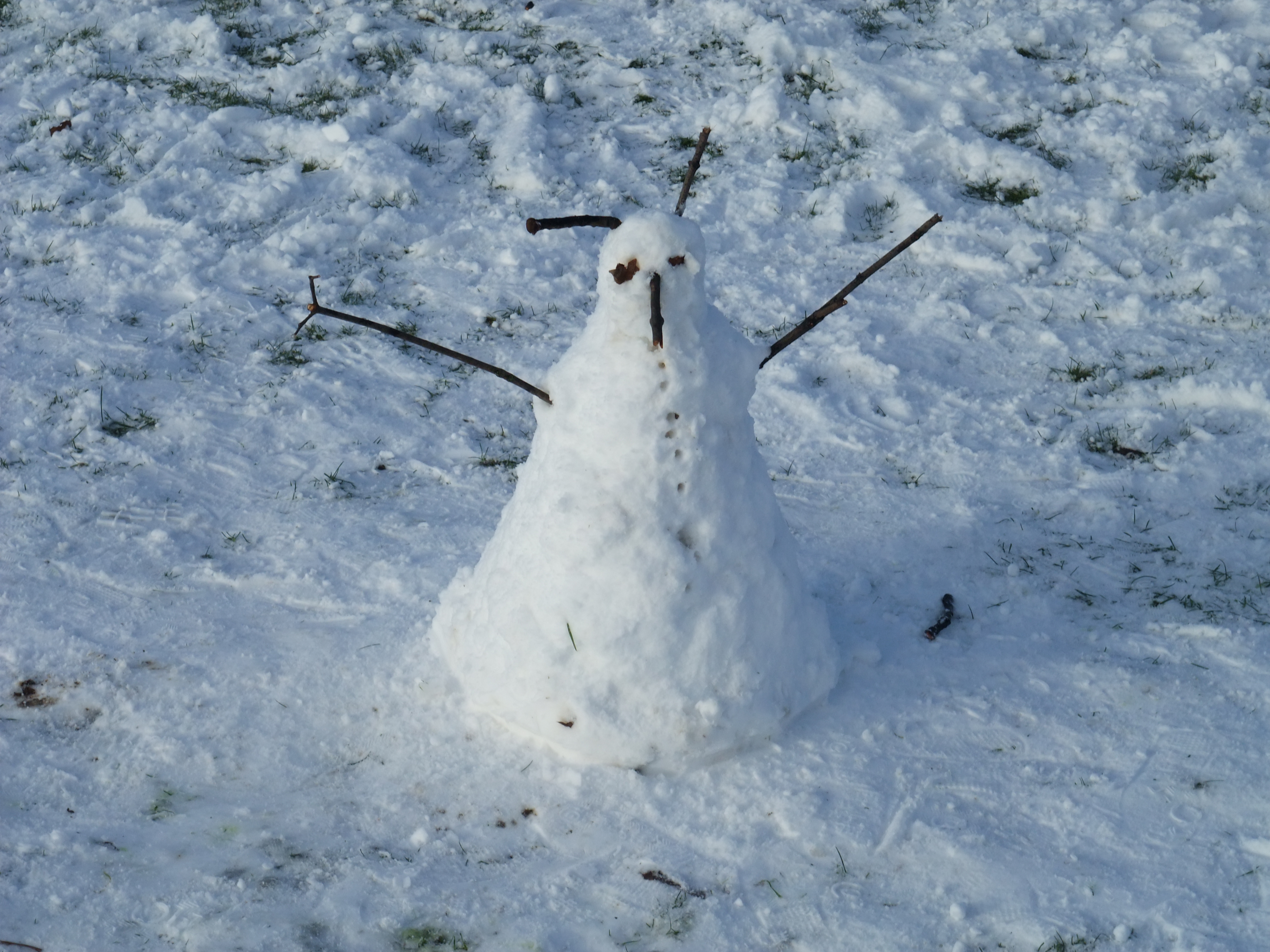
    One of my proudest achievements as a teacher, mainly because of what the students taught me from the experience, was having Tony’s class read Robert Pinsky’s translation of Dante’s Inferno. I expected them to hate it or at least be bored by it. The opposite. That’s for keeps. Which makes me wish I’d had Tony and his class, all pretty recalcitrant boys who I’d genuinely come to love, read Wallace Stevens’ “The Snow Man.” I know Tony would have taught me a lot about the last few lines:

    “…the listener, who listens in the snow,
    And, nothing himself, beholds
    Nothing that is not there, and the nothing that is.”

  • Hercules-Barrick

    Hercules-Barrick

    Ventured over for a hunt on what used to be one of my favorite spots in Hells Canyon.

    We waited until the Hercules-Barrick “exploration” mining operation shut down for “winter weather.” The last two years, the one time each season we’d hunted over there was interrupted by run-ins with mining operations. All this on public land, land we pay taxes every year to maintain. Land that was given to Idaho specifically for wintering ground for deer and elk. Land that many people I know feed their families from the big and small game harvested from that public land. Land that ranchers I know used to run their cattle on in the summer. Land that is now torn up by new roads and heavy equipment.

    Up high, where no motorized vehicles can go (or haven’t gone yet), we saw lots of birds and big game prints. Down low, where it’s pretty easy to get to, not so much.

    Down lower, the signs. Of things to come, no doubt.

    The gate at the junction of Camp Creek and Grade Creek roads, all on public land funded by taxpayers who are being told they can’t access their land.

    It’s worse than sad to see something you love destroyed, and then to be charged for it, and then to be told to stay off of it. Idaho needs to re-work its ancient mining laws: if mining operations close or inhibit access to public lands, taxes should be reduced accordingly, even if it’s only a few cents. Remember the Boston Tea Party? Judy Boyle is not my representative. And Chris Paul, CEO of Hercules, is a Canadian whose business Canada has banned from doing things in his own country for numerous environmental and human rights violations. If they get their way, Barrick, an even more vile non-U.S. offender, will buy the operation and staff it with Peruvians. The local community won’t see a penny. And all this waiting for the deportation shoe to drop with the incoming “administration.”

    We hiked out on Camp Creek, a road that used to be an old two-track terminating at a locked gate on Highway 71, one of the few non-motorized access points to the north end of the Andrus WMA. Now it’s a freeway for heavy equipment, with numerous drill pads excavated along the road. I used to finish great hunts reflecting on life and hunting and connections while walking down this road, and occasionally get interrupted by pointing dogs or busting coveys, bonuses reserved for epic days in the field. Now, it’s just anger, sadness, and maybe a few less savory thoughts.

    This is a bad sign. Mining operations are required to have a “Storm Water Pollution Prevention Plan,” and Hercules-Barrick put this box and a contact phone number (with a Saskatchewan area code) at a place that nobody is supposed to go. The box was empty. I called the number, and got a “Call cannot be completed” message.

  • The Fire

    The Fire

    “God gave Noah the rainbow sign,
    No more water, but the fire next time.”

    –A.P. Carter, “God Gave Noah The Rainbow Sign

    This summer, chukar country was on fire. All of the places, and more, that we hunt have been burned. North, south, east, and west of us. Like most chukar hunters, I wondered about the birds, how they were faring, if this year’s chicks were old enough to run or fly to pockets of safety. Bird numbers have been mostly good this season, but a huge chunk of our favorite spots are now toast.

    Most of the fires started from lightning. Much of the fuel that allowed them to spread, and to continue growing, is invasive annual grasses: cheatgrass, medusahead rye, and ventenata. The “range,” composed largely of extensive tracts of public land (mainly BLM), is now “currently defined by ecosystem dysfunction, social upheaval, and a warming climate.

    We want to point fingers, but that does little good. In many of these places, it’s too late to stop the takeover of these destructive annual grasses, brought here from far-away places by feed for cattle. The pre-livestock perennials that kept the range “healthy” (a relative term) can’t compete and — in many places we hunt — are already gone forever. Bitterbrush and sagebrush, two of the most important perennials for a host of creatures endemic to the range, can’t survive the increased heat, frequency, and duration of today’s range fires. Same with the native bunchgrasses. In some of my favorite former chukar haunts what once plumed vibrant seas of multi-shaded green and gold now is a monochromatic moonscape of charred earth. Yesterday we happened to find ourselves descending into a bowl that once was filled with sagebrush and numerous partridges but now, four years after a big fire there, was choked solely with 4-foot-tall dried grass that completely hid our dogs. Sage and bitterbrush rarely come back once they burn hot. The invasive grasses all but guarantee more frequent fires on the range.

    The obvious irony is that chukar love the fresh, abundant shoots of these invasive grasses. The fall rains that bring “greenup” signal good bird numbers in lots of places. Doubling this irony, of course, is that this beloved bird is itself invasive. So why do we care?

    The answer is obvious and needn’t be stated. Less obvious, maybe, is that an even bigger threat to these public lands is the continuous attempt by robber barons to transfer them to the western states. We’ve been able to continue indulging our chukar hunting passion, despite the fires, because of the abundant choices of BLM and NFS land in Oregon, Idaho, Nevada, Washington, Wyoming, Montana, and Utah. Closest to our home, thanks to Idaho’s repugnant trespass law of 2018, hundreds of thousands of acres adjacent to NFS and BLM land have been purchased and closed off, including (illegally) some public roads, by the notorious Wilks Brothers from Texas, a state with almost no public land. (Look on onX, for example, up the Middle Fork of the Weiser for “DF Development LLC” land, which is one of the Wilks Brothers’ land businesses.) The Wilks Brothers acquired much of their holdings by purchasing Idaho State lands, which the state is required to sell, which is what everybody knows they’ll do with any federal land that gets transferred to the state. Do you want to be like Texas, where you have to be rich in order to hunt?

    The latest legislative assault on public land is happening in Utah, in which a small faction of sycophants to the American Lands Council (funded largely by the Koch Brothers) is using unconstitutional boilerplate arguments paid for by taxpayers to argue that all federal land in Utah should be transferred to state control. The only way they’ll succeed is if the state’s constitution is amended, which is their aim. Most western states have an almost identical constitution which stipulates that citizens of those states “forever disclaim all right and title to the unappropriated public lands” in the state. Courts have, until now, rejected these lawsuits as unconstitutional, but with the shift in the composition of the U.S. Supreme Court, along with numerous federal courts throughout the U.S., it’s possible that one successful challenge — maybe it’ll happen in Utah soon — will lead to a domino effect vaporising federally held (i.e., truly “public”) land in the west. For anyone who uses these public lands, that would be worse than any fire. If you believe in contacting your state representatives to express your opinion, Idaho Wildlife Federation has made a snazzy form for sending an editable comment to Crapo, Little, Risch, and Fulcher that encourages them to disavow Utah’s current effort to transfer its public land to the state. I did it, and am sure I’ll get the typically condescending response from Risch’s office. Can’t say I didn’t try…

    For an excellent, recent overview of where we are and how we got here, see the video below, in which Walt Dabney, former National Park Service Superintendent and Texas State Park Director, discusses the history and future of America’s public lands.

    Finally, with regard to the Hercules project near Cambridge, which is now being called, by Hercules, the Barrick Project, foreshadowing a transition from exploration to actual mining, there’s more information. I personally haven’t been able to stomach going back to the area after my visit last year, but Leslie and I hunted across the canyon from it and were stunned by how many new roads they’ve carved into the publicly owned land there, mostly on the Andrus WMA but extending now into USFS land higher up. Perhaps even more dire than increased fire vulnerability or transfer of public lands to state ownership, mining rights threaten the actual earth itself. The Idaho Conservation League just released a comprehensive report on mining in Idaho, which details current projects and past environmental impacts of mining in the Gem State (click the image below to load the report). Like fire itself, which is both real and metaphoric, verb and noun, mining is something everyone who values public land should know something about and not take for granted.

  • Where They Are

    Where They Are

    [I just found this in my “Drafts” folder. It’s from two years ago when we were still looking for a place back in chukar country to move to. I thought I’d posted it but for some reason didn’t, probably related to a family emergency that, along with the person it centered on, passed about a year ago.]

    We drove nearly a quarter of a million miles looking for birds this season. I don’t have the exact figure. We hiked 51.4, which was at least twice what we did the previous season (I didn’t even bother keeping records), but more than 160 fewer miles than our last big season (2020-21). Those are all the numbers I feel like sharing now. Maybe next year I’ll geek out a bit more on that score.

    At the beginning of one of those long, multi-state drives, in December I think, we left our house at the ultimate northwest point of the contiguous United States and drove nearly 30 miles going 25 mph along the undulant serpentine highway fronting the Strait of Juan de Fuca (also known as the Salish Sea) before realizing that I had forgotten my boots. So we went back and got them. The fog had burned off on the redux. “Worth waiting for, huh?” it seemed to say.

    For years I’d wanted to hunt chukar in Nevada. And never had. So this year, we went down there, armed with some beta from a cyber-friend we ended up meeting for dinner in Winnemucca. We’d reserved a room, on his advice, at Scott’s Shady Court, and when we crossed its threshold we time-traveled back about a half-century. Our suite was big and roomy, and cheap, and the dogs loved it, but there weren’t any grounded outlets so I couldn’t charge all our shit. Anachronism much? Anyway, before dinner at the fabulous (for real) Martin Hotel, we headed to Wally World to buy licenses to add to our Idaho, Oregon, Washington, Montana, and Wyoming bird licenses this season. It was a typical Wal-Mart experience: walk around ’til you find someone who looks like they work there, ask for help, and have them ignore you but walk away and use their radio to ask someone to come to the _____ department and help a customer. The five minutes that elapsed before an associate arrived were spent by me thinking I should have just tried to get my license online. The young man entered the space behind the counter near all the guns and ammo (they lock that up now, too), and began logging into the computer. There was another guy with him, also with an associate’s blue vest and nametag with the smiley face on it. Together they appeared to will the keypuncher’s access to the system. Several minutes and dozens of keystrokes later, the keypuncher looked up for a brief moment, not at me but in my direction, and announced that he couldn’t remember his login information. I looked at him and asked if he could call a manager. “I am the manager,” he replied. The ensuing conversation made it clear that I would not be able to purchase a license at Wal-Mart that evening, but that I could come back at 8 a.m. the following morning when another manager who could probably remember his or her login would have taken over. On the way out I made a brief stop at the customer service desk for a second opinion, which verified the first one.

    At the Martin Hotel, sitting with strangers at the long family style dinner table, before our friend got there, while pretending to peruse the menu, we eavesdropped on our table-mates’ conversation about lining up immigrants, shooting them, and letting them fall into a mass grave. “Where would be a good spot for that?” one of the others asked earnestly. Then our friend arrived, and on hearing the account of the Wal-Mart license experience, was initially aghast but then said that unless we had a physical copy of a certificate showing we’d passed a hunter safety course we would not be able to buy a license in Nevada. It was my turn to be aghast, which I was; none of the other five states had such a requirement for people of our advanced age and inestimable experience. Chock this one up to an overabundance of faith and not doing adequate research: the next morning we drove north out of Nevada, our Silver State Chukar Virginity intact. As we crossed from Nevada into Oregon, Leslie said, “We should call it ‘No-vada.’” [NOTE: We’ve since figured out what we need to do on the license front, but have yet to make it there. Soon, I hope.]

    Like Moses, we wandered a lot in the desert looking both for birds and a new place to live. Wyoming was different for us, and revelatory in several ways. The red landscape around the Wind River range struck us positively, but the prickly-pear cactus stuck our dogs’ feet negatively. Still, after a wonderful morning in and around Lander, we did laundry in Pinedale and talked with an octogenarian man who’d raised ten kids in a log cabin nearby with no running water or electricity; each of his kids had long since graduated from a prestigious university and gone on to do big things. We camped at Ten Sleep Brewing Company, initially setting up in the wrong campground, to be kicked out by a rancher who owned what was the glitzy but empty level concrete pad expensive campground right next to the brewery campground but with no distinguishing signage. We found our sloped grassy/muddy tiny spot not long thereafter, which was okay. Better than okay was being awakened the next morning by chukar calling from a rocky outcropping above the brewery. The dogs were lit running through the network of red arroyos and over terrain that must have registered a lunar difference if they’d even paused for a second to contemplate. I’ve never hiked in anything more beautiful, but no birds were found by us despite a couple hard points by Bloom. On our way out of there, we (I) of course got lost, which I truly enjoy but Leslie does not. An unexpected joy, for us both, was that, while we sat pulled off to the side of the road, a FedEx truck passed us, braked, reversed, and the driver asked us if he could help direct us somewhere. His friendliness and easy-to-follow directions gave me a warmth for humanity. About thirty minutes later, we came to an intersection on the still-gravel road that we wanted to analyze, and — you guessed it — the same driver came past us, stopped, reversed, this time getting out of his truck and walking back to us in case, I don’t know, we might have something as novel as a map to look at (nope; just the “smart” phones). Anyway, he suggested the best route to Cody, and we were on our way, but not before my typical question to strangers in chukar country: “Do you by chance hunt chukar?” He said no, he didn’t have time, which I thought was a good answer, whether or not it was true.

    As it’s no doubt obvious by now, we’re both beerhounds, and the more cynical out there might view our house-seeking/chukar-hunting itinerary as a thinly-veiled excuse to visit brewpubs throughout the intermountain west and Pacific Northwest. Joints including but not limited to ones in Prineville (OR), The Dalles (OR), Walla Walla (WA), Lewiston (ID), Clarkston (WA), Ontario (OR), Mitchell (OR), Ten Sleep (WY), Sheridan (MT), Lewistown (MT), Ennis (MT), Victor (ID), Spokane (WA), Baker City (OR), Enterprise (OR), John Day (OR), Salmon (ID), Driggs (ID), Olympia (WA), and Troutdale (OR) sold us IPAs. And, in the ill-fated Winnemucca leg, we were gifted with some fine brews by Alectoris Aleworks! With Hells Canyon Beer about to embark on its third iteration, we realize we actually might be a Beer Club with a Chukar Problem.

  • But They Do

    But They Do

    “I didn’t know you were left-handed” my father said to me one day while we were having lunch. I sat there not knowing how to reply. I was never his favorite child, something that I’d learned to accept but was stunned at his new realization after being his daughter for over 50 years. 

    A few weeks later, I told my sister about it and she said it’s because he’s crazy, but this incident was a handful of years before his dementia took over his brain. I think he just didn’t understand how his words could make me feel so not very important. 

    I admit that after my mom died 13 years ago I didn’t call my dad as much as a daughter probably should. Instead, I would wait for him to call me first but he never did. Sometimes months would go by without any communication with him, and the phone call or birthday card in the mail that I was hoping to receive never came. My twin brother, who also was not my father’s favorite child, didn’t receive a birthday call or card either. I don’t know why we were both disappointed.

    Yesterday, I loaded up the dogs in their crates in the back of my car and left home for a solo hunt to clear my head from recent events. The morning sun was just peeking up from behind the snowy mountain range in the distance. I don’t like to drive at dawn when elk or deer sometimes cross the highway heading out of town but I wanted to get an early start. It was a long drive mostly on dirt and thick gravel for just over an hour. Rarely, in this place where both Bob and I only try to hunt once per season, we’d hardly ever see someone else parked there but I was worried anyway. I was relieved nobody else was there. 

    My hunt started with a short but very steep climb. As I weaved my way through the sage and tall ancient looking antelope bitterbrush, the air was dead silent and the only sound that I could hear was my own breathing until my Garmin beeped that one of the dogs was on point. Just as I reached the top of the climb Peat was just a few yards away. I walked towards his direction holding my breath and tried to walk as silently as humanly possible. I then heard the sound of wing beats as the covey busted and I got a glimpse of a group Hungarian partridges with their rust-colored tail feathers catching the light. They flew down towards the road.  I didn’t want to chase them back down the hill so we continued looking for other birds.

    A few minutes later, Peat and Bloom both went on point at the same time in opposite directions. Peat 75 yards to my right, Bloom 200 yards away at 10 o’clock. I headed to Peat first because it’s almost always a sure thing and just as I got to him, a different covey of Huns busted just out of firing range. Wild busts seem to be the common theme from my 16 hunts this season. I squinted down at my Garmin and Bloom was still on point, so I headed his direction and Peat quickly moved the same direction. I watched Peat put on the brakes and stop motionless after he saw Bloom pointing. Trying to guess which direction the birds might fly, I got into position. They busted and I was surprised and elated they were chukar.

    Everything seemed like slow motion as I mounted my gun and picked out one bird and hit it as it flew high from left to right. It cartwheeled to the ground and Peat retrieved it to me but it wasn’t completely dead. I held it in my hand and squeezed it hard until it stopped breathing and then stuffed it into my bird pouch. Immediately, an overwhelming sense of sadness swept over me for that chukar. The last time that I cried after killing a bird was seven years ago when I shot a ruffed grouse out of a tree. It was my first time hunting with a shotgun and it didn’t feel right to do what I did at the time but did it anyway. Since then I’ve never shot a bird out of a tree. 

    The dogs and I continued to hunt, finding more birds but I passed on a perfectly easy shot before realizing that I didn’t want to deal with more than two deaths in one week. The other death this week was my father, who died last Sunday at the age of 86.

    On the drive home I’d remembered the advice from a very insightful girlfriend this past summer who has three children of her own. I’d asked her if she had a favorite child. She said it depends on what’s is going on with them and said something like, “The reason your dad hasn’t given you much attention over the years is because he knows you are loved and you are okay. Your sister gets all the attention because she has never had that in her life.” My friend was right. My dad wasn’t a bad person, he just didn’t know how to treat each kid equally.

     When I arrived home, Bob was anxious to hear how my hunt went. I told him that I’d never seen so many coveys of huns and chukar in one day. He said, “You don’t seem very happy.”

    I came to the conclusion while out there hunting that it wasn’t killing that chukar that made me sad but instead I was thinking about my dad and the fact that I really never had a father. Two years ago when we moved back to chukar country it was partly to be closer to where he lived. We get busy with our daily lives, I regret we never got to know each other. 

    Bob said look up the poem “The Mower” by Philip Larkin. I did but found another poem by Larkin that seemed more fitting in my moment of angry grief called “This Be The Verse.” Look them up if you feel inclined. I think some of you might relate to them.