Blog

  • Sea Change

    Sea Change

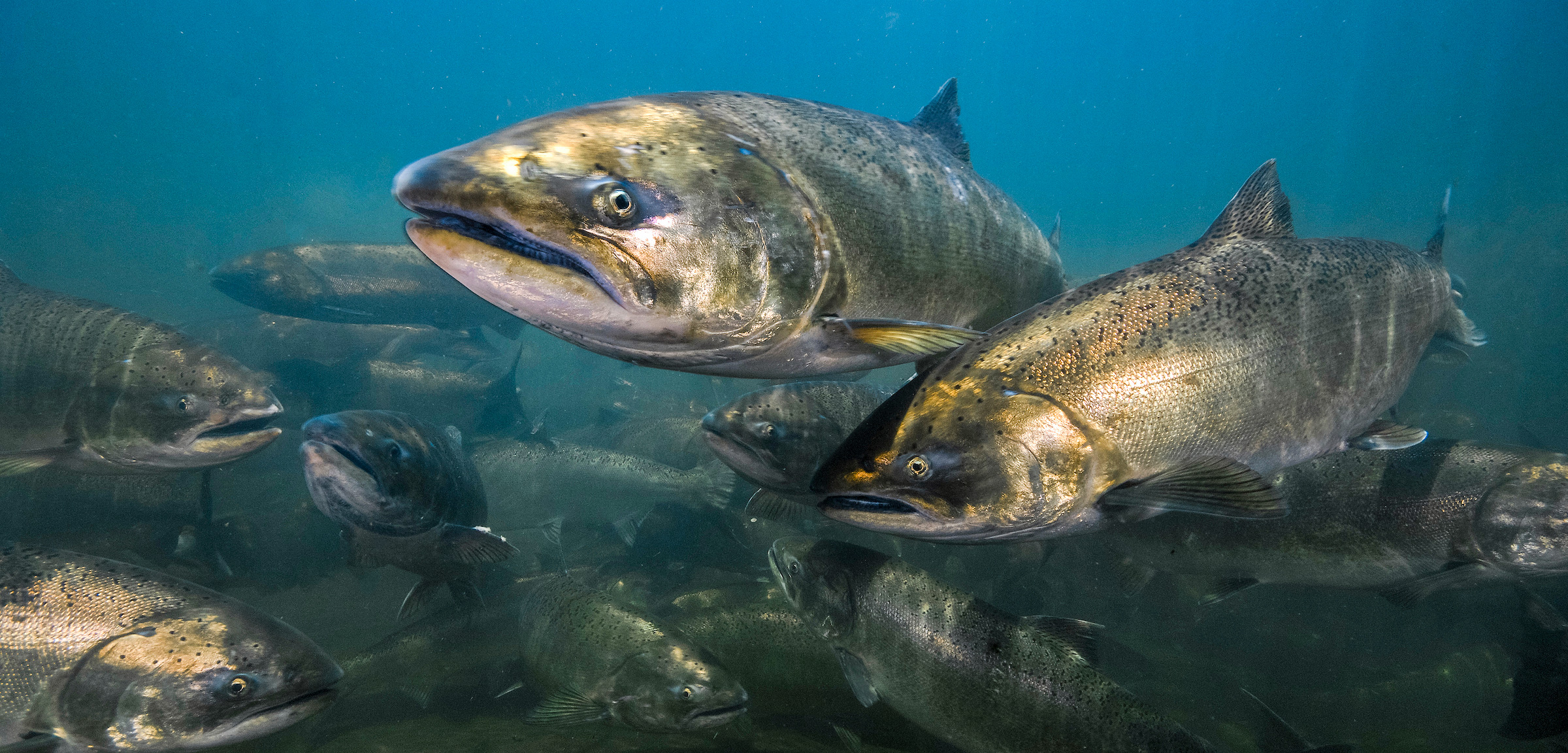
    appointed places set in motion like seasons. We are like salmon
    swimming against the mutation of current to find
    our heartbroken way home again, weight of red eggs and need.

    — Gloria Bird, (Spokane), from “Images of Salmon and You”

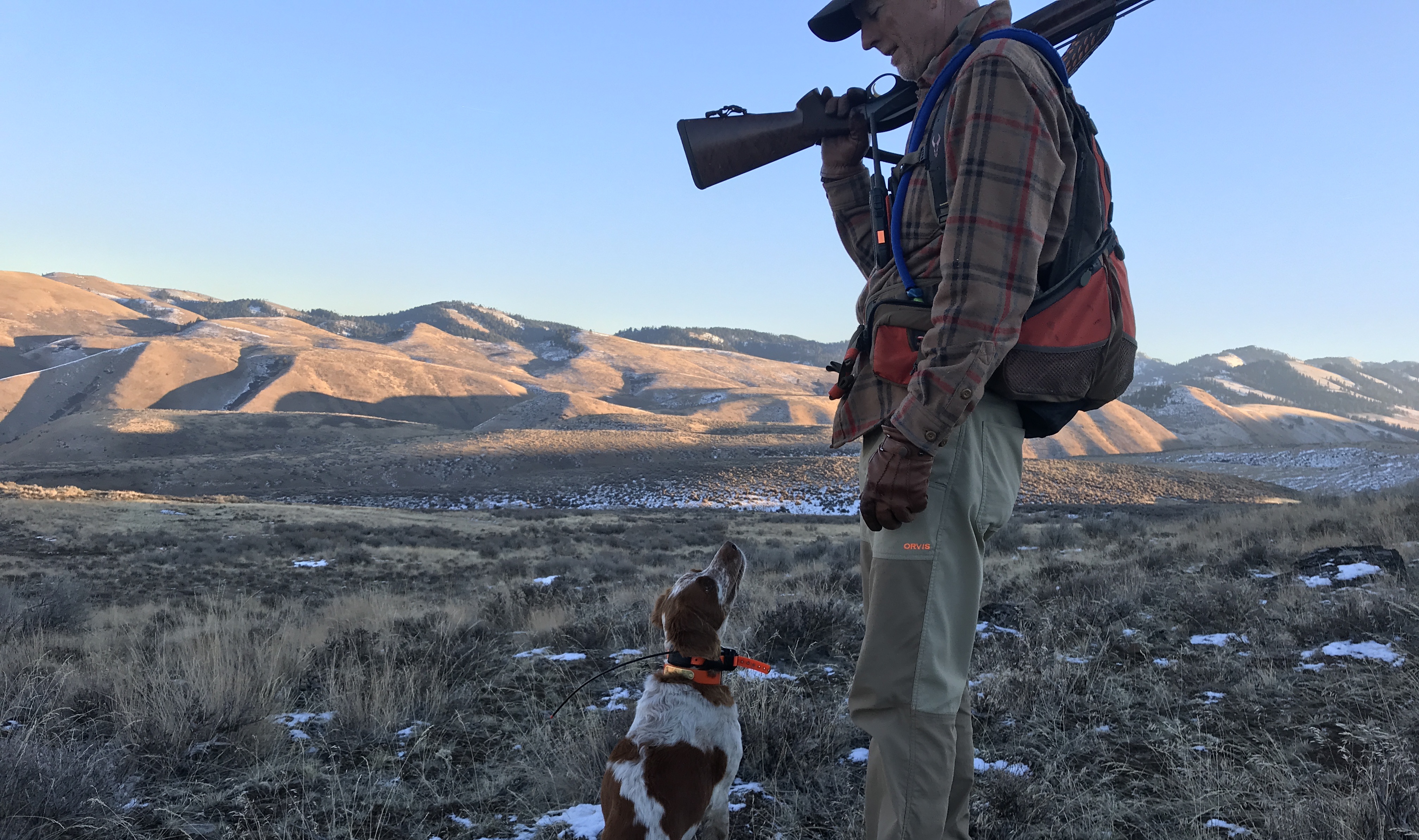
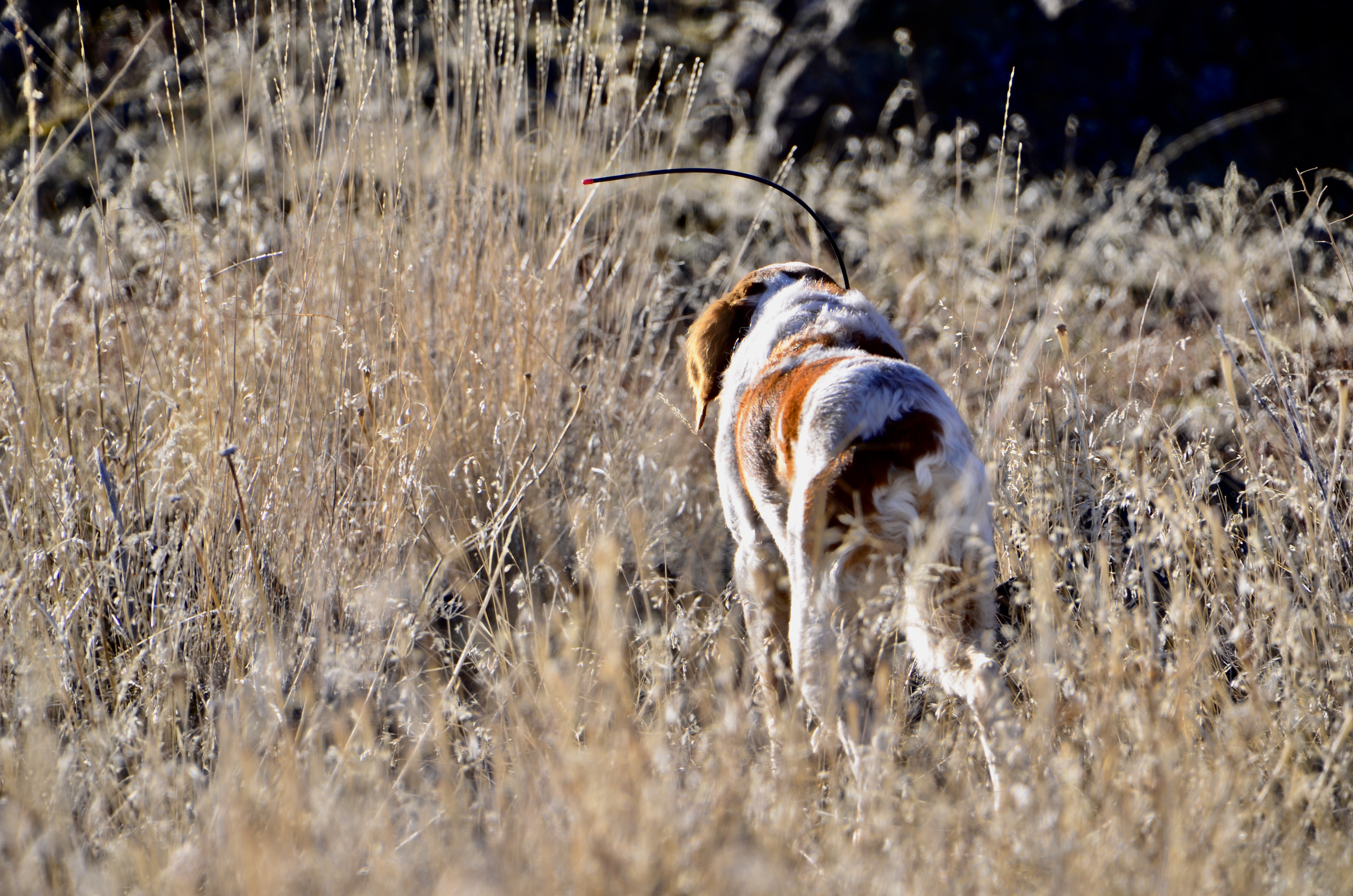
    I grew up on the Pacific. 21 years ago I moved to Idaho. I thought I’d work and live to a riper age here than it appears I will. We’re moving closer to the salt, lucky to have found work, but leaving the easy access to chukar we’ve enjoyed for so long. I’d be lying if I said I wasn’t sad to imagine next opening day far away from the high desert. It’s been the best part of each year for more than two decades now. I won’t get nearly the same number of days in the field bitching about medusahead, seeking jouissance through the sight of a pointing Brittany’s ears barely visible above the bunchgrass just below the ridgeline. Inflections or innuendos? There are lots of ways to look at this. Most of them are good.

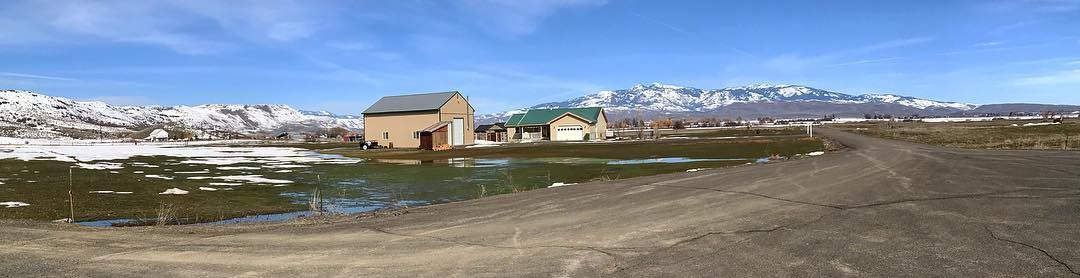
    So we have to move, sell the house and shop we’ve caressed and the soil we’ve cursed while praying for sprouts (let me know if you’re interested!). Never in my wildest dreams, before I moved to Idaho, did I think I’d live on 5 acres with a view of 5 mountain ranges, where I could hit a 4-iron across my property, or where we could let our dogs run around and eat all the horsepoop they could and not worry they’d get flattened by a Hummer. We’ll miss the nearby Weiser River Trail where our dogs’ pads get an almost year-round, traffic-free conditioning, complete with quail and grouse and turkeys (and the occasional bear, mink, and otter). The brewery will get packed up, too, and I’ll miss that until we can — at some unknown point — take it out of storage.

    A good home for a bunch of years
    The sky’s the thing here, even though it’s only Idaho
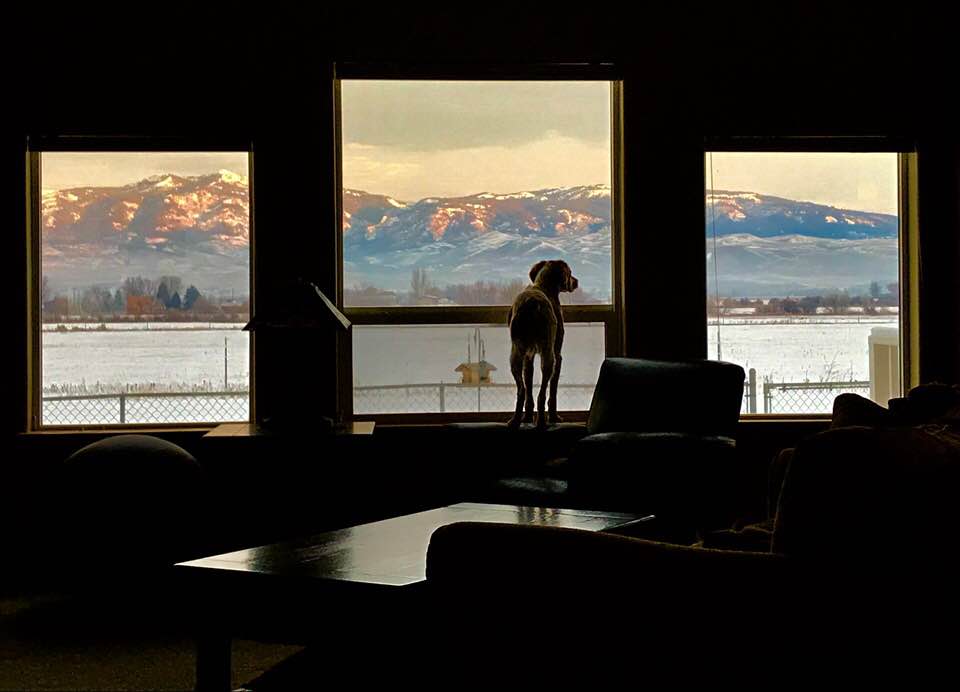
    We’ll miss this view
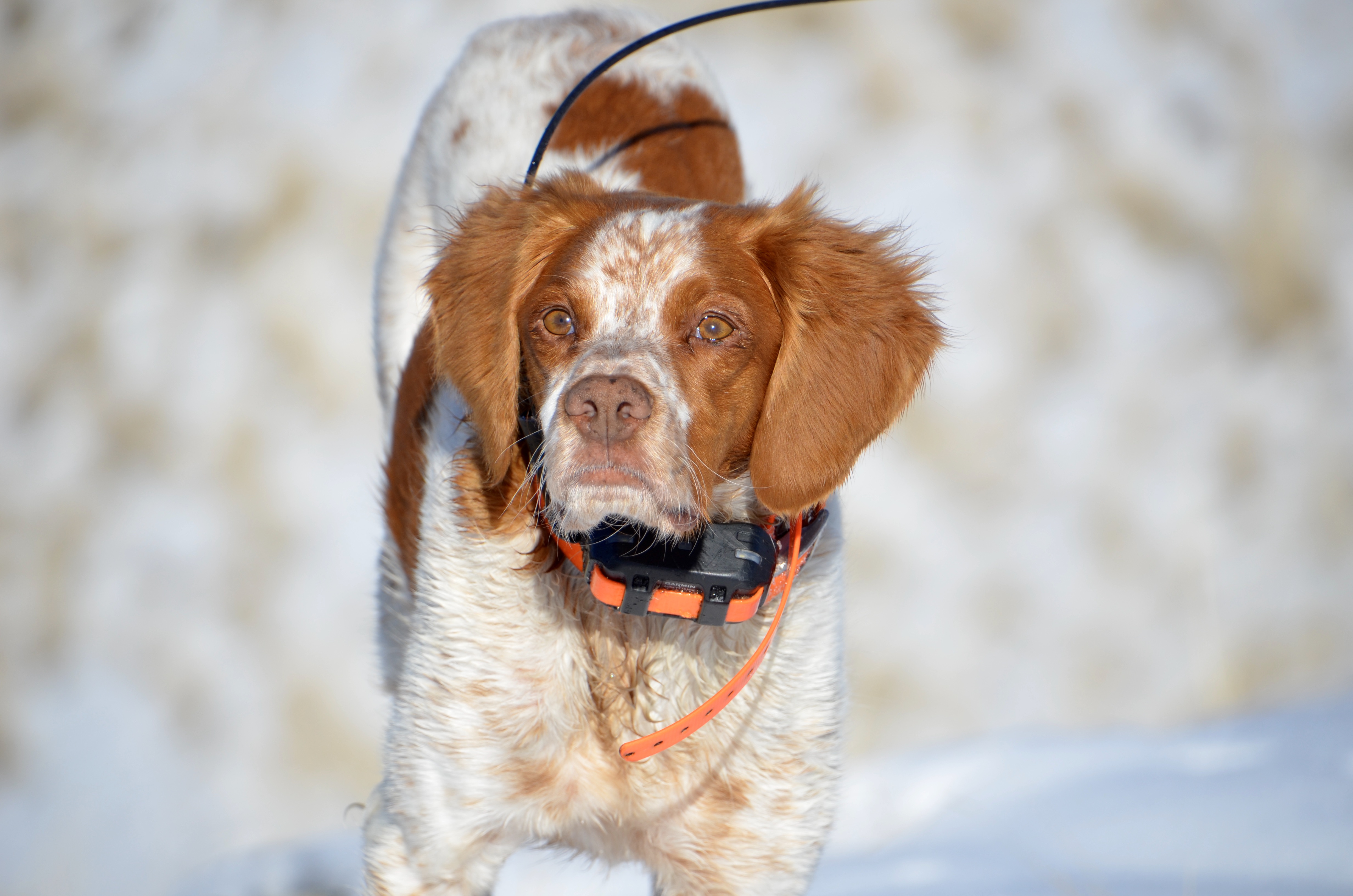
    So will Peat

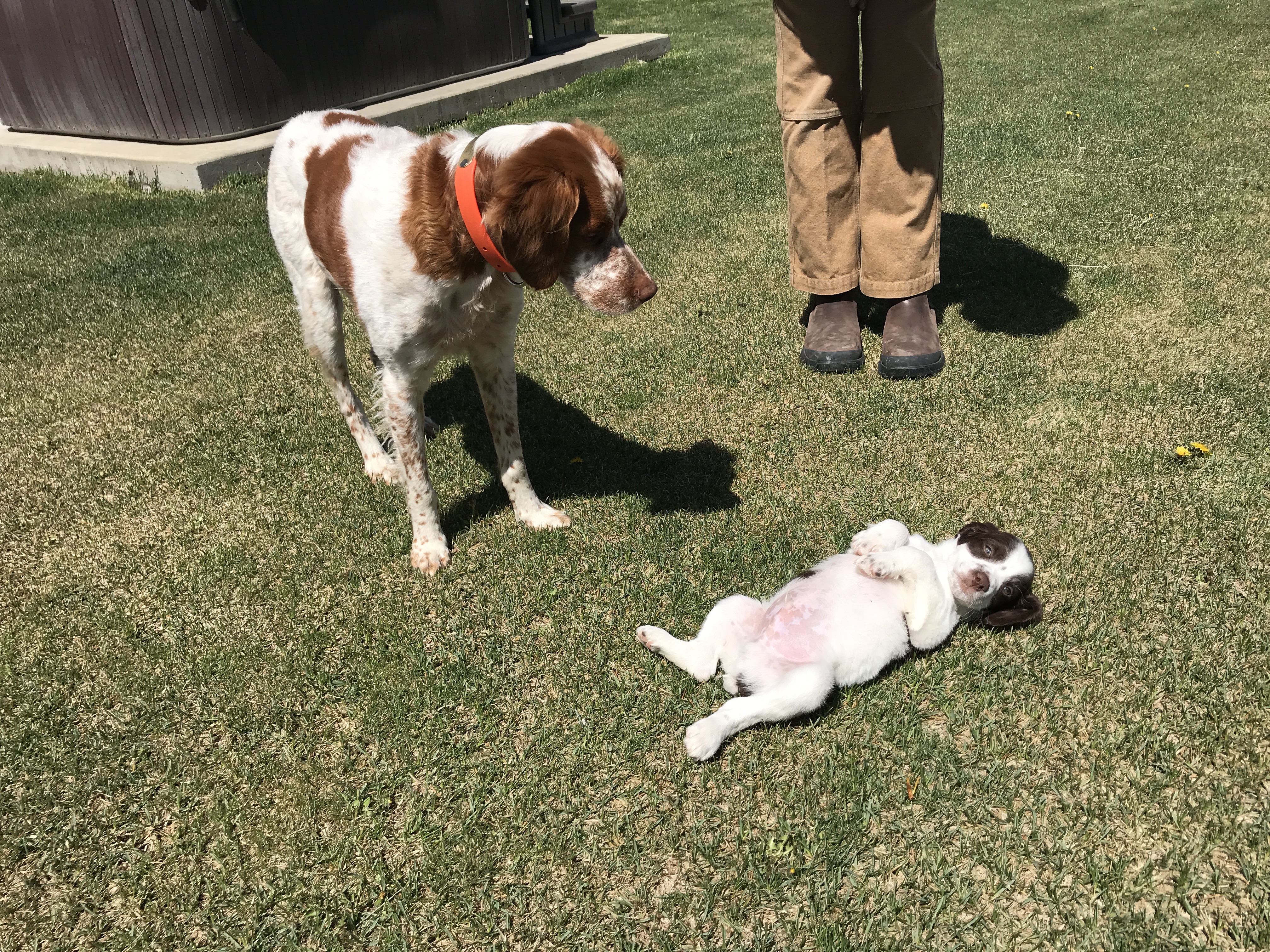
    Chukar Culture will continue. I keep thinking of Frank Zappa’s gem, “Jazz isn’t dead, it just smells funny.” I don’t know how that connects, but it does. Maybe it means what I want to post here will smell funny for those who’ve enjoyed (or tolerated) our weird diet of chukar-scented prose. Fishy, maybe? Leslie hopes to head east with the dogs often to look for birds (hopefully not in the same way seen in Guterson’s East of the Mountains). And we’ll have the new pup, Bloom, to work into the mix, which is very exciting and promises to provide some interesting narratives.

    Bloom?

    In the meantime, we pack and strategize and plan and hope and argue and make up and hike and walk and run and fret and eat and drink and look for places to live up there (there aren’t many, sort of like here). Just so you know.

  • Dreams

    Dreams

    I can’t imagine being an insomniac; sleep has never been a problem for me. Almost every night like clockwork Bob wakes up around 2:30 or 3 and turns on the bedside lamp and starts reading a book and will read for at least a couple of hours. Most nights, I’ll wake up, glance at him and roll over and go back to sleep, but last night I woke up and stared at him in the glow of the light. I squinted to see what he was reading because it’s usually something different each night. He was reading a book of poems by Wallace Stevens. He turned off the light and said, “I remember the poem.” I said “What are you talking about?” He then started reciting the poem out loud and it ended with the words:

    Of the January sun; and not to think
    Of any misery in the sound of the wind,
    In the sound of a few leaves,

    Which is the sound of the land
    Full of the same wind
    That is blowing in the same bare place

    For the listener, who listens in the snow,
    And, nothing himself, beholds
    Nothing that is not there and the nothing that is.

    I whispered to him so that I wouldn’t wake up Peat who was nestled in between us still sleeping. “That’s a really lovely poem, thanks for sharing.” I tell him goodnight for the second time and I toss and turn and try to get back to sleep and start thinking of frost, the boughs of pine-trees crusted with snow and junipers shagged with ice and spruces rough in the distant glitter. I start thinking about how much I miss being on the mountain, so I start retracing my footsteps, my path up and down, one slow step at a time, the upland version of counting sheep I suppose, and think about a season that went by so fast that it almost seems like it never happened. I turn over one last time and reach over to stroke Peat on his back. I can hear him sigh, and then I fall asleep and start dreaming.

    I dream of zigzagging through miles of golden bunchgrass, lichen covered rocks, and dense Antelope bitterbrush and sagebrush forests so thick where sometimes I’d lose track of Bob and Peat. I dream of traversing huge wide open landscapes and the unknowable vastness of it all, and creeping across steep scree slopes while trying not to slip, and how it always seemed that Peat would point on just the other side of a barbed wire fence that I’d have to cross over or crawl under. I dream of those hot and smoky and super dry early season conditions where I ran out of water a couple of times and that covey of chukar that busted wild over my head and we didn’t even know it until we got home and saw the photo. I dream of borrowing beautiful young Custer and how much fun and exciting it was to hunt with two dogs again and also to hunt with Peat’s dad, Sioux, the Mouritsen family, and other Sunburst Brittanys.

    I dream of trudging through knee-deep snow covered with hoarfrost just to get to the top of the ridge and not finding any birds after all the hard and painful work just to get there. I dream of those staunch points and retrieves, and missed shots because my fingers were so bitterly cold to the bone that I couldn’t take the safety off when the birds busted. There is also in my dreams that somber exhilaration when everything finally does come together. I dream of Bob finding a matching set of deer antlers that are such an amazing part of nature, and on another hunt seeing a Peregrine Falcon cruising overhead just before it swooped down and carried off that chukar Peat was pointing. I dream of hunting in late November when the sun sets so early and seeing the pink alpenglow on the distant mountains and how I was so happy and relieved, still over a mile from the pickup, that Bob was the one who’d packed a headlamp in his hunting pack .

    I dream about busting through the thick brush in a deep draw and being tripped, tangled and caught by brambles and branches, and on so many hunts in December and January sliding on my butt on the icy, slick, and muddy slopes and watching Bob do the same thing.

    I dream about the old rattlesnake skins on the mountain left behind like ghosts. I dream about those yellow shotgun shells Bob so lovingly made for me with just a wee teaspoon of Angus’s ashes carefully put inside each one so I could spread his ashes in all of my favorite hunting spots. And the favorite thing I dream is how, just before going to sleep after a day on the mountain, the sweet but spicy and bitter smell of sagebrush lingers on Peat’s fur and which I inhale when I kiss and bury my face in his head and neck.

  • Box Score

    Box Score

    My 2020-2021 stats say something and nothing, like most stats about most things. You had to be there. Still, you get the idea. And these are mine, not Leslie’s. She tracks hers like E.F. Hutton, the old-fashioned way, with a pen or pencil. I use a computer, which takes the data from my Garmin Alpha 200i and Peat’s TT 15 Mini. I’m sharing this to show what a below-average shooter who likes to hike with dogs and doesn’t really care how many birds end up in his vest (despite always wishing he got more) did in a rather crappy year for birds in this area. As mentioned before, despite all the downsides, we still were compelled to exceed our average miles, time, and climbing each hike, despite being a year older.

    Total hunts: 49
    Total miles: 256
    Total duration: 182 hours
    Total ascent: 76,000 feet
    Peat’s total miles: 805
    Peat’s total ascent: 228,000 feet

    I have shooting stats, too, but they’re too embarrassing to share. Let’s just say if this were baseball I’d be one of the leading hitters in the league. Let’s just say that. Next year I hope to break into Ted Williams territory (for the first time ever). If there is a next year.

    My poor shooting means I created significantly fewer bird souls (and vacuum-packed galliform meat) this season compared to last, which is okay by me. I’m not in it for death. I did, though, not recover way more downed birds (9) this year compared to last, which disturbs me greatly. I hate losing birds. It was one of those years. At least two hunts ended prematurely because Peat and I couldn’t find a bird we saw fall, and I lost heart. Not finding birds doesn’t make bird souls. It makes bird ghosts, un-righted wrongs.

    Overall, we didn’t make quite as many outings this year as we did last year, which is weird since I was unemployed this season and was teaching full time last season (we did, though, leave chukar country for the mountains for late September/early October). We mostly avoided weekends, thinking we’d see fewer others, but it didn’t really work out that way. Covid, I guess.

    Peat responded to becoming a solo dog well, significantly upping his range, average miles per outing, and climbing. In his first five seasons, he spent much of each hunt backing Angus and watching the Old Warrior work, and — when things heated up — he’d shift into higher gear. Those first five years, Peat averaged about three times our mileage. This year, he averaged almost four times what we hiked, which is a big overall increase for the little guy. He weighs 34.5 pounds and has femurs smaller than most carrots. I could write a lot more about how Peat did this season, mainly because he was under my microscope much more than ever, but I won’t. I’ve already dealt with that. He’s not Angus, but that’s not a dig. Every dog’s different, and I love Peat more than a million words could convey. And that’s really what matters to me, and to Leslie.

    So that’s what I did if anyone wondered. We do what works for us, and improvise to figure out what that means. Everyone else does the same. I know there are folks out there who hike twice as far and long and say they shoot 75% ( I can’t imagine making 7 of 10 shots on chukar, where we hunt anyway). Yesterday someone told me his son kills at least 200 chukar a year, and someone else out there (you know who you are) told me about someone a long time ago who failed to kill 1,000 chukars in one season by just a few. To each his own. We’ll show our birds every once in a while, but try to focus on other things that mean more to us than lifeless trophies.

    When I think of season highlights, I think of some really peaceful, beautiful moments in the Steens, where we camped out of sight of any lights in late October. We saw lots of birds of all kinds, not just chukar, and endless oceans of sage and piles of basalt clothed with unreal colors of lichen. I think of stopping on the mountain overlooking the Blitzen River and getting a bunch of burst-ripe juniper berries that I brewed my best beer ever with a couple months later. I think of Peat working like a fiend for more than 30 minutes to find a winged, running chukar and bring it back. I think of near-hypoxic ridge-crests. I think of raging, angry wind and thoughtlessness. I think of Leslie making two unbelievable shots like she was Annie Oakley’s sister. I think of finding an elk shed in exactly the same place I found one the year before, the only two elk horns I’ve found in 20 years of hunting. I think of missing lots of easy shots and getting furious with myself and seething about it for too long before realizing how f-ing stupid that was, especially because the birds got away and that made me glad. I think of getting to hunt with Sam again and each getting a bird out of the same rise. I think of the times I saw Peat but thought he was Angus. I think of hunting with and babysitting Custer, Angus’s nephew, for several weeks and how you can really see genetics in dogs. I think of the generosity of Gabe and Katie and their great kids and amazing dogs. I think of finding dozens of grasshoppers in a chukar’s crop. I think of the incredible smoked chukar chili we ate, and the risotto, and the pot pies, and the Thai food with partridge meat. I think of water, in all its forms, and how without it this wouldn’t be possible. I think of the impossibility of a squeaky surprise of pulsing primary feathers on a single erupting at my feet. I think of watching a live chukar flee and tracing it with the bead at the end of the barrel and triggering the shot and instantly watching it fold as its soul gets released and its body falls like a rock to the ground. I think of whether I can still do that, and I wonder. I think of the lives I took and thanked for that, and was it enough. I think, for Peat, and Angus, and even Glenna, and probably for the impending Bloom, that this is by far the best thing in the world for them, and that watching them — from our position as nearly useless humans when it comes to locating this prey — is a miracle that makes life good. And I think I’m already looking forward, with the same excitement and the same ambivalence, to next season.

  • Reason

    Reason

    If one speaks it should only be to say, as well as one can, how wonderfully all this fits together, to indicate what a long, fierce peace can derive from this knowledge. — Barry Lopez, “Children in the Woods”

    And then a Plank in Reason, broke… — Emily Dickinson, from “I Felt a Funeral in My Brain”

    Not recognizing but trying to recognize the wrinkles on my hands tells me something I don’t want to know but know too well: my childhood is long over. The new year began with radically different challenges for me than the last, and an ennui I can’t recognize and don’t want to. So what? Does it all fit together, wonderfully or not? Does seeing an integration in one’s life create peace, fierce or otherwise?

    I grew up with some great influences I wouldn’t trade for anything. Parents who I think unwittingly complied with Lopez’s notions about how to speak to children in the woods; teachers who provided similar tools; shelves full of LPs that hammered me with another plane of existence entirely, infecting me with instruments of utopia and war and peace: these things and more fit together because I’ve allowed them to, and the fact that I see that they do is wonderful in itself. But where’s the peace?

    Bird hunting, because it requires (the way I want to do it) integrating a dog whose very being makes me understand better than anything else Emily Dickinson’s obsession with death (others’ and hers), has also made me really pissed at time and gravity. How much longer will I have the muscles to walk uphill? There was an old guy in my old neighborhood in Boise who used to be a chukar hunting fool. He walked like a fool, every day, rain or shine, a walking stick in each hand and a fetching houndstooth Tam O’Shanter on his head. Often I wanted to yell at him, “You’re nuts!” He wasn’t strong enough to hunt chukar anymore. I wonder what he thought he was training for, or if he was just trying to cheat death. I still don’t get it.

    I think my season is over, but I might get out another couple times before the end of the month. My log shows I climbed more and hiked farther than ever this season, and I wonder how that’s possible, but — surely — am grateful to have been able to have done that. But lots of things were different this year, and it sure felt more segregated than integrated. For whatever reason the parts didn’t jell: Peat had the big seam to cross and figure out how to hunt without Angus; I didn’t recognize what we were doing without the old warrior, especially at first; Leslie had to learn how to hunt without the best partner, and we fought over that; Medusahead seemed to have cropped up overnight in places it didn’t exist last season; bird numbers were way down; shooting steel seemed like a good idea until I literally hit nothing for weeks; we ran into more chukar hunters in one week than in the last decade combined; I was no longer a teacher and had become a ______________.

    I already wrote about the 2020-ness of 2020, so I guess this is just more of the same. Sorry. The new year, and the promise of a new administration and vaccinations and improving health and economies and weather and the plunge of Twitter from ever-present consciousness loom as a great array of “I’ll-believe-it-when-I-see-it” things. Maybe all this froughtness is just my response to seeing that I’m in the group that won’t get a vaccine until June. That’s probably it. But it still feels like a disintegration still happening in slow motion. Chukar hunting, this season, has not been the antidote it was once. There’s been little there there.

    It seems, though, that in a way there is in fact integration going on here, although its wonderfulness is open to debate. It all is what it all is. Do we even have a choice to refuse fitting things together? I think it was John Lennon who said, “Life is what happens to you while you’re busy making other plans.” He would know, right? I look out the window, and notice that seventeen straight days of f-ing frigid fog is lifting just before Beer:30 and I can see my old friend the mountain. I have a headache and am worried for the thousandth time I have Covid. Leslie’s sitting near me reading a book of words about words and I can’t tell you how happy that makes me. 73 quail are eating us, to our delight, out of house and home. The fire’s about to go out but there’s more wood on the porch. Dinner is coming (“Garden burgers AGAIN?!”). Peat sits on the other side of the dog door in the garage waiting insanely for his half cup of kibble. Twenty-six miles northwest chukar are eating as much of the fresh blades of winter grass as they can, if their crops on the last batch we butchered are any indication.

    Sense might be breaking through. Peace.

  • Done

    Done

    Cleaned the last birds today. The wind here is ice. It’s our millionth day in a row without sun. We hunted every single possible day we could this season, except for the penultimate weekend when we both were sick. We literally outdid ourselves. So did the dogs. Angus is a miracle. I think he’s related to Ponce de Leon.

    I can’t wait for next season. There’s a lot to think about, though, and stuff to do in the meantime. It’s important, but will be very hard, to stay positive. Those who know me understand what I’m talking about.

    So for now I’ll say it was my best season in many ways. Coming back after last season’s back problems, and without “training” last summer (sitting in a drift boat doesn’t do much for one’s physical fitness), our average hunts were bigger in mileage, duration, and elevation gain than in any previous season. To say that at 57, after doing this for 20 years, I think is pretty lucky. Maybe it says something about desire. Maybe it just is.

    Still, I noticed some things this season that weren’t all good, which I’ve mentioned before. Medusahead continues its literally uncontrollable spread-and-destroy blanketing of the range in southwest Idaho and eastern Oregon, and other noxious players are rapidly adding themselves to the list. Bird numbers here — I don’t care what anybody says — are down. The number of chukar hunters using ATVs down here continues to climb. Chukar hunting is my favorite thing to do, but it’s becoming the thing I worry about the most. That sounds silly. But it is true. These birds are pretty resilient, but they’re no match for what’s happening to their environment. Chukar are non-native, so maybe it won’t be such a great loss. But they’re in the same boat as the sage grouse and sharp-tailed grouse in these parts, whose numbers are nearly gone (Fish & Game’s last count in 2016 of the Midvale sage grouse lek totaled 2 — two — birds*). We need to do better by the wildlife we all devote our recreational spirit and finances to.

    *From Idaho Fish & Game’s last statewide upland game report, from 2017 re: Sage Grouse in Washington County: “A report documenting seasonal distribution, habitat use patterns, productivity, and survival rates in Washington County is available. Washington County is unique because it is isolated from other sage-grouse populations and habitat; the land is highly fragmented and primarily under private ownership. West Nile Virus has surfaced annually in this area and much of the habitat has been converted/developed to ranchettes. The Washington County population will likely not persist within the next 10-15 years.” [my emphasis; p. 46]