
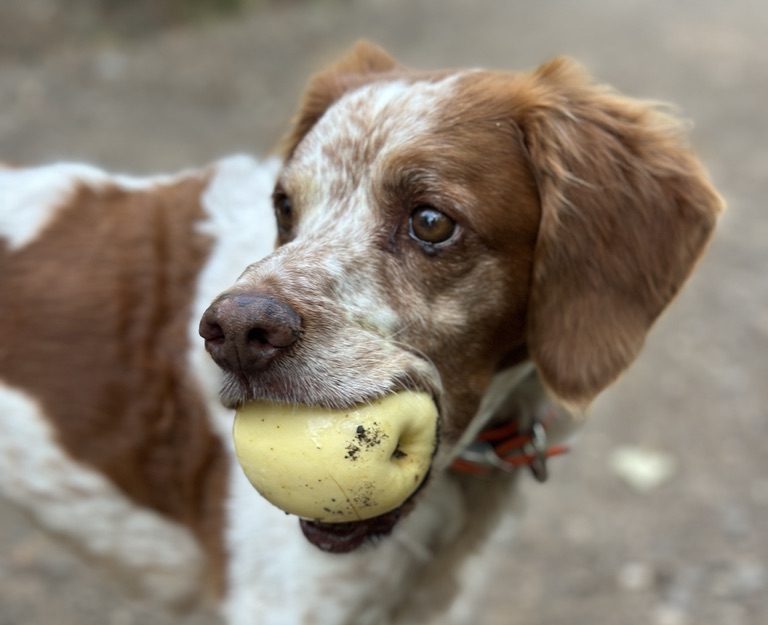
Anyone who’s done this for a decade or more has watched a dog get old. Age, or agedness, is relative. Glenna only made it to 10. Angus 13. Peat turned 11 on April 2. Even though he’s still “going on two” we think he might be losing his mind. With all of the obvious (or so we think) parallels between what’s happening to our own bodies and minds and what we observe happening to our dogs’, we attribute changes in his behavior simply to age. Naturally.
We’ve been lucky with Peat, comparatively speaking, as have we with ourselves. Today, he’ll be anesthetized for some vet work, but nothing major. By Peat’s current age, Glenna had been dead for more than a year and Angus had started to show signs of the cancer that killed him. Peat’s had his share of warrior wounds (torn pads, barbed-wire-induced gashes, etc.), but — knock on wood — nothing extremely worrying or unusual. Like many older dogs, his body is increasingly covered with lipomas and skin tags, and his mouth is a cesspool, with breath that even a mother could never love. And his teeth — well, he’s had some pulled for rot and we expect more today. I take the blame for not being a better dental monitor. You’d think I’d learn.
What keeps me up at night, though, is wondering how his mind is doing. Or what it’s doing. Thunder and, more so, fireworks, have always scared him, but this year seems far worse for him. So much so that his nightly routine, even when the skies are clear and there are no loud noises nearby, features him burrowing into the back of our bedroom closet, burying himself as far from reality as possible. It’s the closest thing to attempted doggy suicide I’ve seen. There are many stable things about him still: his constant obsession with food, his playfulness, his alertness and barking at anything he deems unusual or out-of-place, his daily morning ritual of coming into my closet to smell whether I’m putting on hunting clothes, looking up at me with plaintive eyes that make me want to collapse from love. But, probably projecting, I wonder if changes in his behavior are evidence of dementia.
His physique remains young. We’ve done a good job keeping weight off of him, but the few times he’s had a vacation from us and stolen anything and everything from his hosts to eat (even though we warned them he’d do exactly what he infamed himself by doing) we’ve picked him up noticeably heavier. His muzzle has grayed a little, but it’s hard to notice when you’re with someone every day. Strangers seem amazed he’s as old as he is.
We worry we’re forgetting things more easily: words, names, experiences, why we walked all the way across the house to get something that — when we get there — we can’t remember. And then we see Peat seem to forget he’s eaten already, or see him exhibit a new habit like his pre-bedtime burrowing, and we project our own worry onto him. Or do we?
Despite the thousands of years that have passed since humans began documenting their experiences and speculating on the meaning of life, nobody really knows. Nobody has ever known, nor will they ever. That hasn’t stopped lots of people from confidently stating what they think it is. I’ve certainly done it here, and probably have contradicted myself more than once. But I am pretty sure about this: dogs help increase a person’s wonder.


Chirp away