Category: Hunting accounts

  • Box Score

    Box Score

    My 2020-2021 stats say something and nothing, like most stats about most things. You had to be there. Still, you get the idea. And these are mine, not Leslie’s. She tracks hers like E.F. Hutton, the old-fashioned way, with a pen or pencil. I use a computer, which takes the data from my Garmin Alpha 200i and Peat’s TT 15 Mini. I’m sharing this to show what a below-average shooter who likes to hike with dogs and doesn’t really care how many birds end up in his vest (despite always wishing he got more) did in a rather crappy year for birds in this area. As mentioned before, despite all the downsides, we still were compelled to exceed our average miles, time, and climbing each hike, despite being a year older.

    Total hunts: 49
    Total miles: 256
    Total duration: 182 hours
    Total ascent: 76,000 feet
    Peat’s total miles: 805
    Peat’s total ascent: 228,000 feet

    I have shooting stats, too, but they’re too embarrassing to share. Let’s just say if this were baseball I’d be one of the leading hitters in the league. Let’s just say that. Next year I hope to break into Ted Williams territory (for the first time ever). If there is a next year.

    My poor shooting means I created significantly fewer bird souls (and vacuum-packed galliform meat) this season compared to last, which is okay by me. I’m not in it for death. I did, though, not recover way more downed birds (9) this year compared to last, which disturbs me greatly. I hate losing birds. It was one of those years. At least two hunts ended prematurely because Peat and I couldn’t find a bird we saw fall, and I lost heart. Not finding birds doesn’t make bird souls. It makes bird ghosts, un-righted wrongs.

    Overall, we didn’t make quite as many outings this year as we did last year, which is weird since I was unemployed this season and was teaching full time last season (we did, though, leave chukar country for the mountains for late September/early October). We mostly avoided weekends, thinking we’d see fewer others, but it didn’t really work out that way. Covid, I guess.

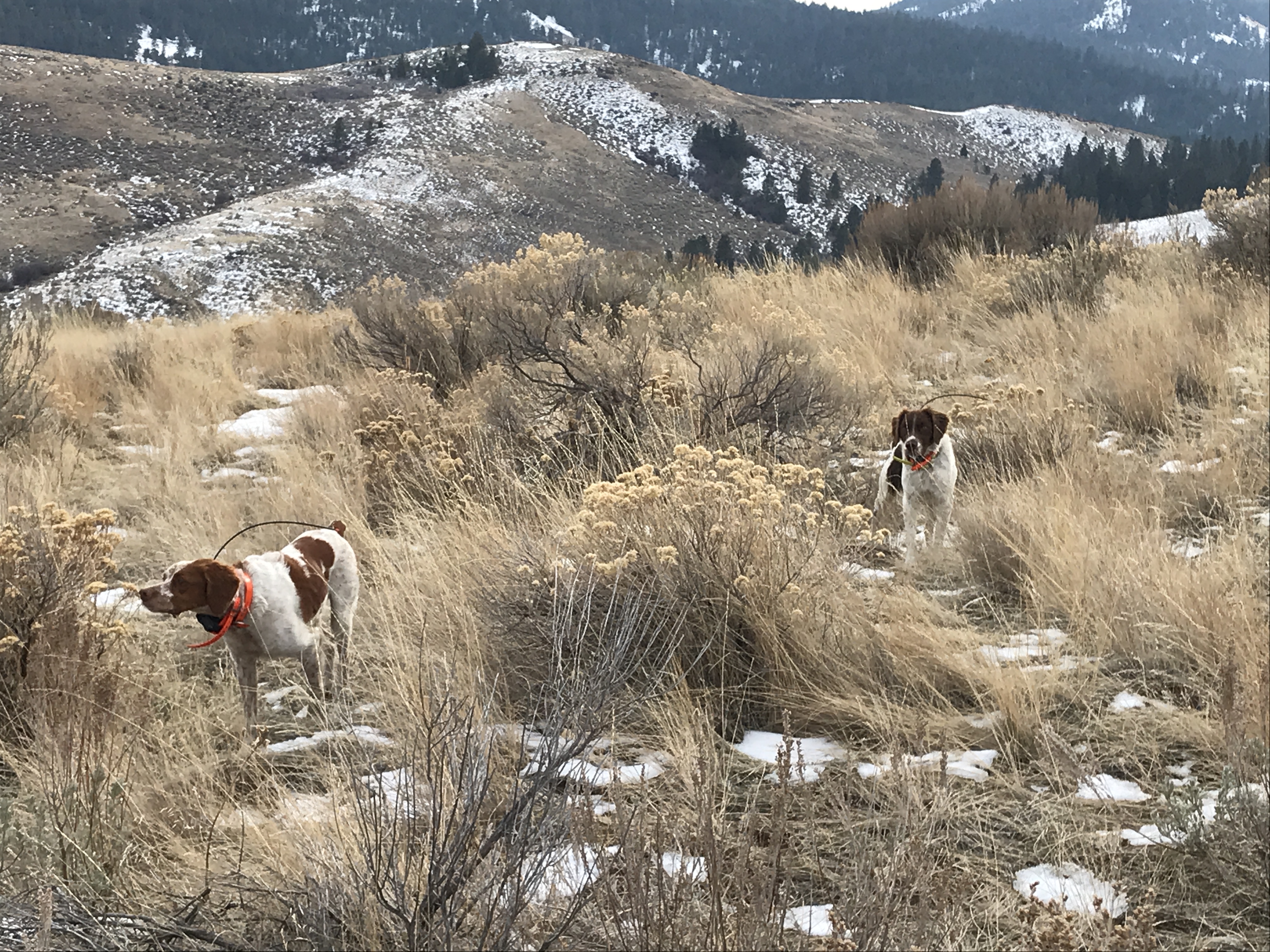
    Peat responded to becoming a solo dog well, significantly upping his range, average miles per outing, and climbing. In his first five seasons, he spent much of each hunt backing Angus and watching the Old Warrior work, and — when things heated up — he’d shift into higher gear. Those first five years, Peat averaged about three times our mileage. This year, he averaged almost four times what we hiked, which is a big overall increase for the little guy. He weighs 34.5 pounds and has femurs smaller than most carrots. I could write a lot more about how Peat did this season, mainly because he was under my microscope much more than ever, but I won’t. I’ve already dealt with that. He’s not Angus, but that’s not a dig. Every dog’s different, and I love Peat more than a million words could convey. And that’s really what matters to me, and to Leslie.

    So that’s what I did if anyone wondered. We do what works for us, and improvise to figure out what that means. Everyone else does the same. I know there are folks out there who hike twice as far and long and say they shoot 75% ( I can’t imagine making 7 of 10 shots on chukar, where we hunt anyway). Yesterday someone told me his son kills at least 200 chukar a year, and someone else out there (you know who you are) told me about someone a long time ago who failed to kill 1,000 chukars in one season by just a few. To each his own. We’ll show our birds every once in a while, but try to focus on other things that mean more to us than lifeless trophies.

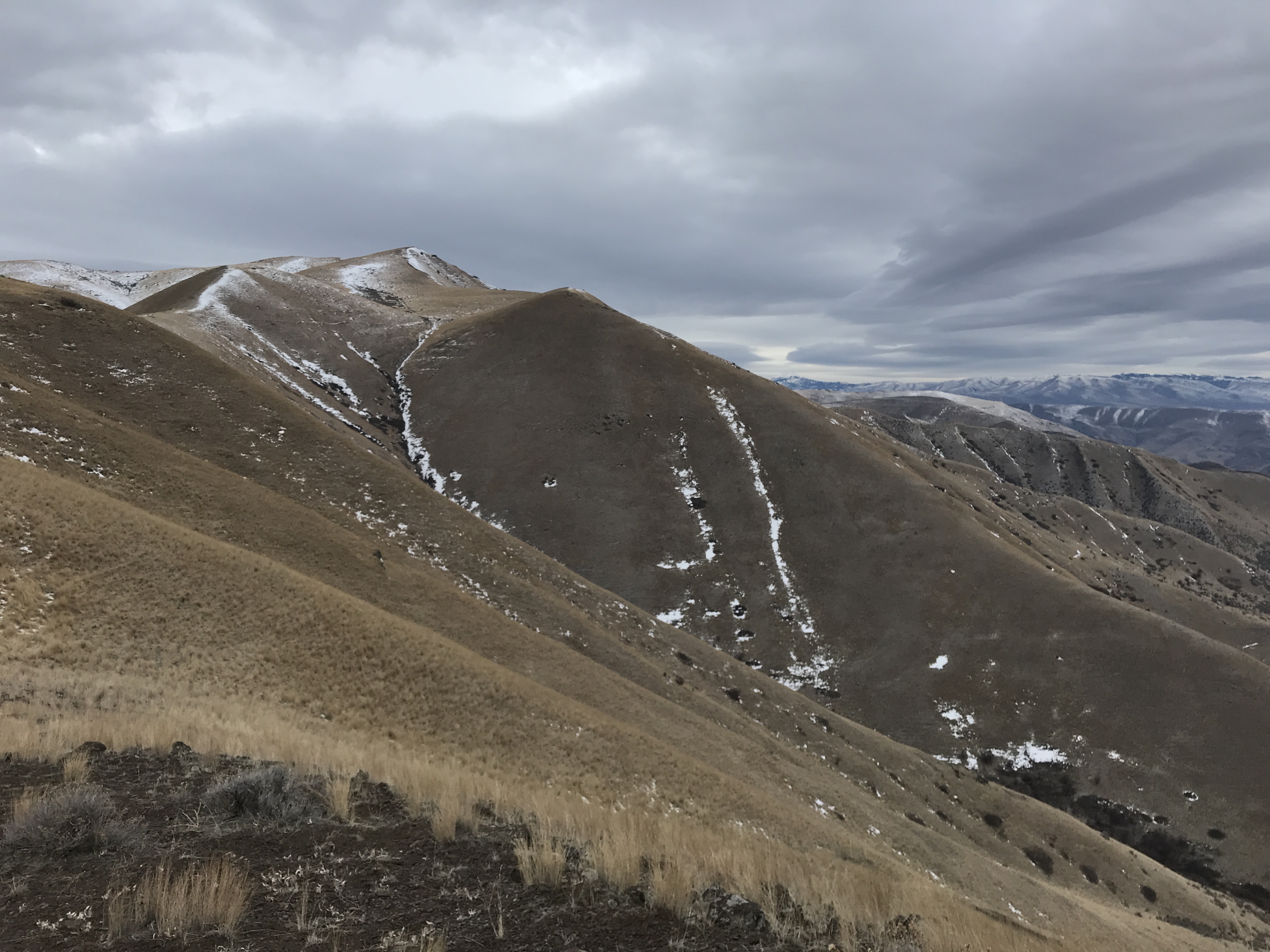
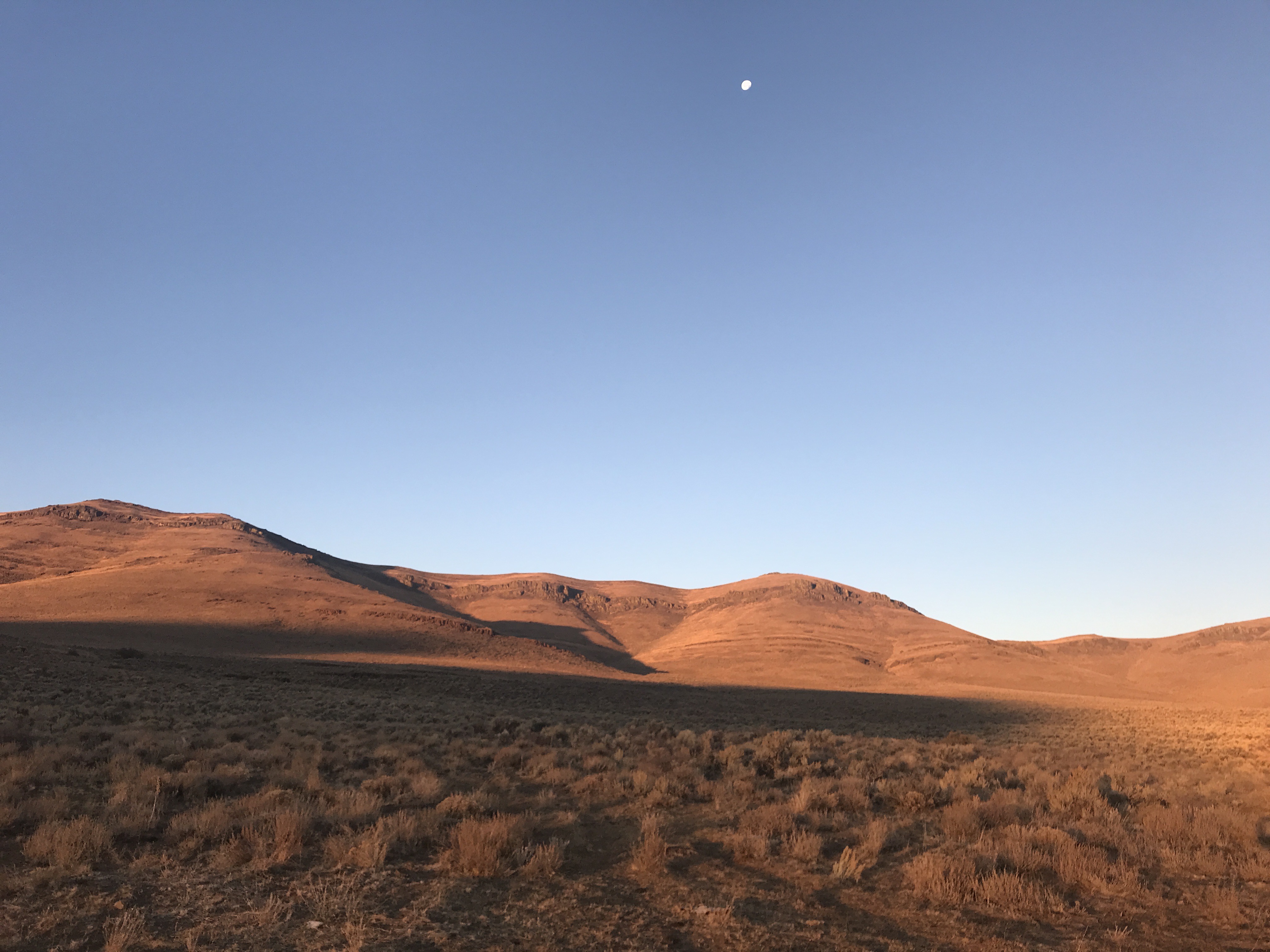
    When I think of season highlights, I think of some really peaceful, beautiful moments in the Steens, where we camped out of sight of any lights in late October. We saw lots of birds of all kinds, not just chukar, and endless oceans of sage and piles of basalt clothed with unreal colors of lichen. I think of stopping on the mountain overlooking the Blitzen River and getting a bunch of burst-ripe juniper berries that I brewed my best beer ever with a couple months later. I think of Peat working like a fiend for more than 30 minutes to find a winged, running chukar and bring it back. I think of near-hypoxic ridge-crests. I think of raging, angry wind and thoughtlessness. I think of Leslie making two unbelievable shots like she was Annie Oakley’s sister. I think of finding an elk shed in exactly the same place I found one the year before, the only two elk horns I’ve found in 20 years of hunting. I think of missing lots of easy shots and getting furious with myself and seething about it for too long before realizing how f-ing stupid that was, especially because the birds got away and that made me glad. I think of getting to hunt with Sam again and each getting a bird out of the same rise. I think of the times I saw Peat but thought he was Angus. I think of hunting with and babysitting Custer, Angus’s nephew, for several weeks and how you can really see genetics in dogs. I think of the generosity of Gabe and Katie and their great kids and amazing dogs. I think of finding dozens of grasshoppers in a chukar’s crop. I think of the incredible smoked chukar chili we ate, and the risotto, and the pot pies, and the Thai food with partridge meat. I think of water, in all its forms, and how without it this wouldn’t be possible. I think of the impossibility of a squeaky surprise of pulsing primary feathers on a single erupting at my feet. I think of watching a live chukar flee and tracing it with the bead at the end of the barrel and triggering the shot and instantly watching it fold as its soul gets released and its body falls like a rock to the ground. I think of whether I can still do that, and I wonder. I think of the lives I took and thanked for that, and was it enough. I think, for Peat, and Angus, and even Glenna, and probably for the impending Bloom, that this is by far the best thing in the world for them, and that watching them — from our position as nearly useless humans when it comes to locating this prey — is a miracle that makes life good. And I think I’m already looking forward, with the same excitement and the same ambivalence, to next season.
  • Done

    Done

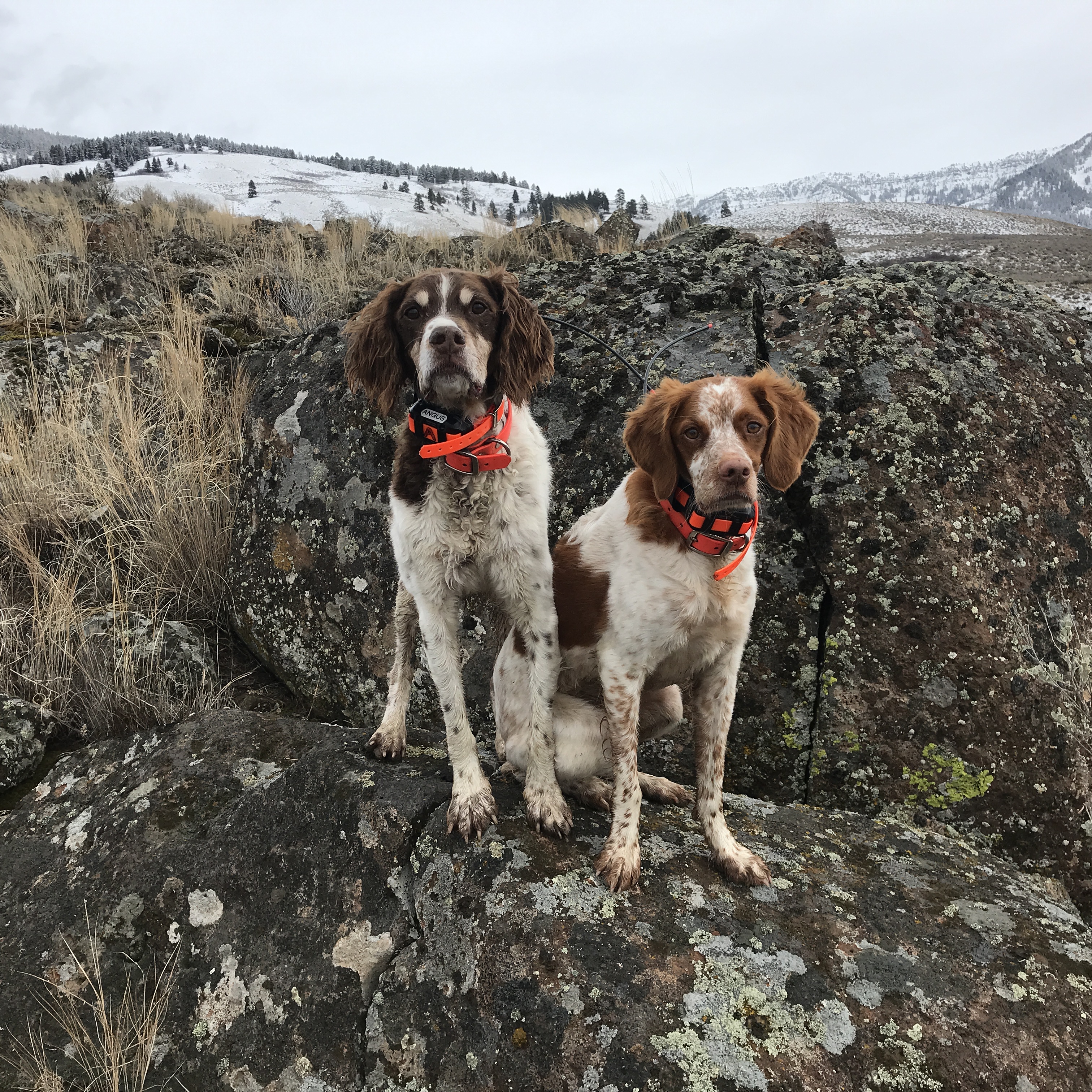
    Cleaned the last birds today. The wind here is ice. It’s our millionth day in a row without sun. We hunted every single possible day we could this season, except for the penultimate weekend when we both were sick. We literally outdid ourselves. So did the dogs. Angus is a miracle. I think he’s related to Ponce de Leon.

    I can’t wait for next season. There’s a lot to think about, though, and stuff to do in the meantime. It’s important, but will be very hard, to stay positive. Those who know me understand what I’m talking about.

    So for now I’ll say it was my best season in many ways. Coming back after last season’s back problems, and without “training” last summer (sitting in a drift boat doesn’t do much for one’s physical fitness), our average hunts were bigger in mileage, duration, and elevation gain than in any previous season. To say that at 57, after doing this for 20 years, I think is pretty lucky. Maybe it says something about desire. Maybe it just is.

    Still, I noticed some things this season that weren’t all good, which I’ve mentioned before. Medusahead continues its literally uncontrollable spread-and-destroy blanketing of the range in southwest Idaho and eastern Oregon, and other noxious players are rapidly adding themselves to the list. Bird numbers here — I don’t care what anybody says — are down. The number of chukar hunters using ATVs down here continues to climb. Chukar hunting is my favorite thing to do, but it’s becoming the thing I worry about the most. That sounds silly. But it is true. These birds are pretty resilient, but they’re no match for what’s happening to their environment. Chukar are non-native, so maybe it won’t be such a great loss. But they’re in the same boat as the sage grouse and sharp-tailed grouse in these parts, whose numbers are nearly gone (Fish & Game’s last count in 2016 of the Midvale sage grouse lek totaled 2 — two — birds*). We need to do better by the wildlife we all devote our recreational spirit and finances to.

    *From Idaho Fish & Game’s last statewide upland game report, from 2017 re: Sage Grouse in Washington County: “A report documenting seasonal distribution, habitat use patterns, productivity, and survival rates in Washington County is available. Washington County is unique because it is isolated from other sage-grouse populations and habitat; the land is highly fragmented and primarily under private ownership. West Nile Virus has surfaced annually in this area and much of the habitat has been converted/developed to ranchettes. The Washington County population will likely not persist within the next 10-15 years.” [my emphasis; p. 46]

  • Weathering the Storm

    Weathering the Storm

    Moving forward. Going backwards, uphill, and slowly descending.

    Last hunt of 2020 for us was yesterday, I followed Bob around the chukar hills just like the old days. Camera in hand. No shotgun. Winter is my favorite time to be out there. It’s quiet.

    Following tracks of ghosts of deer, elk, and birds. Detective work. Bob whispers to me, “I think they were just here.” I look down to examine the prints in the snow. Tiny dog tracks are heading upwards, the lone elk is going downhill. We keep going up.

    We continue to follow Peat. He’s pointing 185 yards away. We look up to see if we can see him, snowflakes are gently falling to earth and into our face. We climb the steep ladder to get to him. He’s focused, patient, and won’t even look towards our direction but knows we’re finally there. His job is almost done.

    The covey busts, Bob shoots, Peat retrieves. Beautiful dog work. Magical. We continue this sequence a few more times finding new coveys and relocating old ones. The dense fog started to come up from below and the snow fell more heavily. We were dressed for the elements but the ground was getting slippery so we decided to head back to the pickup. Bob tells me, “Be careful on the downhill.” We headed down the same ridge we came up and our footprints, Peat’s, and the elk’s had vanished underneath a fresh dusting of snow.

  • What Happens: A Tribute to Barry Lopez

    What Happens: A Tribute to Barry Lopez

    The quickest door to open in the woods for a child is the one that leads to the smallest room, by knowing the name each thing is called. The door that leads to the cathedral is marked by a hesitancy to speak at all, rather to encourage by example a sharpness of the senses. If one speaks it should only be to say, as well as one can, how wonderfully all this fits together, to indicate what a long, fierce peace can derive from this knowledge.

    “Children in the Woods,” from Crossing Open Ground

    When you’re out there. Head. Thoughts. Observations. Hidden rocks the size of a golfball take you down, all stone of you. My experience is mine. Yours yours.

    Here’s something of mine, what happens during and after, and also before the hunt. Not the hunt, but a hunt, and I’d be surprised if most chukar hunters don’t do this, too: things I’ve read that week or that stuck in my graycraw wash into the footsteps and missteps and breathing and hearing. When you’re climbing you’ve got the goal you can see — the ridge, the outcrop, the abutment, the hawthorn vein — but it’s never a straight line, especially with a pointing dog who, after all, is your partner. You repeat that, sometimes out loud and sometimes not, as if some or even you won’t really believe it. The fact of gravity resented. The failure to lose the weight you promised yourself you’d shed. Math. The sharp pain in the back of your throat. Is it Covid? It can’t be. I’ve been careful. Or have I? During a short rest a sound.

    Howling. I hope it’s a wolf. We’ve seen prints nearby in the snow years ago. Suddenly I’m transported back 15 years to a solo elk hunting trip. The two nights I was camped featured nightlong wolfpack serenades. Ecstasy. Prescient or not I’d brought Barry Lopez’s Of Wolves and Men to read. On the second day of the hunt a tall wolf — one of the singers? — and I met at 15 feet on undulating ground. It vanished before my eyes while I marveled. Lopez’s book added to my admiration of these dogs, deepening the irony of living in a state seemingly committed to committing the sins Lopez documents in Of Wolves: extermination without cause. Worse: the science shows wolves improve elk numbers and genepool, but if only the politicians and ranchers would read and think they’d make a place for this predator. But that’s asking too much.

    Reading while listening to wolf music

    Caught up in this thoughtmemory, I’m a little further up the hill. Peat’s on point. I get over to him. Because they’re in the rocks they spot me miles away and bust wild. I reorient to the climb and return to the thought which now is more like a dream, triggered by another howl. I appreciate Lopez again and think of some of his other work, writing that — in part — led me to Idaho because I wanted to be like him, or at least write a little bit like he did, or at least about the kinds of things he wrote about. River Notes, Arctic Dreams, Crossing Open Ground. I had this romantic idea about the land and trying to fit into it and onto it and let it get through me and through to me. I still do. Without work like his, and others of his ilk (David Quammen, Aldo Leopold, Edward Abbey, Edward O. Wilson, Farley Mowat, John McPhee, Robin Kimmerer, Rachel Carson, Diane Ackerman, and Annie Dillard, just to name a few), what happens when I’m outside would be, I’m certain, much different. Worse, I think.

    And then, nearing the ridgetop, I remember my favorite piece of Lopez’s, “Children in the Woods.” My mom, an art teacher, tricked my brother and me into competing to become the bird identifying champion of the Back Bay. I don’t know why. I also don’t know why my dad, a poet, built a cabin in the woods of Idaho but it set us free to explore and learn so many names of things in the forest that we didn’t even need to speak them anymore because we’d prefer to pay close attention to what we sensed and think about relationships between those things and us. When I think about it, as I did on this hunt, this, this is really the only peace I have. It’s as good an explanation as I have for why I keep wanting to hunt.

    While recovering yesterday from this momentous Christmas Day hunt (momentous in so many ways, not least of which was the wolf howl and what it conjured), Leslie told me Barry Lopez had died. May he rest in fierce peace.

  • The Beautiful Familiar

    The Beautiful Familiar

    “Come on dogs, let’s go hunting.”

    Not just one dog but two. Not much more work having two. They get fed at the same time, go to bed at the same time, and adapt to each other’s miscellaneous routines at home, like, for example, keying off of each other when it comes to hearing something outside, both of them to end up running full speed through the kitchen and out the dog door barking their heads off. We’d gotten use to having two dogs around all the time at home and on the mountain. The one thing that I loved most about having two dogs was watching them hunt together.

    Last June when Angus passed away from cancer it was an adjustment, and a void for everyone, including Peat who now has to do all the work by himself finding the birds. It wasn’t that he was lazy, but he was smart. He was like one of those co-workers that we’ve all had at one point in our lives, the ones that sit back and watch everyone work and then when the donuts arrive from the boss on Friday rush to thank everyone for a good job, and he’d be first in the break room to get the only maple bar. Peat would be the first on the bird for the retrieve, a covey of birds that he didn’t find in the first place but he’d bring the chukar to hand and get all the immediate praise that followed while Angus continued to hunt.

    Peat this season was definitely forced to step up his game by being the lone dog. His average mileage used to be three times ours, now it’s four times. He can find birds and he’s the relocation specialist but his nose is either super sensitive or not fully refined because he’s really cautious on pinpointing the covey’s location and getting close enough. The birds are either just very jumpy and busting wild for other reasons. I don’t know if it’s because he spent so much time as the co-pilot.

    The main thing I’ve missed this season is watching him honor another dog. Peat in action is a beautiful, mesmerizing and sometimes funny sight to behold. It’s by far my favorite part of seeing a pointing dog work. Looking back, I think he purposely let Angus find all the birds just so he could honor him. They had a beautiful relationship.

    Before the season started, we stopped by to visit Angus and Peat’s breeder, Katie and Gabe of Sunburst Brittany’s and I casually suggested that maybe they could loan us one of their dogs. I wasn’t entirely serious and thought that it was stupid to even suggest in the first place, but in November they lent us and entrusted us to keep Custer, their young liver and white American Brittany for a few days. I was excited to have another dog to hunt with again, and I was equally excited just to have the presence of another dog in the house.

    One-and-a-half-year-old Custer arrived, and from the get-go it was evident that he hadn’t been around cats before. He went on point when he saw Seamus for the first time. Peat soon took notice of what was happening and acted like he’d never seen a cat before, either (despite getting his ass kicked by Seamus on his first day with us almost 6 years ago!), and both dogs chased Seamus and both got a full set of claws in their furry snouts. From that point when Custer wasn’t tethered to me, he was in his crate on the floor. My 15-year-old cat continued to taunt him by sauntering past his metal crate door within an inch. Cats are masters of intimidation. Trying to train Custer, a kennel dog, to be a house dog that lives with cats in one day so he could be loose in the house was very optimistic.

    The following day, to give the cat a break from all of us, we took Custer out hunting with Peat to a place on some BLM land not far from where we live. We started out initially wanting to have Custer only hunt with me but realized that he hadn’t bonded with us yet and he wanted to hunt with Peat. About 20 minutes into the hunt, my Garmin beeped that Peat was on point. I headed his direction and could see Peat pointing and Custer honoring him through the tall bitterbrush. It almost brought tears to my eyes seeing two dogs working together again. Instead of getting into position to shoot, I pulled out my phone to photograph and capture the moment.

    Custer honoring Peat for the first time.

    The next covey of chukar we found, Custer was the first one to point. I slowly got into position and out of the left corner of my eye, I could see Peat running full speed right past him! Instead of honoring Custer, Peat ran right through the covey and busted them. Freaking Peat! I don’t know what he was thinking. I’m no dog psychologist, but on the next covey Custer found later in the hunt, Peat honored him. They took turns on a couple more coveys and we hunted with both dogs together at least six more times before returning Custer back to Sunburst. We would have preferred to have kept him longer if it wasn’t for the cat. I love my cat. That darn cat.

    It was a beautiful thing to see Custer, Angus’s nephew, move with the same show-dog gait as Angus. He’s got the same sweet personality, and whisky colored eyes, and is a natural on the chukar hills. Custer is a miracle and a bright hope for the future where next spring a new puppy will be in our lives or maybe one of them will be in yours.

    Merry Christmas and Peace on Earth. Enjoy the video!

    Custer backing Peat again.
    Sunburst’s Custer and Peat, November 2020.
    Peat honoring Custer on some chukar. December 2020
    Custer post retrieve
    Angus and Custer, January 2020