Blog

  • Legend

    Legend

    50 miles from home, I realized that I forgot to pack my extra shells for our hunting and camping trip. I sat there for a few minutes in the passenger seat in silence and mad at myself at my unthinkable mistake and embarrassed to say anything to Bob. I wanted to run off and hide.

    It wasn’t totally unthinkable. It wasn’t like we forgot the shotguns or our boots this time. A couple of years ago, heading down the road for an out-of-town hunting trip we were about 45 minutes from home when I realized that both of our hunting boots were still on the boot warmers in the garage. We immediately turned around and went back to get the boots which made for a very uncomfortable and quiet detour back home. We swore from that moment on that we’d always have a check-off list for packing.

    I fessed up about my stupid forgetfulness just before crossing the border into Oregon and the big to city to us, Ontario. We exited into the parking lot of the Walmart, parked and headed into the far back corner of the store to shop for shells and to also look for a cheap dog-proof cooler (or in our case Peat proof cooler without zippers like the soft sided ones have). The Walmart Superstore wasn’t so super when we discovered they didn’t sell ammo anymore and the cooler selection wasn’t very impressive. We left empty handed.

    We then drove all the way across town to a couple of other stores that were open but their selection of 20 gauge shells for upland was pretty dismal or non-existent, focusing mostly on waterfowl shot. On the bright side, at least we found a small Igloo Playmate plastic cooler at Bi-Mart and were fairly confident Peat shouldn’t be able to figure out how to open it.

    We forged ahead and originally wanted to stop for a quick hunt somewhere in the desert along the way but it started snowing sideways and then it rained. Not the best hunting weather for us or the dogs. Once we headed south the clouds opened up and we could see blue skies.

    Arriving to the campground in the late afternoon we set up camp. I pulled out my pack from the pickup and opened up the shell pouch to see what exactly was in there and analyzed the situation in my head. Okay, I rarely shoot more than once on a covey and I’ve got 12 shells so that would last maybe four hunts if I only shot three times per hunt. Of those shells three of them were Angus shells that Bob hand-loaded four years ago and they’re filled with some ashes from our Brittany named Angus who died four years ago. I’ve been carrying them around for good luck ever since.

    Good luck Angus shells.

    It wasn’t going to be the end of the world to only have 12 shells but I’d definitely have to be discretionary in my shooting and not waste any shots unless it seemed like it was a sure thing which in the chukar hunting world is totally laughable.

    Just before dinner, we met a fellow hunter in the campground who had been out the previous two days and according to him, the hunting was terrible and he hadn’t seen many birds. It was ridiculous but I was actually relieved to think that chances of shooting would be limited.

    The opposite turned out on our first two days of hunting. It was really good, and the dogs found plenty of birds. We were pleased. Thrilled.

    On our third day of hunting we found an area to hunt that looked good on the maps but in person it wasn’t very promising and no visible water sources were nearby for miles even though the map showed what looked like a small pond which was now drier than a bone.

    Bob and I decided to stay together since I was down to my last three shells, all of which were Angus shells. Not very long after we started our hike from the pickup the dogs started finding birds but I couldn’t get a good shot and passed on ones that were borderline too far away. Towards the end of the day the dogs found and pointed one last covey of chukar up in the rocks above us. Bob got up to them first and they erupted and flew downhill towards me. I quickly mounted my gun, shot, and hit one on a crossing overhead shot. Bloom hauled down the hill past me to retrieve it and beat Peat to it. On the way up heading towards me with the chukar in his mouth, Peat snatched it away from him and continued to run past me taking my chukar to Bob as if I didn’t exist.

    The only other times (yes, plural) Peat stole a bird from another dog was back in 2015 when he was eight months old. Instead of simply attempting to retrieve them, he watched Angus do all the work of finding, pointing, and holding the birds and then would take the bird Bob shot from Angus’s mouth on the retrieve and go off and eat it. He did this for the first 6 birds Bob shot that season. Angus, gentlemanly at the wrong time, didn’t put up much of a fight. Bloom, like his blood relative Angus, didn’t either.

    Peat’s first season was frustrating, legendary, but epic in its own twisted way. Luckily after the sixth time stealing a bird from Angus, a switch turned off or maybe on in his brain and he started retrieving them directly to us and didn’t stop to eat them.

    On the morning of what would have been our fourth hunt in Oregon, we woke up early and noticed a flat tire on the pickup. It was no surprise with all the rocky backroads we’d been driving on the day before. It was 10 degrees outside but at least it we were parked on a flat piece of ground and not pulled off on a shoulder of a busy highway. Bob changed it but now without a spare tire and with the nearest tire repair shop 60 miles away we decided pack up instead of hunting and head home rather than risk being stranded out on some remote rocky and gravel road without cell phone coverage.

    A couple of days after arriving home and anxious to head out again, I went for a solo hunt with Bloom at a place where I’d been before. 20 minutes into the hunt Bloom went on point below me and held them until I arrived. The covey of maybe 15 birds busted and flew downhill. I shot one chukar, it tumbled to the earth, and Bloom retrieved it right to my hand. I was elated! I searched around and found my bright yellow shell on the ground and picked it up and looked at Angus’s name on it. It was an emotional moment. The place where this happened was almost the exact spot where I shot my first chukar back in 2016 that was pointed and retrieved by Angus.

    Divine Intervention?

    Bloom with his super sensitive nose is still figuring out this game but with each hunt he’s getting better. Yesterday, hunting solo with him in a new spot, I thought it would be too windy to find anything but I remembered my friend and longtime hunter Sam telling me years ago, “Birds are on the ground and their world is much calmer; it’s not as windy down there.” Bloom tracked down birds just below tops of ridges in the frigid and howling wind and went on point on at least 6 different coveys and a couple of solos. I didn’t think that I would be able to shoot with my fingers being bitter cold to the bone but it’s funny how you forget the coldness when your dog goes on point.

    Bloom has a lot to live up to with his legendary genetics and with our high expectations but after the last few hunts and seeing him work, he’s going to be fine.

    My first chukar (2017), compliments of Angus (and Peat)
    Bloom pointing a covey of chukar yesterday.
  • Hercules

    Hercules

    Hunted an old favorite yesterday, and I’m not hiding the location because I’m afraid it’s not long for this world.

    Peat and I went out for a rare solo hunt (Leslie and Bloom are nursing hurt wheels). The rationale was that the forecast was for nicer-than-normal weather with no precip, with an atmospheric river heading our way for the next week. We like to take advantage of windows. We headed out into torrential rain and wind, which I thought must be some kind of cosmic error that would soon be corrected. Instead, the rain continued for quite a while, then turned to fog so dense I couldn’t see Peat 20 yards in front of me. Finally, after a couple of hours, it got gorgeous, and stayed so.

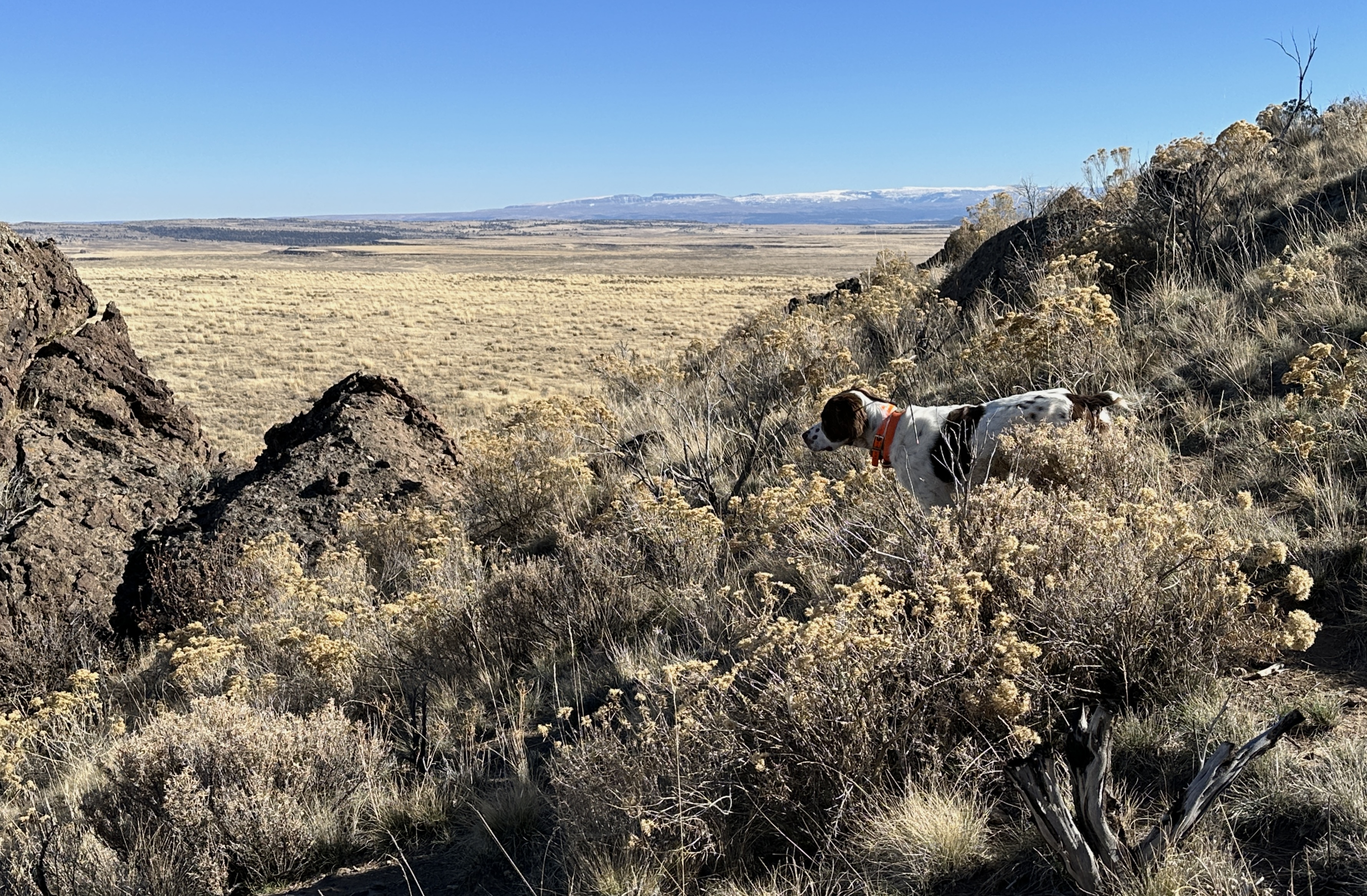
    An abundance of birds and views, and important winter home for deer and elk
    Fog lifting. What a reveal!

    We saw a lot of chukar, and Peat pointed almost all of them we saw. Unfortunately, despite the fact that he held the birds for up to 10 minutes (some of his points were a couple hundred yards up steep hills), they all busted before I got to within 50 yards. No shots on those. Overall, it was a great hunt — by far my longest of the season (8.6 miles) and the second longest of my entire chukar hunting history, with the second most elevation gain ever for me (2800 feet). Peat ran 25 miles and did about 7,500 feet of elevation gain. He’s a bit sore today (as am I). One chukar in the bag, though, after all that doesn’t pencil out on a caloric replacement scale.

    Peat’s Strava on yesterday’s hunt

    Two things must be shared about this spot: first, it’s apparently being liked too much by hunters (I don’t know of an area in Hells Canyon that gets more pressure). Ben Jonson’s suggestion that what we love we might want not to like too much seems worth reflecting on.

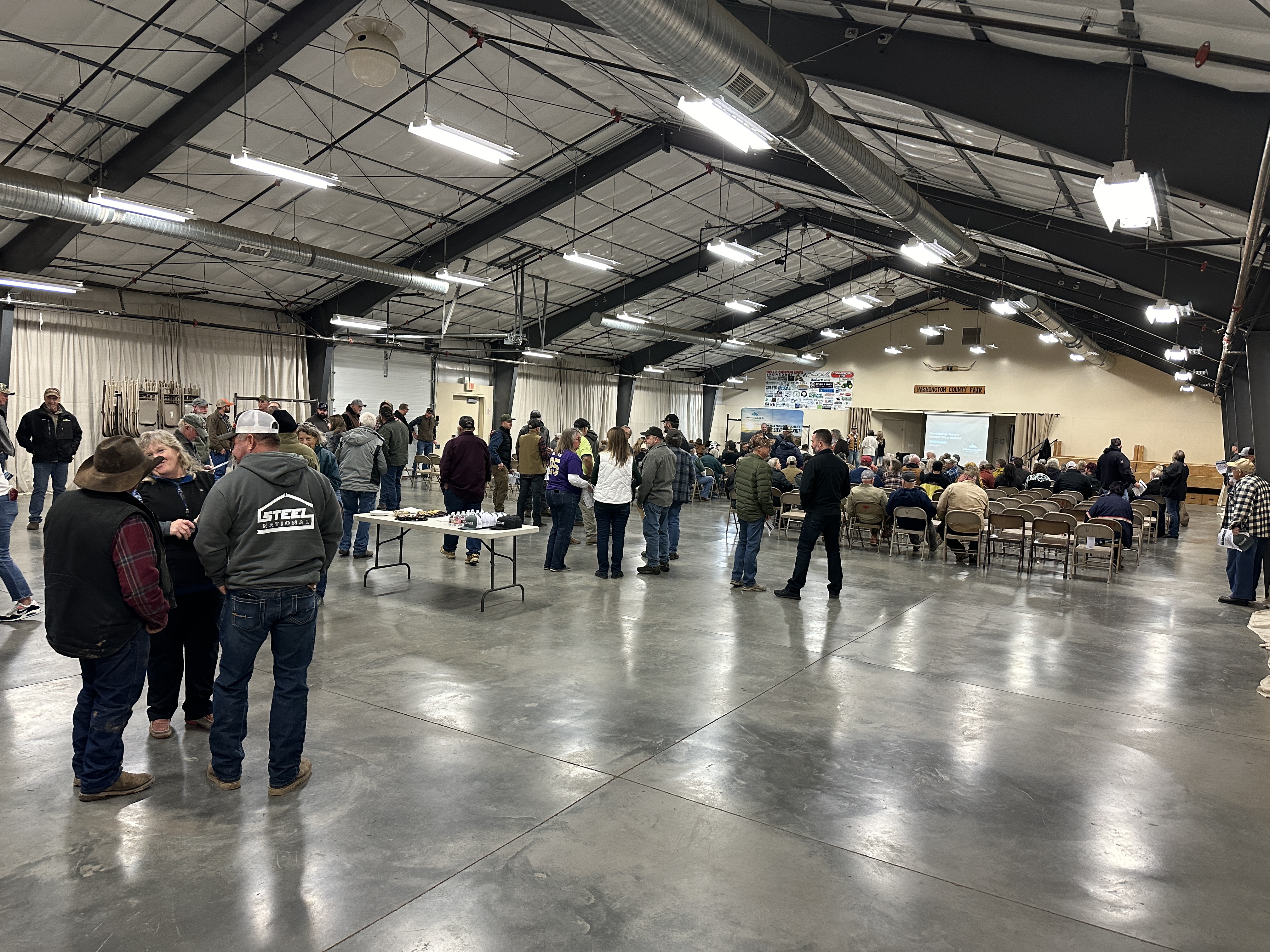
    Second, it looks as though it’s about to become a huge open-pit silver and copper mine. Most of the land sits on more than one-third of the Cecil Andrus Wildlife Management Area, on land owned by the state of Idaho (and thus, you and me, right?). A Canadian mining company called Hercules Silver Corp acquired the mineral rites in 2021 and has been conducting exploratory drilling and geophysical tests since then, with a massive expansion of the project in 2023. Their investor presentation hawks the project as “Located in the state of Idaho, with a pro-mining congressional delegation, governor and state legislature, and local political support for the project.” And, “Long established mining history with streamlined permitting…” I know nothing about mining, which allows me to be flabbergasted by the Hercules’ investor newsletters bragging about finding 2.6 grams of silver per ton (I do know that there are 454 grams in a pound). It seems like not a lot of silver in a ton of excavated earth. I’m probably missing something.

    Hercules home page features a drone video of the gorgeous terrain on the Andrus WMA they’re hoping to turn into an open-pit mine

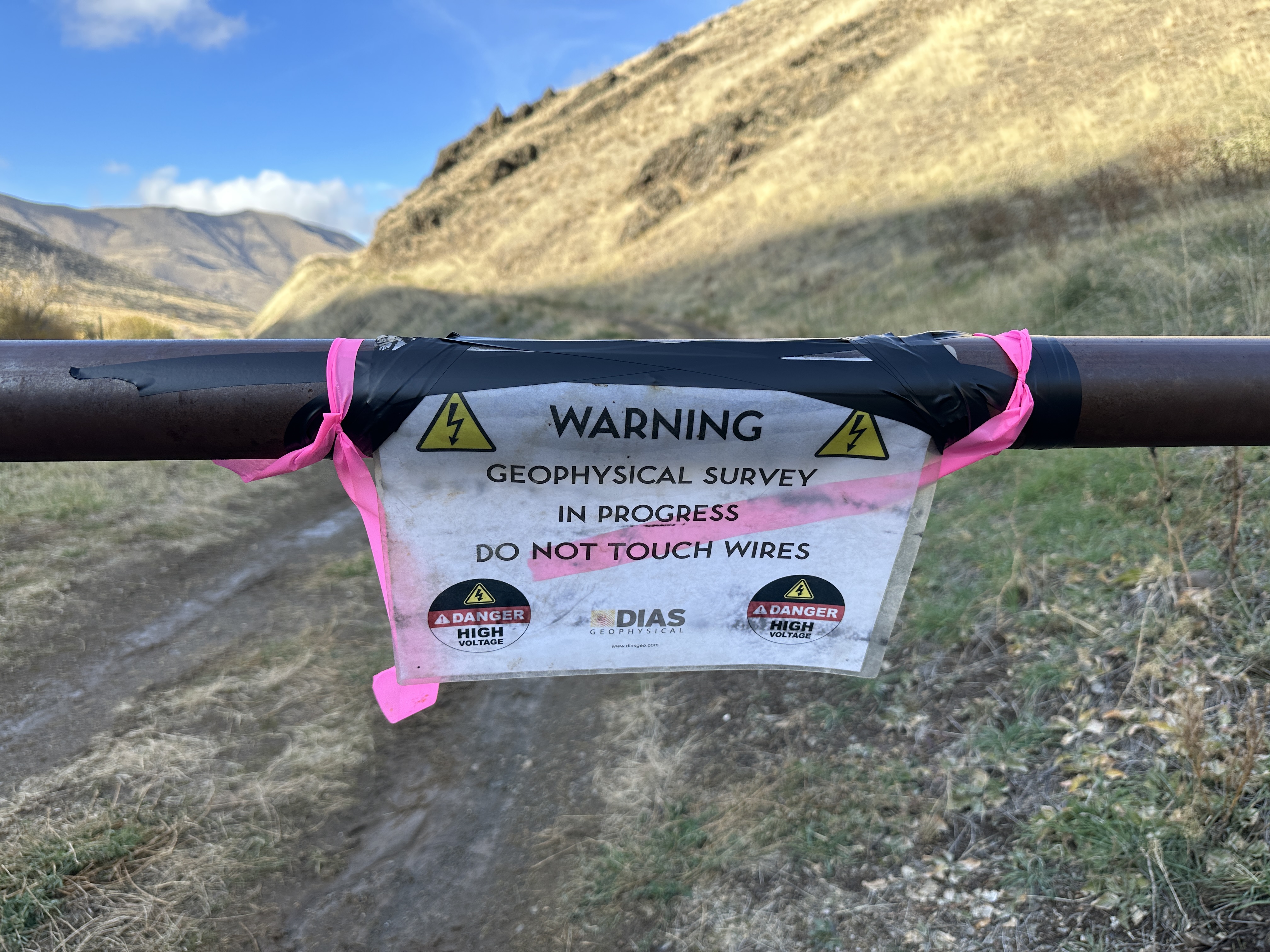
    It does seems strange that all this is happening on public land, but apparently it’s all legal and relatively easy in the state of Idaho, which is apparently populated by dupes, if I take Hercules’ implication correctly. I’ve been unable to find any reporting on this project in the press, and it doesn’t show up in a search on the Idaho Conservation League’s or Idaho Wildlife Federation’s websites; I contacted both organizations about Hercules several weeks ago and haven’t gotten a reply. Unlike federally owned BLM and Forest Service land, Idaho state land apparently doesn’t require a public comment period for projects impacting the environment. But the fact that Hercules has brought a massive amount of heavy machinery and pallets of 5-gallon buckets of chemicals related to the drilling operation up these tiny gravel roads and been running high-voltage electrical cable and high-pressure 1″ air hoses across the entire area, which covers about 10,000 acres, makes me wonder. Yesterday, Peat pointed a covey of chukar about 30 yards from heavy equipment and excavation activity; if I’d shot I’d have peppered the workers. While we searched a thicket near a pond for a grouse, a truck drove up and the driver got out and powered up a nearby high-powered air compressor. The gates to get into these areas have small handmade signs announcing the high voltage wires with “DO NOT TOUCH WIRES.” The wires are everywhere, and hard to see, only about 1/16″ of an inch thick. Peat and I tripped on them numerous times. I’m assuming we were just lucky they weren’t energized. I wonder.

    I’m trying to find out more about this situation, and will share what I discover. This was one of my all-time favorite places to hunt, so I’m part of the “liking-it-to-death” factor (although this was the first time I’d hunted there in three years; I won’t be back). I know others who love this spot, not just for birds but for big game. It’s important wintering ground for elk and deer which, unlike chukar, are endemic. But still, it makes me sad to see it getting ripped up. And it won’t get put back or made right again. Ironic that it’s happening on the Cecil Andrus Wildlife Management area, which is managed by Idaho Fish & Game. It makes me think of one of my favorite passages in literature, the last paragraph of Cormac McCarthy’s post-apocalyptic novel The Road.

    “Once there were brook trout in the streams in the mountains. You could see them standing in the amber current where the white edges of their fins wimpled softly in the flow. They smelled of moss in your hand. Polished and muscular and torsional. On their backs were vermiculate patterns that were maps of the world in its becoming. Maps and mazes. Of a thing which could not be put back. Not be made right again. In the deep glens where they lived all things were older than man and they hummed of mystery.”

    400psi air hoses run across much of the 10,000 acre site
  • Control

    Control

    …I went hunting wild,
    After the wildest beauty in the world,
    Which lies not calm in eyes or braided hair,
    But mocks the steady running of the hour…


    —Wilfred Owen, from “Strange Meeting

    Hunting’s beauty lives wildly between control and chaos. What do you control? How do you deal with chaos?

    We have expensive, complicated electronic devices that tell us where our dogs are and track a ridiculous amount of data. They give us a sense of control. We got them because we disliked the chaos of hunting without them. I might argue they allow us to focus more on the beauty of hunting. The liminal.

    The dogs are licking their wounded paws. We failed to notice Bloom’s abrasions and Peat’s broken toenail at the quick until it was too bloody late. Both are on the DL now, in the best chukar country I’ve ever seen. It just seems endless. I don’t want to hunt without a dog, so we’re going home early. Spoiled stupid. Poor dogs. We should have done better by them. Running on a golf course every day, we now realize, has not toughened their pads the way the gravel trail we used to live near did. Good to get that learned.

    Peat too is a control freak. Bloom’s still figuring out how he feels about retrieving. Rough and labyrinthine at best. I know Peat notices. I winged a bird that both dogs saw hit the ground running. They competed in catching it, which Bloom did, besting Peat in that rodeo, then beelined past me toward Leslie, then away from her, bird clamped hard in his mouth, and then dropped it minus a massive mouthful of feathers and some back skin. Peat watched. A few minutes later Leslie knocked one down and Bloom quickly found it. Heading back up the hill toward Leslie with it, he dropped it a couple times, took it behind a big rock. Soon Peat emerged with the bird, ran straight past Leslie, and brought it to me.

    As a pitcher, I could appease my need for control of the game but always failed to realize and appreciate the supreme irony of struggling to throw strikes, which an external force (the freaking ump) controlled. This little nugget of life has, of course, stayed with me. All of it, especially the illusion. Rarely still am I able to see its beauty.

    The place we’ve been this week, whose exact location naturally I will not specify, is magical. But most chukar terrain seems that way to me, especially when I’m in it, and it varies dramatically. There’s a lot of beauty in that. But even more, the beauty seems to lie in what all those places afford, with or without lots of birds: a setting for an activity that “mocks the steady running of the hour.” We choose the place but have no idea what will happen, where we’ll go, or how long it will take. It’s the wildest.

  • Remote

    Remote

    “As for me, I am tormented with an everlasting itch for things remote.” – Herman Melville, Moby Dick.

    So far this season, Bob and I have been only hunting at higher elevations where the earthy golden grasses and light green sage colored hills meet up with the forested mountains. These are places to take advantage of now. Soon these places will be almost impossible to reach when the winter snows start falling, which will be any day now. Intrepid hunters that don’t mind post-holing for miles can get to these spots when the snow is really deep in December and January. We’ve done it before but it’s really hard on the dogs. It’s hard on us. And you wouldn’t see birds anyway.

    Five years ago in Mid-November, Bob and I hunted on top of a higher elevation plateau covered with big basin sagebrush and antelope bitterbrush. It was remote and far from any roads or two-tracks and undulated like a rollercoaster and required a steep downhill hike first, then a climb up to the top of the plateau, then back down again before climbing back out. It had all the things you would want for good habitat for chukar: steep slopes, rocky outcrops, water, plenty of things for the birds to eat, and cover from predators.

    A couple of weeks ago, waking up to almost perfect health for my age and the sweetness of early morning darkness, I suggested we make the drive back out there. I’m not particularly fond of hunts that start with the downhill first, unless we’re doing a shuttle, but I’d thought of that place often and really wanted to go back. The motivating force was, besides being incredibly scenic, especially in October, was that historically chukar were there before, so they should still be there, right? I do know that every year things change, every month and even day changes your odds of finding them, but it’s the eternal hope that really drives us.

    We left home and after about an hour drive on a gravel road, we arrived to the place where we wanted to start our hunt. We put on our heavy packs, mine weighed down by what felt like gallons of water, and took our shotguns out of the cases. Before letting the dogs out, we put their orange Garmin hunting collars on, which is never an easy process when they are excited and know what’s about to happen and behave like wiggle worms or house cats not wanting to be held.

    The early morning sun was still behind the horizon as we started our descent and the air was cool and frost coated the short green up. In the distance, a rosy alpenglow lit up the hills to the west. At the start of the 1,000-foot descent on a game trail meandering through a dark and shadowy ponderosa pine-lined draw with a tiny dribble of a creek running down it, Bob insisted that I go in front, so I took the lead, which was unusual. I prefer to follow because I’m usually slower and don’t read the terrain as well. I try to make a mental map of the landscape but I’m prone to daydreaming and I once got us temporarily lost in a snow storm, a few seasons ago, in a maze of game trails and rocks and ridges that all looked the same.

    I felt excited to be back and descending on this trail again after five years. A trail that’s been used by wild animals for time immemorial that leads to a place that hasn’t been destroyed by humans. It had rained the day before and prints of deer and dents by bigger and heavier hoofs of ungulates still wandering the area were on the trail. Some tracks were going uphill and some downhill. Peat’s petite little prints and Bloom’s bigger ones were freshly impressed into the earth heading away from us. I looked back up the trail and saw my own tracks. The sound of a grouse busting got our attention and we both removed our shotguns from our shoulders and looked into the direction of the sound. Peat tracked it down across the creek and found it up on a limb of a tall pine tree and starting barking. This is what he does whenever grouse are in trees. He usually barks his head off until we can’t stand it but I don’t like shooting grouse out of trees and Bob really doesn’t either so we buzzed Peat back and decided to continue walking and leave it be.

    I stopped and examined scat of a black bear which was berry- and seed-filled. I pressed it with my boot, and thankfully it was dry. We kept going, more scat, maybe a coyote or fox, turds full of fur. The front of my thighs and ankles started to feel the terrain and I was cursing at myself for suggesting such a strong and steep place this early in the season in when not really knowing my fitness.

    We got closer to the bottom of the damp draw and near the creek the banks were all muddy and eroded and the gooey mud stuck to the bottom of our boots. The creek was a welcome relief for the dogs as they paused to drink water before crossing. Bob took the lead in front of me and stopped and swished the soles of his boots in the water as he crossed, to get the mud off. He said, “I don’t want the extra weight for the long climb.” I did the same but stepped into a slightly deeper section of the creek and water splashed inside one of my boots and got my wool socks wet.

    I followed Bob up the other side of the draw as we zigzagged our way out of the bottom of the creek bed. Five years ago, we flushed chukar out of this spot. This year, nothing. I finally caught up to Bob taking a quick break to catch his breath. He said, “I’m taking 61 steps before stopping to rest.” We continued. I tried 61 steps for a while, hoping to find my rhythm but couldn’t. Mind games to get you to the top where sometimes your mind is your worst enemy and the relationship between walking and thinking and the movement of memory when you don’t have what I call “chukar legs” yet in this early part in the season.

    Almost to the top of the plateau after two hours of hiking, we heard chukar calling in the distance but couldn’t pinpoint exactly where it was coming from, but it sounded like they were on the opposite side of the ridge, the one we just came from.

    I truly believe that some of the chukar up there have never seen a human or hunting dog before. This could be a good thing or bad? Some chukar hunters say birds bust wild and the dogs can’t hold them in the early season because they’re not used to being hunted, or just that they’re young birds. Others say towards the end of the season in January when they’ve had tons of pressure from dogs and people, that’s when they really bust wild. From years of experience doing this, I believe it’s a total crapshoot and there is no rhyme or reason for their jumpiness.

    Once up on top, we split up to cover more ground and to increase our odds of finding old deer or elk sheds. Bob and Peat went one direction, and Bloom with me. Peat stopped ahead and pointed solidly, then three or four dusky grouse busted from the ground one by one near some ponderosa pines just ahead of us. The grouse were too far for me to get a shot. Bob tried to hit one but missed. Bloom, with his strong prey drive and inexperience, saw one flying in the sky and took off like a high speed freight train to pursue it. I buzzed him to come back, which he did. We continued hunting, keeping each other in sight as we headed down a ridge, Bob in front of me.

    The dogs methodically covered the terrain doing circuits and periodically returning to get some water. We noticed Peat was favoring his front right leg and wouldn’t put any weight on it. We examined it and didn’t find any cuts on his pads, and after palpating still didn’t find anything. We kept going down the ridge. A few minutes later, we watched Peat, who we’ve dubbed “The relocation specialist,” find one of the grouse from earlier hunkered down in a sagebrush as it suddenly busted wild before he had a chance to point it.

    The descent down the open ridge felt like it went on forever, and it was covered with loose rocks. I didn’t remember it being that way before. It’s funny how you don’t remember certain things about past hunts. They always seemed easier. Once back down, we crossed over a different section of the creek before heading back up. The climb from the bottom was hard and it was hot. We used as many game trails as we could find and I pulled myself upward using bunchgrass to hold onto, but I felt wimpy for getting sick of it and stupid for complaining about side-hilling and being afraid of traversing one particular loose scree vein on my hands and feet. I had to remind myself that this is part of the game and that every hunt after this will be easier.

    Bloom, our workhorse, continued to cover tons of ground all the way up which took about an hour. Peat kept stopping and laying down in the shade of sagebrush. I worried about him and the possibility of having to carry a lame dog up the rest of the 1,000 foot climb. In the 16 years of hiking these chukar hills with Bob, this was the first time I thought about getting a dog sling for emergencies.

    Almost towards the top of the climb we entered another small forested area. My Garmin handheld beeped that Bloom was on point above me. Bob said, “He’s your dog; you better go.” I picked up the pace, climbing uphill and looking for him and busting through the thick hawthorn and bitterbrush. Then suddenly a grouse busted above me, flew past, I shot, and missed. I felt defeated. It was an easy shot on a big bird.

    On top of the last ridge, the final point of the day was Peat finding a covey of chukar just below the rocky ridge with Bloom backing him. Just as we were carefully navigating downhill getting into position in front of Peat, they busted. We both shot and Bob hit one. The chukar landed on the ground and started running. Peat chased it down and did the most remarkable retrieve despite his handicap. The only bird bagged in our five hour hunt was pointed and retrieved by a three-legged dog.

    When I get nostalgic about the past, which seems more often these days, there are things I’ll remember on this beautiful autumn day engrossed in the intimacy of this remote landscape, and I will love them all.

    Peat is now fine if anyone is wondering.

    On the descent.
    The wall in the distance for the final climb.
  • Fake

    Fake

    We’ve bragged for years about our dogs. It’s part of the game, I think. Part of the culture. Everybody does it, or badly wants to. The dog work this season, though, has not begun as expected. The theme so far has been The False Point. Maybe the chickens are coming home to roost from the two years the dogs spent pointing ghostbirds in the timber farms on the Olympic Peninsula. There were birds there, both ruffed and sooty grouse, and the daily walks sometimes witnessed actual birds, sometimes by sight but more often by wing sounds when they busted. Most often, though, probably by a real-to-fake ratio of 1:100, it was Bloom pointing scent, backed spectacularly by Peat. This pattern grew increasingly boring for us, especially because the “forest” was so dense that you or the dogs literally could not penetrate into it at all off of the logging roads to try to relocate the birds. We did not, though, suspect that this daily routine might be damaging our dogs for chukar hunting.

    Maybe I’m wrong about this. Maybe the preponderance of false pointing so far this season is just a phase and evidence of their incredible noses working to “recalibrate the stations of the [living].” “Never doubt your dog” has always been our mantra, but it’s being tested, and frequently conflicts with another mantra: “Never lose altitude.” I’ve lost track of the times this season that Leslie or I have descended far down a slope to reach a pointing Bloom, only to learn it was fake. This is a new one on us. Even Peat, whose batting average isn’t quite as high as Angus’s (I don’t recall Angus ever false pointing) but is still stellar, has begun fooling himself and, thus, us.

    We don’t want to lose faith. Losing faith in your dog is like wondering if the sun will rise tomorrow, and really not knowing. You don’t want to go there. One hunt last week, Bloom false pointed at least 20 times, and never pointed actual birds. Leslie and I were nearly despondent, and afterward pored over the Internet searching for answers. There were as many differing opinions on the matter as there were people giving them. We decided that the most sensible thing to try was to speedily walk past Bloom when he pointed, letting him know we didn’t acknowledge his fake, and hope that eventually he’d find and hold real birds, whereupon we’d fire, hopefully hit one, and get him a full cycle out of the deal, re-cementing what’s supposed to happen: point – hold – bust – shot – retrieve. But the very next hunt, he nailed five straight real points, so that plan went out the window, thankfully. We thought, “Oh, we’ve been too neurotic about this whole thing; it was just a phase.” But on the next hunt, he only false pointed. Numerous times. And Peat did, too. Arg.

    So we’re back to scratching our heads. I considered keeping this quiet because it probably makes us look like idiots (nothing new), and because I didn’t want to malign in any way these incredible dogs from a fantastic breeder, but I’m wondering if the smart people I’m used to hearing from here might have something helpful to say about it.

    Classic Bloom false point on a logging road near Neah Bay, WA on a bizarrely sunny day.
    This one, yesterday, was real. Of course it’s the one I shot with my camera and not the gun.
    The classic double false point, or “Point-off.” The upside is that we have two dogs that love to honor.