Blog

  • Getting Ready, with a Twist

    Getting Ready, with a Twist

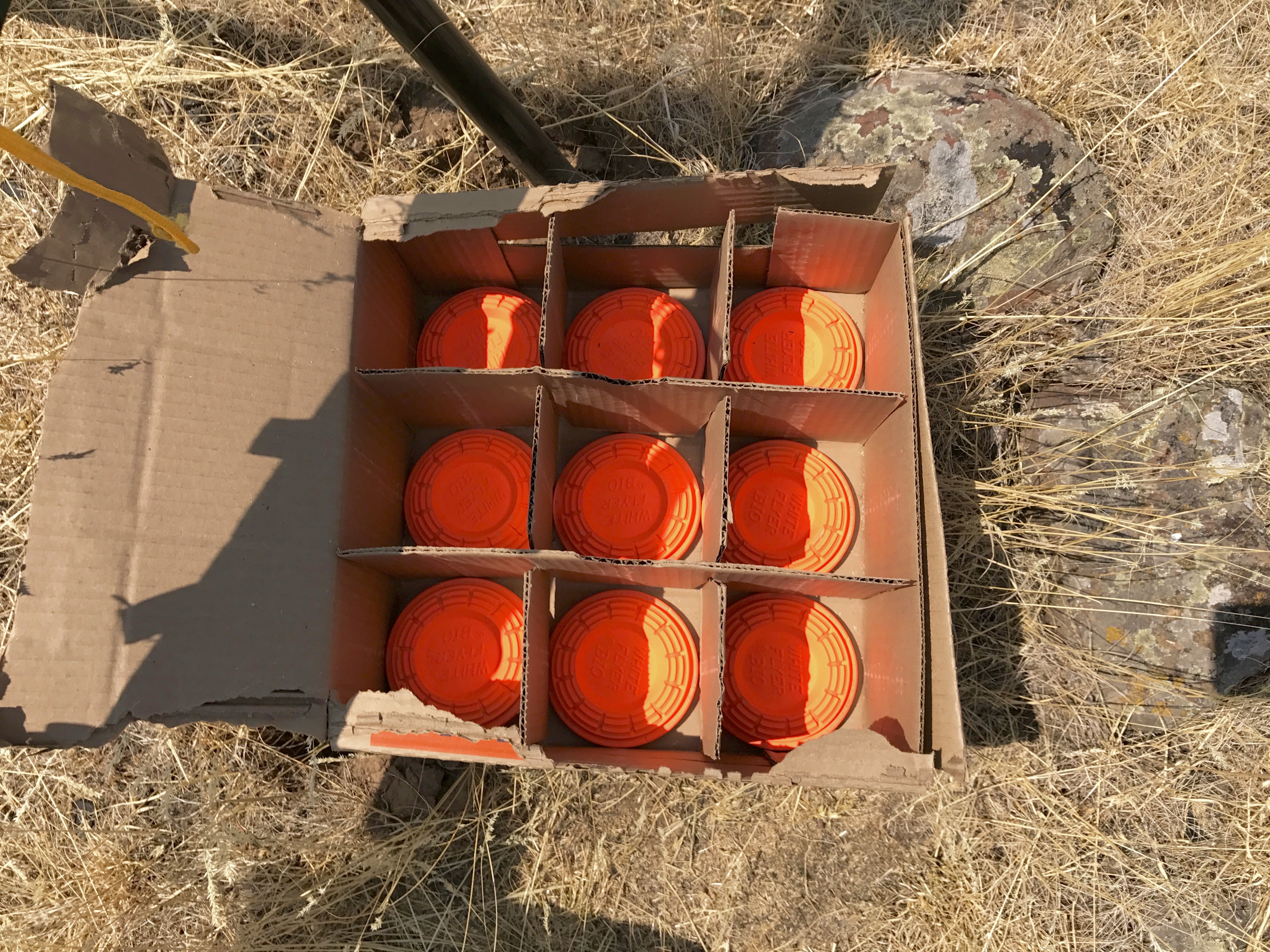
    We’re running out of these things

    Like I need to tell you…

    We’ve had our sights set on Wednesday after school to launch our 2017 bird season. Leslie decided over the summer that she wanted to try hunting this year. She said that she wants to experience what I experience working with the dogs, that taking photos and video can’t capture the experience like actually doing it. I agree.

    Two Benellis now in the family

    I don’t want to make too much about this, but it’s interesting to note that before we met in 2001 Leslie had been a PETA member. I don’t necessarily have anything against PETA; at least they’re not running around with Confederate flags trying to kill people. But they really aren’t fond of the whole hunting thing. So it has always seemed a little odd that Leslie not only didn’t mind me hunting but she accompanied me frequently (thus the great photos and videos on this blog). I knew it saddened her to watch me dispatch a live bird Peat or Angus retrieved; as most of you know, it still saddens me to have to do that. But I rationalized her part in all this as mainly motivated by watching the dogs work. She volunteered for several years with the Greyhound Rescue of Idaho, which began her love for dogs, but also paved her way toward her brief membership with PETA. Life is weird. Now she owns her own Benelli Montefeltro 20 gauge.

    The Natural Shot

    And she can use it. She’d never fired a gun until a year or two ago. On New Year’s Day, she fired one shot from a neighbor’s shotgun when a few of us were shooting clay pigeons on his property. This summer, after she decided she wanted to hunt, she shot about 10 shells at our neighbor’s house, and pulverized 5 of the pigeons. I was excited. She was excited. Our neighbor was excited. So she got the gun, and it sat in our house most of the summer — we were too busy, then school started — until yesterday. We’ve shot the last two days, and she’s getting it. More importantly, she likes it and wants to get better at it. Check out her form in this slow-motion video:

    We also decided that we’re both getting weaker as we get older, so we’re adding some strength training, something a bit more than hoisting a pint a couple times a night. The dogs don’t know quite what to make of it.

    Leslie doing some flexing for the mutts

    So we’re ready to go now. I’ve heard mixed reports on birds in our normal area, and glowing reports about areas lower in elevation. We’ll see. Oh, and we’ve still got boatloads of hats and t-shirts if you’re interested. Check the Shop page for those…
  • Hats & Shirts

    Hats & Shirts

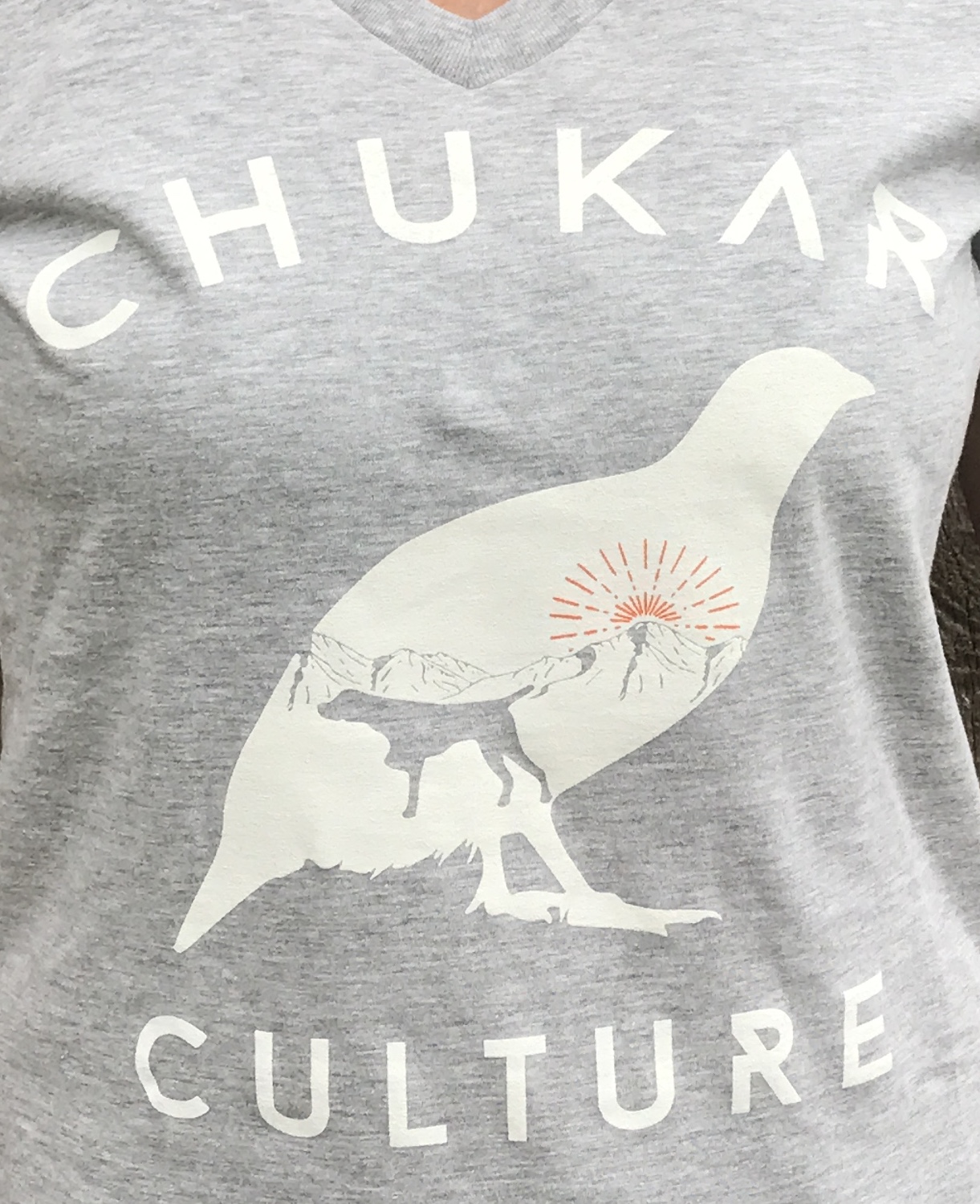
    Chukar Culture hunting hats
    Our new hat collection

    We just added bunch of new gear in our Shop: 6 models of hats, and 5 kinds of t-shirts. I’m still working out some kinks in the shipping module of the shop, so if you have any questions, please send a comment and I’ll get back to you ASAP. Oh, and the all-blaze orange hat was impossible to get the blaze color correct in the photo, but it really is blaze orange…

  • Drones

    http://cdn0.wideopenspaces.com/wp-content/uploads/2016/04/Duck-Hunter-Drone.jpgWith the increasing availability of unmanned aerial craft equipped with cameras, the possibilities for improving the documentation of outdoor activities has radically increased.
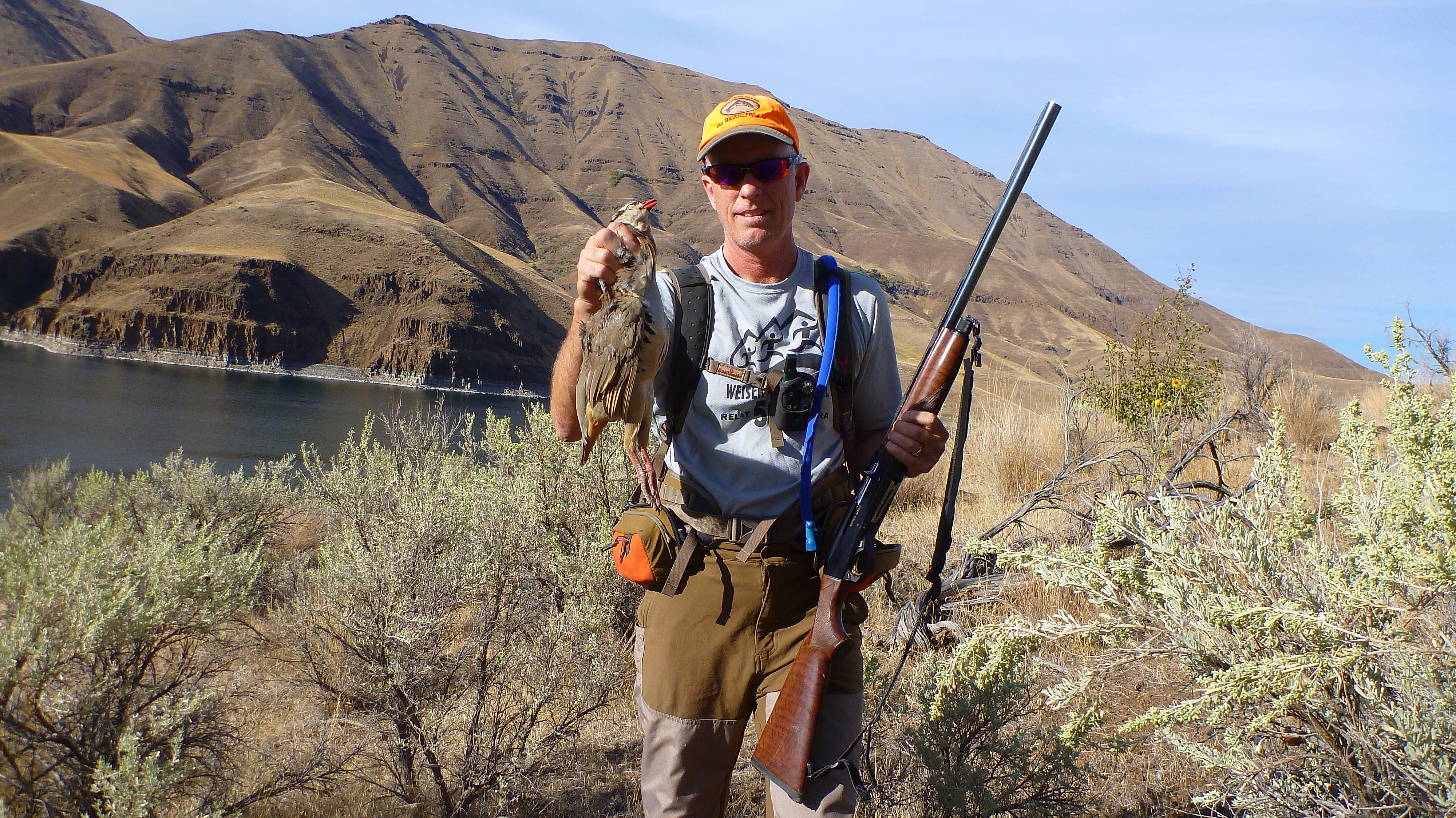
    In Idaho, a recent statute prohibits using drones to assist in hunting, including birds: It is unlawful to “Make use of aircraft, including any unmanned aircraft system, in any manner to spot or locate game animals, game birds or furbearing animals of this state from the air and communicate the location or approximate location thereof by any signals whatsoever, whether radio, visual or otherwise, to any person then on the ground” (36.11.3).

    As most of you know, we enjoy capturing our hunting experiences in still and video images and like to share them. I’d love to have a drone to add to the kinds of shots we get; an overhead moving image of our dogs honing in to point birds on the edge of Hells Canyon excites me. I’m curious to know others’ thoughts about this, and plan to talk to our local Fish and Game officer soon to get his take. The way I read the statute, if we used a drone, we wouldn’t be in violation because we wouldn’t (couldn’t is more like it: there’s no way a drone can do a better job locating chukar than our dogs do). Anyway, I’m curious to know readers’ thought about this.


  • Speaking of Nature

    Speaking of Nature

    The words we choose reveal a lot about how we think about the natural world.

    Source: Orion Magazine | Speaking of Nature

    This might not appeal to many of you, but it has a lot to do with why I’m compelled to write this blog. I just learned of this writer, Robin Kimmerer, a Potawatomi Indian and botany professor. This piece of hers has to do with how the English language separates (elevates) humans from (over) other living creatures by using different pronouns to refer to things. “He” or “she” means a person. “It” means anything else, living, dead, animate, inanimate, as long as it’s not a person. In the business, we call “it” an “indefinite pronoun,” so by extension the only “definite thing,” linguistically or grammatically, can be a person. For a long time in my classroom, I had a circle/slash diagram with “IT” in the center, hoping my students would pay more attention to antecedents. Her essay has helped me reframe this grammatical irritation (I’m worrying now that I’ve lost most of my readers… Sorry!).

    In won’t summarize Dr. Kimmerer’s essay, except to say I think it’s worth reading if only to call some interesting attention to how language shapes our thinking about our relationships with the natural world. I’ll also endorse its ideas as possibly the most elegant conception I’ve seen of a regular theme in this blog, of how I can come to terms with the often bitter paradox of wanting to kill things I love. She mentions, early in her essay, the possibility of honoring the lives we take in our constant efforts to sustain ourselves. She doesn’t address hunting, but I’d love to talk with her about some of these issues and about how “our” language about hunting sometimes falls short of accurately describing what it’s all about.

    If anyone reads her essay, I’d love to hear your thoughts.

  • Tooth and Claw

    Tooth and Claw

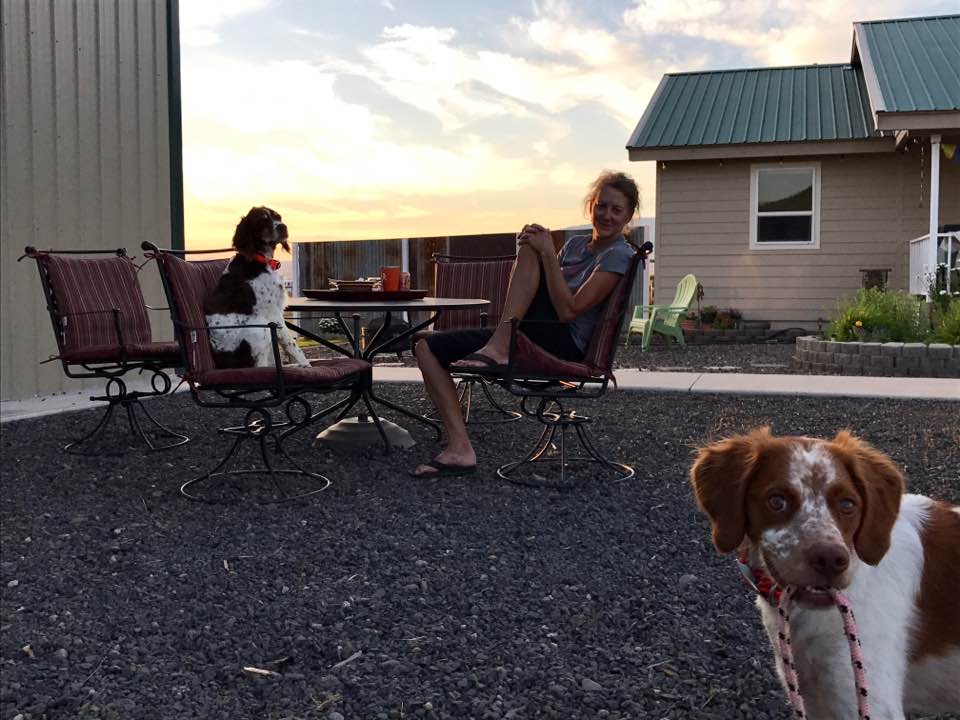
    Dinner with dogs

    We’ve spent a bunch of evenings this summer eating dinner outside near our woodshed, which has a bird house on its west-facing wall that I put up a couple years ago. Its first ever residents are a dutiful tree swallow pair who moved in this spring, and we’ve enjoyed watching them go in and out and eat some of the bugs we’d prefer go elsewhere. It might be a coincidence, but our wasp problem is not nearly as bad this year. I like to think the swallows might be responsible.

    Bird house on the right, with swallow feeding chick

    Just a couple nights ago we noticed the parents coming back to the house and feeding two wee chicks. They’d snatch insects in mid-air and swoop like winged ballet dancers to a sudden stop at the hole and feed their babies, whose wide mouths eagerly took the food. Just as suddenly the adult swallow would fly off on another sortie and return soon with more grub. We got to know these birds. Their concern with getting their babies in shape to leave the nest registered with us and we talked about it at other times throughout the day. Their plight has been on my mind. We rooted for them, and felt relief and satisfaction when we saw the chicks eat, and felt anxious when their yearning heads stuck out of the hole anticipating the next insect installment.

    Parent and chick touching talons

    Our cat Seamus, an accomplished hunter in his twilight years, knows about these birds, as does Peat. Peat barks at the parent when it perches in a nearby dead tree. Last night Seamus sat on a Ponderosa pine round several feet below the bird house. I threw a rock at him and he fled. Tonight, as we watched the birds perform their dusk routine, I thought I’d relieve them of a little stress by moving the round away from the house, and took some perverse pleasure in thinking Seamus would be disappointed at having his bird-killing perch removed.

    As the light faded and we returned from a brief stroll around the yard, I noticed Seamus hunched on the ground near the bird house but couldn’t see what he was doing. I threw another rock at him and he ran off. I attended to some other matters for a moment, and then heard Peat barking and saw him facing Seamus under a lawn chair. Seamus ran off again, and Peat dived under the chair, grabbing something with his mouth. It couldn’t be. He brought it to me, still warm but expired, one of the swallow chicks. My heart sunk.

    We think we understand something and allow ourselves to hope. I looked back at the house, which now appeared empty. I couldn’t see either parent flying around, and the hole was chick-less. It was as if their hearts couldn’t stay. I don’t know if they’re gone, or if there’s still one chick in the house. I hope, but don’t understand. And I’m angry with my cat for succeeding at doing what I spend all year myself thinking about doing , and a third of it actually doing.

    There’s science, and then there’s the other things. I’m dashing this out tonight ipso facto, but always think of the phrase from Tennyson’s long, long poem (which I’ve never read much of but should) in memory of a dear friend of his (from Cambridge, no less – the one in England, not the one I’m in): “Nature, red in tooth and claw,” which caught the ear and imagination of Darwin’s followers despite the fact that Tennyson doesn’t really pick a side of the Creation-Evolution question. But it’s all I’ve got to console me in situations like this: shit happens, and there’s usually an explanation even if you don’t like it. I want that baby bird back. It was obviously too soon for it to fledge. I don’t even know what happened, but I wish it hadn’t.

    Peat with the meadowlark

    About a week ago, Peat snagged a baby meadowlark, brought it to Leslie who Googled an answer while holding the bird with her other hand, returned it to the nest, checked on it later that evening, and found it to be fine, with mom nearby. A couple days later, I found a meadowlark chick corpse in the grass, no doubt re-retrieved by Peat, just doing what he does best. Angus did the same thing to a robin a couple years ago. It’s just hard to take. And then, tomorrow, in another frame of mind, I’ll say again to Leslie for the millionth time since last December, “I can’t wait for chukar season,” when I’ll go and try to kill birds I haven’t gotten to know because I couldn’t stand it if I did.