Tag: sunburst brittany

  • Remote

    Remote

    “As for me, I am tormented with an everlasting itch for things remote.” – Herman Melville, Moby Dick.

    So far this season, Bob and I have been only hunting at higher elevations where the earthy golden grasses and light green sage colored hills meet up with the forested mountains. These are places to take advantage of now. Soon these places will be almost impossible to reach when the winter snows start falling, which will be any day now. Intrepid hunters that don’t mind post-holing for miles can get to these spots when the snow is really deep in December and January. We’ve done it before but it’s really hard on the dogs. It’s hard on us. And you wouldn’t see birds anyway.

    Five years ago in Mid-November, Bob and I hunted on top of a higher elevation plateau covered with big basin sagebrush and antelope bitterbrush. It was remote and far from any roads or two-tracks and undulated like a rollercoaster and required a steep downhill hike first, then a climb up to the top of the plateau, then back down again before climbing back out. It had all the things you would want for good habitat for chukar: steep slopes, rocky outcrops, water, plenty of things for the birds to eat, and cover from predators.

    A couple of weeks ago, waking up to almost perfect health for my age and the sweetness of early morning darkness, I suggested we make the drive back out there. I’m not particularly fond of hunts that start with the downhill first, unless we’re doing a shuttle, but I’d thought of that place often and really wanted to go back. The motivating force was, besides being incredibly scenic, especially in October, was that historically chukar were there before, so they should still be there, right? I do know that every year things change, every month and even day changes your odds of finding them, but it’s the eternal hope that really drives us.

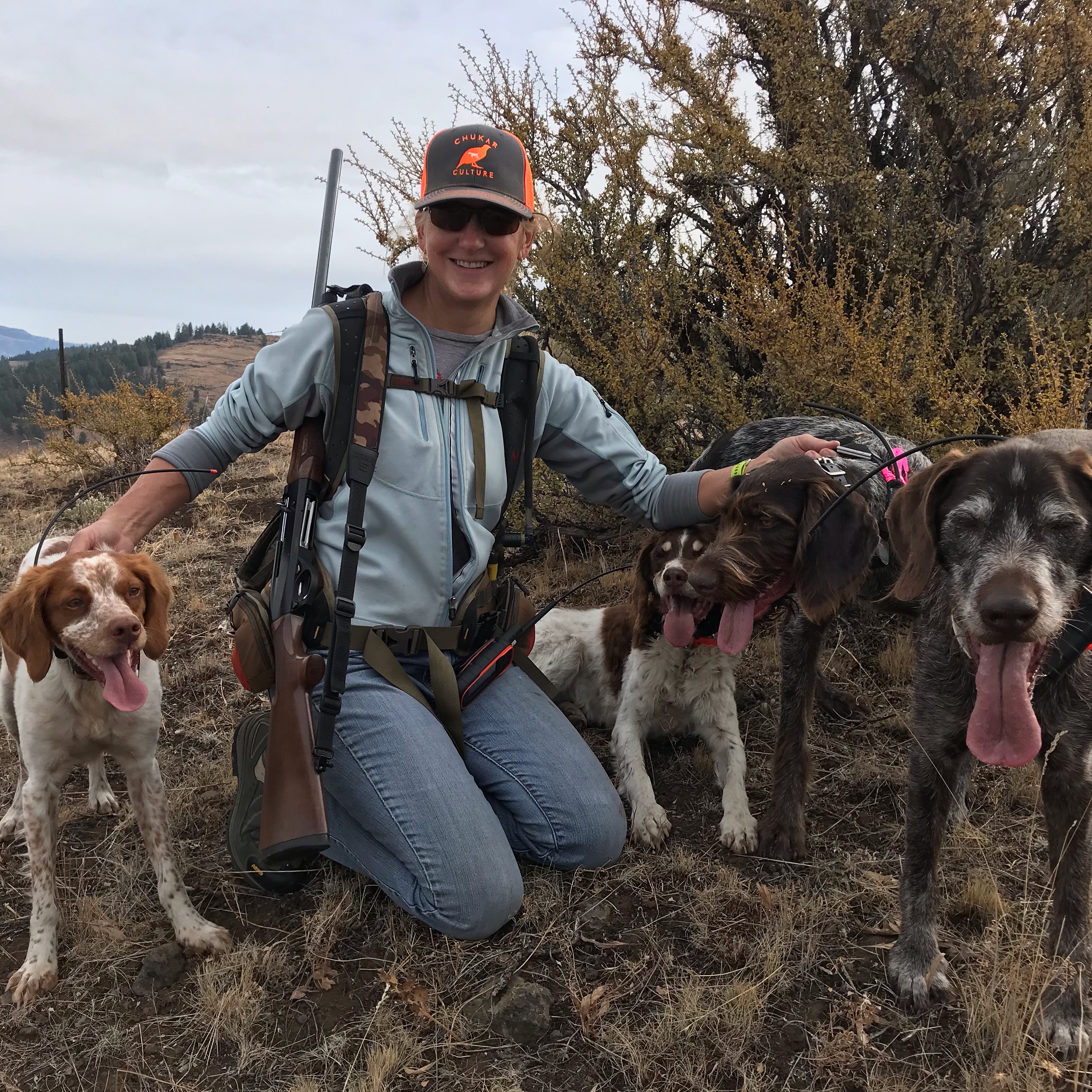
    We left home and after about an hour drive on a gravel road, we arrived to the place where we wanted to start our hunt. We put on our heavy packs, mine weighed down by what felt like gallons of water, and took our shotguns out of the cases. Before letting the dogs out, we put their orange Garmin hunting collars on, which is never an easy process when they are excited and know what’s about to happen and behave like wiggle worms or house cats not wanting to be held.

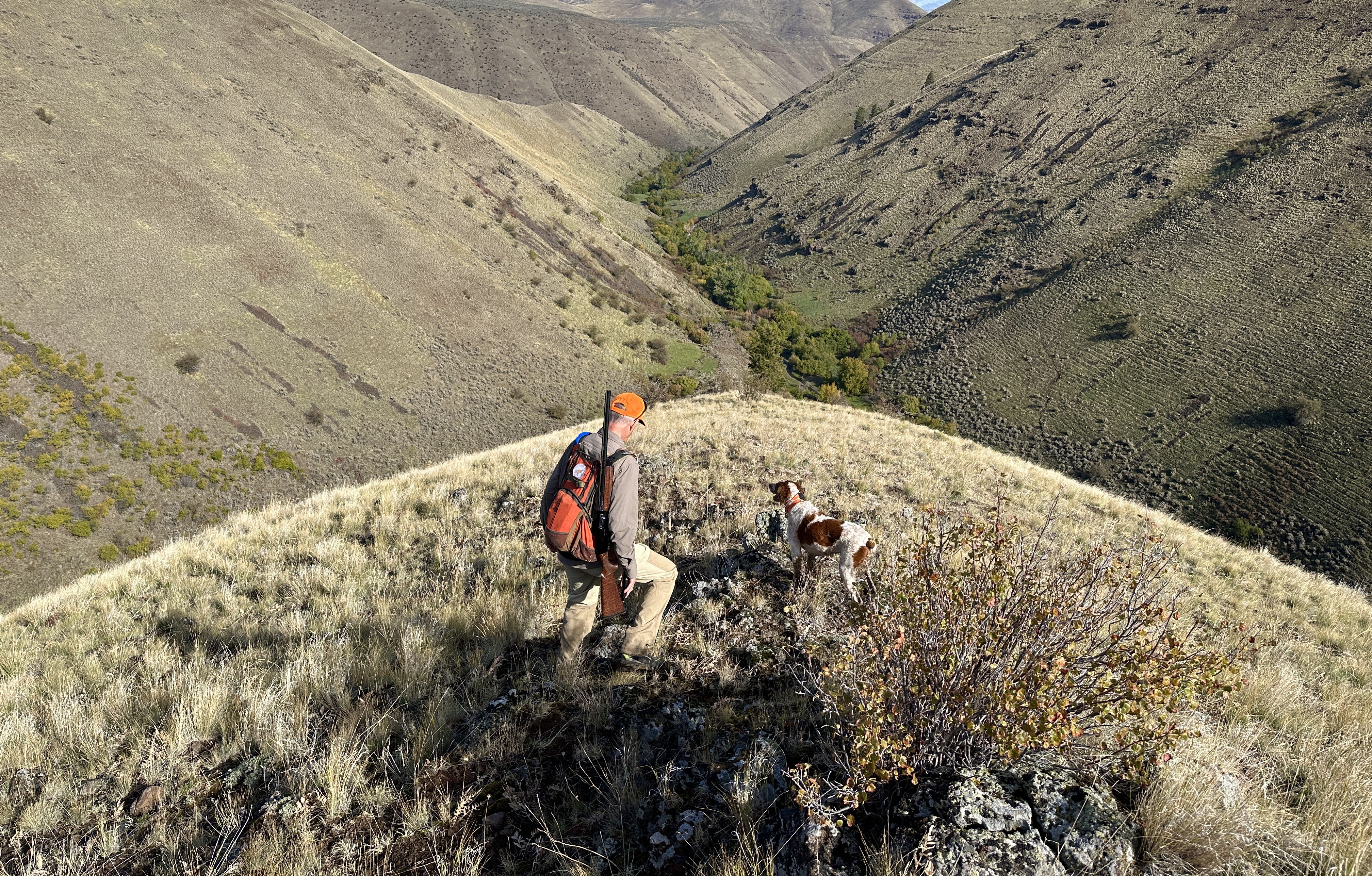
    The early morning sun was still behind the horizon as we started our descent and the air was cool and frost coated the short green up. In the distance, a rosy alpenglow lit up the hills to the west. At the start of the 1,000-foot descent on a game trail meandering through a dark and shadowy ponderosa pine-lined draw with a tiny dribble of a creek running down it, Bob insisted that I go in front, so I took the lead, which was unusual. I prefer to follow because I’m usually slower and don’t read the terrain as well. I try to make a mental map of the landscape but I’m prone to daydreaming and I once got us temporarily lost in a snow storm, a few seasons ago, in a maze of game trails and rocks and ridges that all looked the same.

    I felt excited to be back and descending on this trail again after five years. A trail that’s been used by wild animals for time immemorial that leads to a place that hasn’t been destroyed by humans. It had rained the day before and prints of deer and dents by bigger and heavier hoofs of ungulates still wandering the area were on the trail. Some tracks were going uphill and some downhill. Peat’s petite little prints and Bloom’s bigger ones were freshly impressed into the earth heading away from us. I looked back up the trail and saw my own tracks. The sound of a grouse busting got our attention and we both removed our shotguns from our shoulders and looked into the direction of the sound. Peat tracked it down across the creek and found it up on a limb of a tall pine tree and starting barking. This is what he does whenever grouse are in trees. He usually barks his head off until we can’t stand it but I don’t like shooting grouse out of trees and Bob really doesn’t either so we buzzed Peat back and decided to continue walking and leave it be.

    I stopped and examined scat of a black bear which was berry- and seed-filled. I pressed it with my boot, and thankfully it was dry. We kept going, more scat, maybe a coyote or fox, turds full of fur. The front of my thighs and ankles started to feel the terrain and I was cursing at myself for suggesting such a strong and steep place this early in the season in when not really knowing my fitness.

    We got closer to the bottom of the damp draw and near the creek the banks were all muddy and eroded and the gooey mud stuck to the bottom of our boots. The creek was a welcome relief for the dogs as they paused to drink water before crossing. Bob took the lead in front of me and stopped and swished the soles of his boots in the water as he crossed, to get the mud off. He said, “I don’t want the extra weight for the long climb.” I did the same but stepped into a slightly deeper section of the creek and water splashed inside one of my boots and got my wool socks wet.

    I followed Bob up the other side of the draw as we zigzagged our way out of the bottom of the creek bed. Five years ago, we flushed chukar out of this spot. This year, nothing. I finally caught up to Bob taking a quick break to catch his breath. He said, “I’m taking 61 steps before stopping to rest.” We continued. I tried 61 steps for a while, hoping to find my rhythm but couldn’t. Mind games to get you to the top where sometimes your mind is your worst enemy and the relationship between walking and thinking and the movement of memory when you don’t have what I call “chukar legs” yet in this early part in the season.

    Almost to the top of the plateau after two hours of hiking, we heard chukar calling in the distance but couldn’t pinpoint exactly where it was coming from, but it sounded like they were on the opposite side of the ridge, the one we just came from.

    I truly believe that some of the chukar up there have never seen a human or hunting dog before. This could be a good thing or bad? Some chukar hunters say birds bust wild and the dogs can’t hold them in the early season because they’re not used to being hunted, or just that they’re young birds. Others say towards the end of the season in January when they’ve had tons of pressure from dogs and people, that’s when they really bust wild. From years of experience doing this, I believe it’s a total crapshoot and there is no rhyme or reason for their jumpiness.

    Once up on top, we split up to cover more ground and to increase our odds of finding old deer or elk sheds. Bob and Peat went one direction, and Bloom with me. Peat stopped ahead and pointed solidly, then three or four dusky grouse busted from the ground one by one near some ponderosa pines just ahead of us. The grouse were too far for me to get a shot. Bob tried to hit one but missed. Bloom, with his strong prey drive and inexperience, saw one flying in the sky and took off like a high speed freight train to pursue it. I buzzed him to come back, which he did. We continued hunting, keeping each other in sight as we headed down a ridge, Bob in front of me.

    The dogs methodically covered the terrain doing circuits and periodically returning to get some water. We noticed Peat was favoring his front right leg and wouldn’t put any weight on it. We examined it and didn’t find any cuts on his pads, and after palpating still didn’t find anything. We kept going down the ridge. A few minutes later, we watched Peat, who we’ve dubbed “The relocation specialist,” find one of the grouse from earlier hunkered down in a sagebrush as it suddenly busted wild before he had a chance to point it.

    The descent down the open ridge felt like it went on forever, and it was covered with loose rocks. I didn’t remember it being that way before. It’s funny how you don’t remember certain things about past hunts. They always seemed easier. Once back down, we crossed over a different section of the creek before heading back up. The climb from the bottom was hard and it was hot. We used as many game trails as we could find and I pulled myself upward using bunchgrass to hold onto, but I felt wimpy for getting sick of it and stupid for complaining about side-hilling and being afraid of traversing one particular loose scree vein on my hands and feet. I had to remind myself that this is part of the game and that every hunt after this will be easier.

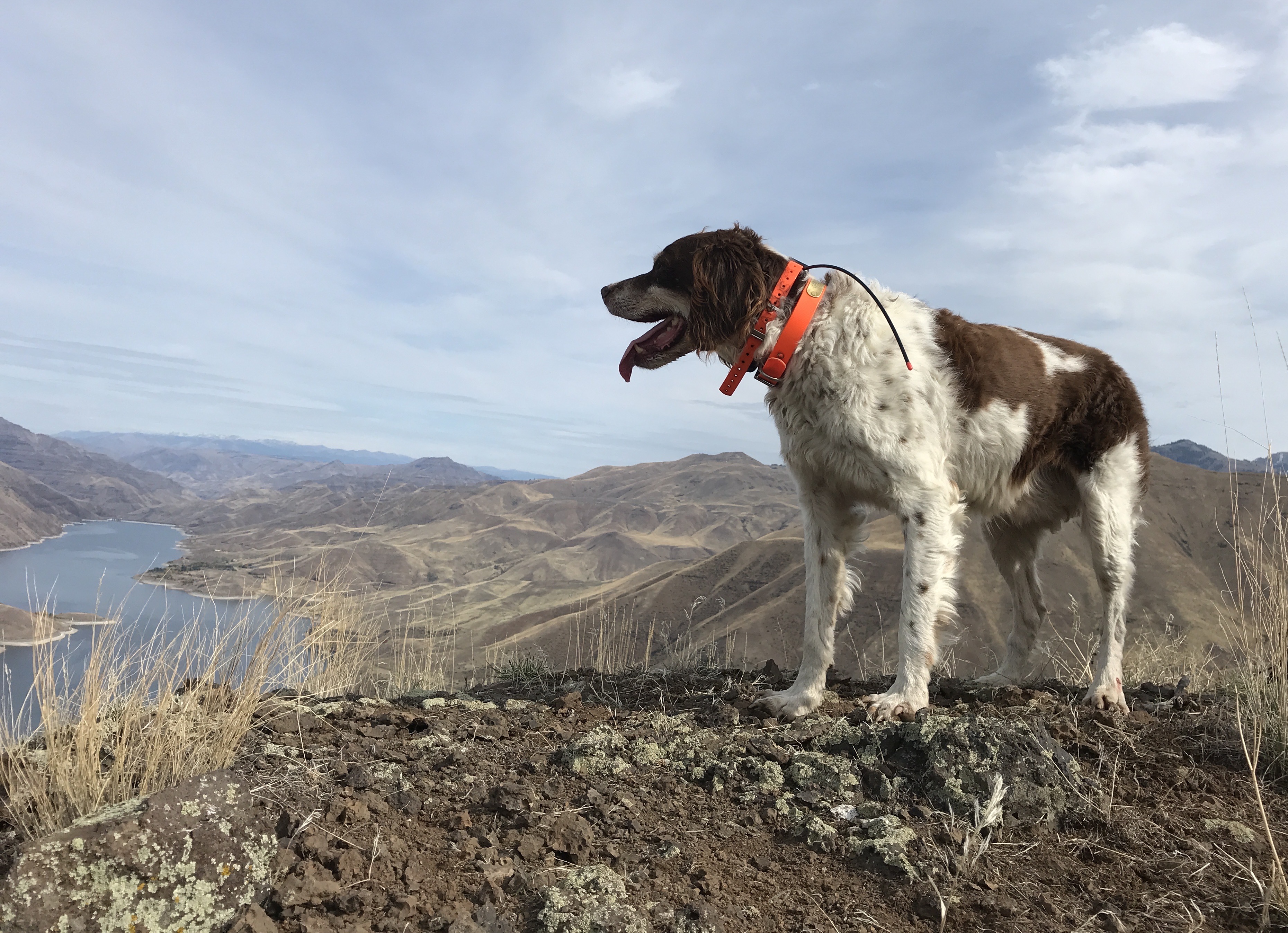
    Bloom, our workhorse, continued to cover tons of ground all the way up which took about an hour. Peat kept stopping and laying down in the shade of sagebrush. I worried about him and the possibility of having to carry a lame dog up the rest of the 1,000 foot climb. In the 16 years of hiking these chukar hills with Bob, this was the first time I thought about getting a dog sling for emergencies.

    Almost towards the top of the climb we entered another small forested area. My Garmin handheld beeped that Bloom was on point above me. Bob said, “He’s your dog; you better go.” I picked up the pace, climbing uphill and looking for him and busting through the thick hawthorn and bitterbrush. Then suddenly a grouse busted above me, flew past, I shot, and missed. I felt defeated. It was an easy shot on a big bird.

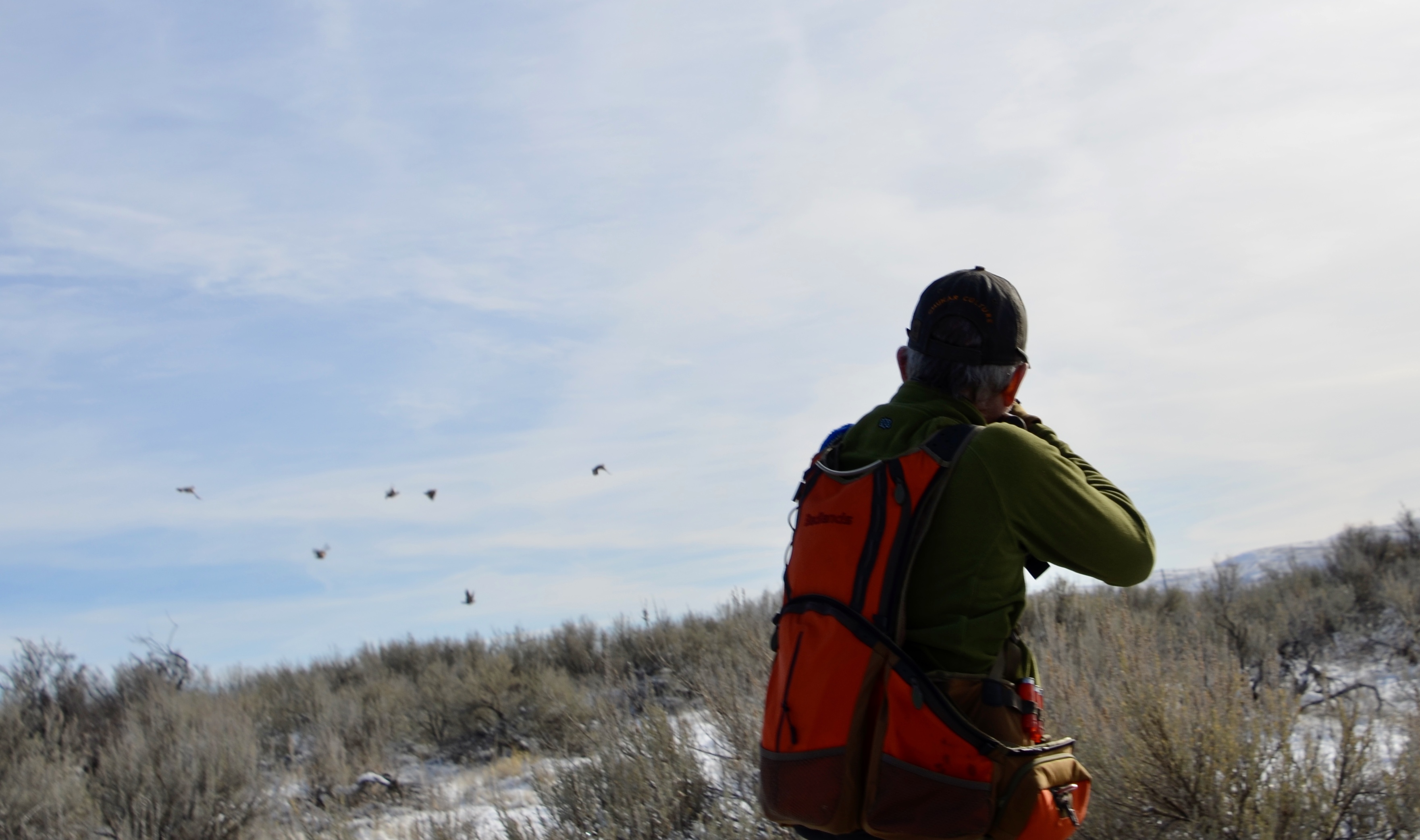
    On top of the last ridge, the final point of the day was Peat finding a covey of chukar just below the rocky ridge with Bloom backing him. Just as we were carefully navigating downhill getting into position in front of Peat, they busted. We both shot and Bob hit one. The chukar landed on the ground and started running. Peat chased it down and did the most remarkable retrieve despite his handicap. The only bird bagged in our five hour hunt was pointed and retrieved by a three-legged dog.

    When I get nostalgic about the past, which seems more often these days, there are things I’ll remember on this beautiful autumn day engrossed in the intimacy of this remote landscape, and I will love them all.

    Peat is now fine if anyone is wondering.

    On the descent.
    The wall in the distance for the final climb.
  • Home Movies

    Home Movies

    After the light came

    We got an early start and headed up the mountain in the dark wearing headlamps for the first part of the climb. After about an hour of zigzagging up the mountain the sun started to rise in the distance. Some parts of the climb were super steep and I ended up having to grasp some clumps of bunchgrass and branches of sagebrush to pull myself further up. Legal shooting hours were one half hour before sunrise but Bob’s goal was to reach the top of the rocky ridge and not start hunting until the downhill. This was early fall and still pretty warm outside during the day and he was hoping that the birds would be heading up after spending the early morning drinking water down by the river and, as they say in cowboy movies, “Head them off at the pass.” This was my first time hiking for chukar with Bob and Angus and this whole world of seeing things off trail was new and exciting.

    Bob asked if I’d carry our video camera to record some of the hunt that day. I’d never used our video camera before and he showed me how to operate it the night before. He told me that the red light meant you were recording and the green light meant it was stopped. Besides negotiating new terrain and trying to keep up with Bob and Angus, my job was also to stay out of the way and be ready to film at all times. When something would happen which I wasn’t anticipating because I didn’t understand what was going on, Bob would signal me that Angus was onto birds or he was on point so I could start filming. With so much going on in my mind that day, operating the camera and pushing the correct button was the opposite of what Bob told me and that the green light meant go. Unbeknownst to me, I spent most of that day recording the ground thinking the camera was turned off.

    Angus pointing chukar
    Angus strikes a familiar pose. This was the first time I saw Angus point.

    The descent on this first chukar hunt was equally challenging and it was easier on my legs to go up than down. Chukar country is steep. We stopped on the way down and I took off my backpack to get something out of it and sat my pack on the ground. Before I knew it my pack was somersaulting down the hill. I stood there and watched in disbelief not being able to do anything about it and thanked my lucky stars that it was still zipped up and that we were heading downhill in that direction anyway.

    When we got home Bob sorted through at least an hour of footage of nothing but the moving ground and dizzying images of boots. I was embarrassed by my lack of getting something on film but he found at least a couple of minutes of hunting action and he made a short video and uploaded it to YouTube. The name of the movie was “Another Chukar Hunting Adventure with Angus.” Back in 2010, YouTube was still fairly new and there weren’t a whole lot of chukar hunting videos out there. Anything was better than nothing, we thought, and we even got some positive feedback on the video and not too many thumbs down. I agreed to carry the camera the next time we went out, and the next and the next and that continued for another seven years until I finally got tired of following Bob around the mountain with the camera and got a shotgun and started hunting myself.

    I call our YouTube contributions “home movies” because they’re not professional quality by any means. Over the course of those seven years of filming, my fitness improved and usually I was able to stay with Bob plus anticipate when something might happen, and I learned to try and hold the camera still and slow my breathing down or hold my breath while filming so we wouldn’t have so much heavy breathing but that wasn’t always easy.

    During this down time we’ve all been having the past month, I’ve been going back and rewatching some of the videos we made over the years. A virtual rabbit hole of good times spent on the mountain. This first video, Another Chukar Hunting Adventure with Angus is the movie made with the footage from my maiden day on the mountain. I’d never seen chukar hunting in person or a pointing dog working until that day and immediately knew that it was something special.

    This next one, How Not to Handle a Hun was made in 2013. We took “The Kid” Jarret hunting and he learned that not all birds are retrieved dead. It was a good learning experience for him and me. It’s something that carried over when I started hunting. My first Hungarian partridge that Angus retrieved for me during my first season wasn’t dead. I had to deal with it and it’s not pleasant but it’s part of upland hunting.

    Chukar Hunting Retriever Man was filmed on the 2016 season opener with our friend Cameron. We lost one of the birds on a rocky cliff down by the water and Angus couldn’t get to it. We decided to go back and get the boat and motor back upriver to find it. While Cam was retrieving it up in the rocks, Angus ate Cam’s roast beef sandwich. We still laugh about it.

    Shit Chukar Hunters Say was my idea back in 2013. I’d seen something called “Shit Cyclists Say” and wanted to make a chukar hunter version of it. We made it with our friend Greg on the hill behind our house. We didn’t really have much of a script and Bob and Greg did a wonderful job ad libbing.

    Public Land Chukar Hunting in Idaho. We went hunting in a place we’d never been before back in 2016 and at a place we really didn’t expect to find chukar but did. I really like this video because it was the first time Bob did a voice over and I love that about it. (He made this video as an example for a video project he had his students do.)

    A Walk for Chukar is one that I made myself last year when learning how to use iMovie. It celebrates the landscapes where these birds live. I love this video and can watch it over and over.

    This last video, Another Chukar Hunting Adventure with Angus, 2020, is footage from this past season 2019/2020. I just made it this week. We used the same music from that first one made in 2009, and the only thing that is different is location and all three of us are much older.

    Looking back at these and watching them, there is one thing that resonates with us, inspires us, and makes us look forward to next season are these beautiful places in the chukar hills.

  • Love and Danger

    Love and Danger

    On the steep ascent the winds were blowing hard and the dogs were having a hard time pinpointing the birds and singles were busting wild from the grasses and the minute you blinked one would take off like a missile.

    Halfway up the ridge, I stopped on top of a rocky outcropping to wait for Bob who was below me. That day my legs felt great and for once I was pushing the pace up the mountain and getting to the dogs on point before him. He made it up to me and we stood there a huge gust of wind almost blew me off my feet. He said, “I’m not standing next to you anymore,” as he looked over the edge of the rocks and down a steep drop off.

    Looking down waiting for Bob.

    We continued climbing higher up the ridge. Peat located a covey of chukar above me, and he held the point religiously but just before I could get close enough, the birds –impatient — busted and flew downhill. All that elevation gain for nothing. I grumbled to myself about it. We continued up for a little longer before bailing out completely because of the very high winds at this point on the ridge. I’d remembered my very experienced bird hunting friend Sam telling me once that “The birds are at ground level and out of the wind; they’ll be there.” They were there but I wasn’t ready for them or couldn’t get to them. On the way down, Angus went on point in a rocky draw just above me. I waved my arm and got Bob’s attention and pointed in the direction of Angus because he couldn’t see him. A covey of chukar busted and flew downhill overhead in between us and we both shot at the exact same time and a single chukar fell to the earth. I thought it was my shot that hit it, and Bob thought he hit it. This was the first time this had happened to us. It didn’t really matter to me whose bird it was, it was a shared experience and I don’t keep track of my shooting average anyway.

    Just over half way up
    Shared bird, shared moment

    We stopped on the downhill to take a break after a long steep descent from the ridge top. I was tired and needed to eat something. I sat down on the ground with my shotgun planted firmly between my knees pointing up at the sky and pulled out a piece of cheese and some crackers, sharing some of it with Peat. It had been a hard hunt, an exhausting one, and a frustrating one. I sat there and watched a herd of elk in the distance grazing.

    Herd of elk

    After resting for a few minutes, Bob and I continued traversing across a steep slope where I found a narrow game trail and started following it. Stepping off the trail to walk around a rock on the trail my boot slipped on a patch of slick mud and before I knew what was happening I was tumbling down the mountain with my shotgun flying out of my hand and into the air. Everything happened so fast. Bob below me witnessed the whole thing and while I sat there on the ground stunned he yelled, “Are you okay?” Feeling my limbs, nothing was hurt. I felt lucky. I looked around for my shotgun and found it uphill laying on the ground with the barrel pointed right at me. The safety was still on, but this was the first time chukar hunting that I felt like something really bad might have happened.

    A few minutes before I fell

    Over the course of the season, our rule is not to hunt the same place twice, and increasingly as we’ve gotten older we find ourselves hiking more miles and gaining more elevation, and finding very remote places each time out but I’ve also managed to end up in some very questionable nooks and crannies with loose rocks and boulders. I have done my share of crawling on my hands and knees or on my butt to negotiate them. I wonder how long I can keep this up.

    Why do we love doing a sport that could be potentially dangerous? Jack Kerouac wrote, “Pain or love or danger makes you real again.” I don’t know about this.

    Lately, my mind keeps wandering back to the chukar hills and sitting on the hillside with Peat by my side on that cold and very windy December day watching those elk. It was a moment when my only complaint or worry about anything was that my ears were cold, the birds were busting wild, and I wasn’t sure what I’d make for dinner that night. These were innocent times.

    It wasn’t until this past chukar season or lately that I’ve worried about my health or my mortality, but these last few days have been surreal around here. Our school has closed for who knows how long, sports canceled, jobs lost, life interrupted. As of today, we don’t have any cases of COVID-19 in our county but if things go as they have it’ll be inevitable. I’m anxious not knowing what the future might bring for the world, our country, our town, our school, our neighbors, or for us.

    I appreciate you reading this post. You’re probably sick of reading about the virus and might be hoping this post would be an escape from it, but it has affected each and every one of us in different ways. I do know one thing for sure: the birds will still be there in the chukar hills this fall when things hopefully get back to some sense of normality.

    Until then, I hope you and your family stay safe out there.

  • First Two Months

    First Two Months

    Friday, August 30th.

    It was warm outside, t-shirt weather, and I was hoping for a crisp, cool morning on grouse opener but the air felt thick and muggy. You could hear a pin drop in all of its calmness. I worked my way up through the deep draw that was nestled between stands of tall sage, weaving my way through the thick brush, tucking and carefully maneuvering my shotgun, always aware of where it was pointed while crawling over and under branches. Some branches catching the back of my upland hunting pack, I fought my way loose. I could hear Angus intrepidly and noisily moving below me, sticks breaking and dried arrowleaf balsamroot leaves being crushed like potato chips. I caught a glimpse of him as he ran uphill past me. Angus was birdy, his docked tail moving back and forth quickly like a hummingbird. I was hoping to hear the sudden fluttering of a grouse busting for freedom but I heard a different sound instead.

    A quiet staccato cak-cak-cak noise came from overhead in the tall pine trees at the top of the draw. I stopped, picked out a tree and squinted into the sun looking for an outline of a bird overhead somewhere. Balancing from a skinny branch like a tightrope walker, I caught the glimpse of the big dusky grouse staring down at me. Bob and Peat were coming up the other side of the draw and heard the grouse calling. I motioned him over and singled out the grouse in the tree. He pointed at my forearm covered in fresh blood and asked “What happened?” I answered back “Hawthorn spike, I guess?”

    My preferred style of hunting is not seeing or thinking about killing a bird too much beforehand. The killing part of bird hunting is the part that I hate the most. “I’m not going to shoot that grouse out of a tree!” I shouted to Bob. In my mind after I made eye contact with that bird, we now had a relationship. Bob said “It’s just meat, I’ll do it.” The grouse impatient from our conversation about who was going to shoot it flew from the branch. Bob shot and missed and then he continued up the draw where he found a large mule deer shed laying on the ground. Bending over to pick it up, another grouse busted from the ground nearby. He proceeded to mount his gun, spin around, and hit the bird as it flew past. It was an amazing shot. Falling from the sky and into the ticket, Angus was first to the retrieve and took the bird directly to Bob. I was proud that he beat Peat to the grouse.

    The old warrior, or aged warrior, as we call him, Angus seemed perfectly normal and fine during the hunt but after we got home we noticed some tiny drops of bloody urine on the kitchen floor. We had noticed some drops of blood before, about a week prior, but didn’t know where it came from. Examining Angus, we realized it was coming from him. I called our regular vet who’s taken care of Angus for seven years. His answering machine said that he was still on medical leave, which he’d been on all summer, but that he might start taking appointments on the Tuesday after Labor Day weekend. Anxious to get Angus treated right away, we called another vet clinic in another town and they said they could see Angus that afternoon.

    The veterinarian, one we’d only met for the first time that day, walked out of the back examination room and into the waiting room where Bob and I were anxiously awaiting the results of Angus’s urine test. Expressionless, he made eye contact with me and looked away. He began by saying “I have some bad news…….[pause]………the good news is that his lab work looks good……..[pause]……..the bad news is that we went ahead and did a quick ultrasound and he has a urinary tumor and most likely has one to three months to live.”

    Devastated.

    I stared down at the concrete floor and looked up as someone walked past close by, and another person with their dog was heading out the door. Without saying any words to me and just from his expression I could tell the vet was saying, “I’m sorry.”

    Instead of being handed a bottle of antibiotics to fix what we thought might be just a simple urinary infection we were being handed a business card for a vet clinic in Boise that we could call the following week to make an appointment so they could discuss starting chemotherapy which might buy him another six months at the most.

    The long Labor Day weekend was ahead of us, and anxious to get a second opinion right away, Bob called a good friend of ours who’s a vet in Washington state to ask him for some advice. Ethan suggested getting Angus on Piroxicam because it’s been shown to sometimes give good results to dogs with transitional cell carcinoma (TCC) and that surgery was too risky to remove the tumor.

    Tuesday, Sept 3rd.

    After the long weekend, doing our own research and giving it plenty of thought, we decided against pursuing chemo because Angus is 12-1/2 years old. Bob called the vet to see if he could get us some Piroxicam, but he’d never heard of using it for TCC. What!? That same Tuesday Bob called our normal vet , Dr. Gardner, who we liked and trusted, and who’d miraculously made a complete recovery from his illness and was back to business full time. Dr. Gardner called into our pharmacy the prescription for the Piroxicam. We started Angus on the drug on Sept 5th.

    Chukar opener was Sept 21st, and I’ve hunted with him eleven times now since they found a tumor in his bladder. He’s been hunting hard and pointing chukar and Huns just like he’s always done, and I’ve had the pleasure of shooting over him and have him retrieve birds for me. Looking at him you wouldn’t know anything was wrong with him, but now knowing that this is his last season makes me appreciate things more than ever. Bob and I take turns following him around outside to watch him pee, but the moment he can’t urinate anymore because the tumor is blocking his urinary tract it will be time. Just like in that moment you choose to shoot and kill a wild game bird, it’s a choice we make or are forced to make, and it’s never easy ending a life.

    Miracle dog?

    I’ve been crying a lot lately but don’t want Angus to see me doing it. Dogs are perceptive, they key into your emotions. He doesn’t know that he’s dying. We took him for his two month check up a couple of days ago, and Dr. Gardner said that the tumor was shrinking.

    Another miracle? We’ll take it for now.

    Watching Angus pee.
    Chukar opener
    Last week
  • Looking Back

    Looking Back

    I admit it, I’m a sucker for trying to take a good shot or even a bad shot. A snapshot, that is. I always swear I’ll leave my camera or phone tucked away while I’m hunting but end up breaking my own rule. Bob even went out a couple of times without his gun and got some beautiful shots.

    Tomorrow is season opener for chukar and grey partridge in Idaho. This will be our 10th year sharing stories and photographs of hunting wild birds in addition to sharing just a small taste of the culture of upland life in our neck of the woods.

    A lot the hunts from last year were challenging, but we always have a fun and wonderful time when hunting alone or with family, friends, and good dogs. These are some of our favorite moments from the 2018/2019 season.

    Thank you for following along on our journey each year. Maybe we’ll cross paths with some of you out there reading this right now. If we do, we look forward to meeting you.

    Enjoy your season, happy hunting.

    Leslie and Bob

    Looking back
    Sun and sagebrush
    The low creep
    In the bag
    A walk for chukar with some Virginians
    The wall
    Double point
    Finn
    Four pointing dog day
    Pot of gold
    New friends and old friends
    The color of the season
    Fence line
    Favorite shade of blue
    Hungry
    Hoarfrost
    Charge
    Afternoon traverse
    The long descent
    Sam
    Nose to the ground
    Covey rise
    Into the clouds
    Focused
    Aged warrior
    Wallowa view
    Snowballs
    Sunburst brothers
    Wings
    A young dog learns a new scent
    Liftoff
    Huntastic
    Post hunt recovery