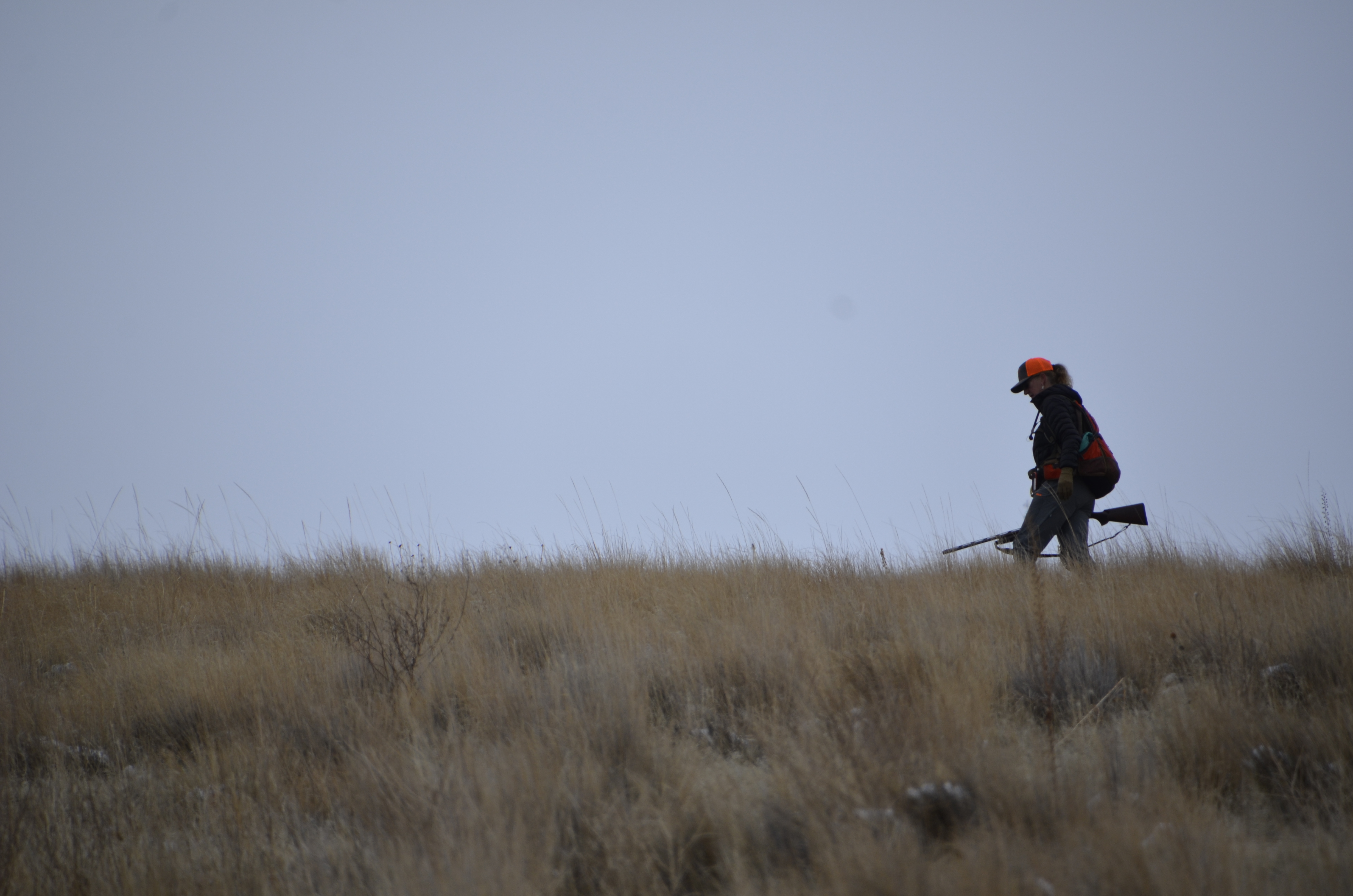
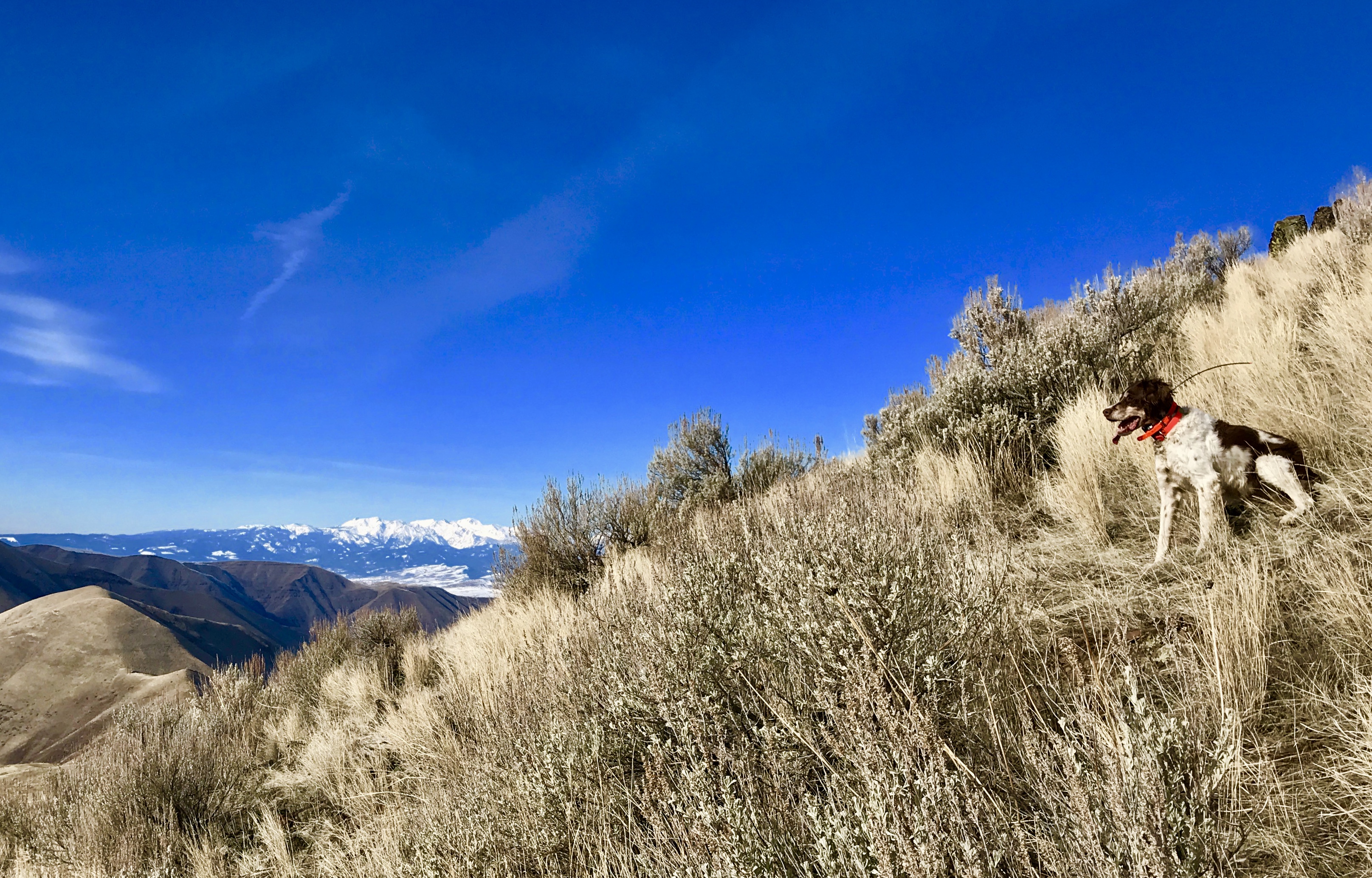
Tag: chukar

  • Saved by a Dog

    Saved by a Dog

    We all have our stories about how bringing a dog into our lives changed it, enriched it, or sometimes made it more complicated. We have our own tale going back to the beginning of Chukar Culture and where it all got started with this one particular Brittany named Angus who is now 12-years old. Looking back at it all, because of this one dog our lives ended up taking a route that might have gone in a different direction or maybe we wouldn’t even live in a part of rural Idaho where we purposely put ourselves to be closer to abundant public lands for chukar hunting.

    The reality of getting my first puppy and converting from a cat person to a dog person didn’t come until later in life. Growing up in rural Eastern Oregon, we always had a menagerie of outside cats and kittens that I’d dress up in doll clothes whenever I could catch them. We did have a couple of dogs, my Mom had a small white poodle that only liked her and my Dad inherited a bird dog, a large Weimaraner from a neighbor that lived down the street. My dad wasn’t a bird hunter or any kind of hunter for that matter, but Greta, named after my Dad’s aunt, lived in a kennel in the backyard and was never let inside the house. Every once in a while, I remember my Dad letting her out of the kennel and into our fenced back yard to run. My brothers and sister and I would all run for cover in fear of her running over our bare feet as she did hot laps around the grassy yard. At the time, I didn’t know that this would be my first introduction to high energy bird dogs.

    Back in 2007, Bob and I had only been married for about four years and were both 44 years old, over the hill, I thought at the time. We both met and married later in life and this was about the time when people stopped asking me if I’d ever have children. Bob was working in the aviation industry and was in Calgary, Canada while I was home alone with a few evenings to myself. On the first night, I decided to start looking for Brittany puppies for sale. Bob and I had talked about getting another Brittany, probably another female, orange and white, just like Glenna, our only other dog at the time. Glenna was one year old when Bob and I first met, but I wanted one just weaned to experience early bonding with my own dog and to see what it might feel like, and I hoped it might fulfill my lack of not having children and the maternal instinct that I thought was deep inside me.

    Sitting down at the computer I searched “Brittany Puppies Idaho.” The website Gun Dog Breeders came up and I found a link to Sunburst Brittanys. Wow, that was easy! I clicked on the link, and photos of a litter of tri-colored American Brittanys popped up on my screen. I was smitten! I loved the coloring and especially their cute caramel colored eyebrows, and — best of all — they would be ready to come home with their new owners in a week. I forwarded the link to Bob to check them out and then immediately emailed Sunburst to inquire about availability of the females. The breeder, Gabe, replied back the following morning, and informed me that of the litter of 10 puppies, eight were male, 2 were females but the females were already spoken for. My heart sunk. Later that night, I called Bob on the phone and told him the bad news. He said, “We could get one of the males as long as we can name him Angus.” He’d fallen in love with the photos of them too and wanted to go look at them as soon as he got home.

    Angus’s litter, born June 2nd, 2007. Sire and dam were Sumac and Sage. Angus is at the far left.

    Bob returned from his business trip just before bedtime, a day earlier than expected. Excited to go see the puppies he rode his motorcycle 14 hours non-stop from Waterton Lakes, Canada to Boise with only a couple of quick stops. In the morning, we drove out to Emmett to meet Gabe at his kennel located on a hillside at the base of Squaw Butte. Interestingly, Squaw Butte, located North of Emmett, was one of the main places in Idaho where chukar flourished rapidly when they were first introduced as a game bird in Idaho back in the 1950s.

    Gabe’s operation at Sunburst Kennels in the early years, as far as we could see, was just a small fenced-in area in the backyard for the puppies. We could tell right away that Gabe was very passionate about what he was doing and wanted to make sure we got the dog we wanted. It didn’t take us long; Angus was the only one that came running to us. We left Emmett that day with wee Angus, a week earlier than recommended by most authorities (42 instead of 49 days). For years, we wondered — whenever something wasn’t quite right with Angus — if we’d taken him from his litter too soon. If we did, then he and we have gotten over it. Some experienced hunters have told us he’s the best bird dog they’ve ever seen. I’m certainly not complaining (or taking credit for his ability and skill; I’d blame Gabe on that one).

    Baby Angus

    When we arrived to Sunburst Kennels and met Gabe for the first time, we weren’t really looking for a hunting dog, we just wanted another Brittany. At this point in our lives, Bob hadn’t been doing much hunting because of his very busy job and because Glenna was one of those bird dogs you’d let out of the truck and then would disappear for hours before finally returning when she felt like it. When she did get the whim to hunt it was for herself, and she’d move every bird for miles into the next county. These were the days before we owned or started using electronic dog collars to control the dogs.

    Glenna died when Angus was only three, and Bob finally took Angus chukar hunting for the first time. Aside from going grouse hunting a couple of times, Angus naturally pointed chukar, having honed his skills on squirrels in our backyard. From one of his first points when tagging along with Bob during his chukar hunt, I captured a photograph of Angus pointing and we knew we had something special. Chukar Culture and our blog started at this exact moment.

    Young Angus, natural chukar pointer and the photo of the moment that started it all.

    When Angus was eight we decided to get another Brittany from Sunburst. Bob contacted Gabe to see if any more of Angus’s line was around. To our disappointment, Angus’s line was no more. Gabe said that he was expecting a litter from a set of new totally different dogs that he was certain would be great hunting dogs. So, four years ago, we got Peat, our second Sunburst Brittany and my second puppy, and this time I got to name him. He’s a combination of American and French Brittany with a beautiful orange and white roan coat and scattered ticking on his forehead. We like his funny and affectionate personality, his smaller size, and his off-the-charts natural hunting ability and prey drive. Gabe was right, this line is fantastic! (If you’ve read this blog for a while, you know the true story on Peat.)

    Bob and I sat down with Gabe and his wife Katie recently at their beautiful home and kennel, now located next to the banks of the Payette River in New Plymouth, Idaho. We got a tour of their kennel and met a litter of adorable 5-week-old puppies almost ready to go home to their lucky new owners. Katie, with the help of Praire, their 10-year old daughter, cooked Indian chukar curry from an old family recipe, sharing some of their chukar breasts from the past season. Over this and some delicious local craft beers we had some intimate conversations about life, dogs, hunting, ethics, and how it seems as we’ve gotten older the number of birds harvested isn’t as important as much as the experience of being out there hiking around public lands in some incredible places around Idaho with our family and dogs.

    Gabe told us how a Brittany changed his life. A fifth generation Idahoan, Gabe grew up upland bird hunting in the chukar hills near his home in Emmett with his family, and hunting pheasant in the the empty fields nearby before they were all turned into subdivisions. Gabe became interested and fond of the Brittany breed after reading a book about them when he was a kid. When he returned from his two-year church mission following high school, he said he was a changed person. With some soul searching he said he had to make some tough choices and re-examine the path his life should take, and it started with getting his first dog of his own back in 2002, a Brittany that he named Sumac. Another choice, even more portentous, was to leave the church. He said he hasn’t regretted that decision, but that he has suffered some strained personal relationships with family and some friends because of it. During this transition, he met and married Katie, started his own family, and decided to become a Brittany breeder, all in a short period of time.

    Sunburst Brittanys, the early years. (This and the following photos are courtesy of Gabe and Katie Mouritsen.)
    Sumac, Gabe’s first Brittany.

    Gabe and Katie over that past 14-years have meticulously bred their dogs. Gabe has done extensive research on pedigrees and genetics, and has found what for him is the perfect combination of Brittanys not bred to be field trial dogs but bred specifically for hunting and for family pets. Their approach works, but it’s no accident and they’ve worked very hard to build their kennel to where it is today. Not everyone looking for an upland hunting dog wants a dog like the ones they breed, but most of their new litters are sold before they are even born, and their dogs are now all over the United States, as far as New York and Alaska. We’ve been lucky to have had two of them and hope to get our third in the next couple of years.

    These days Katie has taken on more of a major role in managing the kennel now that their three children are in school. Besides just taking care of the dogs on a daily basis she’s learning more about gun dog training and handling and just this past season, Katie decided she wanted to upland hunt and did all the proper things to make it happen. The cool thing about Gabe and Katie is that besides breeding these amazing hunting dogs the whole family upland hunts together. This past season their oldest boy Nathan got his first chukar while out hunting with his younger brother Kurt, and Prairie can’t wait until the day her arms are strong enough to carry a heavy shotgun so she can start chukar hunting. A multi-generation Idaho upland family for the future! A very happy and wonderful family, I might add.

    Idaho upland family
    Nathan and Kurt admiring a grouse up close. Serious props for the hats they’re wearing.
    10-year old Prairie relaxing with the dogs after a hard hike in chukar terrain.
    Nathan and Kurt checking out a chukar hotel.
    Nathan after the retrieve.
    Prairie documenting chukar hunting, but not for long. She hopes to carry a .410 soon.
    Kurt surrounded by the Sunburst clan. Sioux and Candy (L, R) are Peat’s sire and dam.

    In the end, you look back at your choices and wonder if you made the right decisions. It was a dog that saved Gabe and it was Gabe and Katie’s dogs that saved me. In a sense, Angus and Peat are my children.

    A link to their kennel can be found here. https://www.sunburstbrittanys.com/
  • A Walk for Chukar

    A Walk for Chukar

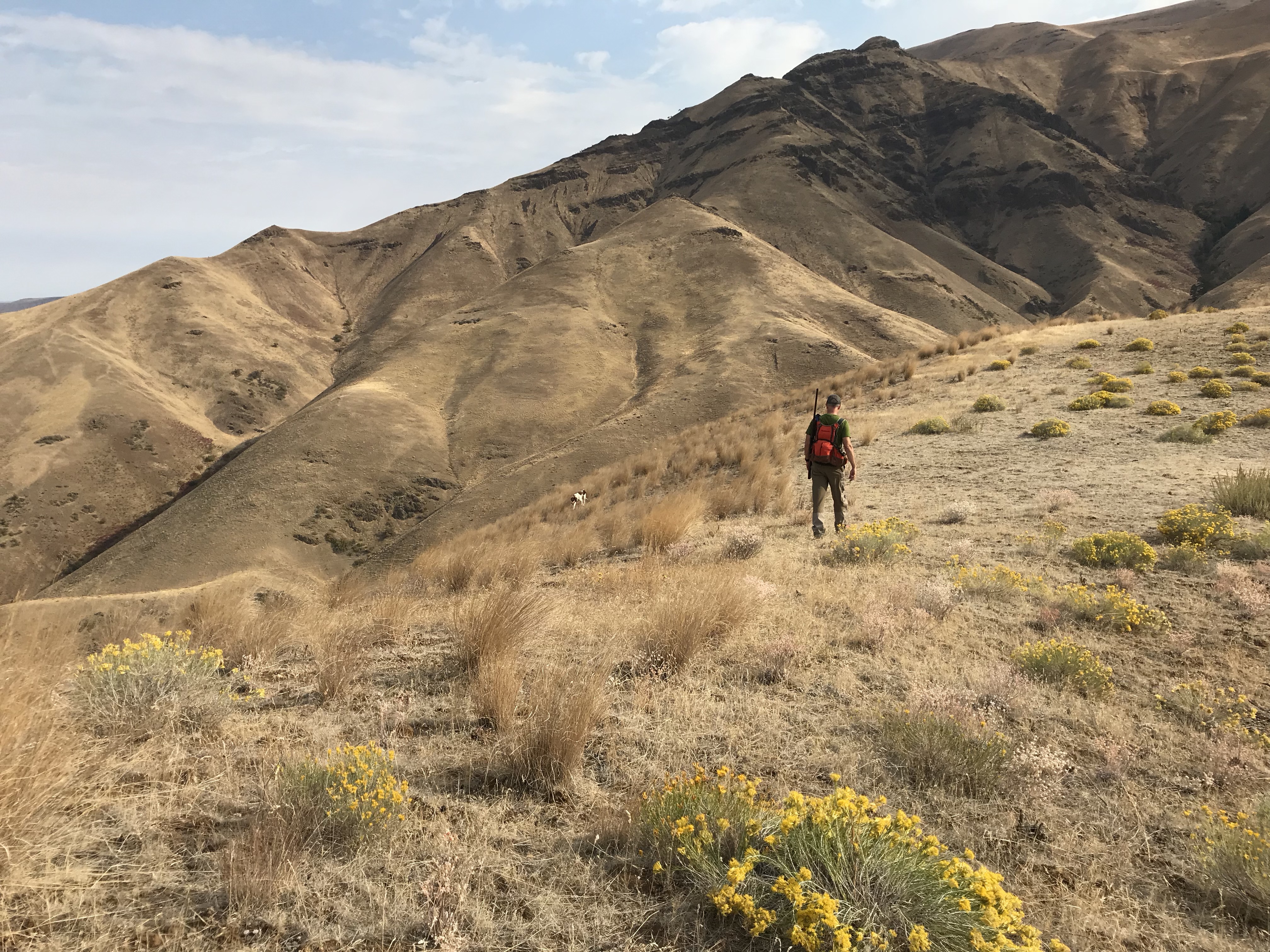
    The landscapes where the birds live dictate where you’ll hunt chukar in the West. Terrain covered in sagebrush, bunch grass, scree veins, and rocky talus outcroppings high up in the clouds is typical in this part of Idaho. You’ll encounter steep traverses and sidehilling that make you wish you had tightened your boot laces tighter. Later in the season, in December and January, it gets snowy, icy, and slick which slows you down especially if you have to posthole it. These hard-to-get places on public lands that can only be reached on foot are what the allure and fuss is all about. It is man and his dog against nature and its elements, or in my case, woman against nature.

    We reminisce and think about these beautiful, wild, and remote places and will plan our hunts next season to purposely seek them out. The reality of it is, you’ll walk a lot, sometimes for hours to find them and only see one covey on good days, but it’s these special places and your attempt to put yourself into position to shoot over a pointing dog that makes you go back another day, and another day, to try again and then dream about the coming season and doing it all over again.

    The video below is my form of ode to walking the chukar hills.

  • Chukar Journey

    Chukar Journey

    “Range after range of mountains.
    Year after year after year.
    I am still in love.”

    – Gary Snyder

    Spring break this year, we drove across the West and past many, many mountain ranges in Idaho, Nevada, Utah, Arizona, and Montana. I didn’t dare sleep in the car or stare at my phone while being a passenger moving past them because I’d miss them. Instead, I gazed across the landscapes or would read my tattered paper road maps splayed across my lap and try to find out the elevation of the highest peak that I could see in the distance or the next little town coming up. On one particular mountain in Nevada, I tried to imagine the route I’d take to the top. Looking out the back window as we drove past it, Bob asked what I was doing and I told him I was trying to figure out a good route to the top. He asked if I was planning on doing that anytime soon. I told him no, but anything is possible.

    The western United States is blessed with vast areas of public lands in the middle of nowhere that rarely get stepped on by a human foot, but it doesn’t make them any less special or less valuable. If anything, it’s the opposite.

    It wasn’t until spending time the past few years hiking around the chukar hills that I realized how important they were to me. On our road trip across the West, I started reflecting back on all the many hundreds of miles hiking up and down these mountains and back to the beginning. I felt like talking about it in the video (below).

  • Final Two Days

    Final Two Days

    I almost didn’t go hunting on the last day of the season. I woke up tired.

    The day before, I’d gone out with the dogs for my fifth hunt in seven days. Overwhelmed by the dread of the looming last day and already missing it, I wanted to take advantage of the unusually pleasant weather we’d been having in this part of Idaho, plus a schedule — or shall I say a lack of schedule — that allows me to hunt in the middle of the week. When I took early retirement from my employer last year, someone told me “The worst thing about being retired is that you never have a day off.” It’s true.

    My second to the last hunt of the season was also my 52nd hunt. I know this, because back in September on opening day, as I’d done the previous season, I started keeping track with data off my GPS watch, if I could remember to turn it on. I like to know where I hunted, my distance hiked, how long the hunt was, and elevation gained. When I got back home I’d write it all down with a ball point pen in my hunting journal which is hand lined with a ruler on a paper notebook. Nothing fancy, just the old fashioned way. Bob, who I’ve dubbed the king of gadgets and who one of the UPS guys a couple of years ago called the king of Amazon Prime because of an almost daily delivery of books or some type of high tech gadget, keeps meticulous detailed records of all his hunts on an Excel spread sheet. Besides all the stuff that I like to keep track of he, likes to record how many shots fired, how many killed and bagged, lost birds, shooting percentage, how far each dog ran, averages and totals for each category, and a barrage of other miscellaneous notes.

    After losing all the elevation in the truck driving deep down into the canyon and finding the place I wanted to hunt the second to the last day of the season, a place unoccupied and not near anyone else, I parked and left on foot with the dogs heading back up uphill for about an hour to the middle of a ridge. Angus and then Peat bolted in a direction that I didn’t want to go but I followed anyway. A couple of minutes later, my Garmin beeped that Angus was on point 127 yards away. Whenever Angus points, it’s almost always legit. Peat, on the other hand, has a collar that’s so ultra sensitive to him stopping for just a second to pee or to smell something that I’ve found myself often ignoring it when it signals me that he’s on point. I picked up the pace through the deep snow drifts that were tucked between forests of sagebrush, and zigzagged my way down to Angus. Once I found him, Peat soon arrived to back him up. I slowly and quietly inched my way in front of Angus, and the birds busted. One shot, and one chukar went down as we also watched the rest of the covey fly downhill changing direction and then disappearing behind a ridge near us instead of flying across valley and to the opposite ridge.

    Not much snow for the end of January.

    It took a few minutes for Peat to find the downed bird and we had no plans to give up on it because the day before I’d winged one that flew down hill into a some bunch grass and rocks and the dogs couldn’t find after 30 minutes of searching. While Peat was retrieving the bird, Angus continued to hunt. It was almost like they had an agreement between them that one would stay looking for the one that I shot and retrieve it while the other continued on searching for the scattered covey.

    On a bed of the terrible noxious weed, medusahead.

    We continued in the direction of where the covey flew, traversing the rocky and muddy sagebrush and medusahead-covered slope. Angus below me with Peat working above me, my Alpha beeped that both dogs were pointing at the same time, on a different covey and not the ones that had just busted. Stopping to stare down at the screen to figure out which dog was closer, Peat flew past me heading towards Angus with a fairly fresh 3-foot-long mule deer leg in his mouth. This was no surprise because one of his many affectionate nicknames I’ve given him over his life time besides “Little F*#ker,” “Little Dummy,” “Crazy Eyes,” “Precious,” or “Sweet Pea,” is the “Garbage Man.” He has this uncanny knack of finding the stinkiest, nastiest, usually dead thing, and either rolling in it or running around with it in his mouth, unwilling to give it up for anything. Our current UPS delivery person last spring, a guy named Sail, was walking up to our house doing a delivery to support bibliophile Bob’s habit that I yelled at the top of my lungs to “STAY CLEAR” while I was hosing off and scrubbing Peat with a skunk concoction remedy for the fourth time after he rolled on a dead skunk near our house.

    The big question of the day was whether Peat would drop the deer leg when he got up to Angus. As I fought my way through the sagebrush, I pulled out my phone and was actually hoping to capture what might possibly be the first photograph of a dog pointing with a deer leg in his mouth. To my disappointment, when I got up to both dogs, Peat backing up Angus again, Peat didn’t have the leg in his mouth anymore. He had actually dropped it.

    The spooky birds busted below Angus flying downhill before I could get into position in front or to the side of Angus to shoot. This has been the theme for most of January where it’s hard to get near chukar before they bust wild. The dogs and I continued into the direction of both scattered coveys before my Garmin again beeped both dogs on point. Again, both dogs were located in different directions. Peat was closer but I could see him above me pointing downhill below a rocky outcropping so I headed uphill. One single busted from the rocks, and I shot once as the quick flying bird disappeared behind the rocks so fast that I didn’t know if I’d hit it or not. My Garmin beeped again, Angus was still pointing 180 yards below. “You have to always honor the point” was something Bob stressed to me last year, so I headed downhill towards Angus. Wondering where Peat was, I stopped and looked behind me uphill just as I saw him running downhill with a chukar in his mouth. I was so thrilled and surprised at the same time that I’d actually hit that one. Angus who held the bird or birds as long as he could before they probably eventually busted returned to check up on me wondering why I didn’t go down to his point.

    Not a tailgate shot but a rock shot.
    Double day: my first ever.

    The following day, the 31st, closing day, we went one final time. My goal was to head uphill and find a place with views of the surrounding valley. I wasn’t worried whether we’d find more chukar, I just wanted to take it all in. The plants, trees, rocks, and other kinds of birds and animals define my place in this ecosystem.

    A treasure and a treasure.

    We headed up a narrow and snowy two-track in a deep valley lined with trees and bushes. Peat in his usual fashion found an animal bone and wouldn’t give it up. I forced it out of his mouth and flung it as far away as possible. I continued on looking at the ground at elk and deer tracks plus Peat and Angus’s tracks in the patches of snow. A paw print that I didn’t recognize at first caught my eye. It was a big cougar track, fairly fresh probably from that morning and heading the same direction. Peat’s body language and routine changed. Instead of running up the trail out of sight a ways and coming back like he normally does he was sticking close to me, running a few feet ahead, stopping and smelling the ground, and continuing on another few feet before repeating smelling the ground again. I watched Angus down by the creek; he wasn’t acting differently, but he’s older and wiser and not the big chicken of the two dogs.

    Still, the cat track and Peat’s behavior was a bit unnerving. We continued up the road and I kept Angus closer to me and instead of carrying my gun on my shoulder, I kept my gun in the ready position and carefully listened and looked behind frequently. I could never willfully or ethically kill an animal like a wolf, coyote, or this cougar that I wasn’t planning on using for food but I actually thought about having to kill something to protect myself or the dogs, and this was the first time I felt the dogs or myself might be the prey.

    Roles reversed. I now know how the chukar must feel.

    On the final climb. 63,755 feet in elevation gain for the season. Peat and Angus way more.
    Upland Peat.
    Angus on the decent.
    Chukar hills.
    One last point.
    Taking it all in.
    Last photo of the 2018/2019 season.


  • Into the Unknown

    Into the Unknown

    The inevitable is here.

    Yesterday, was my last hunt with Bob for the season. It was also Bob’s last hunt. We’d hoped he’d last until the end of the month but tomorrow he’s undergoing spinal surgery.

    Our life for the past three months has revolved around his spine. Yes, our life. It’s not that it’s getting in the way of hunting things; we’ve spent many hours in the car together traveling back and forth for medical-related appointments and things, and his spine affected our ability to travel out of state to visit family over the holidays because sitting in a car or plane would be unbearable. We’ve missed going to see his students play basketball games for fear of being trapped in the bleachers when the pain would start up again. Bob even got to the point where he couldn’t go into the grocery store with me for even 5 minutes so he could pick out his own yogurt and cereal since I can never remember what kind he likes. Our time together spent moving up and down the chukar hills with the dogs looking for birds and being totally in the moment was the only time he said he forgot about his pain. When it did act up, the dogs were confused by him suddenly stopping to lay on the ground to get into a position that would lessen it.

    Yesterday morning was spent doing chores he won’t be able to do after his surgery and other last minute things before heading out to hunt. Because of my lack of experience running our snowblower up and down our driveway by myself, we spent 15 minutes going over how the beast worked. I started out taking notes on a piece of paper but Bob suggested a video on my phone might be better so it would make more sense later.

    I think he’s right. He knows me better than I know myself.

    Opting out of hunting for the day and knowing I’ll have more chances before the season ends on January 31, I wanted Bob’s hunt yesterday to be for himself and for him to experience every point, every flush, and retrieve with both dogs. When Bob and I hunt together, Peat goes with Bob and Angus usually sticks with me. My fear every time we hunt with Angus is that we might lose him. This season because he’s almost totally deaf and going blind he’s relying more on his fine-tuned nose to find birds and because of this he’s ranging farther than he normally does.

    Layers upon layers on our ascent from the valley below.
    Bob and Angus
    Magical point
    Angus still moving like a young dog.
    Chukar nearby, Peat knows.
    He’s only getting better each season.

    Heading up into the hills from the place Bob decided he wanted to try hunting, he wasn’t totally alone. I decided to follow along hoping to capture the pure essence and gorgeous landscapes of everything around us. It was just like the old days before I started carrying a gun; I’d be hot on his heels for every square mile hoping to catch with the camera some of the action and beauty of the sport. Looking down from the rocky outcroppings on the delicate hoarfrost covering the fresh green-up, the fragrant sage, tall pine trees, and the luminous light on the hillsides made an idyllic last hunt. The steadfast and confident points by Angus and the slow and very intense creeps of Peat backing him was stunning to witness.

    Fresh scent nearby.
    Peat taking the lead for a change.
    Angus pinpointing chukar scent; he’s as good as ever.
    Chukar hills as far as you can see.
    Peat’s fast feet gliding across the terrain.
    Moving into position in front of Peat’s point.
    South facing slope traverse.
    Angus pointing chukar in the sage.
    Double point.
    Locked up.

    Lastly, yesterday on our long descent hunting down the ridge on the soft and muddy south-facing slopes, the dogs would lead us to frozen but protected draws. I witnessed the wonderment and fair chase of the wild busting coveys of chukar fueled by swirling cold winds now at our backs, and the curious mule deer we awakened from his nap in the tall grasses tucked next to the sage. All birds quickly disappeared over the next ridge, followed by the dogs who continued to work hard like they always do to find the same or another covey.

    The sound and smell of dogs and people

    Our relationship has been a challenge the past three months. We both vowed in sickness and in health or something like that a long time ago. I know first-hand and intimately the fear patients face the second they set foot into a hospital. I worked in a major medical center as a patient care provider for 36 years, and the roles are reversed now: it’s not easy having a loved one on the receiving end and to witness his anxiety and fears of not knowing what might happen next, and the anticipation of general anesthesia, and knowing you are depending on someone or something else to breathe for you. Finally when the surgery is done, the long-term recovery, the medical bills in the mail that will soon follow, the reality that all of us are getting older and are slowing and falling apart: sometimes it’s hard to deal with or fathom.

    We are some of the lucky ones to have health insurance, sick leave accrued, and money that we stashed away for a rainy day microdiscectomy. The weather forecast for tomorrow and the rest of the week calls for a chance of snow and then rain.

    We’ll be okay.