Tag: chukar culture

  • Praising Canines

    Praising Canines

    Our little burg has a “town square” group on Facebook. Notices of dogs running loose, accompanied by blurry photos, is probably its most common theme. Often, follow-up posts report that the mystery dog’s owner has been found and that the dog has returned safely to its home. Very occasionally, as happened yesterday, someone reports a dead dog. A close-up of creamy and mocha short-haired fur, a Christmassy collar with little bells on it, and lots of small black and white-tipped porcupine barbs. No face or even an indication of breed. Not necessary. Someone’s beloved pet, judging by the remarkable collar. Most people who respond do so empathetically, posting a “sad” or “caring” emoji. Sometimes the keyboard commandos come out, though, as one did in this case, chiding the author of the post for not including a “better” photo of the whole dog. But when it comes to dogs, the better angels win and these j-holes get put in their place publicly. Which is gratifying in a way because people seem compelled to affirm that these creatures really are our best friends. You get it.

    I was a cat-person, childless, until age 36. My first dog was Glenna, a backyard breeder’s last Brittany puppy out of a litter of ten. I think she cost me $300. After she passed at the early age of 10 from megaesophagus I tracked her life’s vet bills (I’m one of those organized OCD types): it was more than $10,000. If I’d never gotten another dog after her — the thought had settled in me for a while there — I wouldn’t be writing this. My time with her would have been written off as a failed experiment. Glenna was a good test for a first dog: headstrong, increasingly irritable as she aged and was overtaken by her discomfort from having an esophagus that went on strike: her food just piled up in her throat, created a lot of foam, and the bolus (a word I’d never heard of before this) would get coughed up spectacularly in stages, piles of sticky white foam surrounding still-dry kibble. Gruesome, and emotionally wretched. The pounds slid off her and I finally had to end her life.

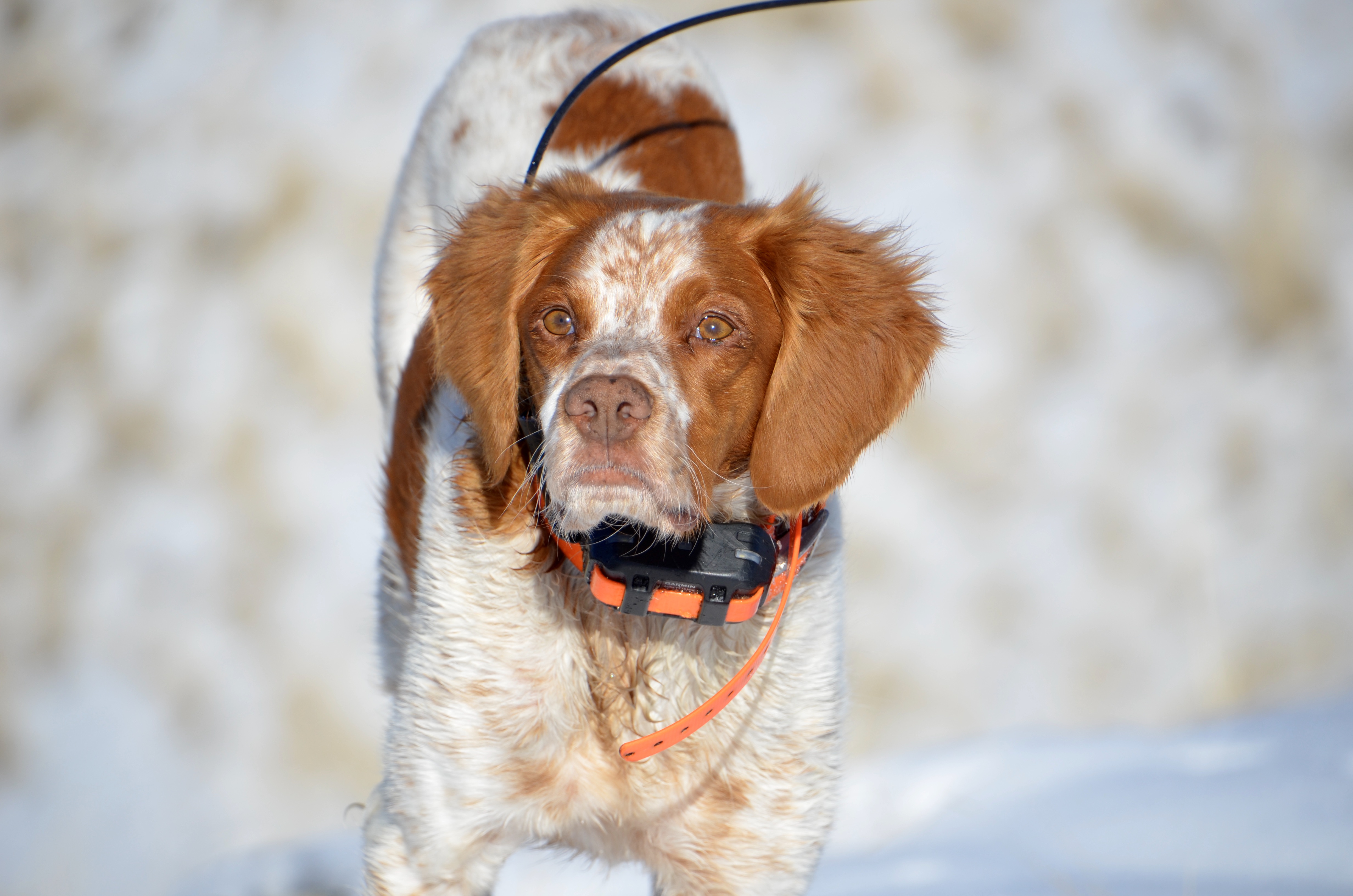
    Fortunately, we’d gotten Angus when Glenna was 7. If you’ve followed this blog, I don’t need to say anything else, but you might want to see Leslie’s post from 2019, “Saved by a Dog.” Then, later than we should have, we got Peat when Angus was 8. But if we hadn’t gotten him then, we wouldn’t have, and we might now be dogless. I was convinced Peat was the Devil. Initially. Well, for about three years. Now that we’ve had almost ten years to adjust to him (he hasn’t changed at all), he’s just adorable. At least we think so. Maybe our lack of friends has something to do with that. Peat. My nephew put it well when introducing Peat to a friend of his when we were all about to float the Missouri this summer: “He’s a 10-year-old that acts like a 2-year-old.”

    Now we have Bloom, who’s 3. Bloom, Peat, and Angus all came from the same breeder. They each couldn’t be more different from the rest. Each has been the world. Bloom, by design, is more Leslie’s dog. I’ll let her write something much better than this about him. She has the knack, and he’s worth some buckets of words.

    Peat and Bloom hunted with, for, us yesterday. It was hot. Early season, where there’s no water anywhere and we might as well have been in the Australian Outback. Within the first five minutes, Peat pointed a covey of Huns. Bloom pointed something else, closer to me, about 50 yards away. Peat’s covey went up and Leslie took one shot, killing two birds. Bloom’s birds didn’t materialize. Halfway through the hunt, both dogs started slowing down, hop-scotching from bitterbrush to sage in search of shade. We took a break, gave the dogs some treats to go with the mass quantities of water they’d been drinking, hoping they didn’t get hyponatremia. I ate a Payday. We did a 180, and the sun was, finally, at our back. Peat got a second wind and hunted hard all the way back to the truck. But we encountered no more birds.

    I probably have a few more seasons with Peat, and each will be diminished somehow. If I’m lucky. I can’t really face it. Don’t want to. Yesterday tried to get me to glimpse the future. When Angus was a puppy, even before I started really hunting with him (I had to wait for Glenna to die, when he was 3), I’d begun grieving his death. It was stupid, but that’s what I was called to do with him. Peat guaranteed I wouldn’t do that, and before I knew it (he was a little more than 3) I was hopelessly in love with him. I’ve never experienced anything like it. He’s a cartoon. There’s nothing remotely noble about him, and he doesn’t give a shit. I suppose, then, he’s like me.

    But I do give a shit. That’s what makes him better than me. I shouldn’t. Dogs do that: no matter what they’re like they make you wish you were better, wish you were more like you think they see you. If you give a shit, that means there’s something not quite right with you. Dogs don’t have that burden. They just want to connect. That’s all that matters. Thank god. Dog.

    Glenna teaching the puppy Angus about sticks
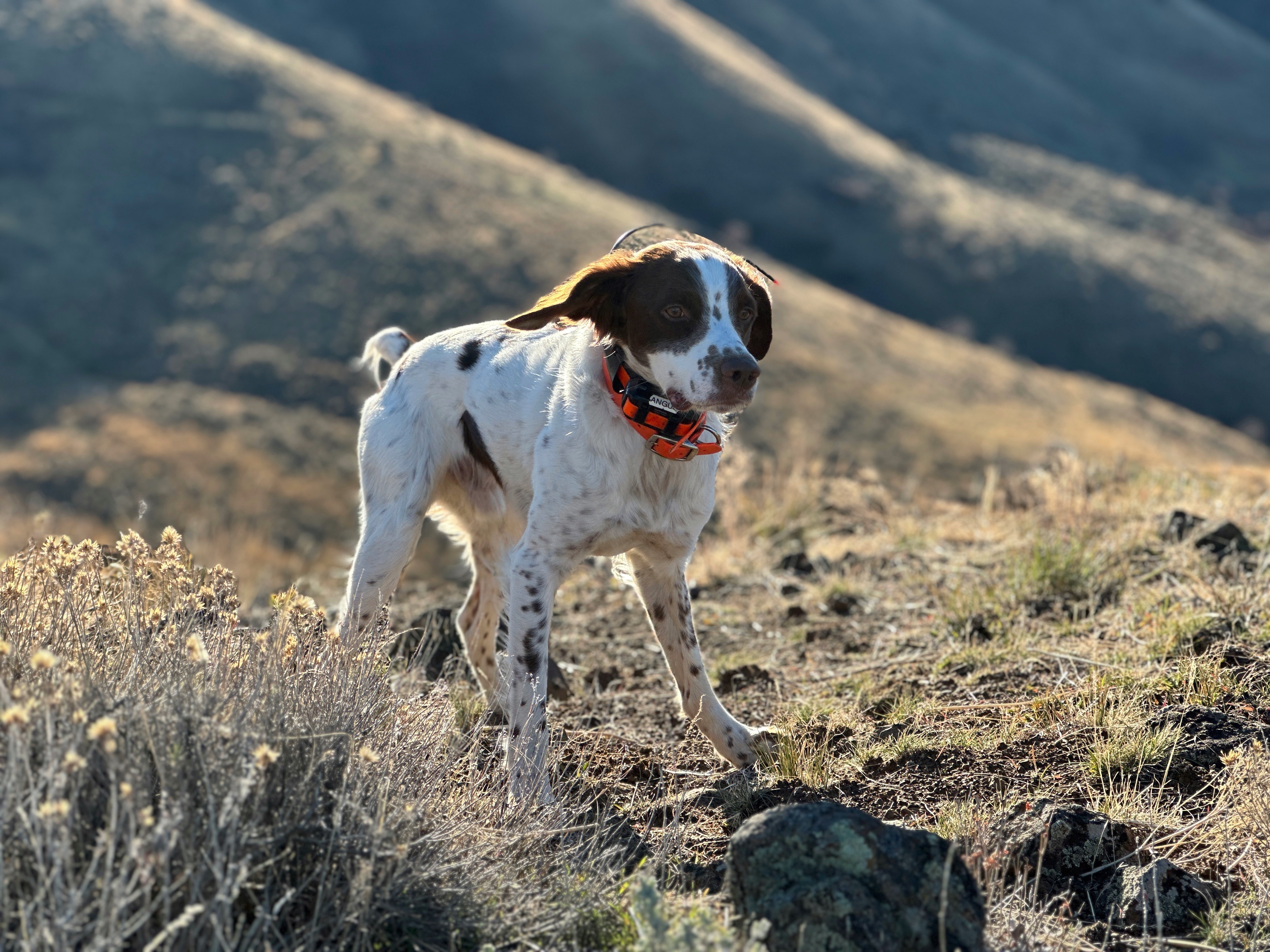
    One of my favorite shots of Angus
    Leslie taking a break with Bloom (wearing Angus’s collar)
    Peat looking at the future (Bloom)
    Peat. MENSA Dog.
    Leslie and Angus in a happy place
    Peat, pointing with a tibia, and style
    Spring in Cambridge with Angus and Peat
    Peat, in my classroom, showing Angus where chukar originate

  • Youth Hunt

    Youth Hunt

    Idaho’s chukar season began on September 21. We were still fishing in Montana. On my first encounter with Idaho chukar this season, on October 1, I was hunting in a spot I hadn’t hunted before. I’d tried one other place for the first time about a week prior, but saw no birds or even turds there.

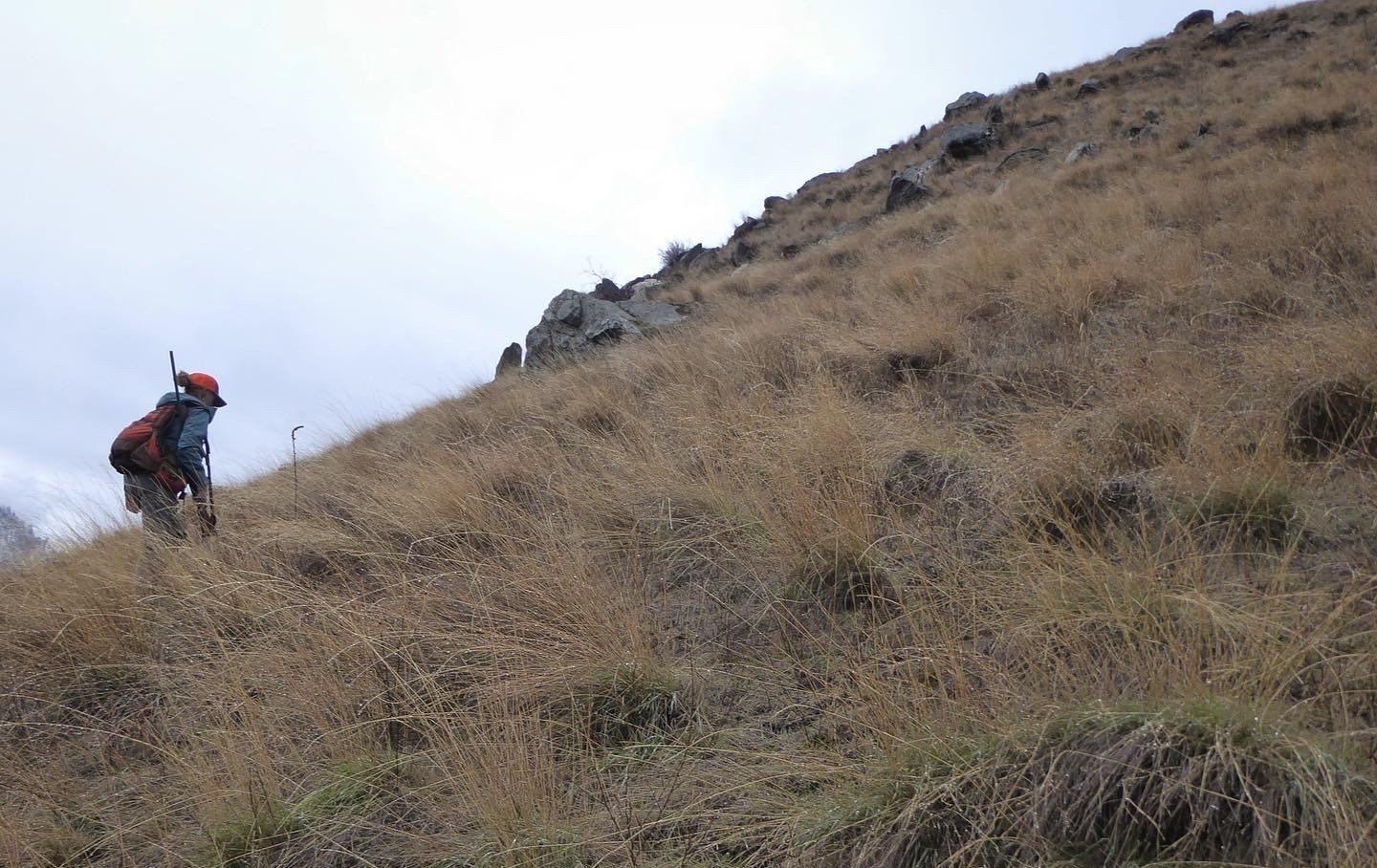
    When I finally joined the dogs after a rather epic brush-busting ascent up a steep incline, Bloom, who last season had been in the annoying habit of false-pointing several times at the beginning of hunts, went straight to what turned out to be a widespread, big covey of chukar in a roomy, shady bowl just below a ridge topped with large Ponderosa. Peat, as Angus used to do to him, initially honored and then crept past Bloom to dial in the birds’ location. As I crept close to the nearly supine, pointing Peat, the thirty or forty chukar busted in waves, from an area at least fifty yards wide, so shocking to me that I was able to manage only one prayer of a shot. Which I missed.

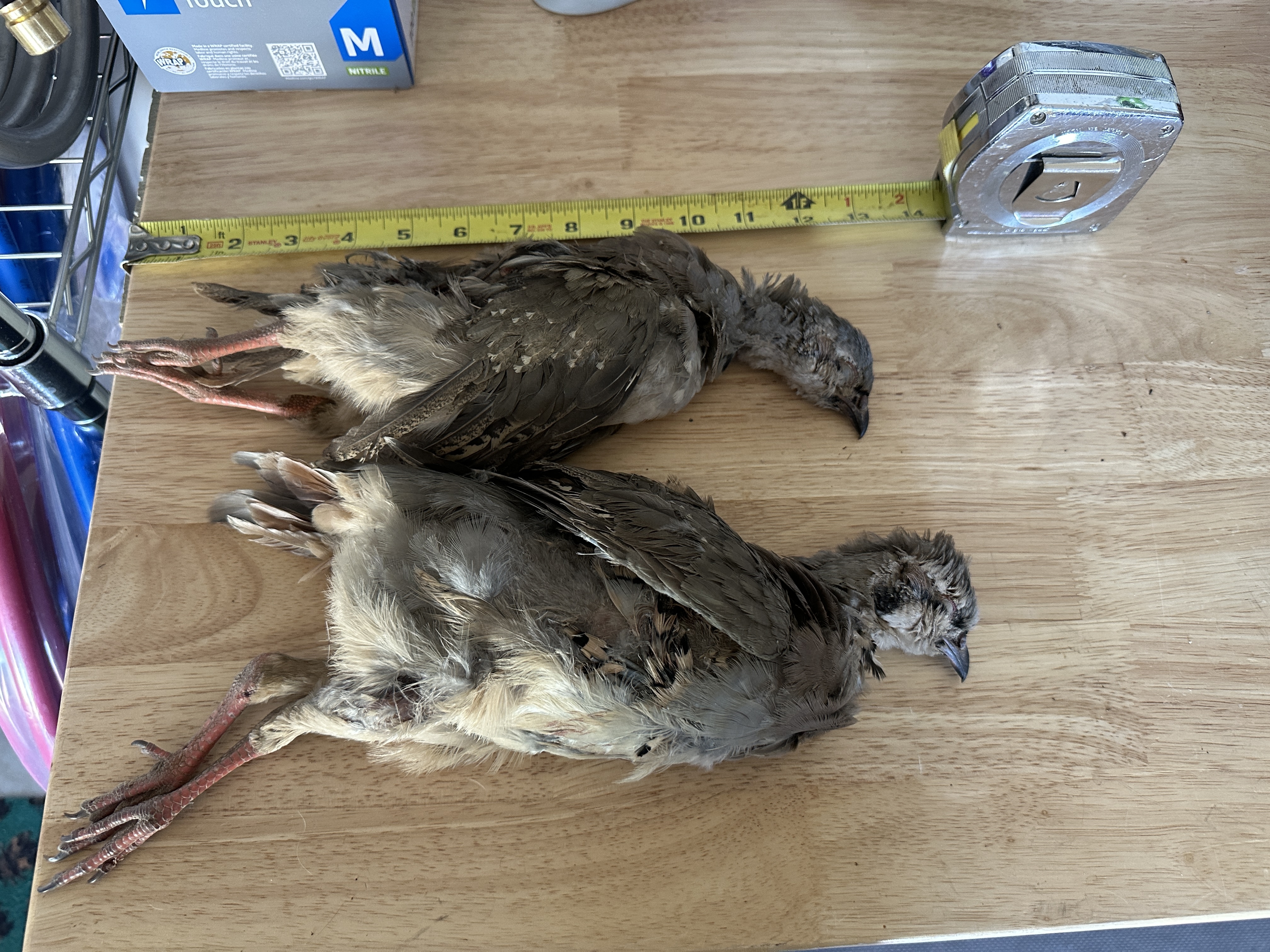
    A while later, Bloom relocated a small group and pointed them staunchly. I got one shot off and killed a bird, which Peat retrieved to me. It was a juvenile, with just a scant hint of the adult chukar trademark barred flank feathers. A few minutes later, Peat pointed another small group, and I shot one of them, which I saw Bloom retrieving toward me. I regarded with great pleasure and gratitude the balance of my dogs and today’s experience as Bloom brought the bird to me, dropping it at my feet. It was smaller than the first, not much larger than an adult quail. A few downy feathers had yet to be jettisoned. Not even a faint hint of the bandit mask or red beak.

    I’m a hypocrite in many ways, but have a long track record of hypocrisy regarding Idaho’s too-early commencement of chukar season: despite always feeling Idaho should match Oregon’s mid-October start, I invariably find myself unable to resist hunting for chukar on or near the opening of the season in Idaho.

    This day’s bag of two diminutive, juvenile chukar is just another confirmation of my longstanding belief that Idaho starts too early. There are many who will argue until they’re blue in the face against my assertion about Idaho’s too-early start to the season. Some have even thrown pop-science at me to counter-argue. I don’t even have pop-science on my side, just the evidence of my own early-season bags, which almost always contain numerous drab juvenile birds.

    In talking about this with a more knowledgeable friend, who happens (I was amazed to find) to agree with me, she made the point that the big outfitters on the Salmon and Snake that offer cast-and-blast trips in September are an effective lobbying force in Idaho’s legislature, which in turn — even more so now with the U.S. Supreme Court’s overturning of Chevron — basically runs Idaho Fish & Game (instead of science). Remembering that Idaho, not too long ago, delayed the start of chukar season and reduced the daily bag limit from 8 to 6, makes me think there’s hope it might revert to what I believe is a more reasonable approach — especially with climate change seeming to delay lots of natural development — but I won’t hold my breath on this.

    I thought about calling one of the bird biologists on the Fish & Game payroll to see what they think (I’ve done this before), and maybe they’d say it doesn’t really matter when the season starts because mortality is mortality and these birds don’t live longer than two or three years anyway, and hunters don’t really impact bird numbers over the long run. Weather, habitat, predators: those variables are much more significant than hunters. I’ve heard this before and it makes a certain amount of sense. Maybe I’d feel better about this if I had a better hand on the relevant science and it in fact showed that start dates and bag limits don’t matter. Even if that were true (which I’m too lazy right now to investigate), I’d probably still feel the same way.

    So what it comes down to is opinion, or, even less importantly, taste. Like preferring Coke to Pepsi, or Fords to Chevys. Brittanys to GSPs. I’m fine with that. But personally, I’m not fine with shooting chukar youth. It leaves a stain. But I’ll still go out, hoping my chances intercept adult birds. Hope, and hypocrisy, springs eternal and infernal.

  • January

    January

    I ran into a friend the other day who gave me crap for not posting anything for a while. I appreciated it.

    This used to be my favorite time of the bird season. Not as many people to contend with. Peace and beauty of a remarkably different quality. The “certain slant of light.” Snow concentrated the birds into predictable places, and they seemed to hold better.

    Now I just feel sorry for the birds and don’t have the heart to bother them. Big snow Januarys, along with very cold air and lots of wind make it hard to find bare ground and food. Their will to live far eclipses mine. I’m not sure if chukar do this, but I know ruffed grouse spend a lot of the winter in snow caves they make, which shield them from wind and much colder temps than if they were out walking around or roosting somewhere. My dogs smell them through the snow, and they’d point them and bust them, giving me another chance to miss (if it was before the end of the year; they still point and bother grouse in January). To me, that’s not fair chase.

    Being back in galliforme country this year has been wonderful. Our two-year remote yearn, idiotic as it was, helped me appreciate the good days we can get in the field here. And we got plenty — not as many as we’d hoped, but they were almost all good days. And we’re older, which should equate to more patience somehow, although — for me — it’s debatable (especially if you ask Leslie; some things do never change). The worst thing about feeling our season is done is seeing how pent-up the dogs are. But they’ll get over it. I have more things to do than they, so it’s not as hard for me.

    We aim to enter next season in better shape than we did this year. For some reason, we failed to get chukar fit by mid-September. Too much golf? Just lazy? Still, we hunted into chukar shape and were able to do some tough hikes. We haven’t practiced getting old, so feeling we are old is odd. Something else to figure out. Or just accept. I’ve been keeping busy trying to get my first real estate client (hasn’t happened yet), writing a bunch of stuff, including a short novel set in chukar country which I haven’t been able to get anyone interested in yet (not surprising, but I like it and think it’s good).

    I’ll end with this because it’s been on my mind all season: I’ve noticed more boot-prints in places I never used to see them, on ridges far from anywhere a UTV can go, which means people are spreading over more chukar terrain. I think that’s great. Get out there.

  • The Face of Death

    The Face of Death

    “Maybe we fear that the work we depend on images to do for us — the work of immobilizing, and therefore making tolerable — will be undone if we throw the image back into the flow of time.” — T.J. Clark, The Sight of Death (8)

    “I think we hide, necessarily, from an understanding of what is most to be avoided in the sight of death.” — T.J. Clark, The Sight of Death (227)

    What is the “face of death”? We’re in a sport that makes us face death whenever we’re successful. And instead of shying away from it, discomforting as it might be, we photograph it, and most of us post the photos for others — friends and strangers alike — to see.

    Why do we do this? Where does our current publicization of this taking of life fit on the continuum of monumentalized, frozen-in-time death? If T.J. Clark is right (and I’m inclined to agree with him, except maybe for the “necessarily” part), we take and share these photos of our kills both to acknowledge and avoid understanding what we’ve done. I have to think there’s something in our DNA that compels us not only to record the fact of our death-causing (and even death-gazing) but also to share it so we don’t have to think about it too much; McLuhan’s “the medium is the message” rings in my head. This compulsion might be limited to those of us outside the hunter-gatherer lines; even though we’re hunting, we don’t need to and neither have our ancestors for thousands of years. In fact, the compulsion might be because hunting isn’t necessary for our survival. It might be compensatory somehow.

    I’ve written about Brightman’s Grateful Prey before, specifically how traditional Cree animal-human (prey-predator) relationships differ from those of Invader/Agricultural traditions (i.e., most of us who are not Native Americans or First Nations people). I’ve tried to fit the imagistic depiction of prey into the Cree system but can’t, nor does it fit in Hugh Brody’s account of Inuit hunting culture, which I’ve also recently mentioned. For hunter-gatherers, at best, static portrayals of a formerly alive thing are disrespectful. At worst, they’re like putting a curse on yourself. But that’s a different tradition, different culture than this. So let’s see.

    Even without doing a thorough historical analysis, it’s fair to say that there are a couple major (let’s call them “Western,” as in Western European) traditions in how dead prey get represented. One, for lack of a better term, might be called the “Still Life Tradition,” and the other the “Hero Shot.” In super simple terms, “still life” images foreground the prey as objets d’art (removing, mostly, the hunter), and the “hero shot” foregrounds the hunter and/or his “achievement” (dead prey). I’m going to talk mostly about the Hero Shot, but I’ve included some fantastic “still life” paintings, too, mainly because they’re amazing (you’ll know why).

    Classic Hero Shot: hunters posing with their alectoris prey, Spain, 2014
    An older version of the above shot, also in Spain, 1959
    Solo Hero Shot: 1937 photo of a young Australian bird hunter with his day’s take.
    A more creative Hero Shot, 1940s, Australia, by the same photographer as the above photo (looks like some sort of snipe)
    1912 Hero Shot, including dogs (no location indicated)
    1903 group Hero Shot, Nome, Alaska (ptarmigan)
    Still Life: Jan Fyt, “Dead Partridges with Hound,” 1647
    Paul de Vos, “Hunter and Dogs by a Table with Dead Game and Fruit,” Flanders, 1640s or 1650s.
    Hendrik de Fromantiou, “A Still Life with Dead Partridge, Pheasant, and Hunting Gear,” Holland, 1670. View this full size for impressive feather detail on this perdix perdix specimen.
    Carstian Luyckx, “Gentleman hunter with his pack of dogs and hunting trophies,” ca. 1650-58, Belgium.
    John Constable, “Study of a Dead French Partridge,” circa 1830-1838. Constable was my favorite artist when I was young, mostly because of his romantic, highly detailed landscapes such as “The Hay Wain.” I was surprised to find this relative of alectoris chukar among his works.
    My favorite kind of Hero Shot, for the true hero of the affair, although he (the bird dog) has relied on me to do the killing, the middle part: he found it, I shot it, and he retrieved it.
    The Solo Bird and Hunter Hero Shot, on location
    My last “tailgate shot” (2017): to me, it’s appropriate that the drone I found sits alongside the chukar because I think it accentuates the undesirable “out-of-place-ness” of this type of image. I see a huge, distasteful imbalance between technology and nature here.
    Classic “tailgate” Hero Shot with dogs, hunters, and prey arranged with heads hanging off the edge of the tailgate. 2016.
    One of my favorite all-time dead-prey photos. Angus, who never stopped hunting is still hunting while Peat poses with a bird that came out of the conifers on an after-school hunt in a place I thought I’d only find grouse. Adding to the image’s dearness to me is the history of Peat’s initial reluctance to retrieve and radical, sudden change of course, becoming a flawless retriever to this day. It’s one of the purest gestures of reconciliation I’ve known, even though he’s “just” a dog and probably doesn’t think of it like that.
    4 years in the making: The Kid with his first chukar, after trying hard for most of 4 seasons with me, he finally got one (he actually got three that day). Doesn’t speak much for my guiding abilities, but a worthwhile Hero Shot.

    Chukar hunting is hard, and bagged birds come at a price, whether it’s the calories you burned in the pursuit, the abrasions on your dogs’ pads, the pride you had to swallow when you couldn’t get up the hill to your dog’s stealthy point in time, or the axle you broke trying to get just a little farther up that nasty road. Lining birds up on a tailgate for a photo, with your amazing dog whose praises you’ve made a habit to sing and your best human buddy you’ve shared the challenge with, makes a certain amount of sense. This photo is not intended to say, “Screw these stupid birds, I’m glad they’re dead and I’m gladder I killed them.” It’s not meant to say, as the truly stupid saying about chukar hunting goes, “The first one’s for fun, and the rest are for revenge.” Rather, it’s meant to say, I think, “I respect these birds, love where they live, admire beyond description my dog’s singular flotation of the whole proposition, and am grateful for the opportunity to hunt them.” It says, “Chukar are beautiful, and a worthy pursuit, and I’ve hunted them fairly, ethically, and shot well enough to harvest some of them, who — I admit — gave their lives in exchange for all of the above.”

    So, going back to T.J. Clark’s thoughts about these images of death, the faces we see probably daily (at least during bird season) of these multitudes of expired prey, I still can’t help wondering what we’re avoiding, “what is most to be avoided in the sight of death.” I do think something’s not being said here, whether it’s in the image or outside it, behind it, surrounding it. What, for example, really, is remorse? Pity? Sorrow? Projection? Reciprocity? Do those register? And, if so, since they’re all necessarily (aha!) irreconcilable (unless you commit suicide every time you kill a bird), where do they go, what do they do to us, what can we do with them? And how can we participate in a tradition (whether it’s a Hero Shot or a still life) saturated with adulation but based entirely on death that’s not our own, without avoiding something important? Is that possible? Does it matter?

    On a very crass and basic level, what we’re doing is trying to connect (with others?) and using the death of birds to do so. Somehow, posting pictures of bird dogs pointing or of the sun rising beautifully over a ridge just doesn’t garner the same kind of response (or we think it won’t) from whomever we’re trying to connect with. The result rather than the experience. The bottom line. It used to bug me when I’d go back to work on Monday and the dudes who didn’t chukar hunt would ask, sincerely, “How many birds did you kill this weekend?” Once I answered, “None, but you should have heard the wind carry a slow sound in the hawthorn.” Connection aborted.

    One of the loveliest poems I know is Robert Burns’ “Song Composed in August,” which situates bird hunting naturally in the middle of courtship:

    Avaunt, away! the cruel sway,
    Tyrannic man’s dominion;
    The sportsman’s joy, the murd’ring cry,
    The flutt’ring, gory pinion!

    Part of what I like about this is that it just puts it out there, this is what we do, they’re birds, they’re beautiful, and some of them, when we’re not trying to get laid, we kill. Chalk it up to “tyrannic man’s dominion” and the “joy” of sportsmen. We hear and see and might even be the cause of the murderous gore, and then get on with things. This, it seems, is exactly in the right cultural milieu. Harvest. Death isn’t really faced because it doesn’t have to be (as long as it’s not your own, and even then…). So, killing birds — and posting photos of them — isn’t the end of the world. Unless you’re the bird. I just think, aesthetically, that photos of dead birds look way better in natural settings (rocks, grass, dogs’ mouths) as opposed to tailgates or (the absolute worst) impaled on barbed wire. But that’s just me.

  • Climb

    Climb

    I used to be an athlete a long time ago.

    In the summer of 1989, I watched the Boise Twilight Criterium bicycle race as men rode their bikes at lightning fast speed on laps downtown. I was smitten by the action and excitement. That same month on NBC Sports I watched Greg Lemond win the Tour De France (by just 8 seconds, over a Frenchman no less!) and decided at that exact moment that I wanted to race bicycles. Not having any money at the time, I borrowed $275 from my Mom to buy a used road bicycle, and by September of that year I entered my first race, the Bogus Basin Hillclimb, a 16-mile uphill race, and came in 3rd place for women.

    Wanting to get better at bicycle racing, I asked for training advice from a local Boise cycling legend named Bob Hoene who had won the Bogus Basin hillclimb many times. I remember him telling me something like this: “The best way to know just how far to push yourself is to ride up Bogus as hard as you can until you puke. Once that happens you’ll know your limit.” Later that week, I rode up Bogus with him and puked at milepost 1.5.

    I never amounted to be much of a climber and preferred racing on flatter ground doing time trials or criteriums. In the 1990s, before the promoters of the Twilight Criterium decided to include a separate women’s race, I competed with the men. I loved every adrenaline rush minute of it and even crashed out once. Just like in chukar hunting, I wasn’t intimidated being in a sport mostly dominated by men.

    Twilight Crit start; that’s me in the center with the red helmet.

    I didn’t purposely seek out or want a dog that covered a lot of ground, but yesterday Bloom went on point 256 yards straight above me. I cursed when my Garmin alerted me to this. Every 20 steep steps or so, I stopped, caught my breath and pulled down my fogged-up glasses, checking the Garmin every few seconds hoping he wasn’t on point anymore. But he was. I kept going and felt light-headed and was on the verge of vomiting. My thoughts on the climb up to Bloom made me think about Bob Hoene and my ride up Bogus Basin with him 34 years before. It probably took me another 10 more minutes to reach a place on the climb where I could see Bloom but he was still 75 torturous yards away. After all these years, I still hate climbing but I couldn’t stop because one must always honor the point.

    I hadn’t thought about Bob Hoene for years but now wonder what happened to him? I hope he’s still racing bicycles. Sometimes, I wonder what will become of me.

    My nemesis climb. Bogus Basin prologue start for the International Women’s Challenge stage race, 1993
    Powerbar Women’s Challenge, 1994
    Meeting the great Greg LeMond