Category: Pets

  • Ebbing and Flowing

    Ebbing and Flowing

    “The road to Neah Bay is serpentine, a thin twist of wet double-yellow-lined gray. It flirts for twenty miles with the edge of cliffs that seem to stand at the mercy of the Strait of Juan de Fuca and its wide swath of soon-to-be Pacific Ocean. Mapmakers mark it as scenic when it would be better marked IMAX: waterfalls and cliffs and mud slides on the left; white-capped blue water on the right.” — Robert Sullivan, A Whale Hunt

    There is only one way in and out of Neah Bay and I know the road like the back of my hand now and take every opportunity in between hairpin turns to look out to the water for gray whales, big waves, and cargo ships carrying colorful stacks of containers. Back home in Idaho when I’d drive the winding road into the canyon to go chukar hunting I knew every hairpin turn, too.

    Our first major purchase besides our house just outside Neah Bay was a big portable generator because the locals told us that in the winter the power goes off a lot and sometimes for three days. We were also told to have supplies like food and water in your car in case you get stuck behind a landslide, and even to carry a chainsaw in case a big tree falls over the road. It rains 144 inches a year here, and life on the Peninsula is dictated by the tide charts and storms which come often. One second it’s pouring rain and then it’ll be sunny. We were also told it doesn’t start raining a lot until November but it rained 20 inches in October and an inch a day so far in November. After 40 years of living in Idaho where it rained 12 inches a year it’s been hard to get used to the wet climate.

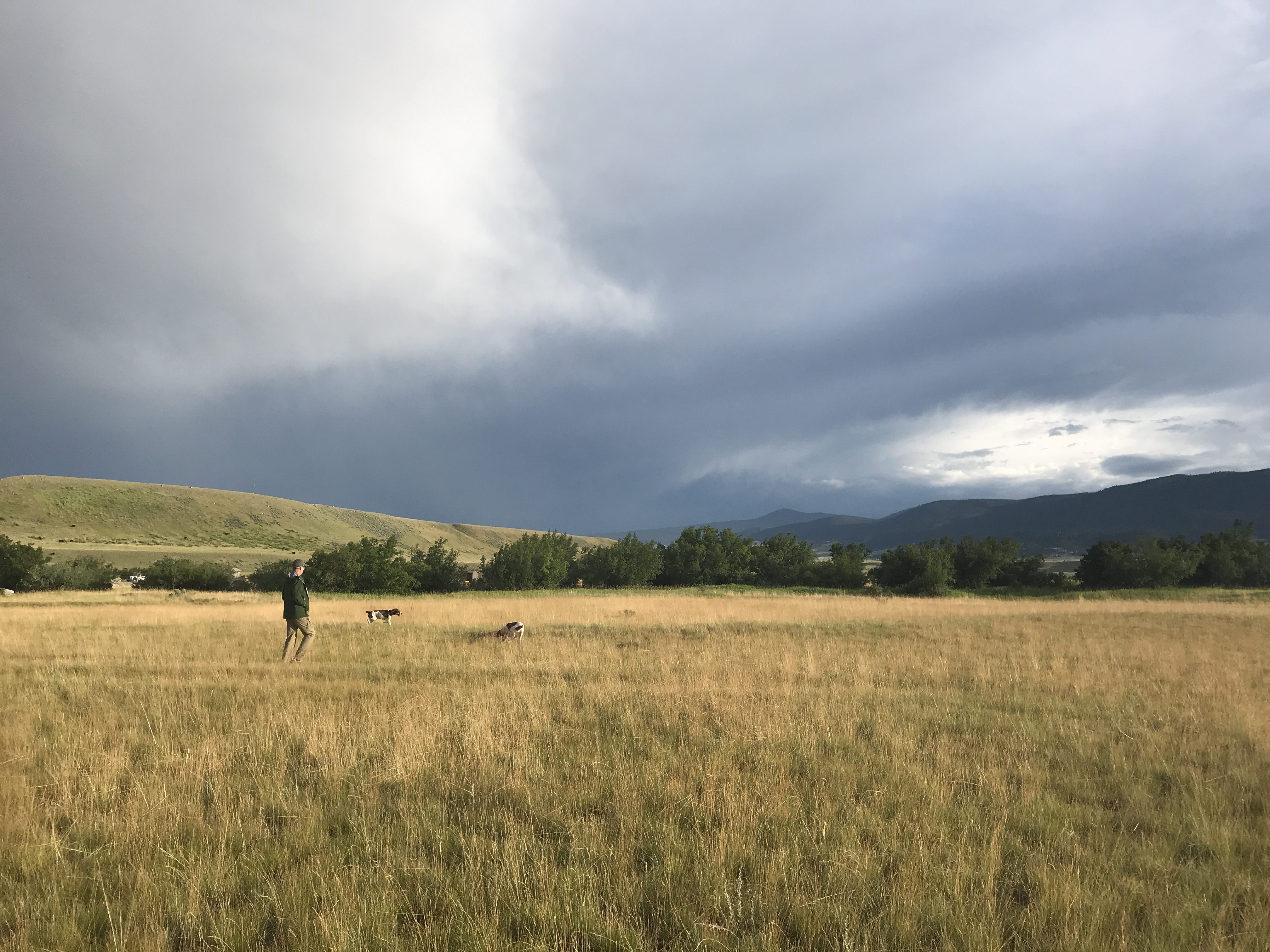
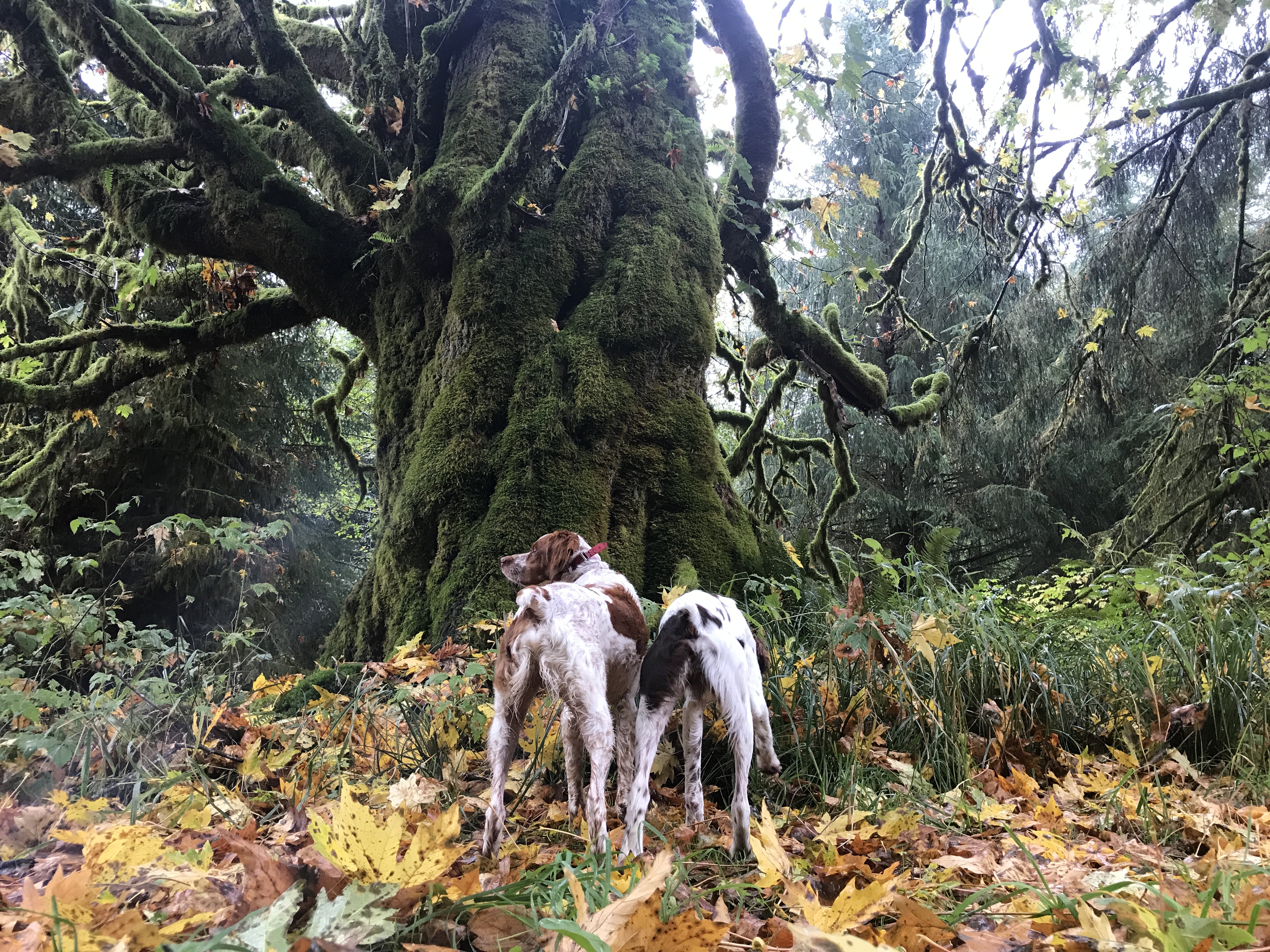
    This past summer in-between home improvement projects and the many trips to Home Depot and shopping two hours away we took the dogs out exploring and we’ve found some logging roads so the dogs can run off-leash. These roads start at sea level and head up into the coastal mountains forking, intertwining, with dead ends and roads you can see on maps but they don’t exist anymore or have gotten so overgrown you can’t find them. In this part of the Olympic Peninsula where tall Sitka spruce, red alders, and Douglas Firs grow thick, they have provided a nice canopy to get out of the rain; but sometimes the precip smothers me, so I’ll seek out the huge clearcuts in the forest where I find solace and familiarity like the wide open spaces back home in Idaho.

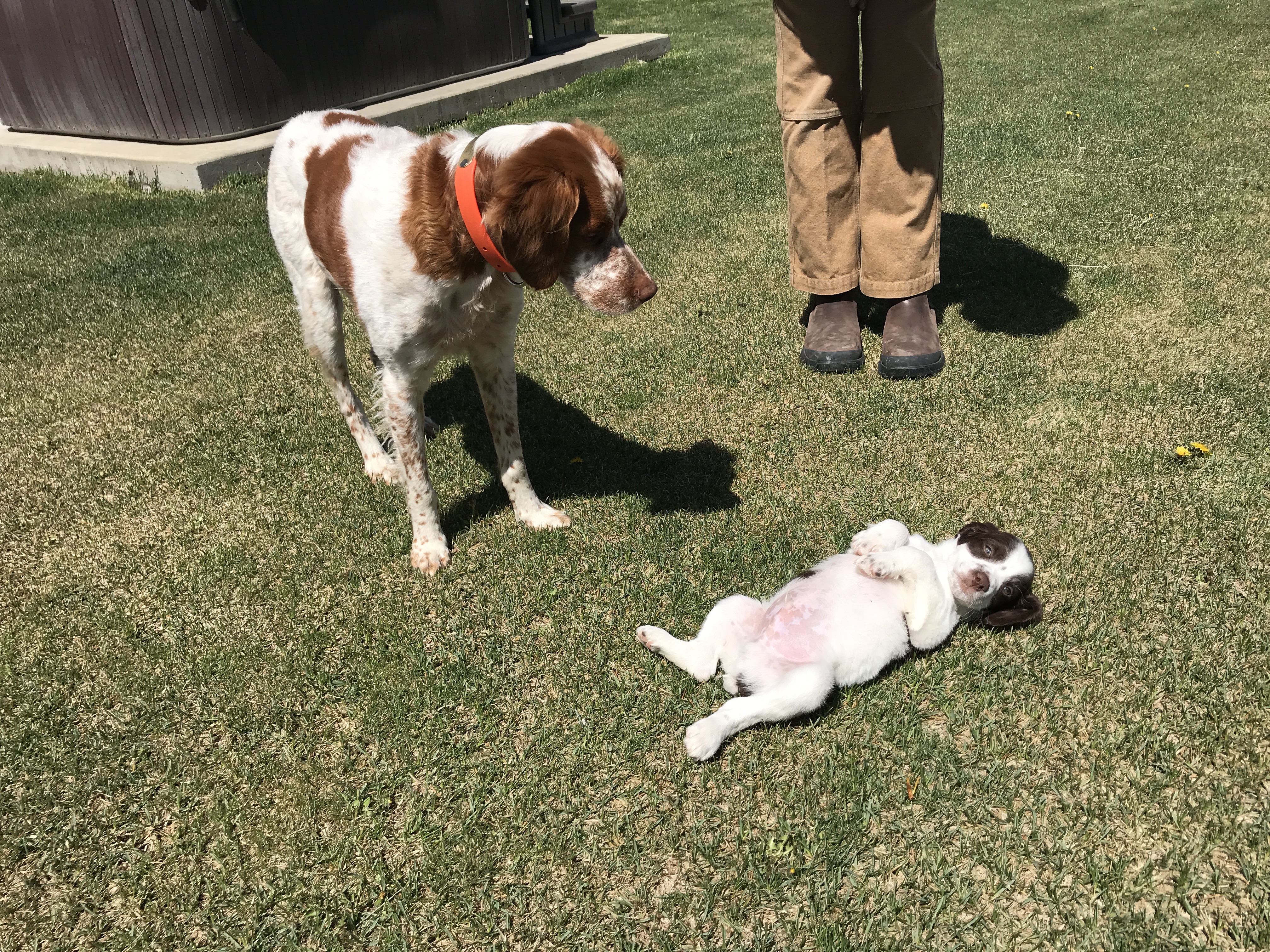
    Bloom is almost 7 months old now. He’s turned into a beautiful dog with long legs and a show dog gait that when he runs reminds us of his great uncle Angus. He moved here with us when he was 8-weeks old and has only known the rain forest and the smell of ruffed grouse and the chukar wing that he chased around the backyard before pointing.

    Bloom and the Salish Sea

    We’ve been out looking for birds but grouse hunting in the rain forest can be a tricky proposition we have found out. Besides being steep and wet, it’s so thick of sword ferns, brambles, and tangled deadfall that when the dogs do occasionally find a grouse, trying to get close enough and into shooting range before they fly is next to impossible. I thought many times about just shooting my shotgun into the air to see what kind of reaction Bloom would show.

    Grouse hunting in the Olympic Peninsula
    Solace in the wide open clearcuts

    We all carry a relationship to land and to the place that we call home, or in my case the place that I used to call home and that is or was part of my identity. It was what molded me. The pull back to the place where I felt connection through nature and place was too strong to resist, and like a salmon heading upstream from the Pacific and back to the place it was born, I felt like I had no choice but to go. I said goodbye to Bob as he headed off to school one day and loaded up the dogs in the pickup and headed East and to a place where I knew Peat would find birds for Bloom.

    After eight hours of driving the landscape around The Dalles, Oregon changed from emerald green to brown, dry, and parched. A few hours after that when I finally got down into the canyon and to familiar places that had green shoots of bunchgrass growing back, cattle were now covering the hills and grazing it and eating all the grasses down to the nub that would — if they’d live — provide cover for the birds. I was sick to my stomach because of the overgrazing.

    My excitement and happiness being back to familiar surroundings was taken over by my anxiety and fear of going hunting alone with no cell service and I worried about everything that could go possibly wrong in taking a puppy hunting chukar for the first time. Things that went through my mind were, what if Bloom gets lost, gets torn up by barbed wire, bitten by a rattlesnake or falls off a cliff or his pads get ripped up from the rough rocks. My worst fear was what is he’d be gun shy or he he’d be a jerk and blow through every one of Peat’s points.

    Bloom and Peat on the chukar hills

    It was mid-afternoon when we finally arrived to the place where we parked and I put the collars on the dogs and took my shotgun out of its case and headed out. It felt great to be out of the pickup after the long drive. Within ten minutes Peat found some birds and when I got up to him he was in his classic Peat point which is almost comical but beautiful at the same time. Bloom caught up to us and seemed oblivious of what Peat was doing. I wanted to yell at him, “Look at Peat, back him!” Bloom instead was intensely smelling the ground and running around, and then he ran right through the covey of Huns that were hunkered down near some sagebrush. I lost my cool and in my frustration didn’t get a shot off and instead watched the birds fly away. I watched Bloom watching the birds and it was almost like he realized that we weren’t out for just a hike but we were actually hunting. It dawned on me that Bloom only knows rain forest scents and had never smelled Huns before, in addition to all the other smells of the High Desert. On the next couple of coveys of chukar and that initial group of Huns that Peat would eventually relocate, Bloom honored him. I was so relieved. Bob assured me before I left that Bloom is going to be good. He was, and nothing bad happened.

    After the hunt, I found a dispersed camping spot and I watched the sunset over the Wallowas. I could see in the distance the mountains and ridges that I’ve covered on foot, hundreds of miles over the past ten years with Bob, Angus, and Peat and know like the back of my hand just like the serpentine road back home in Neah Bay.

    Home

  • Bloom One

    Bloom One

    Mr Leopold Bloom ate with relish the inner organs of beasts and fowls.

    — James Joyce, Ulysses

    Related by blood both to Angus and Peat, Bloom, finally, like the spring, has arrived.

    It’s amazing our capacity for forgetting. The sudden shift of frame a puppy brings: Peat’s now the mature, even stately, one. I expected the butt-hurt, but not so much the kindness. He wants to, but isn’t sure he should, dote on Bloom. He’s on his way. But just the day before we got Bloom, Peat, age six, snagged and ate an entire extra-large Meat Lovers pizza.

    Sioux is Peat’s father, and also Merci’s father, and Merci is Bloom’s mom. Custer, Angus’s nephew, is Bloom’s dad. Bloom is calmer by several furlongs than Peat was, and that I still remember. Leslie is doing her damnedest to be Bloom’s mother, and I’m trying to take a back seat. It’s wonderful to glimpse in Bloom the distant memory of Angus. He has that steady, rocking gait, already discernible in the rotund germ of his body. We weren’t sure it was such a good idea to be getting a puppy right now, but he’s been a welcome distraction from the horror of packing for a major move. Small packages. Goodness.

  • Tick Trouble

    Tick Trouble

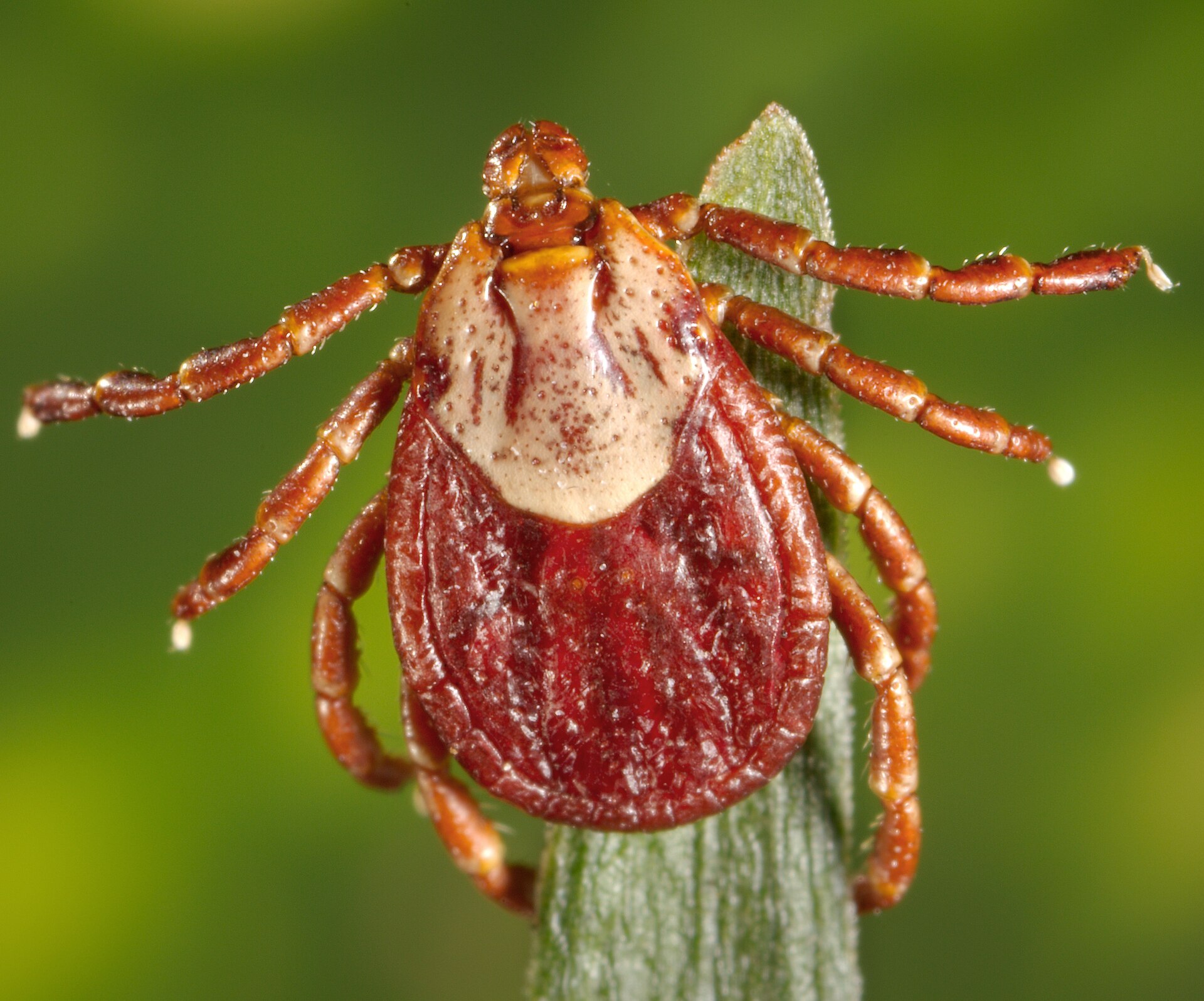
    [Here’s another old unpublished post, from May 2011. NOTE: I might have been mistaken on the species of tick in the following post — it seems that Idaho Fish and Game specifies that the most common tick here is dermacentor andersoni, or the Rocky Mountain Wood Tick, which is what the featured image of this updated post shows…]

    American Dog Tick
    American Dog Tick

    After a trail run today, Leslie and I picked 19 American Dog Ticks (dermacentor variabilis) off of Angus. We found some crawling on us, which we assumed came from Angus, and are included in that number, which is one shy of the record 20 I pulled off of Glenna after a hike a few years ago. I assume that anyone hiking with a dog in the spring knows the drill: caress the fur with heightened fingertip sensitivity, feel for little flat bumps on the skin, and then quickly extract the little nuisances and flush them down the toilet. At least that’s what we do with them. Then we spend a couple hours imagining they’re crawling around in our shorts or on our scalps or in our armpits.

    I went googling for info on ticks because I couldn’t imagine any good their existence provided the world. Even worse than mosquitoes, which I know at least provide a food source for trout, ticks just seem like pure badness. They’re creepy, they’re parasitic, and they spread some really horrible diseases, not unlike investment bankers, politicians, lawyers, and crooked CEOs.

    The Good

    If it’s permissible to put a value judgment on an insect (debatable), ticks are good because they help control the rodent population. That’s about it. The bad things they do are more interesting.

    The Bad

    Ticks spread Lyme Disease. You can read about it on wikipedia, but I found a post on a forum that paints a clearer picture. This person chimed in on a thread that was being dominated by more scientific types who took the time to explain in biological terms the position of ticks in the greater ecosystem; some even qualified their remarks with the good-science move distinguishing science from morality or judgment (i.e., “ticks are what they are”). Some of the posters, however, couldn’t refrain from saying that because of the “good” ticks provided their habitat, they were better than humans. Enter this poor soul:

    When a tick pays for my medicine, doctor and emergency room bills, I’ll think about “save the ticks.” I have Lyme Disease. I know what a Neurologist is. I know what an epileptic seizure is. I know more medications than I should. I sometimes have a hard time walking to get my morning newspaper. I haven’t run in 4 years. I can’t SCUBA, Frisbee, sail alone, ski, walk on boulder jetties, drive (without a lawyer), I golf like a loser, can’t throw a (base, foot, snow)ball without falling. I have vertigo, I can’t climb a ladder; I used to climb a mast on a sailboat underway to change a lightbulb. I lost my “sea-legs.” I lost my Captain’s License, driver’s license is in perpetual limbo. Have a “spaz” lose a license. Sometimes I use a cane. Part of running around is risk. I got whacked… I’ll be an adult and NOT sue someone. I’ve been beaten, stabbed, robbed, left-for-dead, shot at… Lyme scares me the most. There is nothing I can do now.

    Ticks spread other diseases, too, such as Rocky Mountain Spotted Fever, anaplasmosis, tularemia, and – my personal favorite – 364D Rickettsiosis. None of these are any fun. The key is removing the tick before they have a chance to get deep into their feeding cycle, which sometimes takes over 24 hours. I read that as many as 50% of the ticks out there carry one of these diseases, some of which are species specific.

    The Tick
    The Tick, from a 1994 TV cartoon series

    The Weird

    American popular culture has a fascination with strange and gross things. Ticks pop up here and there. There’s a cartoon I watched on Saturday mornings back in my thirties. It’s called The Tick, of all things, and was based on a comic book character and spawned an even weirder TV series starring the guy who played David Puddy on Seinfeld (Patrick Warburton). Then there is the 1993 horror film Ticks, which marketed itself with the line, “It’s not nice to mess with mother nature.” Do me a favor and don’t see it. Do me a favor and do listen to “The Ticks” girl band if you want to run screaming from your computer. And do your dog a favor and get those ticks off of him or her before they do some serious damage.

  • Jimmy’s Beau

    Jimmy’s Beau

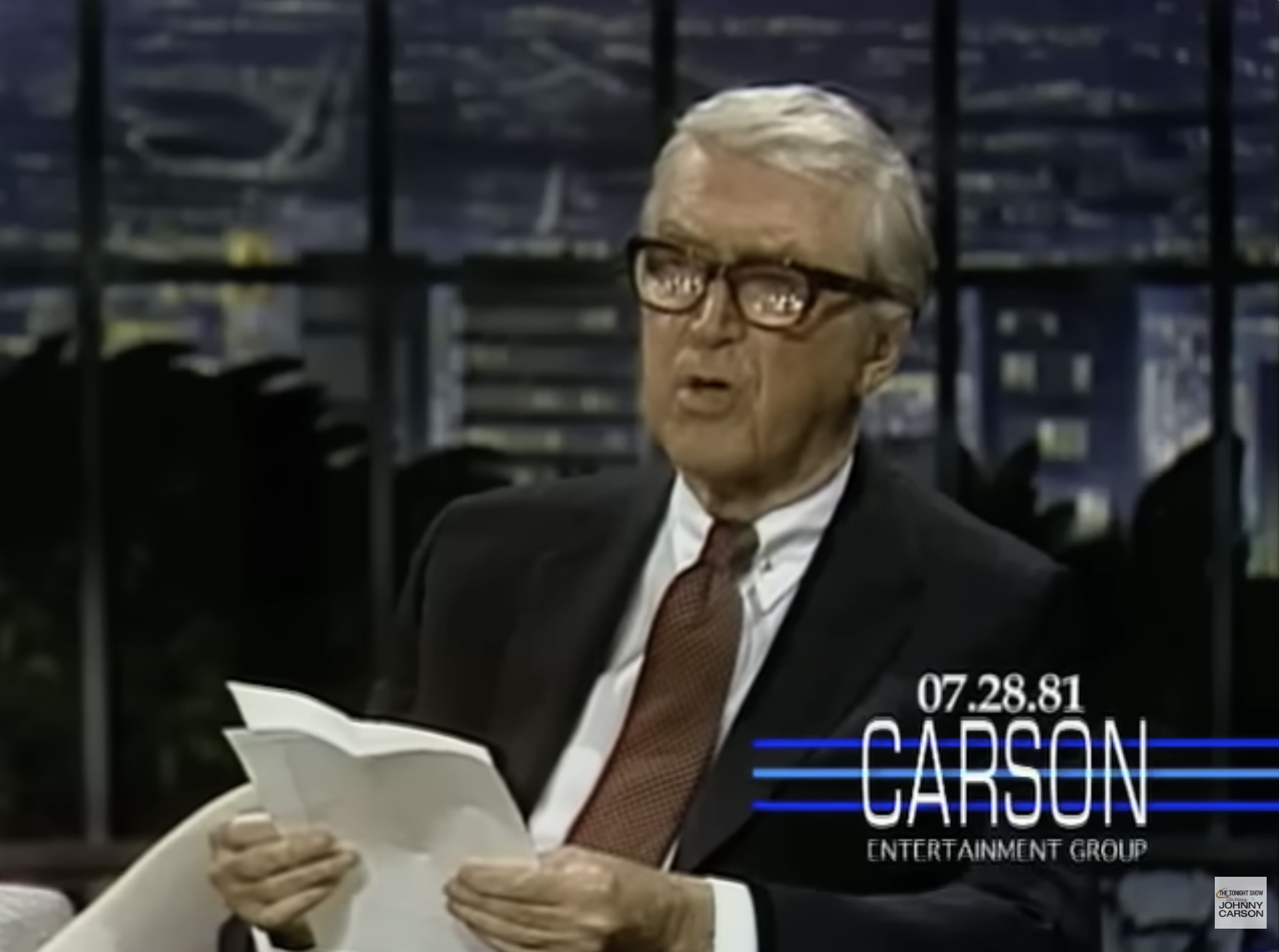
    I saw this on Facebook the other day and it made me cry. I’m not sure if that’s saying much since I cry (when I’m not enraged) at parallel or crooked lines. I somehow developed a soft spot for Jimmy Stewart when I was a kid. I don’t really know much about him, but he reminds me of my maternal grandfather (whom I’m named after), both a little in looks and demeanor. They’re from the same general generation. I do remember him being made fun of sometime in the ’80s for publishing a book of poems. I believe some thought he, a movie star, had no right. I might even have agreed at the time.

    Not now. The world can’t absorb enough enthusiasm and admiration for dogs. Especially not now. So let yourself go and listen to him. I think you’ll find something to like about it.

  • Love and Grief

    Love and Grief

    “Her name is Rosie”, the old man that was camped near us with Florida license plates told me as his dog walked over to me. Rosie was an overweight black lab with gray on her face and eyes clouded over with glaucoma. “Come on Rosie, don’t bother her,” he yelled in her direction.

    I yelled back. “She’s okay, I like dogs.” He still walked over in my direction to fetch her.

    “I’ve been coming to the Madison every year with her for the past 7 years,” he told me. “This year she’s had a hard time jumping up into the camper. She just turned 12.” I bent down to pet her. “I don’t know what I’ll do when she dies, I love this dog and I’m already dreading the day I have to put her down,” he sighed.

    “My husband and I just had to put our 13-year-old Brittany down last month; he had cancer.” I tried not to let him see that my eyes were starting to tear up as I told him about Angus. “He didn’t suffer; he went downhill pretty fast.”

    “I camped here with my son years ago, we used to ride motorcycles together, but I don’t ride anymore,” he said. “I like going back to the places that we used to go together.” He paused for a moment, “He died a few years ago.”

    I hesitated responding, remembering how my own dad used to ride motorcycles and go on trips with my older brother. On a gorgeous fall day in September, 16 years ago, my brother took his own life only a couple of days after he’d spent the weekend going on a motorcycle road trip with my dad. “I’m sorry to hear about your son, that’s tough,” I told him. I don’t know why, but I didn’t ask him how his son died. I just remember telling him, “Yeah, it’s nice to go back to those places that you shared with someone you loved, it makes you feel closer to them.”

    As he walked away with Rosie, he said “I’m sorry for your loss.” I appreciated the words of condolence from this total stranger who reminded me of my own dad.

    To get to this place on the Madison River was a long drive in stormy weather on hundreds of miles of winding roads. Bob and I drove in separate vehicles bringing the extra one to use for longer shuttles on the days we fished out of our drift boat. I’d been listening to music along the way, but somewhere between Grangeville and Lolo Pass, a song called “Mercy Street” by Peter Gabriel started playing on my Bluetooth shuffle and it touched a nerve. It caused me an overwhelming sense of emptiness and panic, and I felt like we’d left Angus behind. Teardrops followed like the rain falling heavily on the windshield. Peat was in the cab of the pickup with me; he’d been sleeping soundly but was awakened by my loud wailing over the music. Not wanting to upset him, I made myself stop crying and focused on the curves in the road. I’d been forcing myself to forget about it but I vividly remembered that dreadful day, that day we drove Angus to our vet in Council in the back of our old Jeep that we parked out front next to the curb and we ended this life. I remember trying to be strong and comforting for him and not let his last moments of life be watching me crying and being so upset. He knew what was happening, he was ready, he was the strong one, the stoic one. When I think back and remember life with Angus it isn’t just those memories on the chukar hills but those days in-between because he had a calm presence that just made everything seem right in the world.

    I called my father immediately after Angus died to let him know Angus had just died. Angus had been my loyal companion from the time when he was small enough to fit in my hands. I thought my dad should know, but he didn’t answer the phone and never called me back. It’s complicated, thorny, and complex, but I’ve got a non-existent relationship with my dad and it’s been that way for years and I’ve learned to accept it.

    After talking to the old man from Florida, I sat in my camp chair and stared at Peat and wondered if he remembers being on the Madison with Angus and running in the golden fields near our campground and if he’s sad because he’s gone. I wanted to come back to this campground on the Madison to remind me of happier times from the previous summer when life wasn’t so strange, surreal, uncertain. The time before lost lives, broken friendships and when people used to be kind to each other, the days before we knew Angus had cancer even though it was already growing inside him.

    Innocent times

    As we drove away from the campground to head home, the old man from Florida was still there alone in his camper with Rosie. We headed west and through the rolling hills, mountains, and ranches near Dillon and Wisdom that reminded me of home but on a much larger scale. On our last night on the road we camped in a National Forest campground high up on the Idaho/Montana border that we’d visited two years before with Peat and Angus. After setting up camp, Bob, Peat, and I walked along a beautiful little creek where we went the last time we were there. I watched this funny dog that makes me laugh constantly, this little dog that loves life and play and that I adore and that I’ve raised since he was 7-weeks old explore the world without Angus. I remember Bob saying, “I think he’ll be okay.”

    I love Peat but we have a complex relationship. At home Peat has replaced Angus as my constant shadow but sadly the last three years he didn’t want to hunt with me in the field when Bob and I were hunting together. Peat prefers Bob, and it is as if I don’t exist. It’s weird but I’m okay that Bob is the alpha. When it’s just Peat and me out together, he’s fine and he hunts hard for me but just like humans relating to one another, relationships with our dogs can sometimes be complicated, intricate, and painful. Angus is missed terribly and I’ll miss having him be my hunting partner on chukar opening day but I’m looking forward to having some quality days with Peat this coming season.

    Grief is loud but love is even louder.