My problem is that anything that I want to be good at, I take it seriously and have the tendency to get obsessed with it. Years ago, I raced bicycles at an elite level and for 12 months a year my life revolved around bicycles and the bicycle racing scene. It was eat, sleep, train, travel all over the place to race plus I had a full-time job on top of that.
This time of my life was way before the internet, social media, and Instagram so I had subscriptions to every bicycle magazine on the planet to get my constant fix. Success back then wasn’t measured by how many followers or likes you had, real or fake ones that are easily bought for a few bucks but actual credentials and race results that got me free bikes, clothing, and a small stipend towards my race entry fees and travel expenses. After 15 years of spending every free moment on my bike and missing doing other outdoor activities, especially in the summer, I got burned out and walked away from the sport and didn’t want anything to do with it.
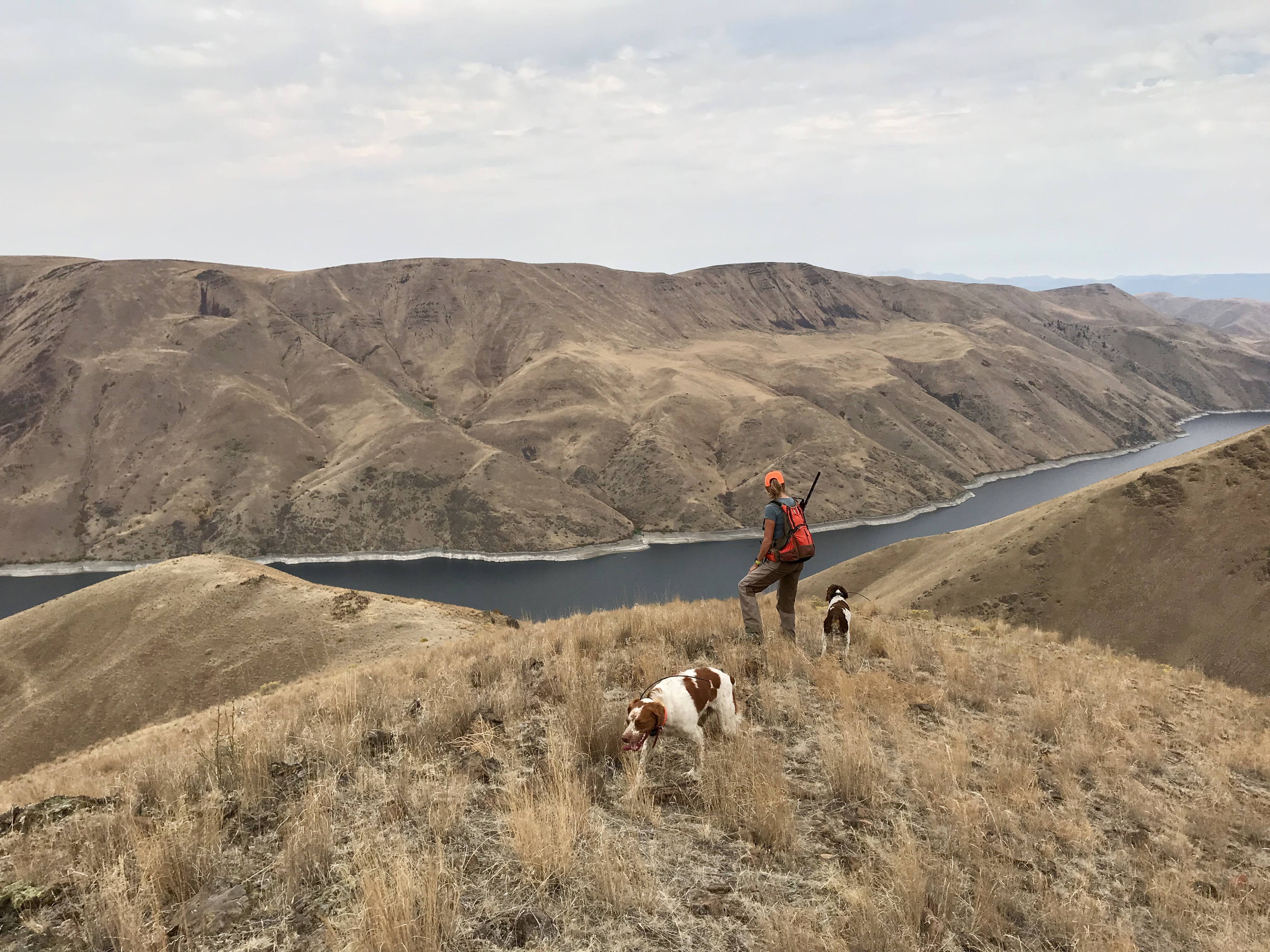
I’m passionate about chukar hunting and love the sport but I’m almost glad the season is only four months a year. I’m also happy that I’m not in the upland hunting industry because it’s nice to take a break, change focus, and do other things the other eight months. My chukar hunting obsession needs to take a break, yes there is too much of a good thing and I don’t want to get burned out on upland bird hunting like I did on bicycle racing.
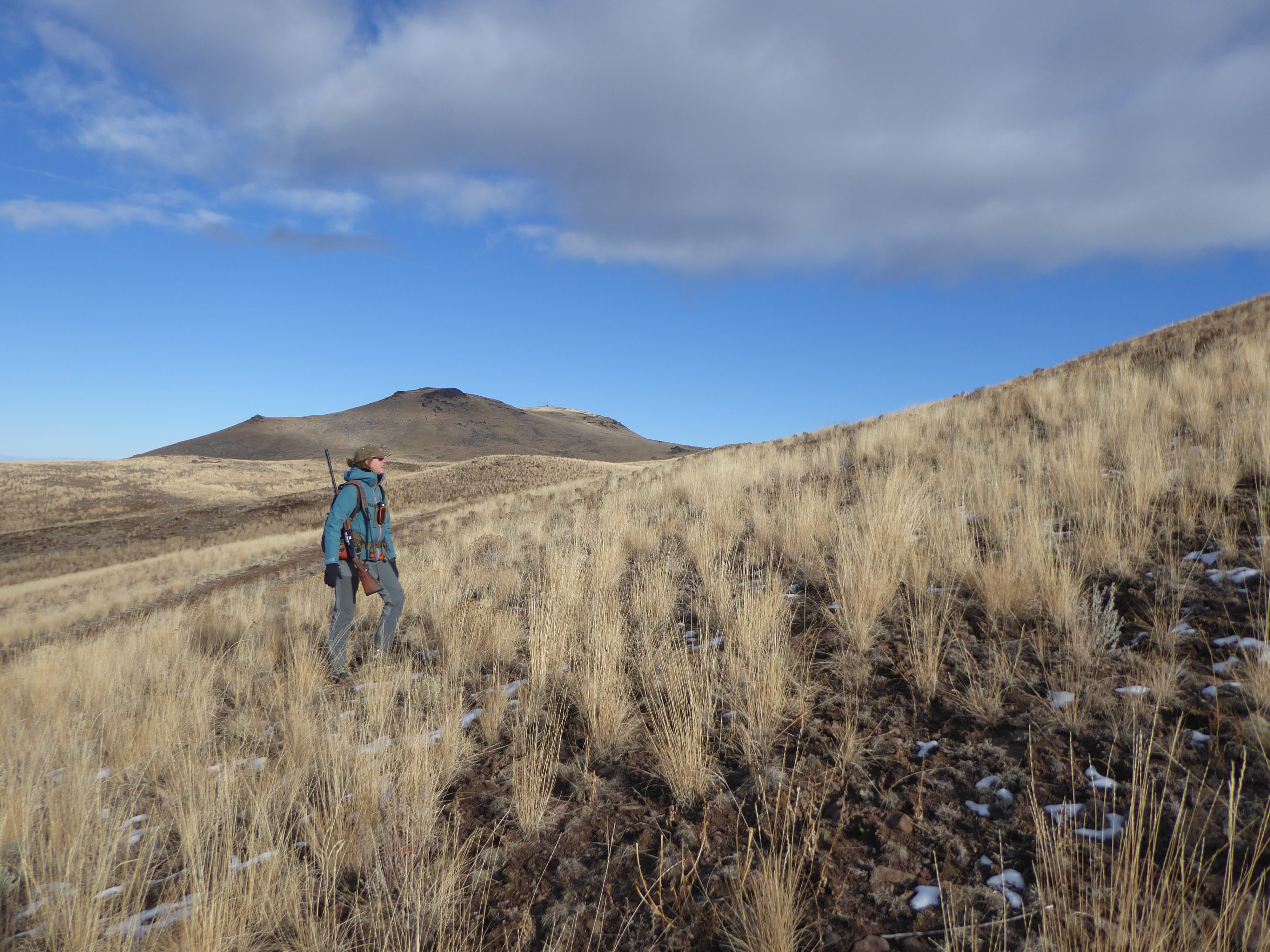
I’m a goal oriented person which made me be a successful bicycle racer but I made a mistake at the beginning of this past chukar season to try and hunt my age which is 57 plus hike further and gain more elevation than the season before. I didn’t achieve my goal on the last day of the season and felt a little bit of a failure.
I like the off-season and I’ll be outdoors trail-running, hiking, fly-fishing, and sometimes even riding my bicycle. My plan is to be fresh and excited to switch gears back to chukar hunting this coming fall. Who knows what my next what obsession will be. Mountaineering? I kind of doubt it but who knows, ten years ago I never thought in a million years I’d ever carry a shotgun and kill birds. I do know one thing for next season, I’m not setting any goals for anything.
Eventually, all things merge into one, and a river runs through it. The river was carved by the world’s great flood, and runs over rocks from the basement of time. On some of the rocks are timeless raindrops. Under the rocks are the words, and some of the words are theirs.
I am haunted by waters.
–Norman Maclean, A River Runs Through It
The final two paragraphs of Maclean’s first story, written in his seventies, may be one of the most-quoted chunks of literature about the west, maybe because it’s an anthem to an original wildness we continue moving away from in ever-accelerating fashion. Maybe it’s just beautiful and has to do with water that moves (all water moves, but at least we can watch and listen to it move in rivers, and feel it if we get in it). I connected with this story when I was much younger and falling in complicated love with fly fishing, a romance that’s recently been rekindled for some reason I’m not sure about. But I am sure that it (the book and its final paragraphs) connects to chukar hunting in some ways that might resonate with other bird chasers. The connections are visible: whether it’s on Instagram or in the flesh, we see people fly fishing accompanied by bird dogs; we see other drift boaters on the Missouri with big, bearded German breeds; in the “off season,” we see Idaho Chukar Foundation posting pictures on Facebook of what he calls “water chukars” he’s landed in some mysterious aqueous artery. There’s a stereotypical ethic, I think, that each activity shares: a honed-down pursuit of elusive, beautiful prey, based ninety percent on knowledge and the other half on patient perseverance. Ultimately, it doesn’t matter why. But there is a connection. It’s centered on the people, and cultivated in them. In a way, all things we experience as people eventually merge into the one person we are. We’re like rivers.
Fly fishing with bird dogs requires more stops than usual, which is good for everyone.
Earlier this spring we received the following message on Chukar Culture from a reader we’d never met.
“Hey Bob and Leslie, I feel like I know you at least a little from your blog. I have commented a few times. I live in Butte, MT and have spent the last 22 years “researching” trout populations within a 60 miles radius of my home. I would be pleased to take you out for a day or two this summer on some of my favorite streams.”
Chris and his wife Becky took us to a special place dear to them, where he knew we’d have a good chance of catching some Arctic Grayling.
One of many grayling we caught that day
The reader, Chris, knew from reading our blog that we’d be in Montana fly-fishing for much of the summer as soon as school got let out. After some emailing back and forth, Leslie and I took a day off from fishing the Missouri and drove down to Butte for our fly-fishing blind date. We put the coordinates of Chris’s house into our GPS. As we got closer and made the right turn into his subdivision we had a deja vu moment. The previous year, driving from Missoula to Bozeman we detoured into Butte to buy fishing licenses, and after leaving one of the local sporting goods stores to continue our journey out of town our GPS took us by mistake into the same neighborhood and down the same street past Chris’s house.
Peat inspects his first graylingChris and Becky
The main reason we continue this blog is because of the real connections we make with people who are also passionate about it.
Next upland hunting season will be our 10th sharing stories, photos, and occasional videos. This blog, and the videos that sometimes accompany it, continue to thicken the web of life for us. Just today, a Turkish man who’s coming to hunt Hells Canyon with his son this fall, sent me a comment asking about the Turkish music on one of our videos. I loved this chance to share a connection with a stranger through both bird hunting and music. The musician, Arif Sağ, whose music I used for the sound on this particular video has a song called “Erzurum” (which I’ve used on another video), which is one of the most memorable places I’ve ever been, and pretty remote, in the mountainous, arid eastern part of the country, which reminded me a lot of the area between Bozeman, Helena, and Butte. Chris, from Butte, was stationed in Erzurum when he was in the Army. I’d never imagined I’d meet another person who’d been to Erzurum, much less catch Arctic Grayling with him in a high mountain lake in Montana.
Erzurum, Turkey
Then there’s Harisfrom Cyprus, and our emailed conversation about Brittany puppies, which has led to a regular correspondence. Someday I hope he’ll be able to visit us with his Brittany Molly. And Larry of Moby Goes fame, who’s become a kind of guide for me about the ideal; he knows he’s at least responsible for several of my students eating chukar legs at lunch. And of course Gabe and Katie of Sunburst Brittanys, whose dogs have upgraded the foundation of our lives, and — I imagine — will continue to do so.
Students eating chukar legs in my classroom.
The longer I survive, the more connections strike me, and the more I look for them and, usually, appreciate them. In a way, they’re the only things which matter, and have everything to do with how we see things. Connections we miss hurt us sometimes (but often we have no way of knowing), although some we know will hurt us but we make them anyway; dogs are like that for sure. This blog has connected me, very favorably, with so many people and experiences real, digital, and otherwise that I feel I owe everyone who reads this a big “thank-you.” So thank you: the connections Leslie and I have made through Chukar Culture make our lives bigger and better in lots of different ways. I tried to express some of this six years ago when I made a video for a class I took after my first year of teaching. It’s called “Only Connect,” after the mysterious epigraph from a novel. The fact that each of us is the connector of all the things that make us who we are means that we need other people (and animals and hobbies and curiosities…) to make us who we are. I share it again because its main idea, as obvious as it is, still haunts me, just like this blog and Norman Maclean’s water.
Leslie wouldn’t dream of promoting herself, so I’m gonna. I’m doing this because, obviously, I’m proud of her, but also because some of you might find this interesting.
Leslie’s been making jewelry for a long time, but only recently began making her own silver charms, and only very recently set up an Etsy site to sell her wares: Taisie Design.
Her interest in chukar has crept into her production aesthetic, and she designs and makes sterling silver charms that have a chukar’s profile portrait, among other things. I don’t wear a lot of jewelry, but if I did, these earrings would be my go-to bangles. I like her aesthetic.
Leslie sports her own chukar earrings while briefly caressing a lovely specimen from the Missouri (click on photo and expand to see the earrings).
She also makes, under the business name Salubrious Wax, some wonderful soy wax candles for which she’s designed regionally specific scents. Unlike her jewelry, these aren’t available on her Etsy site; you can get them from The House That Art Built (Ontario, OR), Kaye York Gallery (Cambridge, ID), or Barn Owl Books (McCall, ID). Or you can contact her and try persuading her to send you some candles. They’re good things.
As a recent retiree, Leslie now suffers from never having a day off. Some people joke about that, but for her it’s true: she’s always up to something new in her studio out in the shop. She doesn’t tell me much about what she’s doing or planning, and sometimes doesn’t even show me when she’s done with something spectacular and I only find out when I go in there to steal a tongue depressor or borrow the heat gun.
Leslie working with Peat in her studio.
The other creative outlet Leslie employs out there are her mosaic mirrors and windows. Like the rest of her stuff, she takes her time to get everything just the way she likes it. It’s a good thing we don’t rely on her income and that I rake in the mind-boggling salary of a public school teacher. Otherwise, I’m not sure how we’d make ends meet.
Leslie’s latest mosaic, currently on loan to me for my classroom.
We’re hunkered down again today. It was a blizzard this morning when we woke up. Bob and I really wanted to know the wind chill but our weather station anemometer stopped spinning due it to being caked with snow and ice from the cold winds. I’m not complaining one bit about the snow drift that was pushed against our front door when I went outside to get wood for the stove this morning; snow is needed for water this summer. I’m sure later while I’m out there pushing around the snow blower up and down our long gravel driveway that I might complain and utter a couple of choice words, especially if I break another shear pin from the big sticks and branches Peat manages to find from who knows where and leave scattered randomly on the driveway now buried in snow.
Today is the day for doing those indoor projects you love and hate. After having papers and receipts spread all over our kitchen bar, Bob just finished doing our taxes and is now dreaming of a summer of fly-fishing in Montana and he’s doing research on Montana rivers and what kind of flies to tie. He also has a lot of school work to do today like grading papers, figuring out assignments, then practicing the bagpipes. He loves it.
I’m waiting for the winds to stop. It’s pointless blowing snow when it will blow right back in my face. Bob’s recovery from his spine surgery is going well but he’s still not able to lift or move heavy things (or so he claims). Shoveling snow and snow blowing is my project today. In the meantime, I’ve been going through hunting photos from this season and finding the ones that represent just a small taste of our season spent with good people and better dogs.
My stress doesn’t come close to the stress wildlife endured this winter, but it’s been there daily, mainly in the form of wonder and hope. In a phone call with my dad earlier this winter, I lamented the tough conditions for chukar and the rest, and he reminded me of this wonderful Emily Dickinson poem:
Hope is the thing with feathers
That perches in the soul,
And sings the tune without the words,
And never stops at all,

And sweetest in the gale is heard;
And sore must be the storm
That could abash the little bird
That kept so many warm.

I’ve heard it in the chillest land,
And on the strangest sea;
Yet, never, in extremity,
It asked a crumb of me.
It doesn’t cost us anything to hope, and we did plenty of that this winter. On a recent bluebird day we got a chance to look for the birds whose mere existence warms our collective souls.
It felt amazing to walk uphill, and reminded us of the abbreviated season and what we missed in its last month, and what the dogs missed. To say they were gleeful would be an understatement. We ascended up a two-track for a couple of miles, and then climbed off the road and circled back through some terrain I’ve seen plenty of birds on over the years, but I wasn’t expecting to see anything.
I kept a close, hopeful eye on the dogs, though, and they began getting birdy in the stiff wind. And then Angus pointed, and Peat picked it up with a classic low-rider high-speed creep up to a steady backing position. Not having a gun, I enjoyed the rare chance to capture this beautifully addicting dance with a camera. A covey of 10 chukar busted. A short while later, my bird gods pointed another covey of about 10 chukar. And just a few minutes later, they pointed a covey of 5 Hungarian partridge. On the short walk along the creek on the way back to the truck, Angus dislodged a large grouse (couldn’t tell if it was a ruffed or dusky). All of the birds we saw looked sizeable and healthy. 4 miles, a couple hours, and a result greater than the hoped-for. We’ll steer clear of birds now so as not to disturb their mating, but I do feel relieved to have seen more survivors than expected.