Hercules Metals sent this press release today (July 30, 2026), announcing the addition of a team of (non-American) mining operations folks. I’m no expert, but it looks like Hercules is ramping up the exploration phase (which is how they sold it to the locals in Cambridge, with the carrot of jobs and other community benefits) to an actual mining operation.
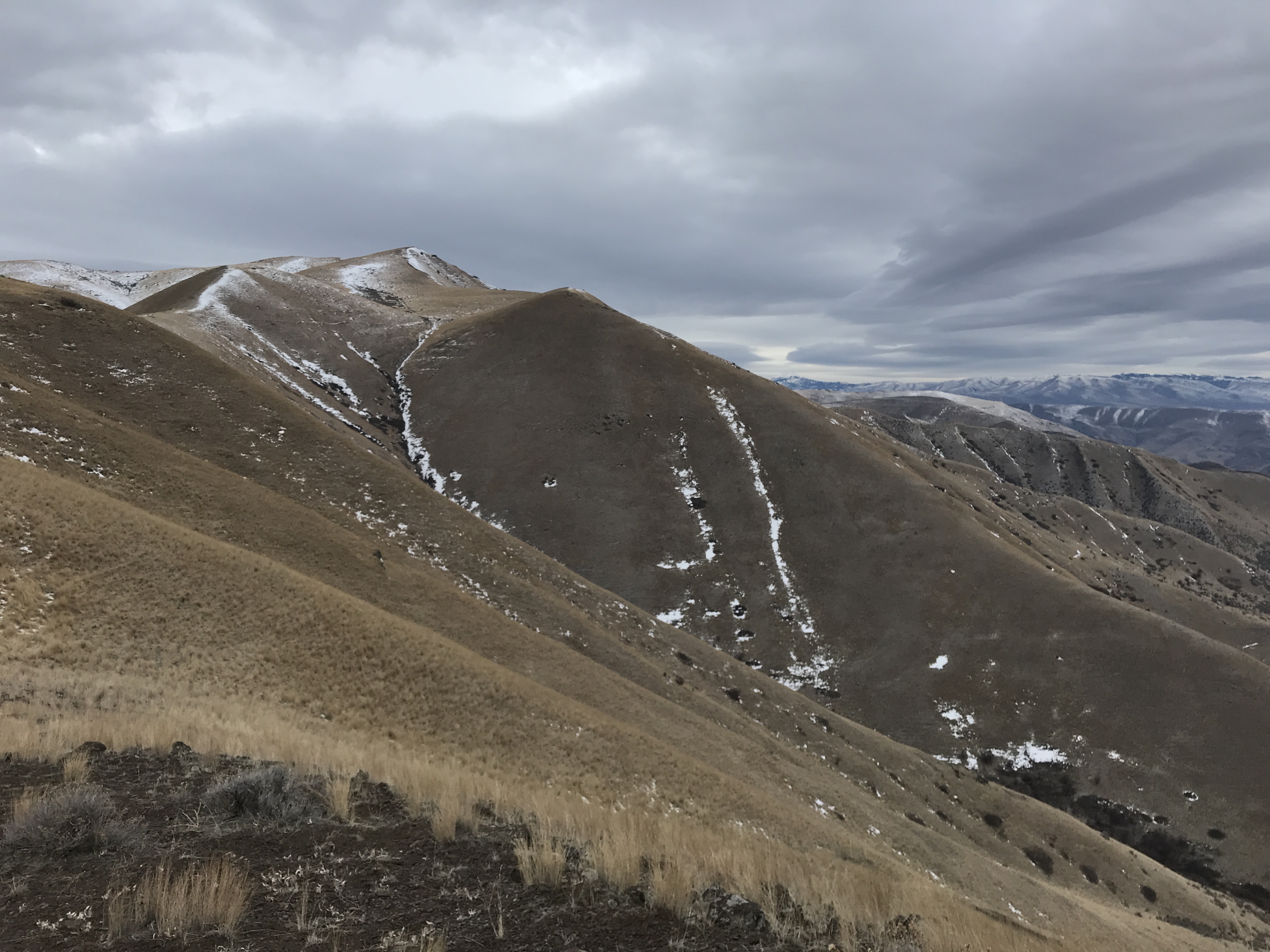
If you read the press release, there is not a single word about the impact of an open-pit mine (or any other form of mineral extraction) on the landscape, the public land, or the community. Idaho law allows what they’re doing, but anyone who uses that land — whether it’s ranchers with grazing allotments, big game or bird hunters, or other recreationists — knows that first, they won’t be able to use it ever again, second, that it will poison the Snake River irreparably, and third, that the way of life championed by Cambridge and the “Upper Country” will be forever lost.
Tell me I’m wrong. Tell me I’m being stereotypically alarmist. Tell me I’m a communist. Tell me that the donation of the bulk of the public land this operation will destroy wasn’t really intended to protect crucial wintering ground for deer and elk. Tell me I’m smoking something. Any of that would be preferable to what seems to be coming.
“The road to Neah Bay is serpentine, a thin twist of wet double-yellow-lined gray. It flirts for twenty miles with the edge of cliffs that seem to stand at the mercy of the Strait of Juan de Fuca and its wide swath of soon-to-be Pacific Ocean. Mapmakers mark it as scenic when it would be better marked IMAX: waterfalls and cliffs and mud slides on the left; white-capped blue water on the right.” — Robert Sullivan, A Whale Hunt
There is only one way in and out of Neah Bay and I know the road like the back of my hand now and take every opportunity in between hairpin turns to look out to the water for gray whales, big waves, and cargo ships carrying colorful stacks of containers. Back home in Idaho when I’d drive the winding road into the canyon to go chukar hunting I knew every hairpin turn, too.
Our first major purchase besides our house just outside Neah Bay was a big portable generator because the locals told us that in the winter the power goes off a lot and sometimes for three days. We were also told to have supplies like food and water in your car in case you get stuck behind a landslide, and even to carry a chainsaw in case a big tree falls over the road. It rains 144 inches a year here, and life on the Peninsula is dictated by the tide charts and storms which come often. One second it’s pouring rain and then it’ll be sunny. We were also told it doesn’t start raining a lot until November but it rained 20 inches in October and an inch a day so far in November. After 40 years of living in Idaho where it rained 12 inches a year it’s been hard to get used to the wet climate.
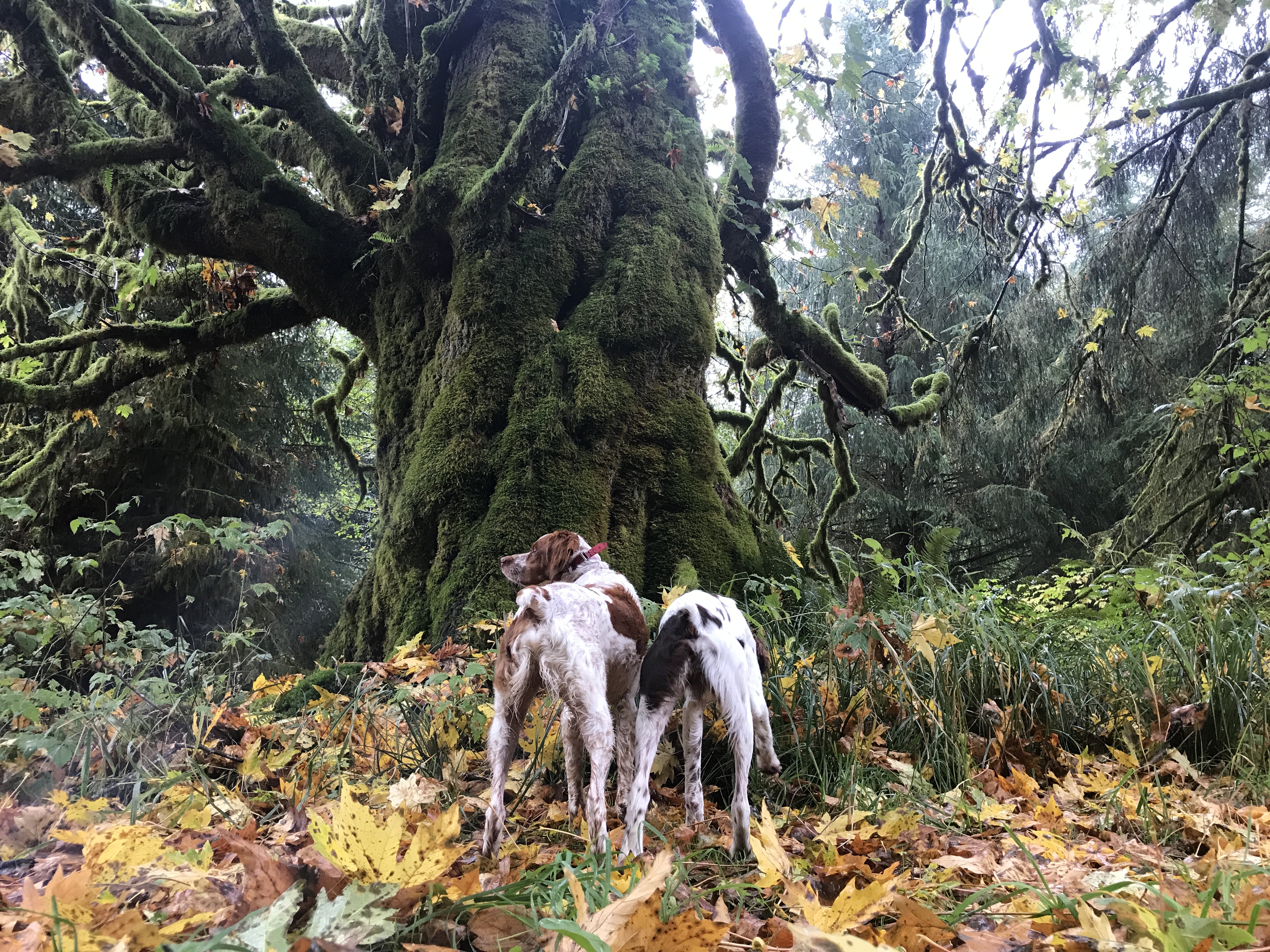
This past summer in-between home improvement projects and the many trips to Home Depot and shopping two hours away we took the dogs out exploring and we’ve found some logging roads so the dogs can run off-leash. These roads start at sea level and head up into the coastal mountains forking, intertwining, with dead ends and roads you can see on maps but they don’t exist anymore or have gotten so overgrown you can’t find them. In this part of the Olympic Peninsula where tall Sitka spruce, red alders, and Douglas Firs grow thick, they have provided a nice canopy to get out of the rain; but sometimes the precip smothers me, so I’ll seek out the huge clearcuts in the forest where I find solace and familiarity like the wide open spaces back home in Idaho.
Bloom is almost 7 months old now. He’s turned into a beautiful dog with long legs and a show dog gait that when he runs reminds us of his great uncle Angus. He moved here with us when he was 8-weeks old and has only known the rain forest and the smell of ruffed grouse and the chukar wing that he chased around the backyard before pointing.
Bloom and the Salish Sea
We’ve been out looking for birds but grouse hunting in the rain forest can be a tricky proposition we have found out. Besides being steep and wet, it’s so thick of sword ferns, brambles, and tangled deadfall that when the dogs do occasionally find a grouse, trying to get close enough and into shooting range before they fly is next to impossible. I thought many times about just shooting my shotgun into the air to see what kind of reaction Bloom would show.
Grouse hunting in the Olympic Peninsula Solace in the wide open clearcuts
We all carry a relationship to land and to the place that we call home, or in my case the place that I used to call home and that is or was part of my identity. It was what molded me. The pull back to the place where I felt connection through nature and place was too strong to resist, and like a salmon heading upstream from the Pacific and back to the place it was born, I felt like I had no choice but to go. I said goodbye to Bob as he headed off to school one day and loaded up the dogs in the pickup and headed East and to a place where I knew Peat would find birds for Bloom.
After eight hours of driving the landscape around The Dalles, Oregon changed from emerald green to brown, dry, and parched. A few hours after that when I finally got down into the canyon and to familiar places that had green shoots of bunchgrass growing back, cattle were now covering the hills and grazing it and eating all the grasses down to the nub that would — if they’d live — provide cover for the birds. I was sick to my stomach because of the overgrazing.
My excitement and happiness being back to familiar surroundings was taken over by my anxiety and fear of going hunting alone with no cell service and I worried about everything that could go possibly wrong in taking a puppy hunting chukar for the first time. Things that went through my mind were, what if Bloom gets lost, gets torn up by barbed wire, bitten by a rattlesnake or falls off a cliff or his pads get ripped up from the rough rocks. My worst fear was what is he’d be gun shy or he he’d be a jerk and blow through every one of Peat’s points.
Bloom and Peat on the chukar hills
It was mid-afternoon when we finally arrived to the place where we parked and I put the collars on the dogs and took my shotgun out of its case and headed out. It felt great to be out of the pickup after the long drive. Within ten minutes Peat found some birds and when I got up to him he was in his classic Peat point which is almost comical but beautiful at the same time. Bloom caught up to us and seemed oblivious of what Peat was doing. I wanted to yell at him, “Look at Peat, back him!” Bloom instead was intensely smelling the ground and running around, and then he ran right through the covey of Huns that were hunkered down near some sagebrush. I lost my cool and in my frustration didn’t get a shot off and instead watched the birds fly away. I watched Bloom watching the birds and it was almost like he realized that we weren’t out for just a hike but we were actually hunting. It dawned on me that Bloom only knows rain forest scents and had never smelled Huns before, in addition to all the other smells of the High Desert. On the next couple of coveys of chukar and that initial group of Huns that Peat would eventually relocate, Bloom honored him. I was so relieved. Bob assured me before I left that Bloom is going to be good. He was, and nothing bad happened.
After the hunt, I found a dispersed camping spot and I watched the sunset over the Wallowas. I could see in the distance the mountains and ridges that I’ve covered on foot, hundreds of miles over the past ten years with Bob, Angus, and Peat and know like the back of my hand just like the serpentine road back home in Neah Bay.
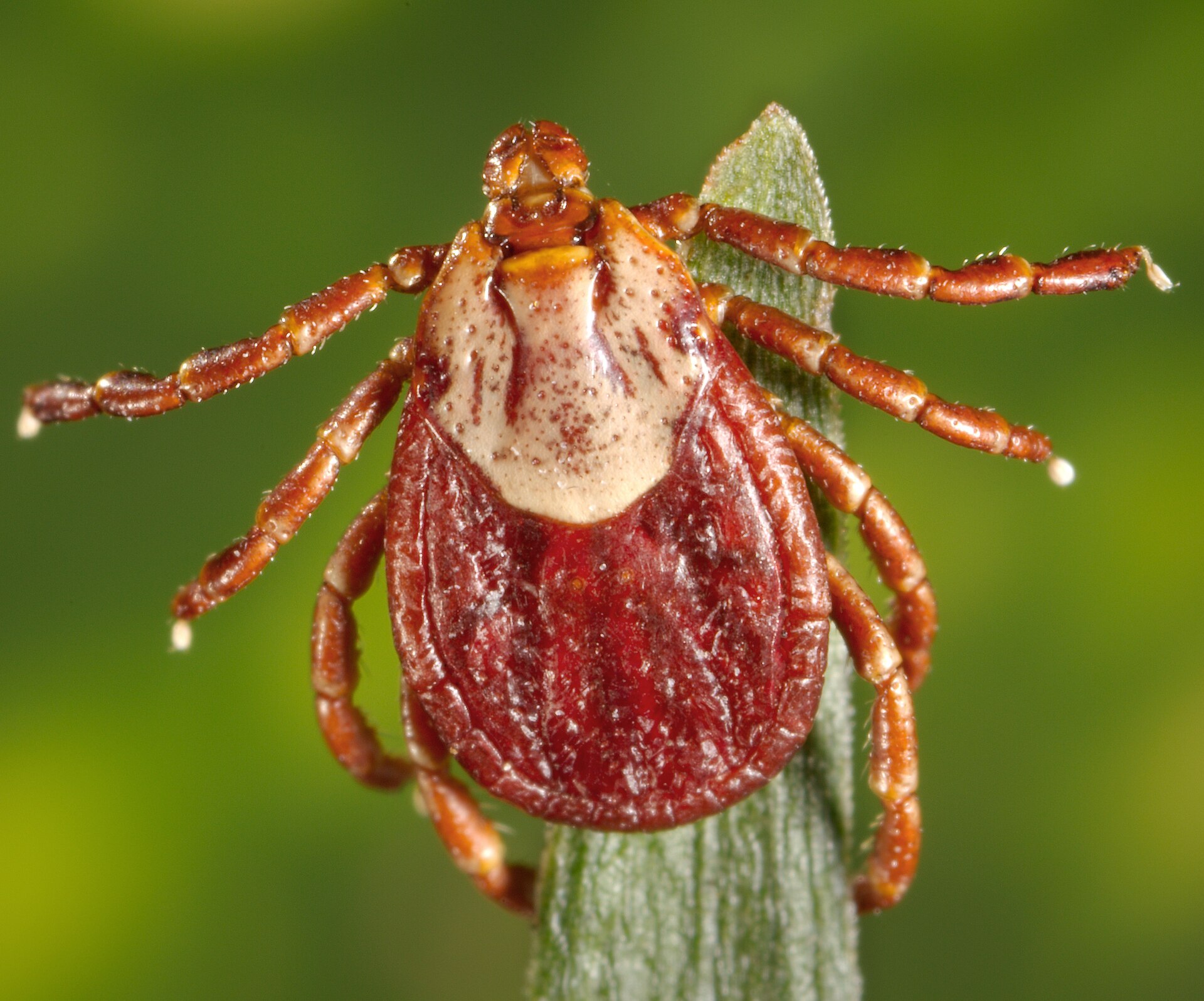
[Here’s another old unpublished post, from May 2011. NOTE: I might have been mistaken on the species of tick in the following post — it seems that Idaho Fish and Game specifies that the most common tick here is dermacentor andersoni, or the Rocky Mountain Wood Tick, which is what the featured image of this updated post shows…]
American Dog Tick
After a trail run today, Leslie and I picked 19 American Dog Ticks (dermacentor variabilis) off of Angus. We found some crawling on us, which we assumed came from Angus, and are included in that number, which is one shy of the record 20 I pulled off of Glenna after a hike a few years ago. I assume that anyone hiking with a dog in the spring knows the drill: caress the fur with heightened fingertip sensitivity, feel for little flat bumps on the skin, and then quickly extract the little nuisances and flush them down the toilet. At least that’s what we do with them. Then we spend a couple hours imagining they’re crawling around in our shorts or on our scalps or in our armpits.
I went googling for info on ticks because I couldn’t imagine any good their existence provided the world. Even worse than mosquitoes, which I know at least provide a food source for trout, ticks just seem like pure badness. They’re creepy, they’re parasitic, and they spread some really horrible diseases, not unlike investment bankers, politicians, lawyers, and crooked CEOs.
The Good
If it’s permissible to put a value judgment on an insect (debatable), ticks are good because they help control the rodent population. That’s about it. The bad things they do are more interesting.
The Bad
Ticks spread Lyme Disease. You can read about it on wikipedia, but I found a post on a forum that paints a clearer picture. This person chimed in on a thread that was being dominated by more scientific types who took the time to explain in biological terms the position of ticks in the greater ecosystem; some even qualified their remarks with the good-science move distinguishing science from morality or judgment (i.e., “ticks are what they are”). Some of the posters, however, couldn’t refrain from saying that because of the “good” ticks provided their habitat, they were better than humans. Enter this poor soul:
When a tick pays for my medicine, doctor and emergency room bills, I’ll think about “save the ticks.” I have Lyme Disease. I know what a Neurologist is. I know what an epileptic seizure is. I know more medications than I should. I sometimes have a hard time walking to get my morning newspaper. I haven’t run in 4 years. I can’t SCUBA, Frisbee, sail alone, ski, walk on boulder jetties, drive (without a lawyer), I golf like a loser, can’t throw a (base, foot, snow)ball without falling. I have vertigo, I can’t climb a ladder; I used to climb a mast on a sailboat underway to change a lightbulb. I lost my “sea-legs.” I lost my Captain’s License, driver’s license is in perpetual limbo. Have a “spaz” lose a license. Sometimes I use a cane. Part of running around is risk. I got whacked… I’ll be an adult and NOT sue someone. I’ve been beaten, stabbed, robbed, left-for-dead, shot at… Lyme scares me the most. There is nothing I can do now.
Ticks spread other diseases, too, such as Rocky Mountain Spotted Fever, anaplasmosis, tularemia, and – my personal favorite – 364D Rickettsiosis. None of these are any fun. The key is removing the tick before they have a chance to get deep into their feeding cycle, which sometimes takes over 24 hours. I read that as many as 50% of the ticks out there carry one of these diseases, some of which are species specific.
The Tick, from a 1994 TV cartoon series
The Weird
American popular culture has a fascination with strange and gross things. Ticks pop up here and there. There’s a cartoon I watched on Saturday mornings back in my thirties. It’s called The Tick, of all things, and was based on a comic book character and spawned an even weirder TV series starring the guy who played David Puddy on Seinfeld (Patrick Warburton). Then there is the 1993 horror film Ticks, which marketed itself with the line, “It’s not nice to mess with mother nature.” Do me a favor and don’t see it. Do me a favor and do listen to “The Ticks” girl band if you want to run screaming from your computer. And do your dog a favor and get those ticks off of him or her before they do some serious damage.
The quickest door to open in the woods for a child is the one that leads to the smallest room, by knowing the name each thing is called. The door that leads to the cathedral is marked by a hesitancy to speak at all, rather to encourage by example a sharpness of the senses. If one speaks it should only be to say, as well as one can, how wonderfully all this fits together, to indicate what a long, fierce peace can derive from this knowledge.
“Children in the Woods,” from Crossing Open Ground
When you’re out there. Head. Thoughts. Observations. Hidden rocks the size of a golfball take you down, all stone of you. My experience is mine. Yours yours.
Here’s something of mine, what happens during and after, and also before the hunt. Not the hunt, but a hunt, and I’d be surprised if most chukar hunters don’t do this, too: things I’ve read that week or that stuck in my graycraw wash into the footsteps and missteps and breathing and hearing. When you’re climbing you’ve got the goal you can see — the ridge, the outcrop, the abutment, the hawthorn vein — but it’s never a straight line, especially with a pointing dog who, after all, is your partner. You repeat that, sometimes out loud and sometimes not, as if some or even you won’t really believe it. The fact of gravity resented. The failure to lose the weight you promised yourself you’d shed. Math. The sharp pain in the back of your throat. Is it Covid? It can’t be. I’ve been careful. Or have I? During a short rest a sound.
Howling. I hope it’s a wolf. We’ve seen prints nearby in the snow years ago. Suddenly I’m transported back 15 years to a solo elk hunting trip. The two nights I was camped featured nightlong wolfpack serenades. Ecstasy. Prescient or not I’d brought Barry Lopez’s Of Wolves and Men to read. On the second day of the hunt a tall wolf — one of the singers? — and I met at 15 feet on undulating ground. It vanished before my eyes while I marveled. Lopez’s book added to my admiration of these dogs, deepening the irony of living in a state seemingly committed to committing the sins Lopez documents in Of Wolves: extermination without cause. Worse: the science shows wolves improve elk numbers and genepool, but if only the politicians and ranchers would read and think they’d make a place for this predator. But that’s asking too much.
Reading while listening to wolf music
Caught up in this thoughtmemory, I’m a little further up the hill. Peat’s on point. I get over to him. Because they’re in the rocks they spot me miles away and bust wild. I reorient to the climb and return to the thought which now is more like a dream, triggered by another howl. I appreciate Lopez again and think of some of his other work, writing that — in part — led me to Idaho because I wanted to be like him, or at least write a little bit like he did, or at least about the kinds of things he wrote about. River Notes, Arctic Dreams, Crossing Open Ground. I had this romantic idea about the land and trying to fit into it and onto it and let it get through me and through to me. I still do. Without work like his, and others of his ilk (David Quammen, Aldo Leopold, Edward Abbey, Edward O. Wilson, Farley Mowat, John McPhee, Robin Kimmerer, Rachel Carson, Diane Ackerman, and Annie Dillard, just to name a few), what happens when I’m outside would be, I’m certain, much different. Worse, I think.
And then, nearing the ridgetop, I remember my favorite piece of Lopez’s, “Children in the Woods.” My mom, an art teacher, tricked my brother and me into competing to become the bird identifying champion of the Back Bay. I don’t know why. I also don’t know why my dad, a poet, built a cabin in the woods of Idaho but it set us free to explore and learn so many names of things in the forest that we didn’t even need to speak them anymore because we’d prefer to pay close attention to what we sensed and think about relationships between those things and us. When I think about it, as I did on this hunt, this, this is really the only peace I have. It’s as good an explanation as I have for why I keep wanting to hunt.
While recovering yesterday from this momentous Christmas Day hunt (momentous in so many ways, not least of which was the wolf howl and what it conjured), Leslie told me Barry Lopez had died. May he rest in fierce peace.
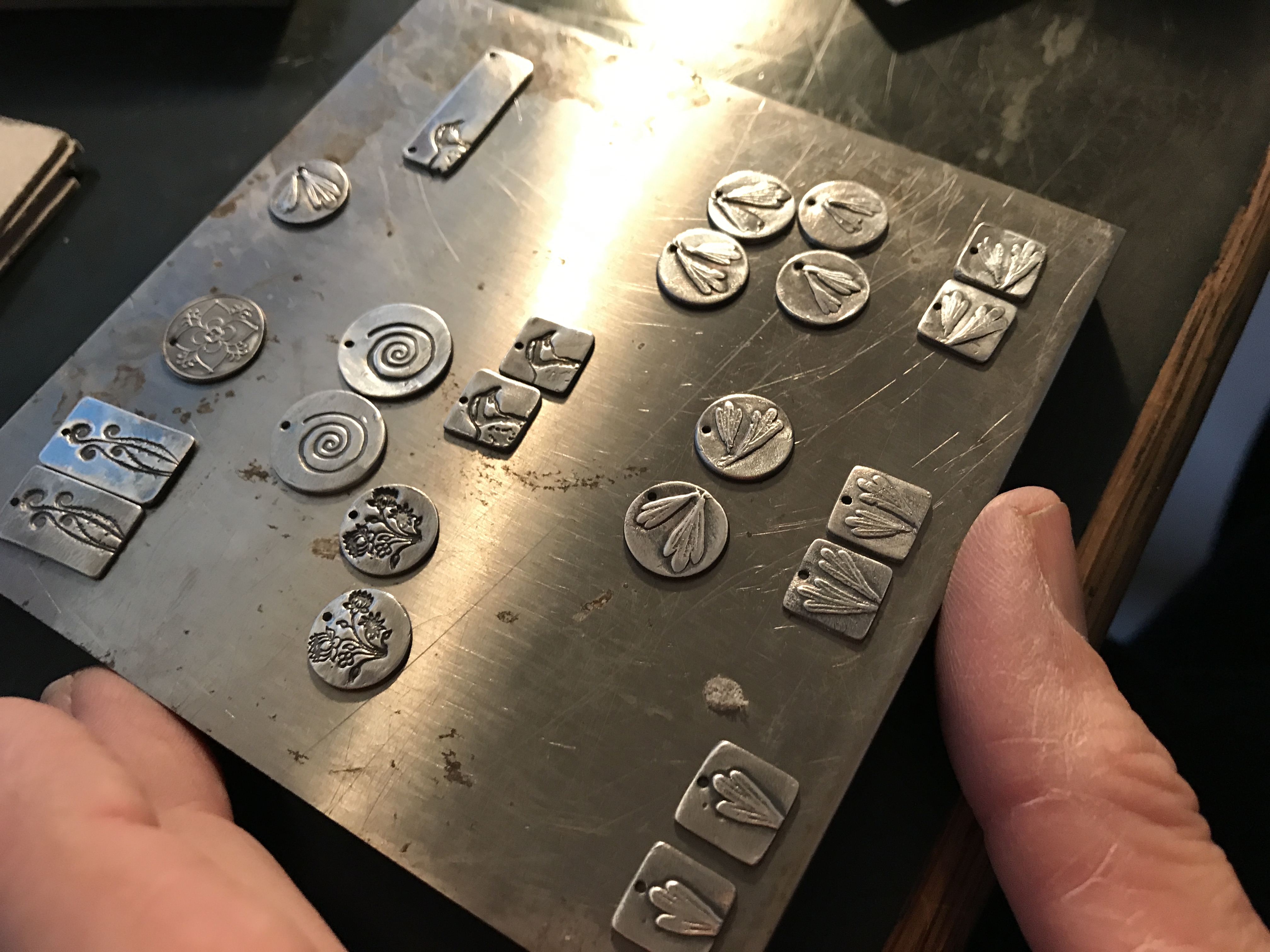
She’d never do this herself, so I’m doing it. Part of the “culture” of this blog’s title is off-the-hill stuff. Leslie, retired from a long career in healthcare, spends most of her non outdoor time in her studio making jewelry and scented soy candles. She sells her jewelry on her Etsy site “Taisie Design,” but the candles (as well as some of her jewelry pieces) are only available in a few local stores (Kaye York’s gallery in Cambridge, The House That Art Built in Ontario, Oregon, and Barn Owl Books in McCall).
I admit I’m biased, but I’m a big fan of her precious metal clay jewelry, even though I don’t wear any of it. Each piece is a one-off, handmade piece of art relating to the outdoors and the landscape we spend our best time in, including Hells Canyon. She’s a perfectionist, and won’t list anything on her site if she wouldn’t buy it herself, so many pieces never make it.
Leslie is more inspired in life by her time chukar hunting than I am. I just write about it occasionally. She makes art that brings the sensuality of the terrain, the intensity of the bond with precious dogs, and the profoundly rare simplicity of losing oneself in an experience all together in wee dear things that capture a little of all of that in ways that obviously resonate with others. It’s a culture thing.