Tag: public land hunting

  • Grace

    Grace

    Unmerited favor.

    I’ve gotten out quite a bit so far this season. The weather’s been good. We recently took a trip to what — in years past — had been the best place I’d ever hunted chukar, for many reasons. We’d looked forward to it for nearly a year. But for whatever reason the hunting was terrible. Or I should say that the bird count was terrible; the hunting was excellent as it usually is when compared to not hunting. But in more miles than normal we saw a small fraction of the number of chukar we’d routinely seen in the area.

    Still, six or seven weeks into the season, it’s been good in many ways. Stats. Because of the nerdy log I keep, I can see that — so far — it’s taking me less time, distance, and elevation to bag birds than it ever has (my duration, elevation gain, and distance hiked, however, are significantly down — which I attribute to age; you can’t win ’em all). My shooting started out much better than average but — with yesterday’s atrocious performance, perhaps attributable to our first outing in Hells Canyon this season, on jumpier (probably much more frequently hunted) birds — it’s back down to my “normal” (but still unacceptable) 35-ish percent. Most of the 23 hunts I’ve done this season have been in completely new places, closer to home, found on onX; I’ve looked for public lands that — on the computer — looked like they should have chukar, and every single one of them has, sometimes with very good numbers of birds, and usually these have been places that I doubt many — or any — people have looked for chukar (they tend to be places that a UTV can’t get near). The conclusion that I make from these interim data is that — finally — it seems I’m getting more efficient — dare I say better? — at finding and hunting chukar. I could go on about all this. But…

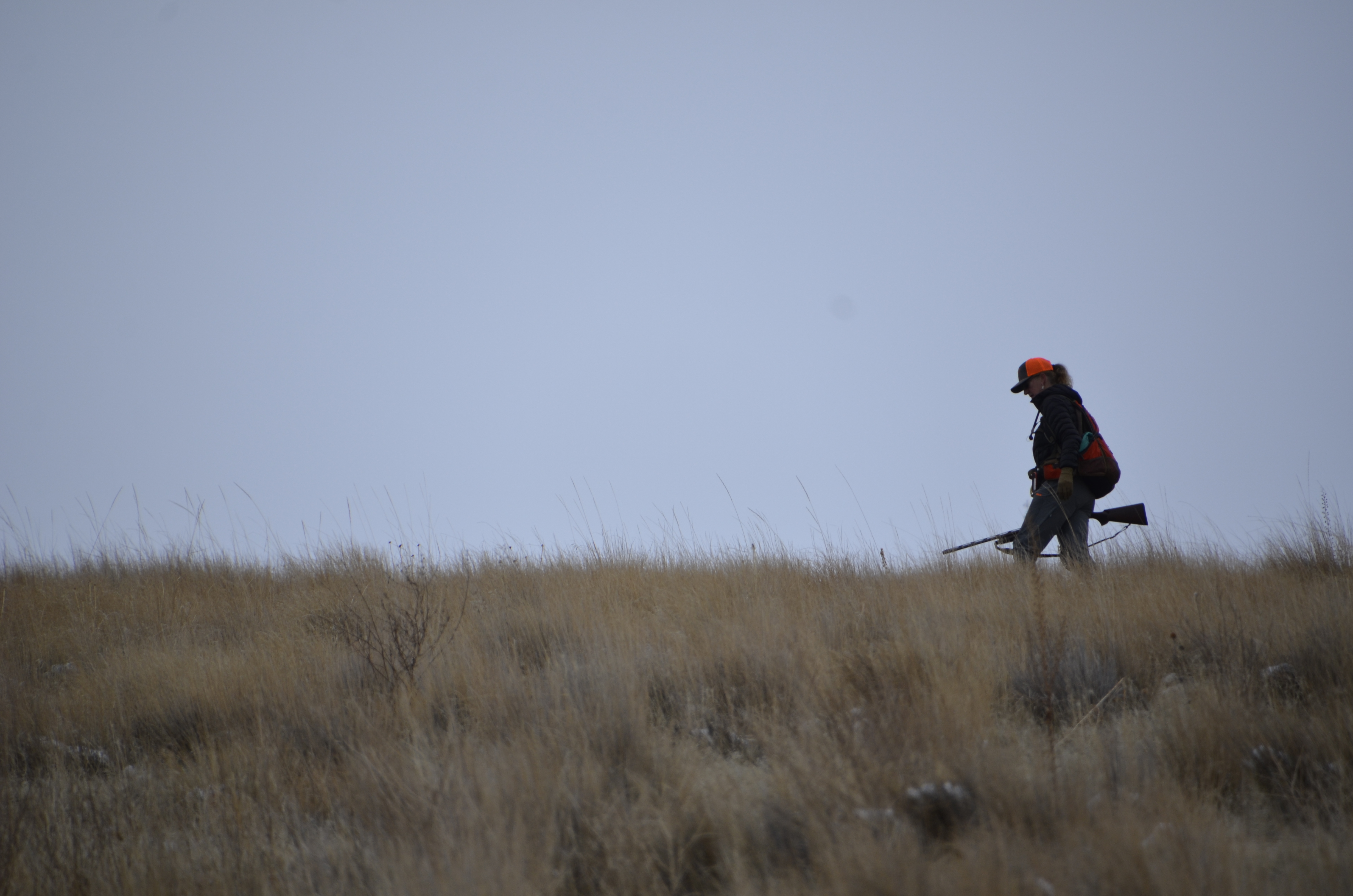
    A person wearing an orange hat and backpack walks through a grassy field with two dogs, amidst rolling hills under a clear blue sky.
    Pretty over-grazed and overly flat terrain, but we’d never been here and didn’t see sign of others, either. And there were lots of birds. Plausible conclusion: the lack of homo sapiens is a good indicator of game bird presence.

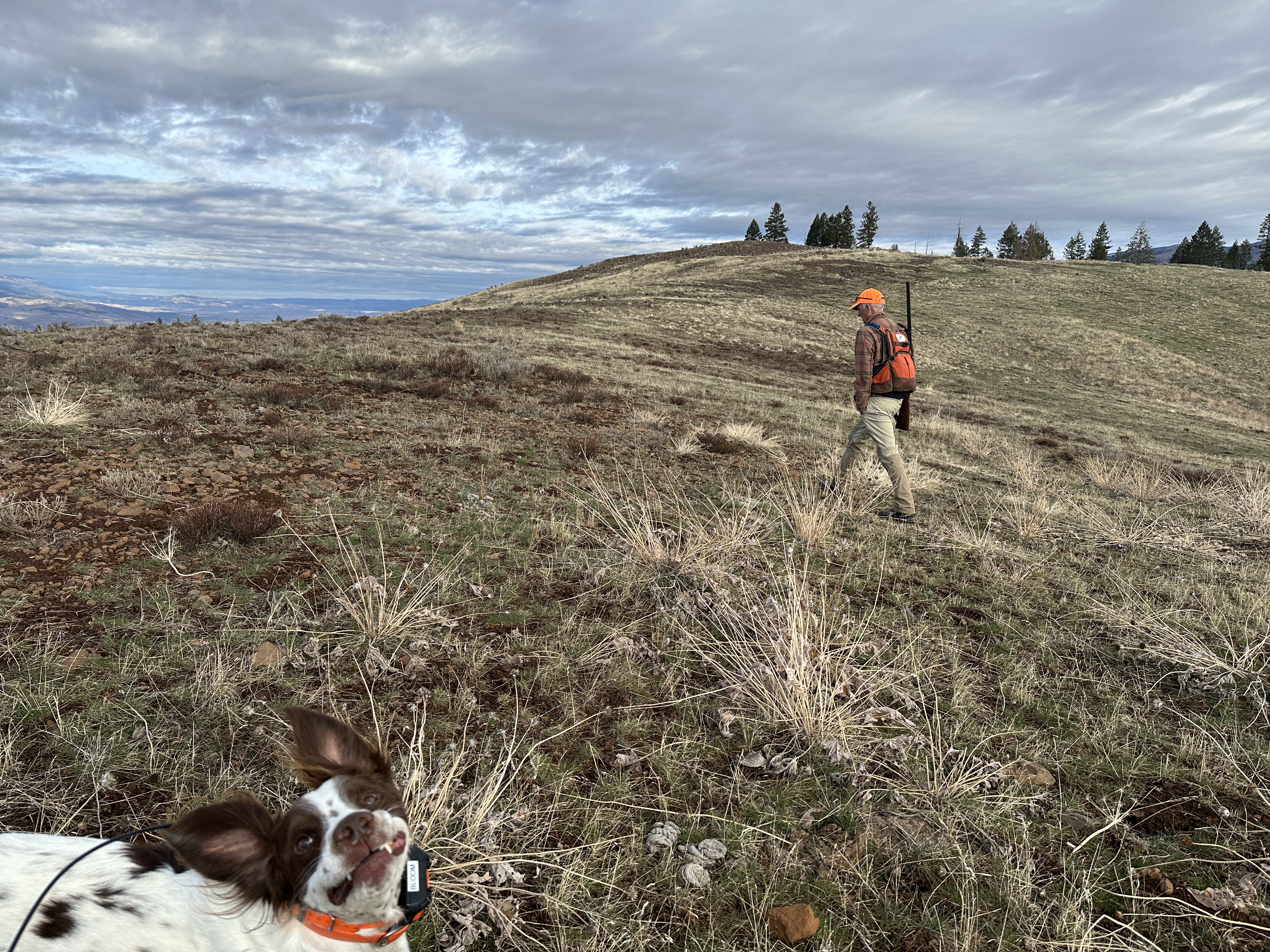
    One of the best things for me this season has been hunting with nearly-eleven-year-old Peat. Five times now he’s chased down chukar that I knocked down, disappearing for quite a while, and come back with them. Yesterday, for the first time this season, Peat disappeared after a bust in which I was able to whiff three times with no visible evidence of having even ruffled any feathers. It was one of those “I can’t believe I didn’t hit anything!” busts. But he came running back to us at least five minutes later with a chukar in his mouth. One of every seven birds I’ve bagged this season has been courtesy of Peat’s hard work after the shot.

    A dog carrying a chukar bird in its mouth, surrounded by rocky terrain and sparse vegetation.
    Peat with the chukar I didn’t know I’d hit

    The Hard Work Before the Shot award will without question go to Bloom. He covers much more ground than Peat does. Bloom averages more than four times what we cover, while Peat does almost three times our distance. Bloom in 18 hunts with me so far this season has run 272 miles, while Peat, in 22 hunts, has covered 237. We’ve noticed that when we all hunt together, Bloom tends to false point fairly often, especially at the beginning of a hunt. He definitely improves as the hunt goes on, but it’s almost like he’s trying to impress Peat, whose favorite thing in life is to honor another dog’s point (see my YouTube channel for many examples of this). Usually, Bloom’s first point of a hunt is several hundred yards uphill from where we’re just getting acclimatized, and we book it up to him, sometimes after he’s been stationary for up to 20 or 30 minutes, and as soon as we get up to him, he bolts. I’ve started calling it a “self-imposed whoa,” which is weird because Angus, who never once false pointed, always pointed with this very un-stylish posture (Angus is Bloom’s great-uncle). But as the hunt progresses, he seems to get more and more solid locating and pinpointing birds, which is really great. He tends to leave the retrieving and tracking duties to Peat, so it’s a good division of labor. I will say, though, in the couple of hunts I’ve done alone with Bloom that he has not false pointed even once, and has been an ideal hunting partner. It’s almost as if he’s trying to tell me that I can still do this when Peat is gone.

    A brown and white dog running through dry grass while carrying a bird in its mouth, with another dog in the background.
    Bloom doing his thing, whatever that is.
    A dog with a collar standing on rocky terrain, observing its surroundings in a grassy field.
    Bloom’s “self-imposed-whoa” posture
    A dog with a white and brown coat, wearing an orange collar, stands on rocky terrain in a grassy landscape, with hills in the background.
    Bloom in a “real” point (birds were there)

    Maybe the best thing that’s made this season, so far, really good is Leslie. I’m not sure about saying this because I realize it might make me look like much more of an ogre than I think I am, but she’s done two things differently this season than she’s done in the eight seasons since she started hunting. First is insisting I go alone with Peat every once in a while. As I’ve said, that’s been beautiful; I think it’s been beautiful for both of us because she’s gone by herself with Bloom several times and has really enjoyed that. Second is, when we all hunt together, she agrees to go where I want to go, and the discussions about the route we’ll try to take get vastly reduced. I’ll be honest here by saying that the main reason I have liked hunting for the 25 years I’ve been doing it is that when one is really hunting everything else disappears, including language and everything that stems from it. There’s nothing else like that for me (except, maybe, playing music). This, for me, makes it necessarily a solo endeavor. Any “foreign” intrusion on that — whether it’s your wife or best friend or boss or whatever — mitigates the escape from everything that is crucial to liking it, to wanting to hunt. So the thing I think I’m most grateful for this season, among many great things, is Leslie’s realization and appreciation of how and why I like hunting. It’s allowed me, for probably the first time since she began hunting (which was a huge step for her for many reasons), to sincerely enjoy hunting with my wife. I realize her sacrifice here, and that, as I said, I might look bad in the equation, but I’m just trying to be honest.

    A woman kneels in a grassy area, smiling while holding a chukar bird in her right hand. Two dogs are positioned nearby, one is a brown and white dog and the other is a tan and white dog. The background features a mountainous landscape.
    Leslie on a recent hunt

    Finally, the other thing that’s made the season so far very good for me has been the book. Many of you have bought a copy of Chukar Culture: Memory, Dogs, Paradox, and for that I’m very grateful. I’d love to hear what readers think about it, so if you’ve gotten a copy please don’t be shy sharing your thoughts with me. I’m trying to figure out how to market it better, but am kind of stymied there (i.e., I’m open to suggestions!).

    Book titled 'Chukar Culture: Memory, Dogs, Paradox' by Robert McMichael, featuring a dog holding a chukar in a grassy landscape.

    Speaking of merch: hats, shirts, and hoodies are coming soon. I will post here when they’re live.

    Thanks for reading, as always, and may your season be filled with as much world-cancelling experience as you’re looking for.
  • A Walk for Chukar

    A Walk for Chukar

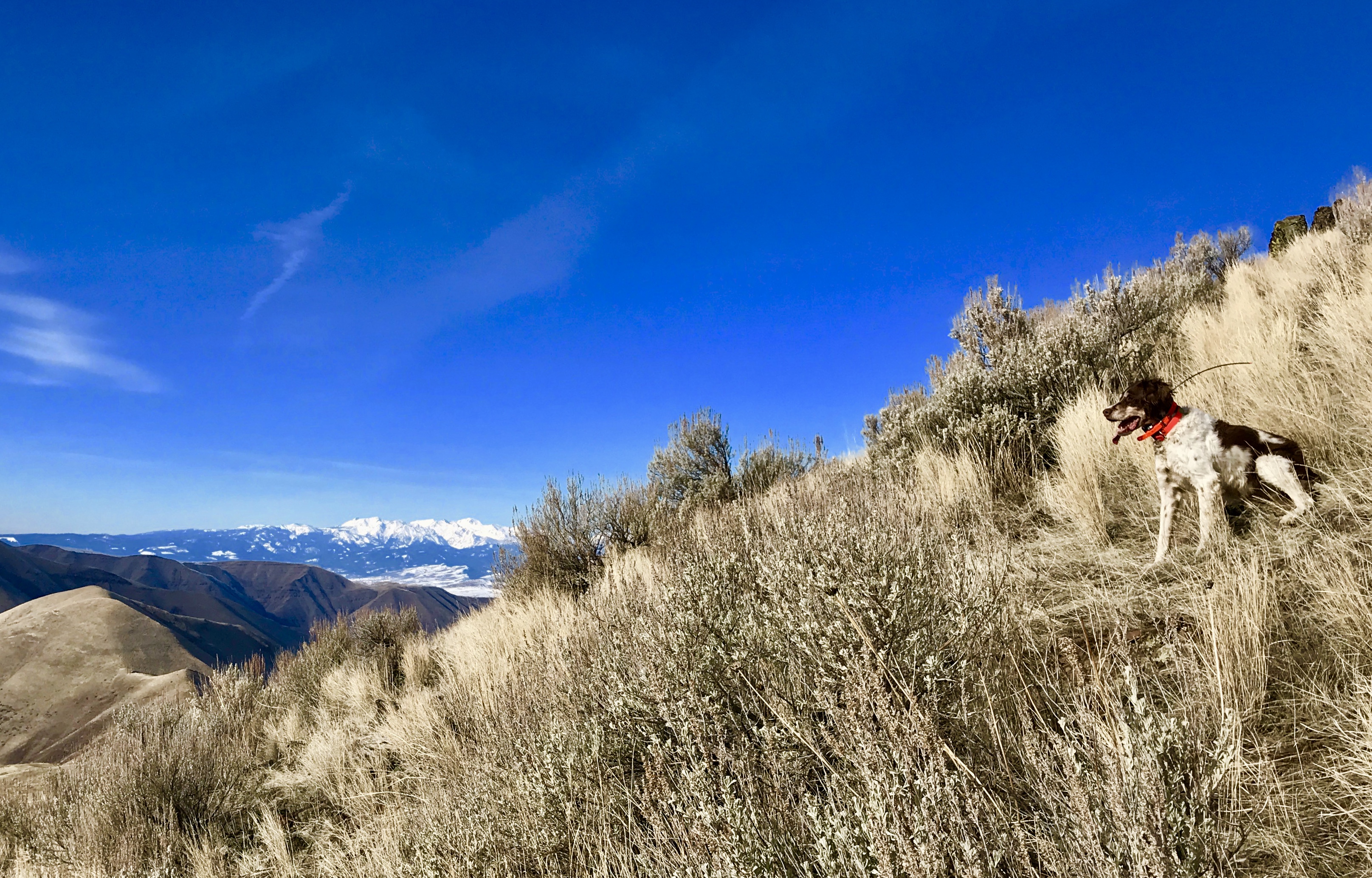
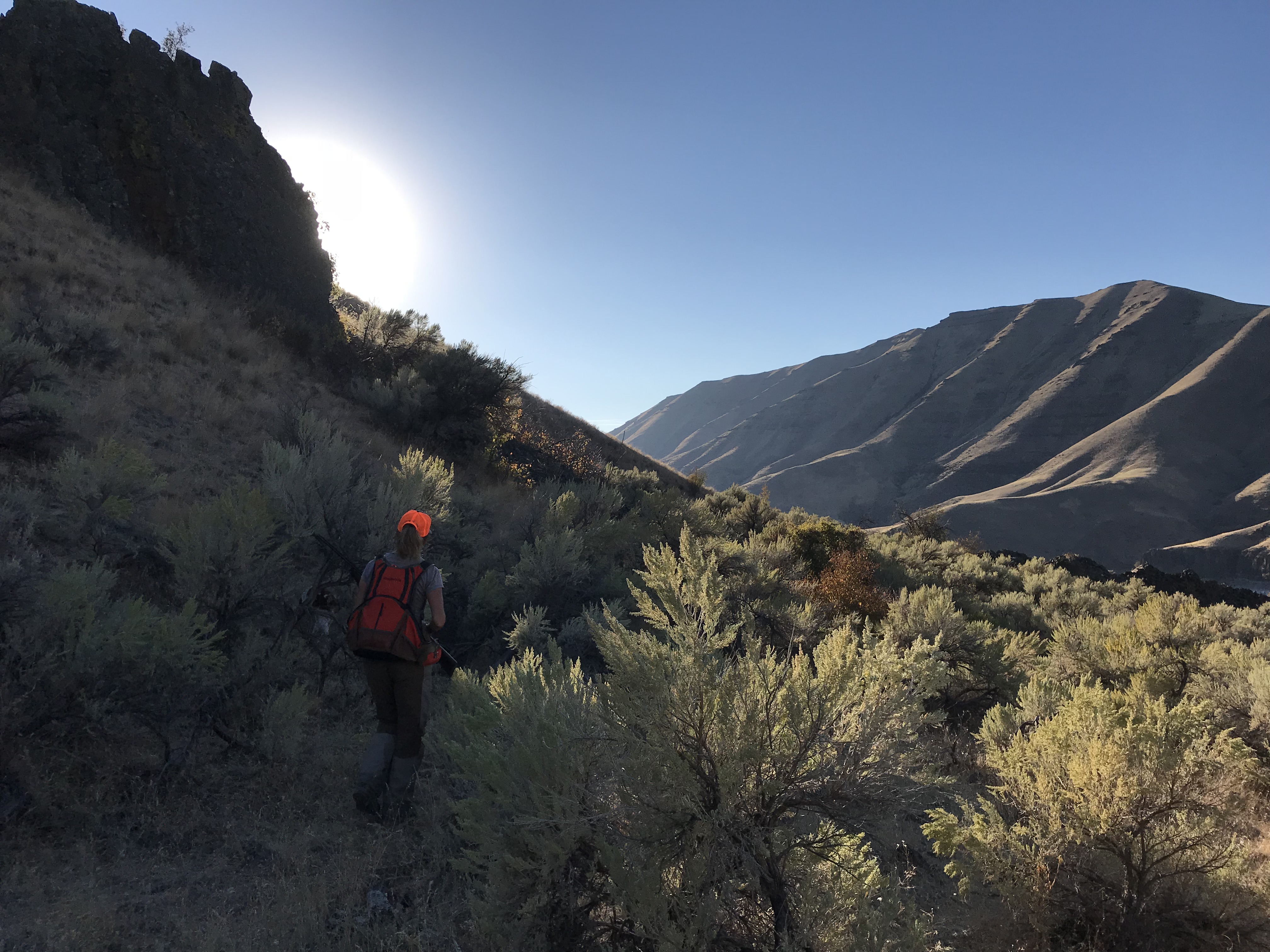
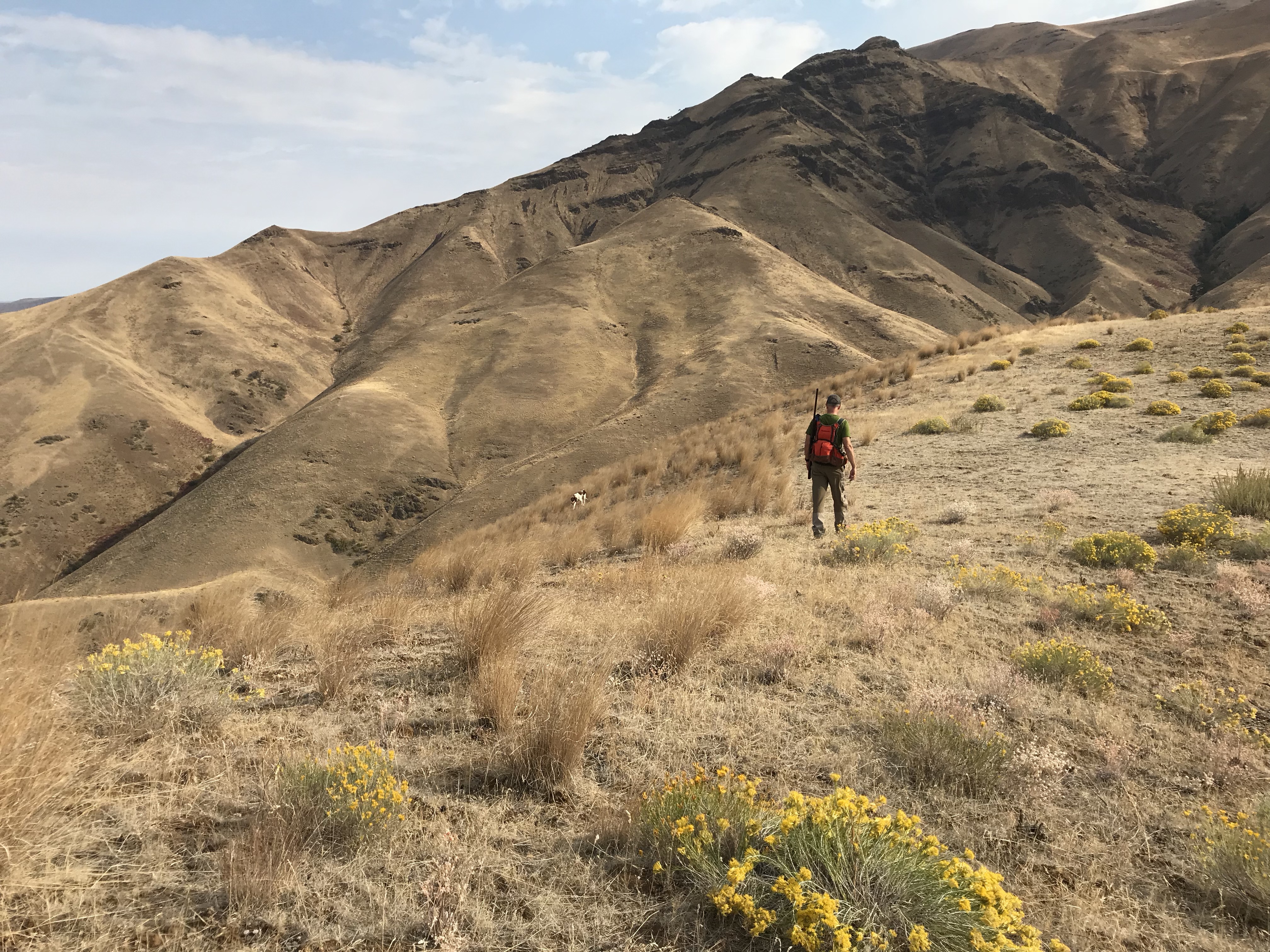
    The landscapes where the birds live dictate where you’ll hunt chukar in the West. Terrain covered in sagebrush, bunch grass, scree veins, and rocky talus outcroppings high up in the clouds is typical in this part of Idaho. You’ll encounter steep traverses and sidehilling that make you wish you had tightened your boot laces tighter. Later in the season, in December and January, it gets snowy, icy, and slick which slows you down especially if you have to posthole it. These hard-to-get places on public lands that can only be reached on foot are what the allure and fuss is all about. It is man and his dog against nature and its elements, or in my case, woman against nature.

    We reminisce and think about these beautiful, wild, and remote places and will plan our hunts next season to purposely seek them out. The reality of it is, you’ll walk a lot, sometimes for hours to find them and only see one covey on good days, but it’s these special places and your attempt to put yourself into position to shoot over a pointing dog that makes you go back another day, and another day, to try again and then dream about the coming season and doing it all over again.

    The video below is my form of ode to walking the chukar hills.

  • Chukar Journey

    Chukar Journey

    “Range after range of mountains.
    Year after year after year.
    I am still in love.”

    – Gary Snyder

    Spring break this year, we drove across the West and past many, many mountain ranges in Idaho, Nevada, Utah, Arizona, and Montana. I didn’t dare sleep in the car or stare at my phone while being a passenger moving past them because I’d miss them. Instead, I gazed across the landscapes or would read my tattered paper road maps splayed across my lap and try to find out the elevation of the highest peak that I could see in the distance or the next little town coming up. On one particular mountain in Nevada, I tried to imagine the route I’d take to the top. Looking out the back window as we drove past it, Bob asked what I was doing and I told him I was trying to figure out a good route to the top. He asked if I was planning on doing that anytime soon. I told him no, but anything is possible.

    The western United States is blessed with vast areas of public lands in the middle of nowhere that rarely get stepped on by a human foot, but it doesn’t make them any less special or less valuable. If anything, it’s the opposite.

    It wasn’t until spending time the past few years hiking around the chukar hills that I realized how important they were to me. On our road trip across the West, I started reflecting back on all the many hundreds of miles hiking up and down these mountains and back to the beginning. I felt like talking about it in the video (below).

  • Final Two Days

    Final Two Days

    I almost didn’t go hunting on the last day of the season. I woke up tired.

    The day before, I’d gone out with the dogs for my fifth hunt in seven days. Overwhelmed by the dread of the looming last day and already missing it, I wanted to take advantage of the unusually pleasant weather we’d been having in this part of Idaho, plus a schedule — or shall I say a lack of schedule — that allows me to hunt in the middle of the week. When I took early retirement from my employer last year, someone told me “The worst thing about being retired is that you never have a day off.” It’s true.

    My second to the last hunt of the season was also my 52nd hunt. I know this, because back in September on opening day, as I’d done the previous season, I started keeping track with data off my GPS watch, if I could remember to turn it on. I like to know where I hunted, my distance hiked, how long the hunt was, and elevation gained. When I got back home I’d write it all down with a ball point pen in my hunting journal which is hand lined with a ruler on a paper notebook. Nothing fancy, just the old fashioned way. Bob, who I’ve dubbed the king of gadgets and who one of the UPS guys a couple of years ago called the king of Amazon Prime because of an almost daily delivery of books or some type of high tech gadget, keeps meticulous detailed records of all his hunts on an Excel spread sheet. Besides all the stuff that I like to keep track of he, likes to record how many shots fired, how many killed and bagged, lost birds, shooting percentage, how far each dog ran, averages and totals for each category, and a barrage of other miscellaneous notes.

    After losing all the elevation in the truck driving deep down into the canyon and finding the place I wanted to hunt the second to the last day of the season, a place unoccupied and not near anyone else, I parked and left on foot with the dogs heading back up uphill for about an hour to the middle of a ridge. Angus and then Peat bolted in a direction that I didn’t want to go but I followed anyway. A couple of minutes later, my Garmin beeped that Angus was on point 127 yards away. Whenever Angus points, it’s almost always legit. Peat, on the other hand, has a collar that’s so ultra sensitive to him stopping for just a second to pee or to smell something that I’ve found myself often ignoring it when it signals me that he’s on point. I picked up the pace through the deep snow drifts that were tucked between forests of sagebrush, and zigzagged my way down to Angus. Once I found him, Peat soon arrived to back him up. I slowly and quietly inched my way in front of Angus, and the birds busted. One shot, and one chukar went down as we also watched the rest of the covey fly downhill changing direction and then disappearing behind a ridge near us instead of flying across valley and to the opposite ridge.

    Not much snow for the end of January.

    It took a few minutes for Peat to find the downed bird and we had no plans to give up on it because the day before I’d winged one that flew down hill into a some bunch grass and rocks and the dogs couldn’t find after 30 minutes of searching. While Peat was retrieving the bird, Angus continued to hunt. It was almost like they had an agreement between them that one would stay looking for the one that I shot and retrieve it while the other continued on searching for the scattered covey.

    On a bed of the terrible noxious weed, medusahead.

    We continued in the direction of where the covey flew, traversing the rocky and muddy sagebrush and medusahead-covered slope. Angus below me with Peat working above me, my Alpha beeped that both dogs were pointing at the same time, on a different covey and not the ones that had just busted. Stopping to stare down at the screen to figure out which dog was closer, Peat flew past me heading towards Angus with a fairly fresh 3-foot-long mule deer leg in his mouth. This was no surprise because one of his many affectionate nicknames I’ve given him over his life time besides “Little F*#ker,” “Little Dummy,” “Crazy Eyes,” “Precious,” or “Sweet Pea,” is the “Garbage Man.” He has this uncanny knack of finding the stinkiest, nastiest, usually dead thing, and either rolling in it or running around with it in his mouth, unwilling to give it up for anything. Our current UPS delivery person last spring, a guy named Sail, was walking up to our house doing a delivery to support bibliophile Bob’s habit that I yelled at the top of my lungs to “STAY CLEAR” while I was hosing off and scrubbing Peat with a skunk concoction remedy for the fourth time after he rolled on a dead skunk near our house.

    The big question of the day was whether Peat would drop the deer leg when he got up to Angus. As I fought my way through the sagebrush, I pulled out my phone and was actually hoping to capture what might possibly be the first photograph of a dog pointing with a deer leg in his mouth. To my disappointment, when I got up to both dogs, Peat backing up Angus again, Peat didn’t have the leg in his mouth anymore. He had actually dropped it.

    The spooky birds busted below Angus flying downhill before I could get into position in front or to the side of Angus to shoot. This has been the theme for most of January where it’s hard to get near chukar before they bust wild. The dogs and I continued into the direction of both scattered coveys before my Garmin again beeped both dogs on point. Again, both dogs were located in different directions. Peat was closer but I could see him above me pointing downhill below a rocky outcropping so I headed uphill. One single busted from the rocks, and I shot once as the quick flying bird disappeared behind the rocks so fast that I didn’t know if I’d hit it or not. My Garmin beeped again, Angus was still pointing 180 yards below. “You have to always honor the point” was something Bob stressed to me last year, so I headed downhill towards Angus. Wondering where Peat was, I stopped and looked behind me uphill just as I saw him running downhill with a chukar in his mouth. I was so thrilled and surprised at the same time that I’d actually hit that one. Angus who held the bird or birds as long as he could before they probably eventually busted returned to check up on me wondering why I didn’t go down to his point.

    Not a tailgate shot but a rock shot.
    Double day: my first ever.

    The following day, the 31st, closing day, we went one final time. My goal was to head uphill and find a place with views of the surrounding valley. I wasn’t worried whether we’d find more chukar, I just wanted to take it all in. The plants, trees, rocks, and other kinds of birds and animals define my place in this ecosystem.

    A treasure and a treasure.

    We headed up a narrow and snowy two-track in a deep valley lined with trees and bushes. Peat in his usual fashion found an animal bone and wouldn’t give it up. I forced it out of his mouth and flung it as far away as possible. I continued on looking at the ground at elk and deer tracks plus Peat and Angus’s tracks in the patches of snow. A paw print that I didn’t recognize at first caught my eye. It was a big cougar track, fairly fresh probably from that morning and heading the same direction. Peat’s body language and routine changed. Instead of running up the trail out of sight a ways and coming back like he normally does he was sticking close to me, running a few feet ahead, stopping and smelling the ground, and continuing on another few feet before repeating smelling the ground again. I watched Angus down by the creek; he wasn’t acting differently, but he’s older and wiser and not the big chicken of the two dogs.

    Still, the cat track and Peat’s behavior was a bit unnerving. We continued up the road and I kept Angus closer to me and instead of carrying my gun on my shoulder, I kept my gun in the ready position and carefully listened and looked behind frequently. I could never willfully or ethically kill an animal like a wolf, coyote, or this cougar that I wasn’t planning on using for food but I actually thought about having to kill something to protect myself or the dogs, and this was the first time I felt the dogs or myself might be the prey.

    Roles reversed. I now know how the chukar must feel.

    On the final climb. 63,755 feet in elevation gain for the season. Peat and Angus way more.
    Upland Peat.
    Angus on the decent.
    Chukar hills.
    One last point.
    Taking it all in.
    Last photo of the 2018/2019 season.


  • Movement

    Movement

    “The lunar landscapes above and below the conifer forests that necklace western mountains, the “chukar hotels” (rock outcroppings used by birds), and the overwhelming panorama that negates any notion of supremacy man might harbor is witnessed only by a small percentage of hunters. Climbing defines hunting in the West. There was elation when, after a hard ascent into the clouds, I killed a bird.” – Guy de la Valdene, The Fragrance of Grass

    IMG_0525
    Chukar hotels

    Movement defines us, and it enables us to do certain activities like walking, climbing, and chukar hunting.

    Last month, I drove my Dad to the Veteran’s Hospital in Boise for his one-year follow-up after he had colon cancer surgery a year ago. In between his CT scan in the morning and visit with his surgeon in the afternoon, we spent a lot of time in waiting rooms. If you’ve never been to the Boise VA before it’s a bustling place of activity and people everywhere. I observed the flow of military veterans, visitors, and staff going up and down the hallways. Some of the veterans, young and old, were being pushed around in wheelchairs, unable to walk. The ability to stand up to walk and then put one foot in front of the other is something that most people take for granted; I know that I do.

    IMG_0813 2.jpg
    Top of the mountain

    Last weekend, I went out chukar hunting with Bob and our nephew Finn. After a long climb to the top of the pine covered mountain, we split up. Bob went with Peat down one ridge, and I went with Finn and Angus in another direction. Not far from the top on a very steep descent, I slipped on some loose ground and rocks, and in my desperation and awkwardness not to fall on the ground, my left leg muscle in the front of my thigh felt like it was torn in half. The pain was excruciating and walking was difficult. I was more pissed than anything when I realized my day of hunting was over and our vehicle was 2,000 feet down a steep rocky ridge. I waved and signaled at Finn hunting below me to wait. Slowly I made my way to him pretending that nothing happened. I told him to go on and hunt with Angus and I’d make my way back and for him not to wait for me. I come from a background of years of bicycle racing where crashing hard, getting up, dusting yourself off, and keeping going was nothing new to me. You learn to have a high pain tolerance and it’s a price you pay when you want to do activities where you might get hurt.

    IMG_0706.jpg
    Chukar break with Bob and Finn

    Chukar hunting on steep talus slopes and sidehills could be dangerous, depending on where you hunt. I’ve fallen a few times and it’s usually not a big deal but this was the first time in ten years of hiking around in chukar country that I felt hurt. Chukar terrain in the West on public lands is almost always in some very remote locations and places where not a lot of other people hike or hunt. In fact, we usually try and find places with little pressure and away from everyone. It’s also not the best place to get injured, and if you couldn’t make it out on your own it might require either getting medical evacuated on a helicopter or crawling on your butt for three miles like Bob did a few years ago when he busted his ankle chukar hunting by himself with no cell phone coverage to call for help. It was actually Bob’s accident that day in 2011 that prompted me to start going hunting with him regularly in case he got hurt again. The other motivation for going with him was that I’d get to see Angus working and get some good off-season cross training.

    IMG_8618.jpg
    Chukar terrain

    My dad, 80 years old, walks slower now than he used to, partly because he never exercised a day in his life. My parents both came from a long line of non-exercisers and it just wasn’t in the cards for them. Growing up they both smoked cigarettes and I was a second-hand smoker from the day I was born until I was 18 years old. When I moved away from home a week after graduating from high school, it was only then that I realized how badly my clothes smelled of cigarette smoke. I hated my parents’ unhealthy lifestyle and decided that I didn’t want to be like them.

    It took my dad and me a long time to make our way through the hallways in the VA hospital. I’m a fast walker, so I found myself getting impatient. I asked my dad if he wanted me to push him in a wheelchair, but — independent and living alone after my mom passed away 8 years ago — he refused the wheelchair because he wanted to walk. We ended up stopping many times walking down the hall, but he didn’t want the wheelchair, I think, because he was proudly wearing his 11th Airborne Division cap. Other veterans heading our direction recognized his army division on his cap and they would stop and chat and reminisce for a few minutes. My dad shared stories with total strangers about being stationed in Germany, stories that I’d never heard before. He never talked about his past when we were growing up. In fact, he didn’t talk much about anything. We continued out of the building and down the sidewalk. His cancer was gone, according to the results of his CT, and his surgeon told him he didn’t need to return to the VA for another year. My dad told me he was proud that he is now a cancer survivor, one of the few times he’s ever expressed his personal feelings to me.

    IMG_2734.jpg
    Last season

    Last season, my Garmin GPS watch recorded 153 total miles of hiking with 47,275 feet of elevation gain. Some days felt effortless; other days, I felt sluggish and out of shape. On the off days, I’d play games with myself to make it go faster and to take my mind off of the climb. I would take fifty steps before allowing myself to stop and catch my breath. Then I would repeat it again. Angus or Peat would be gliding across the golden grasses and through the sage effortlessly before stopping to point a covey of chukar above me. I’d crank up my pace a notch even though I knew that the dogs would hold the birds. If the adrenaline rush is there, you go with it whether you want to or not. You forget about the pain, and places in your body you didn’t know existed hurt and somehow you’re able to muster up super-human strength when a dog’s on point. I’m not trying to brag about my chukar hunting athletic prowess or say I’m a badass; I’m not. My nephew Porter is a mountaineering guide on Mt. Rainer in Washington State, taking clients to the top of the mountain day after day. He’s badass. If he ever goes chukar hunting with us again, which he did a couple years ago, Bob and I will probably just stay at the bottom with binoculars and watch him chukar hunt with our dogs.

    Chukar hunters, like mountaineers, must come either from backgrounds of competitive athletes or the criminally insane. I come from the former and have learned that movement is medicine and it keeps me sane. I hope to be doing this until I’m 80 years old, like our neighbor Sam.

    80-year-old Sam (right). An inspiration.

    IMG_0901
    Brownlee

    IMG_0884 3.jpg
    Heading down with Angus yesterday

    After resting my leg for a week we went out in the boat on Brownlee Reservoir yesterday to get to a place that looked good for hunting. From the boat to the top of the peak, we both climbed up 2 miles and but my legs felt like jello. Bob and I both got into a lot of birds and it was the most action I’ve seen so far this year. Angus out-hunted Peat and found and pointed all the coveys of chukar we saw. I even had a small victory today for myself: I had more elevation gain than Bob. On the way home in the pickup, I told Bob that today was hard and wondered how long we’ll be able to keep it up. Movement is medicine.