This will probably be the final post for a while about Hercules.
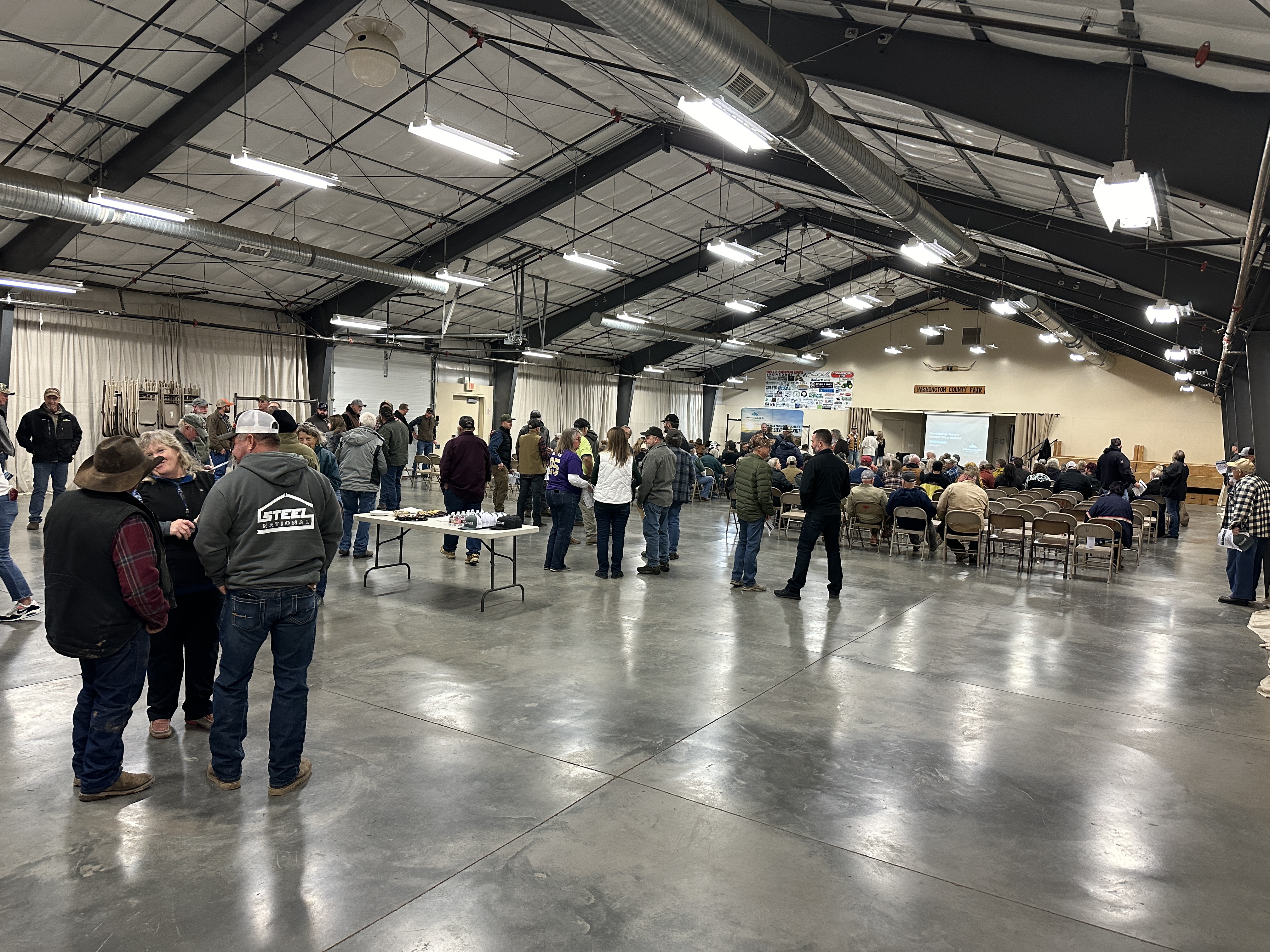
The town hall meeting called by Hercules Silver Corp last night in Cambridge was, unexpectedly, packed (I took the photo above before everyone had arrived). Hundreds of people showed up for what was, expectedly, a PR presentation by Chris Paul, CEO, and Chris Longton, VP of Exploration. I recognized many ranchers, teachers, and other community members in the crowd, as well as journalists, representatives from Idaho Wildlife Federation, Idaho Fish & Game, and Backcountry Hunters and Anglers. Judy Boyle, the 7-term District 9 Idaho House Representative from Midvale, began the meeting by introducing Paul and Longton, as well as the Washington County Commissioner for District 3, Gordon Wilkerson. Boyle, as seems to be her trademark in public comments, wasted no time criticizing the federal government, saying that the mining project was the first positive hope for the community since when “we used to manage our own forests, remember that!?” Then she handed the mic to Paul.
Paul began by calmly saying that he was glad to see so many people come out to learn about the project, and that he decided to call the town hall meeting to respond to lots of rumors he’s heard about what’s going on, one of which is that next year there’ll be 200 miners coming to town. “That’s not going to happen,” he said.
After Paul gave a long-ish review of the history of mining on this site, and some explanation of their scientific and exploration activities, Longton illustrated the mining process as a whole. He emphasized, repeatedly, that the project is in the exploration stage, the first stage of any mining project, and that it could take up to 13 years before it progressed to the design stage, which could take another 13 years before reaching the construction stage (Stage 3). He elaborated that the design stage (Stage 2) required detailed planning for the reclamation stage (Stage 6), which would remove much of the physical evidence of the mine’s existence. Paul added that present-day mining operations are required to bond for the reclamation stage, which prevents a lack of recourse for communities savaged by mining operations that abandon the mine, which is common historically. It was interesting to see Longton’s demeanor change during his part of the presentation from relatively calm to stressed and labored; I had the distinct sense that he was angry to have to explain all this. Then, during the Q&A afterward, he overdid the friendliness when answering questions. He came across to me as more volatile than I’d expect a geologist to be, which was in direct contrast to Paul, who — dressed to match the local code, in flannel plaid shirt, jeans, and a vest — stayed calm and understated the whole time. Sophisticated.
All of this talk about mining, of course, has nothing to do with what Hercules is doing, which is trying to find copper and silver so they can sell their rights to an actual mining company. Much of what they shared in their presentation was obviously to allay fears of the negative impacts a future mine would have on the Andrus WMA. During the Q&A that followed their presentation, many questions focused on the impact of a mining operation in the area. Since Hercules isn’t going to be doing any mining, they, understandably, prefaced their answers as purely hypothetical and speculative, but tended to downplay the potential impact. Where would the workers live? (A. They’d hope to hire as many as possible locally, but typically mining operations want miners to live on-site or close by.) What would happen to an already “messed up” Highway 71? (A. No idea at all; that bridge’ll be crossed if and when it’s gotten to.) What would happen to the Snake River? (A. No idea since we don’t know what kind of mine it would be.) Would it be an open pit or an underground mine? (A. We don’t know yet, but that based on how deep the copper is, it would probably be subsurface and therefore have minimal surface disturbance; Paul, who answered this one, of course didn’t say anything about the plethora of environmental and occupational hazards of underground mines.) How would public access to the site be affected? (A. For what Hercules is doing there won’t be any impact or limit on access for recreation, grazing, etc.) I know you can’t say, but what’s your best guess how long the exploration phase you’re doing will take? (A. You’re right, I can’t say, but if you’re gonna press me I’d guess 5 years.) Someone else asked how many drill rigs they’ve had up there, and Paul said they had three this year, and might add a fourth next year.
In my opinion, based on my extensive hiking up there this fall, Both Paul and Longton significantly minimized the impact on the site that their exploration has already had; Longton, for example, showed a slide of a huge drill rig whose footprint was bigger than Cambridge, and then contrasted it with a photo of their drill rigs, saying they could “probably fit 10 of them in this room.” Maybe not. The drill pads they’ve already made up there are sizeable for the area — at least 50 yards by 50 yards — but they didn’t say anything about the numerous roads they’ve bulldozed between drill rigs and storage areas. The two gated access roads into the site — Camp Creek and Grade Creek — have been noticeably eroded by the machinery traffic in the area, and the runoff and silt will no doubt end up in Brownlee Creek, Brownlee Reservoir, and the Snake River. No discussion of mitigation of this whatsoever.

And, of course, not a word about the principle on which public land is founded: multi-use. Mining rights trump all other rights in Idaho. But part of the site is on Forest Service land, so they were blurry on permitting, as well as the breakdown of state-federal land and the respective regulations. I’d prepared a list of questions, as did Leslie, but it was clear from the outset that Hercules Silver Corp’s objective was to sell their part of the project to the community mainly by emphasizing that they’re not doing much to change anything up there right now; they’re “just looking.” They knew a major hope in the community was jobs the mine might bring (which Boyle alluded to in her introduction), but they immediately downplayed that as an imminent possibility, and as something they wouldn’t be involved in anyway since that would happen only after a mine had been designed and when it was entering Stage 3 (Construction), which could be 20 years off if I understood Longton’s presentation. It struck me as ironic that Judy Boyle introduced the meeting by suggesting how promising this would be economically for “the community” (as if everybody wants the same thing she, and the mining industry, wants: to pull as much money from the ground as possible, regardless of the impact on the land). Of course, she’s just doing her part to smooth the way, which is why Chris Paul has expressed great admiration for Boyle. If I were him, I’d want to be on her good side (full disclosure: I’ve long been bothered by Boyle’s efforts to eliminate federal land in Idaho, the passage of her trespass law in Idaho, and especially her in-person support of Ammon Bundy’s violent takeover of the Malheur Wildlife Refuge in 2016. I’ve witnessed many times her uncivil responses to positions that don’t agree with hers; see, for example, the factually vague, gaslighting rhetoric she uses in a Boise Metro Chamber video dialog titled (ironically) “In Search of Civility” from 2021, especially in contrast with the other guest, Idaho legislator Ilana Rubel).
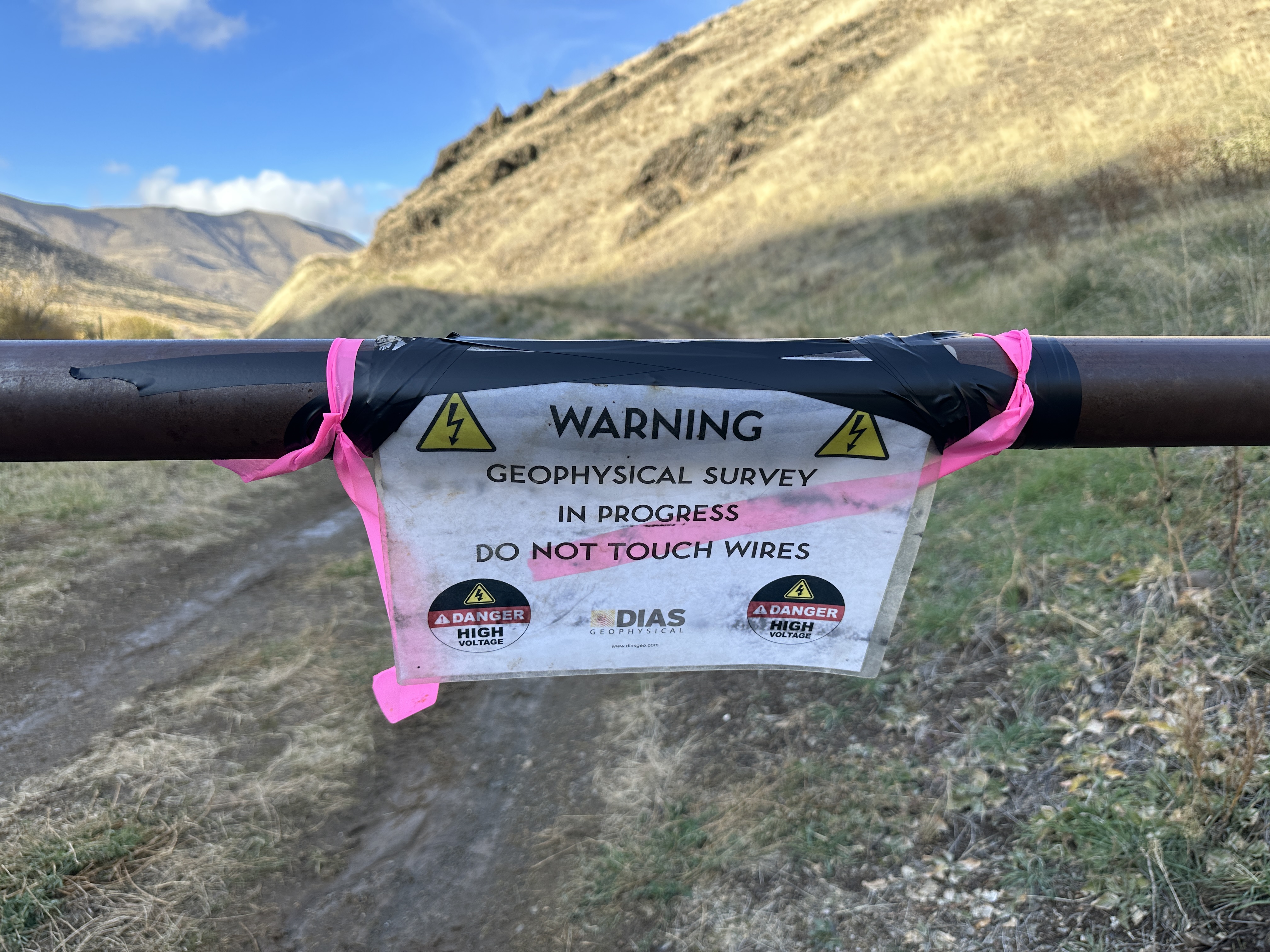
I talked with some folks afterward, and most had the same feeling I had: that it’s going to be a while before we know much, or before much changes. Hercules has the rights, and will explore — drilling and other research, including the geophysical stuff that all those high-voltage wires were for, about which at one point either Paul or Longton said, “You didn’t see piles of corpses anywhere near those wires” (I wondered if this was in response to my complaining about it in my previous posts) — for at least another year. One person I talked with, who runs a natural resource business in the area, said that if a mine goes in and they hire locally it will be tough if not impossible for him to hire any employees, as it will for other businesses in the area that can’t pay as much as the mine would. Several people I talked with afterward had the same concern about the non-economic impact on the public land: its importance for big game, upland game, and outdoor recreation. But one thing’s clear: if Hercules finds what mining companies feel is worth digging for, it’s going to happen, and they’ll do whatever necessary to make it happen. Whether the community will benefit in any way is anyone’s guess, but — unless Hercules pulls the plug because there’s not enough there to sell — it’s not an if but a when. Maybe I’ll be gone by then.
It’s obvious I’m against this project 100%. I know that’s hypocritical in an absolute sense because we all depend on the metals they hope to find here, and they’re apparently in short supply (I’m not sure this is true, but they said so). My defense against my hypocrisy is that not all mining areas are in places that were originally private lands which were purchased and donated to a public entity specifically for wildlife conservation. Elk hunting, for example, is big business in Idaho but also an important part of life and local tradition in the area. The vast majority of elk killed every year nearby spend winters on the Hercules site. Some local hunters (many of whom are ranchers) have expressed concern about the negative impact wolves have had on elk numbers and harvest rates (the science on this is ambivalent at best); but if the Hercules site becomes a mine (even a subsurface one), that winter ground will be unavailable to elk and they will disappear from the area (as will all other access, recreational and cattle-related). No science needed to know that fact.
Another layer of irony here is that Hercules and its major investor (Barrick Gold) are Canadian companies; Paul said he was from BC and it’s over-explored, and (in the podcast I linked to in Hercules 2) the Canadian government was a pain to deal with, especially compared to Idaho. Idaho prides itself on its natural beauty, but when it comes down to it its legislators will sell it if they can.