If one speaks it should only be to say, as well as one can, how wonderfully all this fits together, to indicate what a long, fierce peace can derive from this knowledge. — Barry Lopez, “Children in the Woods”
And then a Plank in Reason, broke… — Emily Dickinson, from “I Felt a Funeral in My Brain”
Not recognizing but trying to recognize the wrinkles on my hands tells me something I don’t want to know but know too well: my childhood is long over. The new year began with radically different challenges for me than the last, and an ennui I can’t recognize and don’t want to. So what? Does it all fit together, wonderfully or not? Does seeing an integration in one’s life create peace, fierce or otherwise?
I grew up with some great influences I wouldn’t trade for anything. Parents who I think unwittingly complied with Lopez’s notions about how to speak to children in the woods; teachers who provided similar tools; shelves full of LPs that hammered me with another plane of existence entirely, infecting me with instruments of utopia and war and peace: these things and more fit together because I’ve allowed them to, and the fact that I see that they do is wonderful in itself. But where’s the peace?
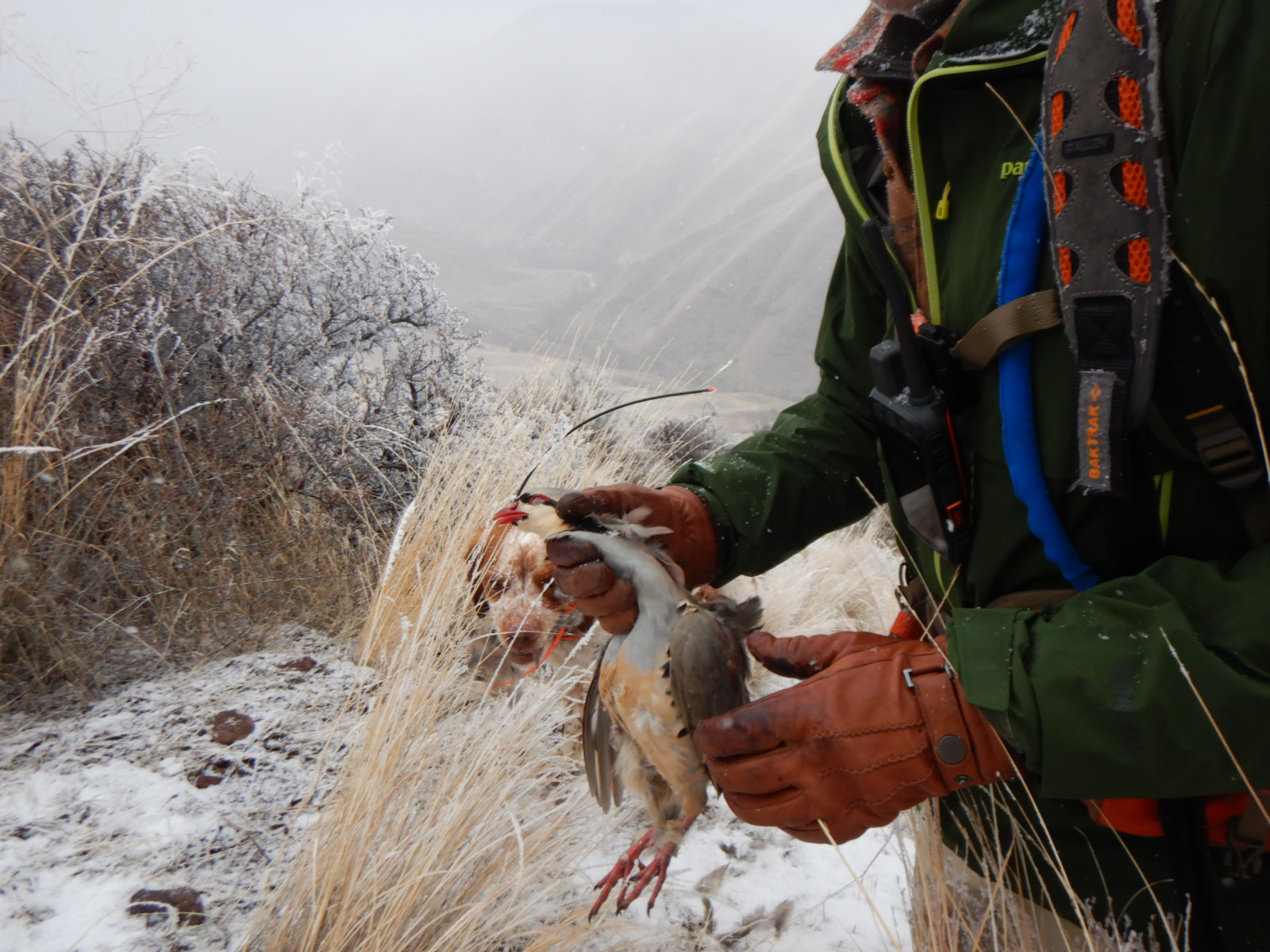
Bird hunting, because it requires (the way I want to do it) integrating a dog whose very being makes me understand better than anything else Emily Dickinson’s obsession with death (others’ and hers), has also made me really pissed at time and gravity. How much longer will I have the muscles to walk uphill? There was an old guy in my old neighborhood in Boise who used to be a chukar hunting fool. He walked like a fool, every day, rain or shine, a walking stick in each hand and a fetching houndstooth Tam O’Shanter on his head. Often I wanted to yell at him, “You’re nuts!” He wasn’t strong enough to hunt chukar anymore. I wonder what he thought he was training for, or if he was just trying to cheat death. I still don’t get it.
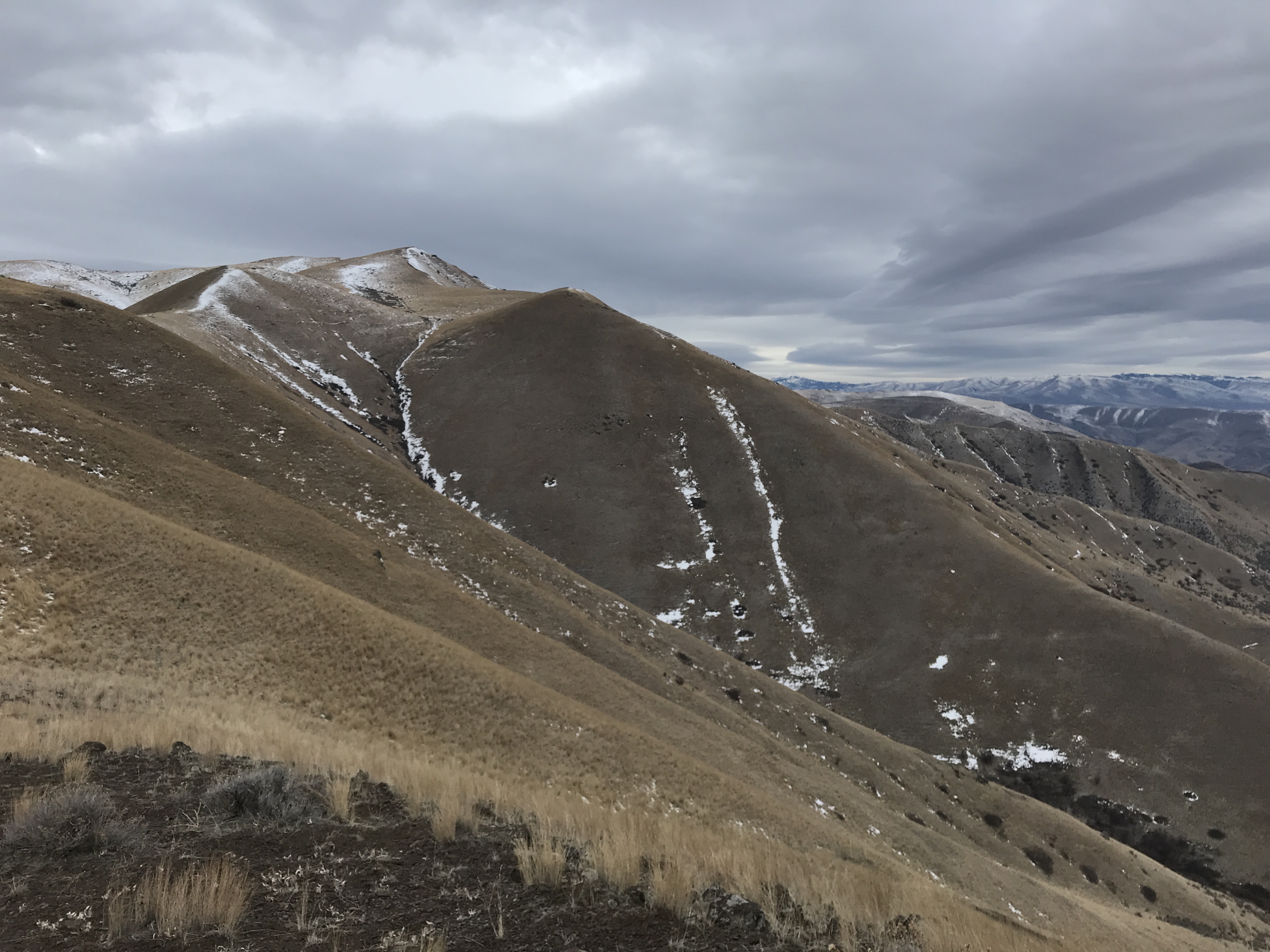
I think my season is over, but I might get out another couple times before the end of the month. My log shows I climbed more and hiked farther than ever this season, and I wonder how that’s possible, but — surely — am grateful to have been able to have done that. But lots of things were different this year, and it sure felt more segregated than integrated. For whatever reason the parts didn’t jell: Peat had the big seam to cross and figure out how to hunt without Angus; I didn’t recognize what we were doing without the old warrior, especially at first; Leslie had to learn how to hunt without the best partner, and we fought over that; Medusahead seemed to have cropped up overnight in places it didn’t exist last season; bird numbers were way down; shooting steel seemed like a good idea until I literally hit nothing for weeks; we ran into more chukar hunters in one week than in the last decade combined; I was no longer a teacher and had become a ______________.
I already wrote about the 2020-ness of 2020, so I guess this is just more of the same. Sorry. The new year, and the promise of a new administration and vaccinations and improving health and economies and weather and the plunge of Twitter from ever-present consciousness loom as a great array of “I’ll-believe-it-when-I-see-it” things. Maybe all this froughtness is just my response to seeing that I’m in the group that won’t get a vaccine until June. That’s probably it. But it still feels like a disintegration still happening in slow motion. Chukar hunting, this season, has not been the antidote it was once. There’s been little there there.
It seems, though, that in a way there is in fact integration going on here, although its wonderfulness is open to debate. It all is what it all is. Do we even have a choice to refuse fitting things together? I think it was John Lennon who said, “Life is what happens to you while you’re busy making other plans.” He would know, right? I look out the window, and notice that seventeen straight days of f-ing frigid fog is lifting just before Beer:30 and I can see my old friend the mountain. I have a headache and am worried for the thousandth time I have Covid. Leslie’s sitting near me reading a book of words about words and I can’t tell you how happy that makes me. 73 quail are eating us, to our delight, out of house and home. The fire’s about to go out but there’s more wood on the porch. Dinner is coming (“Garden burgers AGAIN?!”). Peat sits on the other side of the dog door in the garage waiting insanely for his half cup of kibble. Twenty-six miles northwest chukar are eating as much of the fresh blades of winter grass as they can, if their crops on the last batch we butchered are any indication.
Sense might be breaking through. Peace.