Category: Gear Reviews

  • Garmin Alpha 200i REDUX

    Garmin Alpha 200i REDUX

    The first Garmin Alpha 200i I received, and about which I wrote my initial review, was defective: the compass would not calibrate properly and the pointer sometimes literally spun in circles on the screen when I tried to find my pointing dog. Worse than useless. I spent hours testing and recalibrating the compass on that unit, calling Garmin’s tech support (typically worthless), and finally reached out to Gun Dog Supply for help. GDS is awesome and their staff know way more about Garmin dog products than Garmin does, which is why I buy all our dog stuff from them. They suggested some things to try that Garmin didn’t, and when I got back to them that their suggestions didn’t work and that I thought the unit was defective, they sent me a replacement immediately.

    I’m happy to report that the replacement Alpha 200i works as it should (I’ve now used it on three chukar hunts in extreme terrain and the compass works as well or better than my trusty old Alpha 100). So, phew, this thing does work for locating my dog, which has allowed me to look at the other things that might make it worth upgrading from the Alpha 100 (or Astro):

    • Bigger, brighter screen: so far no trouble reading it in any kind of light
    • inReach: a great safety tool, and better than SPOT or other PLBs in the same price point. When hunting alone outside of cell service, I can send texts home that include a link to my location on a map (Leslie appreciates this, especially when I’m done hunting and send her my preset “I’m heading home” message, which takes just a few seconds)
    • I can track Leslie’s Alpha 100 on my compass screen, so it’s easy to see where she is when we lose sight of one another, which happens a lot in chukar country

    Things that I’m not convinced are better, which Garmin marketed as big improvements over the Alpha 100 are:

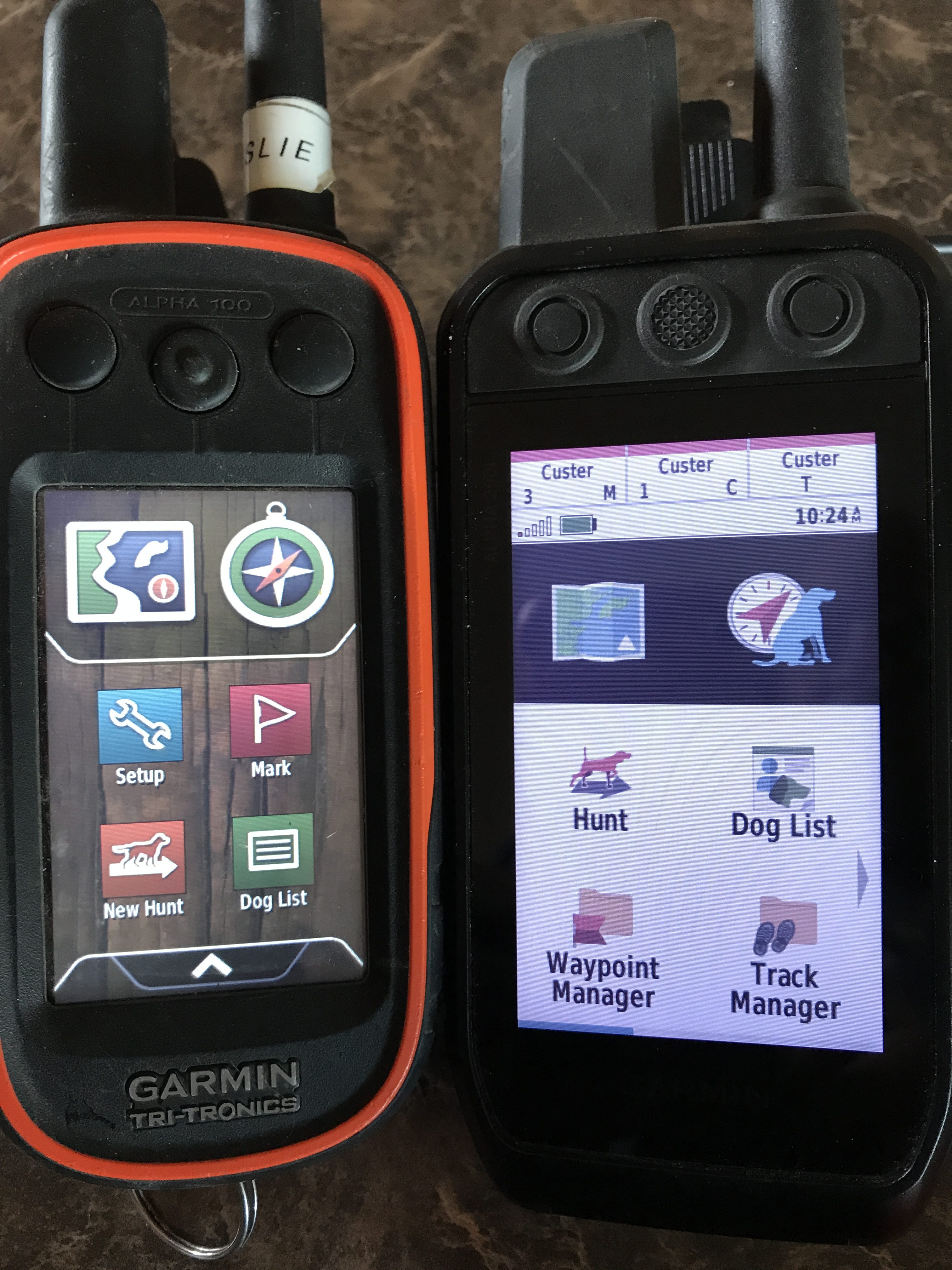
    • Physical buttons: the Alpha 200i has three physical buttons on the upper right of the unit, which can be used to toggle between functions and dogs. I don’t like them because I accidentally hit them all the time. It’s possible I could get used to them, but I never had any trouble with the touch-screen control on the Alpha 100, even with gloves (and — unlike the 200i — the Alpha 100 does not require “tech finger” gloves to work the touch screen; my solution for the 200i was to get a pair of tech finger gloves, which I love and which cost very little, actually)
    • The three “training buttons” on the upper face of the unit don’t have the same quality feedback as the buttons on the Alpha 100: when I hit the tone button to recall Peat, I’m never sure it actually registers because it’s flush-mounted to the face as opposed to the raised, rounded rubber buttons on the Alpha 100. If I’m looking at the screen when I push the button, I can see it change color, verifying I’ve sent the tone, but I don’t want to have to look at the screen to see if the button worked. This lack of tactile feedback is even more pronounced if you’re wearing gloves
    • The size and weight of the new 200i are basically the same as the Alpha 100; you’d think it would be possible to put it in a significantly smaller package (look at external hard drive size vs. capacity over time, for example…)
    • Usability in the field: both the Alpha 100 and Alpha 200i come with belt clip swivels, which attach to someplace on most bird vests. There are a few “aftermarket” “solutions” for mounting these handhelds in various ways, but — despite looking fairly deep — I haven’t found a great way to mount and use these awesome devices on my vest. Everyone uses different vests and has different hunting styles, so access to the handheld screen differs greatly among the users of these things. It’s sort of surprising, though, that Garmin or another company hasn’t developed a slick, adaptable case or something to make it easier to use in the field. The best I’ve seen, but haven’t tried, is the “Hands Free Case” from Okie Dog Supply, but I’m not sure it wouldn’t get in the way of mounting the gun in a rush…

    All of these are picayune gripes, first-world problems, gratuitous bitches and moans, etcetera etcetera etcetera. But you know me. Overall, now that I received a unit that appears to work as it should, I’m happy with it. If you do decide to fork over the clams to upgrade, and you have trouble getting the compass to work correctly, definitely contact Garmin and then ask for a replacement unit from whomever you purchased it.
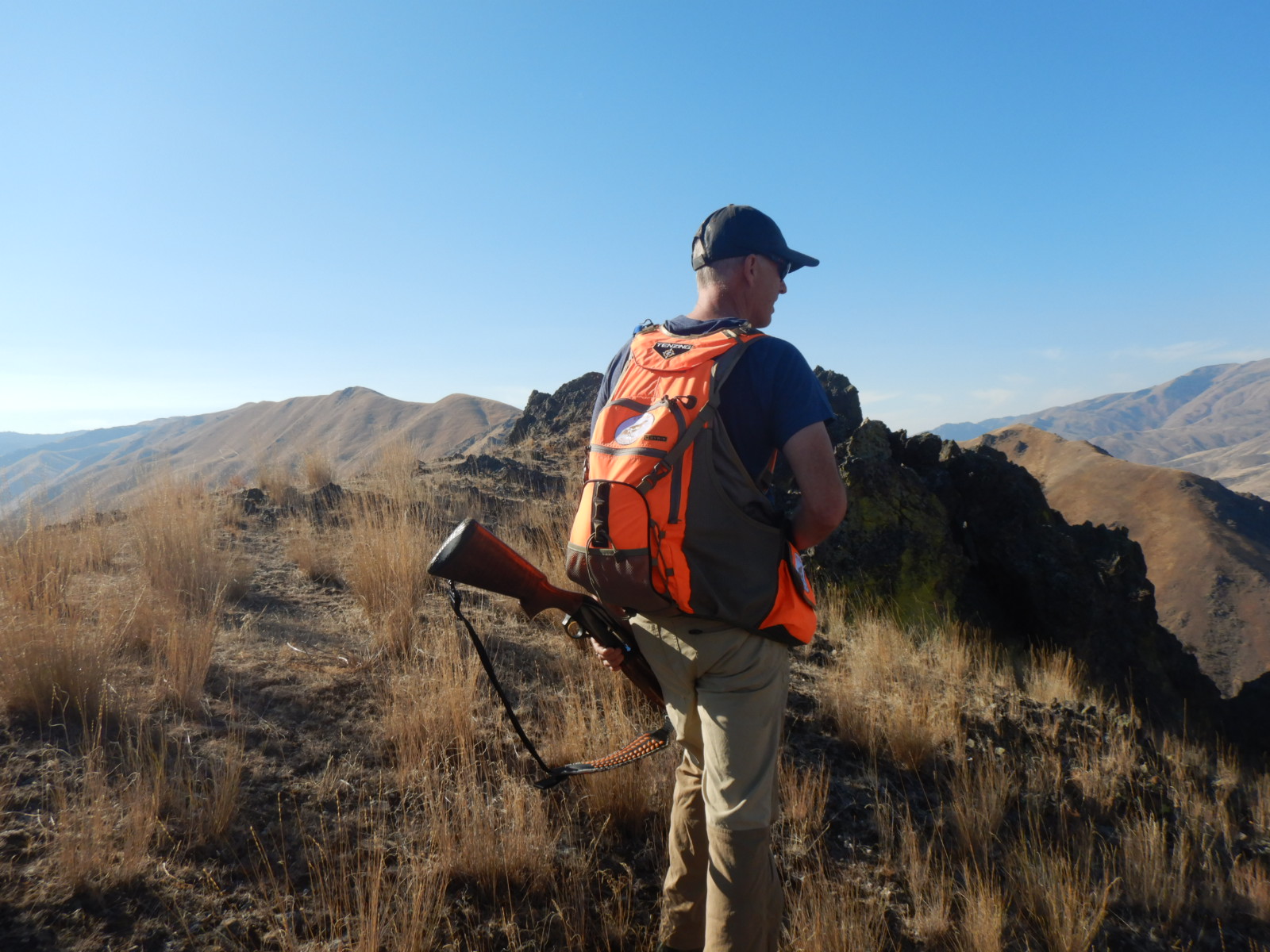
  • Tenzing BV16 Upland Bird Vest

    Tenzing BV16 Upland Bird Vest

    After getting several glowing recommendations for this vest last year, I finally managed to snag one in the off-season. I’ve now used this size M/L Tenzing BV16 since the beginning of the season, for 18 hunts and just about 100 hours. As with all the stuff I review, I bought this vest with my own money and have no stake in Tenzing or any other company. In other words, it’s honest. It’s also my first video review, aside from the comparison to the Badlands vest in the photos and captions below. The bottom line: I’ll leave it up to you. Enjoy the video.

    Leslie thinks I went a little overboard with the Chukar Culture patches (we only have 3 left!)
    Here, the Badlands Upland Bird Vest is laying on top of the Tenzing BV16. In the video, I think I said the Tenzing was about 4″ longer than the Badlands, but it looks more like 5″ or 6″.
    The Badlands vest definitely rides higher, which is the main reason I think I’m switching back to it, even though the storage capability is far inferior to the Tenzing.
    Badlands waist belt rides easily on the top of my hip bones.
    Badlands, side view
    Tenzing BV16: doesn’t hang down as long as some vests (see my review of the Quilomene Upland vest), but quite a bit lower than the Badlands.
    Tenzing waist belt, in the upper spot, rides about the same place as the Badlands, but the shell pockets fall much lower.
    Tenzing’s shell pockets and bird pouch from the side
  • Garmin Alpha 200i

    Garmin Alpha 200i

    I jumped on this as soon as I heard about it. The fact that it had an inReach built into it helped because we’d been considering getting an inReach for a while. The Alpha 200i is a tiny bit thinner and has a bigger screen than the Alpha 100, which I’ve used nearly flawlessly for years.

    The main reason anyone would have a GPS handheld for upland bird hunting is to track their dogs in undulating terrain where they’re not always visible. The Alpha 100 immediately increased the number of points I was able to get to on each hunt.

    I’ve completed 10 hunts of about 4 hours average with the Garmin 200i and TT15 Mini collars. The dog tracking on my 200i is rubbish. At best, it points about 15 degrees from where the dogs actually are. At worst, the compass dial spins and jumps around, or points 180 degrees off (see the video below). I’ve done all the updates on the handheld and the TT15 Mini collars, consulted with Garmin’s tech support team, Gun Dog Supply’s (where I bought it – they’re awesome) tech support (more knowledgeable than Garmin’s), calibrated and re-calibrated the compass, and it’s proving to be worth than useless in locating the dog.

    I reached out to some readers who I knew had pulled the trigger on the 200i to see if they’d been experiencing anything like my problems with it. One person said it was working fine for him, but he’d heard from several others who were having similar problems. I immediately flashed back to having bought the Garmin Fenix a couple years ago because I wanted to use a watch instead of the clunky handheld to find my dog, but its compass was also rubbish, and I returned it. I’m not sure if this is just bad luck or if I got a lemon from Garmin (twice), but it seems like they might not have done adequate testing on this in the field before putting it out there for mass consumption.

    If you do decide to go for it, and you have issues like this, Garmin’s tech support person told me that they hope users will contact Garmin if they have problems so that they can work on them. This seems bass-ackwards to me, but what do I know? I probably shouldn’t be using these kinds of toys anyway.

    The other problem, which pales in comparison to the compass disaster, is that the touchscreen on the Garmin 200i does not work with gloves. WTF? It worked with a “tech finger” glove, but not with a light leather glove. The Alpha 100 worked fine with any glove I threw at it.

    Below are some visuals of the issues with my Garmin 200i. At the very bottom of this post are some comparison photos between the Alpha 100 and Alpha 200i.

    This compass “spasm” on my Alpha 200i is more common than not when trying to locate pointing dogs. This is on a flat field. Chukar terrain is not flat. Usually you cannot see your dog when you get the “Dog is on point” notification. The Alpha 100 was almost always pointing in the precise direction of the pointing dog. We learned to rely on it. The new unit, at least mine and many others’ I’ve heard from, is very unreliable.
    “True North,” “Magnetic North,” and “User Defined” (where you enter your particular magnetic deviation (or declination) settings on the Alpha 200i) result in about a 50-degree difference between the old-school compass’s reading.
    Peat is the white dot in line and to the left of the antenna
    You can see Peat at least 45-degrees to the left of where the compass shows him
    Peat’s with his malamute buddy, Rocky; the compass shows Peat about 40-degrees to the left of where he actually is. Not helpful. Hurtful.
    The 200i is actually wider and just as tall and fat as the Alpha 100.
    The touchscreen on the 200i is bigger, but doesn’t work with regular gloves. You’ll need a techfinger glove. The Alpha 100 works with any glove.
    The Alpha 200i is actually heavier than the Alpha 100.
  • Quilomene Upland Bird Vest Review

    Quilomene Upland Bird Vest Review

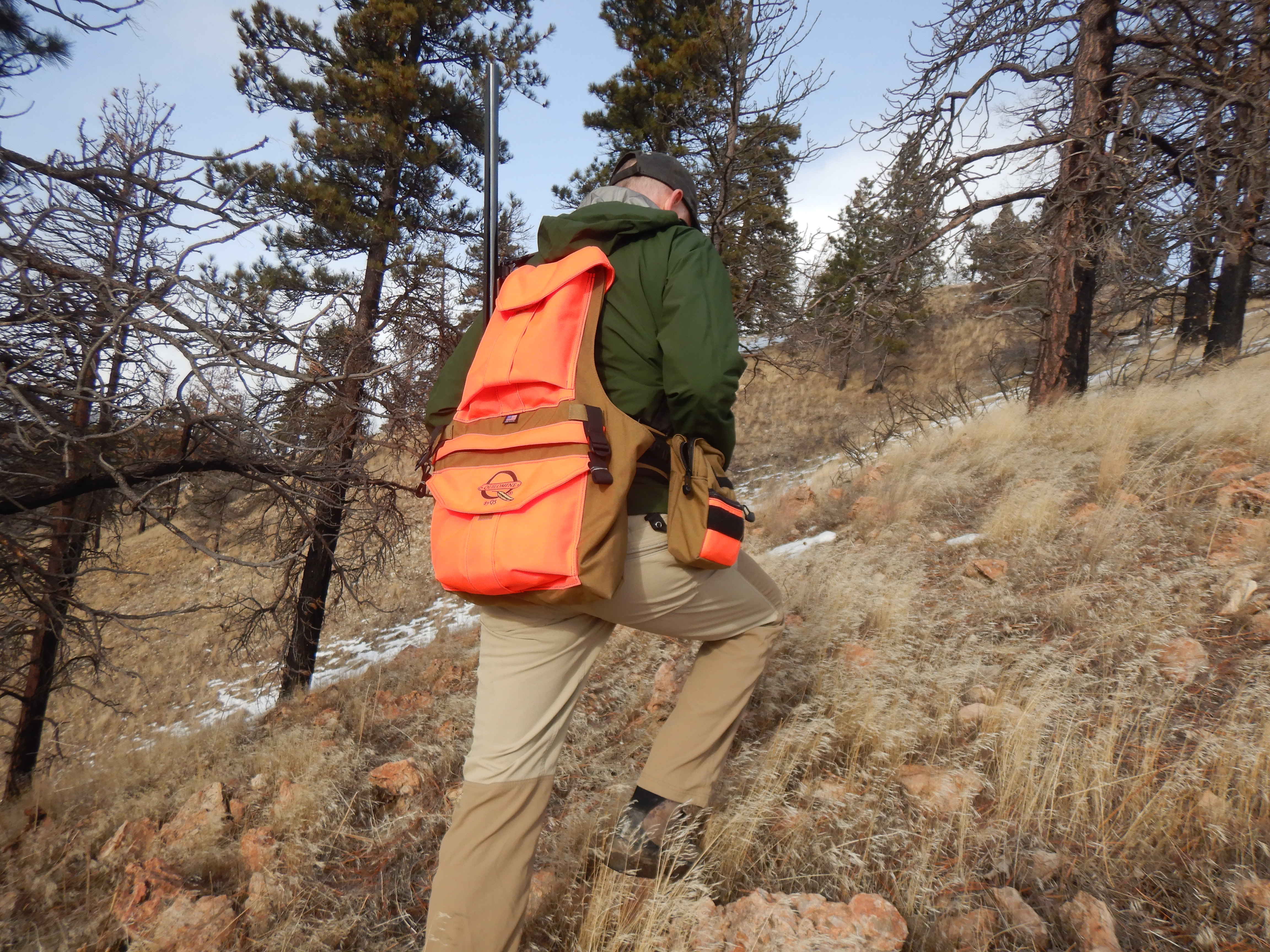
    Heading out with the Quilomene Upland Bird Vest, nothing in the bird bag yet

    Just before New Year’s my new Q5 chukar vest arrived, which I’d ordered on November 30th: the Quilomene Upland Bird Vest. I’d been using the Badlands Upland Vest (no longer available) for the past couple of seasons and — as the weather asked us to bring more apparel, which goes on and off depending on the terrain — I started finding it just didn’t have the carrying capacity I wanted, especially as the bird bag began being burdened by bigger bunches of birds. The Badlands vest is still my favorite overall vest, but it’s not perfect and I continued to wonder if a perfect vest existed.

    So I looked and looked: I looked at the Tenzing BV16 (currently out of stock everywhere I looked), at the Filson Pro Guide Strap Vest (no longer available), the Orvis Pro Series Hunting Vest (won’t work with a hydration bladder), Oregon Pack Works Rogue Bird Pack (not much information and only one photo, and by far the most expensive), and Wingworks Upland Wingshooting Vests (unavailable; I’ve been trying to get one of these for quite a while now). L.L. Bean makes a cool-looking vest, but I tried it a few years ago and returned it after one hunt because the water bladder sat too low in the pack to get it to flow without standing on my head. I’d used the Q5 Centerfire for a couple of seasons and really liked it, but ultimately found it too bulky for my style of chukar hunting, but decided to take another look at their wide variety of upland vests.

    On the Q5 site, the Quilomene Upland Bird Vest looked like it might be the ticket: bladder-ready, easily-accessible large bird bag, moderate storage, modular straps (can add/remove accessory and shell pockets), and lash-strap ready for external carrying options. I’m about 6′ and 155, so I ordered the smallest waist belt, and it just fits cinched as tight as it goes; skinnier folks will probably find it too loose.

    When I ordered it, the site showed one message saying they were running a 2-week lead time on new orders, and — somewhere else on the site — a 30-day turnaround. I received mine a month after they charged my card. The current message (as of 1/10/20) shows 30 days out and “unable to provide any status updates.” It’s ironic that chukar hunting seems never to have been more popular, yet it’s nearly impossible to get a new vest quickly, and the choices seem to be shrinking. Not sure what to make of that, other than American manufacturing doesn’t seem to be faring too well at the moment; the only two vests I mentioned that are available (the Orvis and the L.L. Bean) are not made in the U.S.

    Anyway, I was very excited when the Quilomene vest finally arrived. It took a while to set it up to fit, but once I’d made some velcro adjustments, shortened the shoulder straps as far as they’d go (see more on this below), and added the two shell pockets to the padded hip belt, I was ready to install my 100-ounce Camelback hydration bladder. This wasn’t easy. The bladder pouch is directly against your back (which is moderately uncomfortable when the bladder’s full), and there is a hole on both sides of the bottom of the pouch, intended for the hydration bladder’s hose to exit the pouch for routing somewhere on the vest. The problem with this is that most bladders have their hoses exiting the bladder at an upward right angle; I hadn’t realized this until I couldn’t get any water out of the hose and had to pull the whole bladder out to see what the problem was. No matter how I tried routing the hose through the bottom holes in the pouch, the hose got kinked and wouldn’t flow. So I ended up running the hose up the inside of the pouch and out the top; not a huge deal, and it works fine.

    Bladder pouch with hose coming out the top
    Top of the Camelbak bladder; note the retainer clip: the vest’s pouch doesn’t feature anything to clip it to

    Another issue with the vest if you use a bladder is that there’s nothing at the top of the bladder pouch to attach to the top of the bladder to keep it from sloughing down in the pouch as the water level drops. Most bladders have something at the top near the fill point to counteract gravity so the flow doesn’t get interrupted; the Q5 Centerfire did, but this vest doesn’t.

    Hose clip sewn into right shoulder strap
    After cutting out the clip; I used a flame to seal the loose nylon threads…

    Still another problem with my particular set up is that I ordered a water hose retainer clip, which the Q5 video shows as removable, so I assumed it would come loose and I could put it wherever I wanted. But it was sewn low down on the right shoulder strap. The first problem here is that a right-handed shooter probably won’t want the drinking tube on the right side; second problem is that it’s sewn into the strap and prevents me from shortening the shoulder strap below the clip. I wanted to shorten the straps to get the vest to ride higher, so I had to cut the clip out (more on that below).

    The other negatives I’m experiencing with this vest (I’ve hunted with it a half-dozen times now) have to do with the shell pockets. I ordered a standard Q5 shell pocket for my shells, which I keep on the right side and a Quilomene pocket for the left, which looked like it’d be roomy enough for me to carry our small camcorder. It’s not, but it’s bulkier and takes up more hip-belt real estate so that it rides on my left thigh when I’m climbing (very annoying), and requires two hands to open. The Q5 shell pocket holds a lot more shells than I’m used to, which I appreciate, but is not nearly as user-friendly as the substantially smaller Badlands magnetic closure shell pockets; for quick reloading, especially with gloves, the Q5 shell pockets are not easy to manipulate with one hand.

    With just a couple birds in the bag, it falls lower on my body than I’d like

    The bird bag is really big and easy to get birds into, as long as the storage pockets (which sit on the outside of the top layer of the bird bag) aren’t too heavily loaded with gear, or you don’t have a heavy garment or elk shed lashed to the outside of the bag; if this is the case, you have to push hard backward to gain enough space to drop the bird in the pouch. Without birds in the bag, it rides much lower than I’d like, and when I’ve got a bunch of birds in it, it bangs on the bottom of my butt with every step, which gets old fast. At 6′, I don’t think the vest should hang as low as it does.

    Bird bag, secured by snaps and velcro, opens to adjust the strap length and clean out the pouch

    So after cutting the sewn-in clip out of the right shoulder strap I shortened the straps a lot to see if I could get it to ride higher so the bird bag doesn’t ride on my rump. I was able to shorten the straps to get the bag to ride below the small of my back and on the top of my butt, but this moved the padded hip belt above my waist: not an option! So it seems the vest is definitely designed to ride as low as it does, which doesn’t make a lot of sense to me, but what do I know?

    I don’t hate this vest. I really wanted to like it. At $240, it should be high quality, which I think it is, at least as far as the materials. The heavy-duty nylon and plastic components seem durable, although I do wonder if the very bright blaze sections will quickly fade as they did on my Centerfire vest. It’s been a long time since I’ve used a strap vest, so I wasn’t sure how I’d like the basic no-frill, unpadded nylon shoulder straps, and they’re actually a lot more comfortable than I expected. Ultimately, I just don’t like the fact that it’s designed to ride so low. If anyone’s interested, it’s available for $200, and I’ll throw in a couple of our new iron-on patches.

    Our new Chukar Culture embroidered patch

    The bottom line is that this — so far — is definitely not my perfect chukar vest. I still haven’t found it and suspect it probably doesn’t exist.

    Pros:

    • Fairly comfortable (aside from the butt-whomping)
    • Adjustable (within limits)
    • Good amount of storage capability
    • Easy to get birds in the bag (as long as you’re not carrying a lot of stuff in the storage pouches)
    • High quality components and construction

    Cons:

    • Q5 shell pockets not easy to use with one hand
    • Quilomene shell pockets almost impossible to use with one hand
    • Water bladder setup not well designed
    • Removable components should not be sewn onto vest
    • Expensive
    • Long lead times
  • Best Chukar Hunting Pants: Orvis Pro LT

    Best Chukar Hunting Pants: Orvis Pro LT

    For the past two seasons I’ve been wearing the Orvis Pro LT Hunting Pants. I’ve worn them from opening day through the end of the season. Aside from a tiny hole on the seat of one of them, from getting hung up on some barbed wire fencing, they still look new.

    I love these pants.

    Taking a knee for chukar in the Orvis Pro LT Hunting Pants, as Peat admires his work

    They’re made of a fairly thin, “stretch-woven Cordura® fabric with advanced hydrophobic fibers woven in for better moisture control,” and are easily the most durable and comfortable pants I’ve ever hunted in. I wouldn’t say they’re “stretchy,” but they don’t bind when hiking up 45% slopes for an hour, as we did a couple of days ago. Despite how thin they are, I don’t get cold in them, but then my legs never get cold (I wish I could say the same for the rest of me).

    If I don’t say so myself, the Orvis Pro LT Hunting Pants do not make my butt look fat

    They’ve got some functionality I don’t use, but it’s not a detriment to the pants (but might add some unnecessary cost): hidden drawstrings in the pant cuffs, and a “quick-release tab” for a cell phone. I don’t carry my phone in my pants when hunting because it’d shatter in the first mile. Oh well.

    My previous favorite pants, L.L. Bean’s Technical Upland Pants, seem to weigh at least twice the Orvis pants, and aren’t nearly as durable. I’ve busted through extensive hawthorn thickets, brushed against coarse basalt, and taken copious soil samples with the Orvis Pro LT pants, and — as mentioned — they honestly still look new. The Bean pants’ soft-shell and Cordura fabric pilled up before the end of their first season, but the Orvis pants just keep taking it.

    They’re a bit pricy ($149 as of today, although I just noticed they’re on sale for $119), but given how comfortable and tough they are, I’m okay with that.

    Finally, in case you wondered, I bought these pants at full price with my own money, and even paid shipping (the same goes for all other gear I’ve reviewed). I wouldn’t say no to a “pro deal” with Orvis (or any other gear company, in case someone who matters is reading), but I don’t spend my time pursuing that sort of thing. Birds, books, bagpipes, and beer are way more interesting.