Blog

  • 2020

    2020

    I went elk hunting one day this October. A friend went with me. We got to the spot I’d planned to leave the truck, and — nobody was there! With plenty of dark before dawn we set out for the short hike to the spot I wanted to glass. I’d hunted birds there several times and noted (from looking at past years’ logs) that elk often hid out in this little bowl we perched above. I’d never seen anyone anywhere near this spot, so figured it was as good as any place I could go.

    It was overcast and not too cold, so the wait for visibility wasn’t uncomfortable. I began getting excited, and my ears played tricks on me: it seemed I heard elk making their way to the little bowl from every direction. But I thought I was probably wrong.

    When the veil of dawn finally offered a view of the landscape, I scanned the area horizontally. Something caught my eye. I re-scanned and couldn’t see it. So I tried again and found it: a pickup parked in the center of the bowl with someone sitting in the driver seat. I handed my friend the binoculars. He saw it, lowered them, looked at me, raised his eyebrows, and said, “2020.”

    It’s become lots of people’s mantra, catch-phrase, excuse, punch-line, or whatever, to explain the unprecedented, inexplicable, anomalous, uncanny, bizarre, and — maybe more than anything — the highly and unbelievably undesirable things that make us batshit crazy about the state of the world right now and how batshit crazy it is.

    Well? What?

    Chukar Hunting 2020 for me is, well, as 2020 as anything else. It’s not immune, which kind of sucks because it’s been the holiest of hobbies for me for 20 years. Last year, 2019, was, well, 2019 (read my year-end reflection, which was more of a rant, so…). This year is different, though, at least for us. For the first time ever we took a couple weeks off in September to take a trip to someplace that had no chukar. We half-heartedly tried for grouse and that didn’t go well (conflicts with bow hunters; expensive emergency barbed-wire injuries to Peat; the constant fear of getting eaten by grizzlies), but were just trying to get away. We and a zillion other people who — like us — apparently didn’t need to be chained up somewhere.

    Is it just me, or does this season feel different? For us, we’re a year older, edging toward the JRC (Joint Replacement Crowd), but hunting nearly an hour longer on average, going further, and coming back with fewer, what?, birds, blisters, shells, dogs, stories? Opening day of chukar was exciting for us because we had guests from Nevada come up to hunt with us; we’d never met them in person and were excited and a little nervous: they’re much younger and fitter and obviously better shots (or used to seeing lots more birds) judging from their tailgate photos. We’d planned a boat trip to a hard-to-access spot I knew would have decent numbers of birds. One or both of their dogs had never been in a boat, so they were excited. We drove to the put-in, but it was blocked unexpectedly by a fire crew: access closed to all. Plan B was to go hike for hours in some brutal terrain and see literally one piece of dried chukar shit between the 7 of us (4 peeps and 3 dogs). Damn. Their attitude was far better than mine. “That’s chukar hunting!” I was like, “Yeah, that’s why I’m sick of it.” I never claimed to be a positive guy. Leslie’ll tell you.

    So that’s how it started. But, actually, we haven’t given up (thus, the bigger hunts). I suppose feeling different about this season, and this season feeling different about us (not the same thing) shouldn’t be a surprise given that the main reason I began this ridiculous activity, and became obsessed by it, and started this blog, and spent gigabillions of pennies on it is not a part of it anymore. Physically, anyway, although that’s not entirely true: we each carry some of Angus’s ashes, and our shells contain some as well. But until we hunted with his nephew Custer for a week or so recently we hadn’t seen that type of movement from a dog across that type of landscape since Angus died. It brought tears to realize it wasn’t him, but also to know he’s out there somewhere. For us? For whom? When we die, who’ll love his memory? How many dogs’ souls are ghosts?

    And so we’re still trying to figure out how to do this thing we thought we understood. How to make it the same even though it’s not. Expectations are a bitch. Not expecting things that blind-side you are, too. The world and what’s going on in it, also, have been creeping into and sometimes all-out invading my time out there. How about the rest of you? It doesn’t seem as fun somehow. Or maybe I’m just stressed about being involuntarily and (I hope) temporarily retired (thanks, Covid, and the disastrous non-response to it). Who the hell knows. Anyway, it’s not the same. I keep looking for something familiar. And then Peat points, and it comes flooding back and I forget everything. And then we’re done as soon as it began. It’s not the same. It’s 2020.
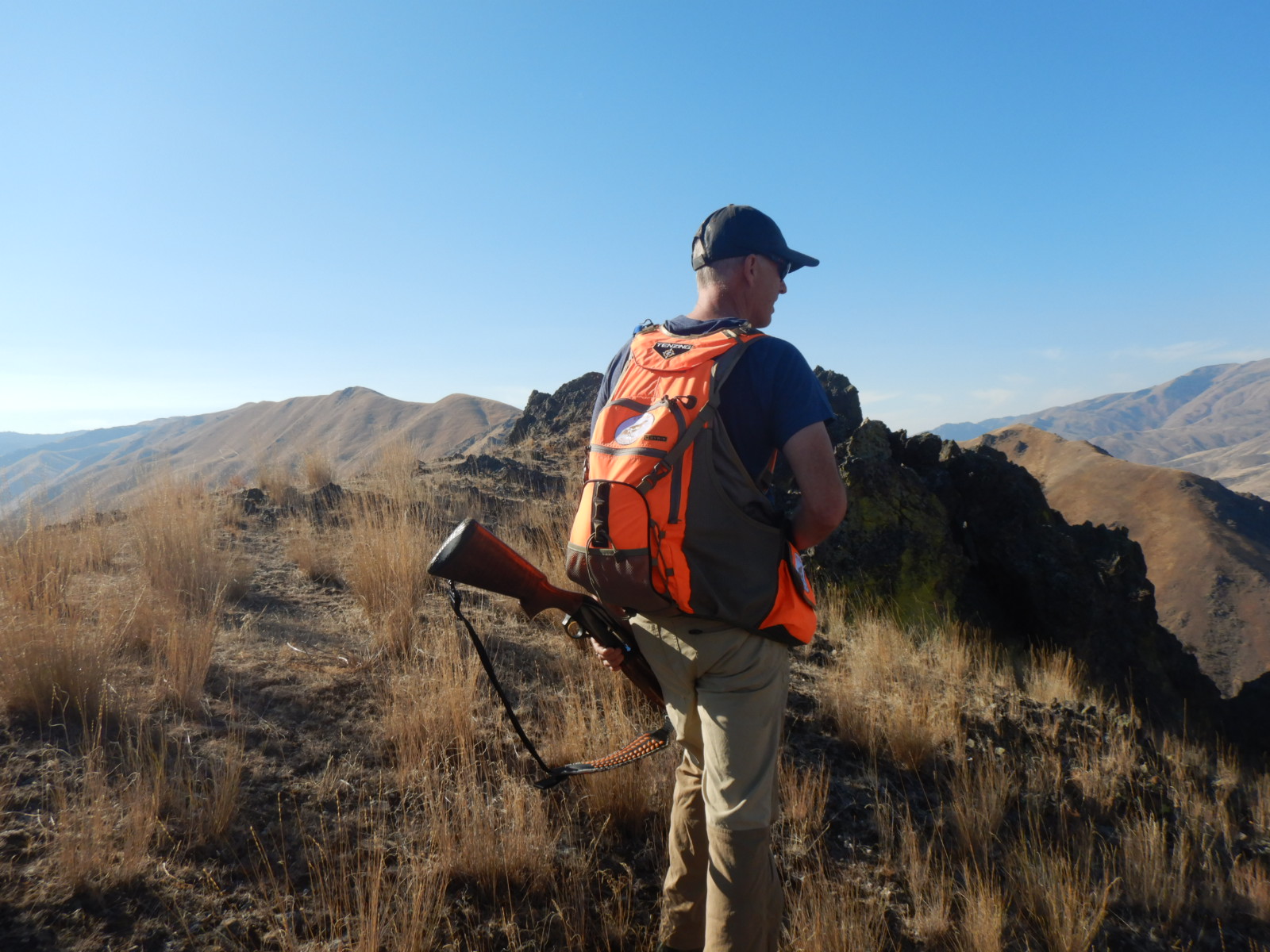
  • Tenzing BV16 Upland Bird Vest

    Tenzing BV16 Upland Bird Vest

    After getting several glowing recommendations for this vest last year, I finally managed to snag one in the off-season. I’ve now used this size M/L Tenzing BV16 since the beginning of the season, for 18 hunts and just about 100 hours. As with all the stuff I review, I bought this vest with my own money and have no stake in Tenzing or any other company. In other words, it’s honest. It’s also my first video review, aside from the comparison to the Badlands vest in the photos and captions below. The bottom line: I’ll leave it up to you. Enjoy the video.

    Leslie thinks I went a little overboard with the Chukar Culture patches (we only have 3 left!)
    Here, the Badlands Upland Bird Vest is laying on top of the Tenzing BV16. In the video, I think I said the Tenzing was about 4″ longer than the Badlands, but it looks more like 5″ or 6″.
    The Badlands vest definitely rides higher, which is the main reason I think I’m switching back to it, even though the storage capability is far inferior to the Tenzing.
    Badlands waist belt rides easily on the top of my hip bones.
    Badlands, side view
    Tenzing BV16: doesn’t hang down as long as some vests (see my review of the Quilomene Upland vest), but quite a bit lower than the Badlands.
    Tenzing waist belt, in the upper spot, rides about the same place as the Badlands, but the shell pockets fall much lower.
    Tenzing’s shell pockets and bird pouch from the side
  • Garmin Alpha 200i

    Garmin Alpha 200i

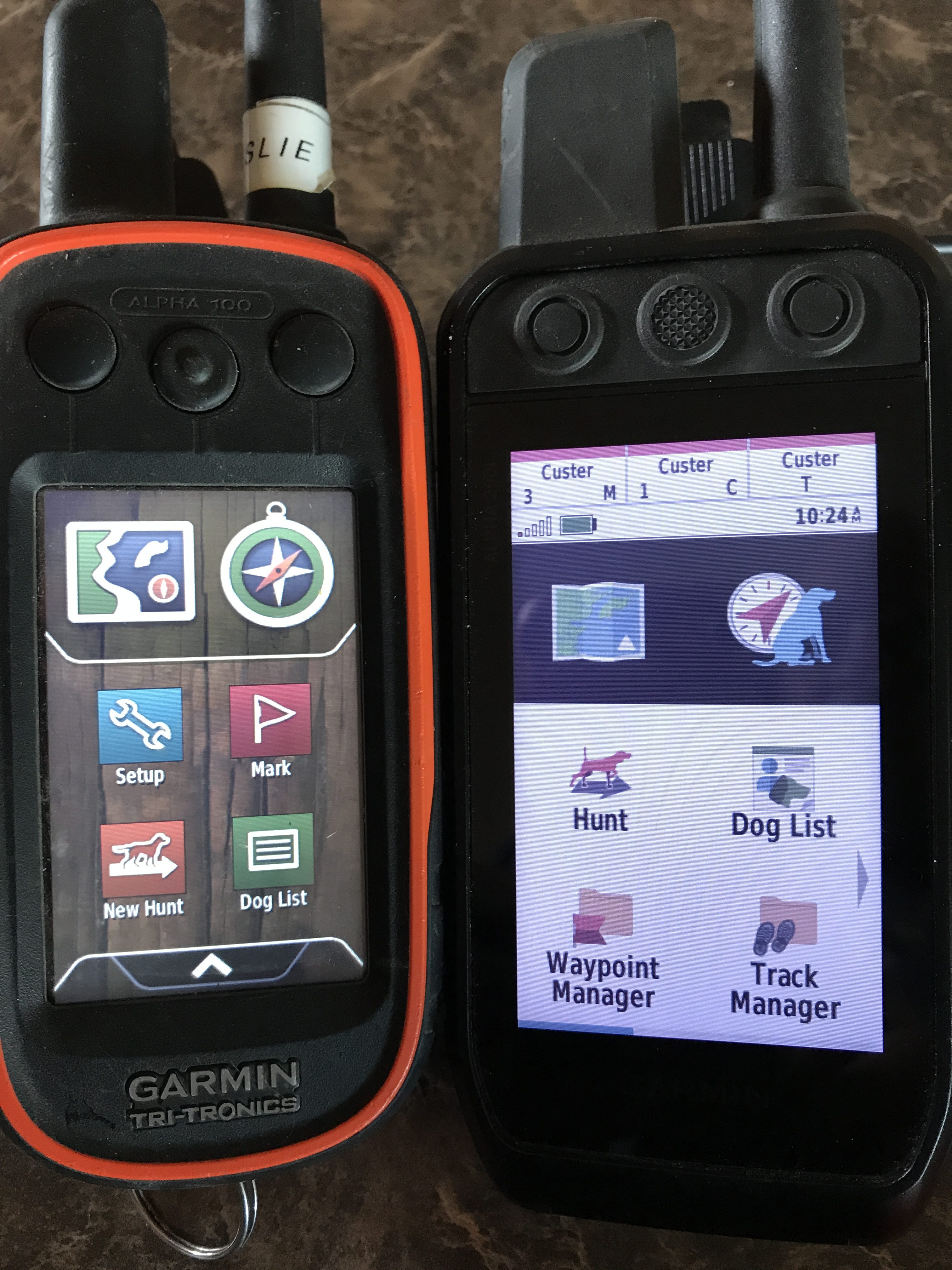
    I jumped on this as soon as I heard about it. The fact that it had an inReach built into it helped because we’d been considering getting an inReach for a while. The Alpha 200i is a tiny bit thinner and has a bigger screen than the Alpha 100, which I’ve used nearly flawlessly for years.

    The main reason anyone would have a GPS handheld for upland bird hunting is to track their dogs in undulating terrain where they’re not always visible. The Alpha 100 immediately increased the number of points I was able to get to on each hunt.

    I’ve completed 10 hunts of about 4 hours average with the Garmin 200i and TT15 Mini collars. The dog tracking on my 200i is rubbish. At best, it points about 15 degrees from where the dogs actually are. At worst, the compass dial spins and jumps around, or points 180 degrees off (see the video below). I’ve done all the updates on the handheld and the TT15 Mini collars, consulted with Garmin’s tech support team, Gun Dog Supply’s (where I bought it – they’re awesome) tech support (more knowledgeable than Garmin’s), calibrated and re-calibrated the compass, and it’s proving to be worth than useless in locating the dog.

    I reached out to some readers who I knew had pulled the trigger on the 200i to see if they’d been experiencing anything like my problems with it. One person said it was working fine for him, but he’d heard from several others who were having similar problems. I immediately flashed back to having bought the Garmin Fenix a couple years ago because I wanted to use a watch instead of the clunky handheld to find my dog, but its compass was also rubbish, and I returned it. I’m not sure if this is just bad luck or if I got a lemon from Garmin (twice), but it seems like they might not have done adequate testing on this in the field before putting it out there for mass consumption.

    If you do decide to go for it, and you have issues like this, Garmin’s tech support person told me that they hope users will contact Garmin if they have problems so that they can work on them. This seems bass-ackwards to me, but what do I know? I probably shouldn’t be using these kinds of toys anyway.

    The other problem, which pales in comparison to the compass disaster, is that the touchscreen on the Garmin 200i does not work with gloves. WTF? It worked with a “tech finger” glove, but not with a light leather glove. The Alpha 100 worked fine with any glove I threw at it.

    Below are some visuals of the issues with my Garmin 200i. At the very bottom of this post are some comparison photos between the Alpha 100 and Alpha 200i.

    This compass “spasm” on my Alpha 200i is more common than not when trying to locate pointing dogs. This is on a flat field. Chukar terrain is not flat. Usually you cannot see your dog when you get the “Dog is on point” notification. The Alpha 100 was almost always pointing in the precise direction of the pointing dog. We learned to rely on it. The new unit, at least mine and many others’ I’ve heard from, is very unreliable.
    “True North,” “Magnetic North,” and “User Defined” (where you enter your particular magnetic deviation (or declination) settings on the Alpha 200i) result in about a 50-degree difference between the old-school compass’s reading.
    Peat is the white dot in line and to the left of the antenna
    You can see Peat at least 45-degrees to the left of where the compass shows him
    Peat’s with his malamute buddy, Rocky; the compass shows Peat about 40-degrees to the left of where he actually is. Not helpful. Hurtful.
    The 200i is actually wider and just as tall and fat as the Alpha 100.
    The touchscreen on the 200i is bigger, but doesn’t work with regular gloves. You’ll need a techfinger glove. The Alpha 100 works with any glove.
    The Alpha 200i is actually heavier than the Alpha 100.
  • Leslie’s Day

    Leslie’s Day

    A friend responded to a Facebook post I made the other day in which I stated that Leslie made two of the best shots on chukar I’ve witnessed. This is my account.

    Since you asked…

    The first shot was at a single that busted wild about 25 yards above Leslie on a steep, steep basalt ball-bearing incline. She was moving the opposite direction of the bird, and by the time she moved her feet 180 degrees and swung on it (not easy when you’re side-hilling), it was at full speed and heading away fast. I was just about to yell, “Don’t shoot” when she triggered the shot and I watched the bird fall like a sack of spuds. It was probably 40 yards away when it dropped.

    This was her first bird of the season, and using the new 3″ 1 oz. #6 20 gauge steel loads buffered with Angus’s ashes (FPS is probably around 1300-1350). When I asked her how she made that shot, which I definitely would have either missed or passed on, she said that she looked at the bird and swung the barrel just past it and squeezed, keeping the barrel moving. Easy peasy.

    The second bird Peat pointed in the brush near the creek. A big covey (maybe 25 birds) busted at a really wide angle fairly close to her, and she picked the farthest left bird, and hit it going away just before it cleared the Hawthorn trees. Like the one before, it fell like a rock, but right in the middle of the dense vegetation. Peat had no trouble retrieving it, though.

    Both birds were very large adults, super healthy looking. The second was the easier of the two shots, but what made it tough in my opinion was that so many birds busted at the same time right near her but pretty spread out. I always have a panic-hesitation response to these wide, big covey busts and usually take a flock shot and miss because I can’t pick out one bird. But her focus and patience was excellent, especially considering we haven’t practiced at all this year. These two shots were probably the 6th and 7th shots she’s fired since last January.

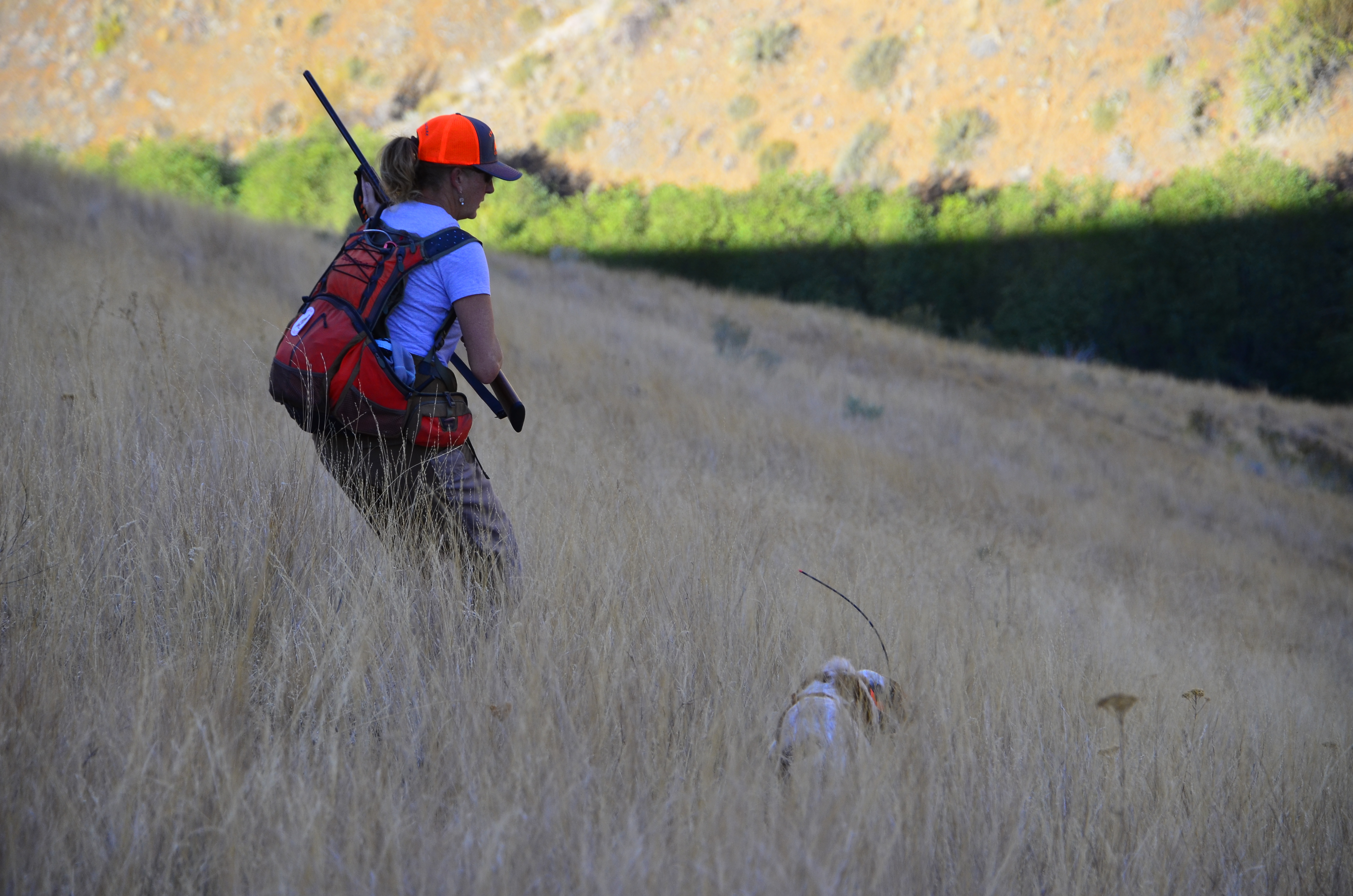
    I’m shooting 12 gauge steel loads now, too, and pretty happy with them so far (1-1/8 oz., 2-3/4″, #6, about the same FPS as Leslie’s). I was also quite impressed with the number of birds in this spot, which was a place we’d never hunted before. I followed her with the camera and had a great time watching Peat hunt for her.

    Starting out
    A little bit of ground out there
    Peat is learning to be THE dog
    The first bird
    Almost 58. She can kick and stretch, too.
    Second bird just before the bust (Peat’s pointing lower left)
    It’s hard to imagine Peat stealing from Angus and eating the first 6 birds I shot during his first season. He’s a retrieving machine.
    Peat’s last point of the day — the covey busted wild before Leslie could get in position. All in all an excellent day.
  • More Birds, and a Dilemma

    More Birds, and a Dilemma

    Decided to up the punishment yesterday with some steep climbing. And it was good. The bagged-bird count wasn’t so good, but we saw lots of birds. Early-season wild busting, way up high (again). Peat did better today, managing to hold two staunch points, but most of the birds we saw were launching far away on their own, probably because the dryness of the terrain makes it impossible to sneak up on anything. At one point, I was looking around and noticed a shady area about 200 yards away with lots of lush vegetation hiding a spring, and headed over to tell Leslie quietly that I bet chukar were hunkered down in the bushes over there when they suddenly busted. A super covey. So yes, there are birds. But the big numbers required 2,000 feet of climbing in less than a mile to get to them, only to watch them bust 200 yards from us.

    A point of clarification on my previous post: I mentioned that an Andrus biologist had told a friend of mine they weren’t seeing good numbers of birds there, and I implied they might not be right. That was my bad: the good numbers we saw (both the other day and today) were not on the Andrus WMA. I had a chance to speak to one of the biologists there yesterday and he said that they’re not seeing the birds numbers on the Andrus WMA that they’re used to seeing during their late summer hikes. So it might be a skimpier year there. The only way to find out is to go bust your ass and see for yourself. But that’s what real chukar hunters do anyway, right?

    Photos never capture either the actual steepness of the terrain or (more importantly) what it feels like to do this for 45-60 minutes at the very beginning of a chukar hunt.

    Yesterday’s hunt was the 4th chukar outing we’ve made since Angus passed away. Over the past five seasons we’d gotten used to the luxury of each having our own dog to hunt with; Peat would stay with me, and Angus — the consummate gentleman — would work for Leslie. She always appreciated and remarked on his dedication and prowess, which makes his absence this season particularly noticeable and sad. Now, with just one dog, even when we agree to hunt together so we can both benefit from Peat, anyone who’s ever hunted chukar knows that this is not possible 100% of the time: inevitably, the terrain or some other unpredictable variable will separate you at least for a little while. And because Peat freaks out when he realizes he doesn’t know where I am, even if he does follow Leslie temporarily, he’ll abandon bird scent to find me. (Angus would never, ever stop following his nose, not for anyone or anything, including the sudden appearance of a honey badger, Medusa, or a well-needed human break.) Near the end of the hunt yesterday, I found myself on the other side of a gully from Leslie, and realized Peat was hunting — as usual — for me, and moving the opposite direction from Leslie. I looked over to find her, and she was sitting down. I yelled, “Are you okay?” And she replied, “I’m just resting.” Believable, given the strenuousness of the hunt, and the heat, and the terrain. But I couldn’t help imagining she was feeling unusually alone in the beauty of this landscape without her steadfast, superlative hunting partner, Angus. On rare occasions near the end of an early season hunt, Angus would stop to poach shade from Leslie or me and settle down for a short break. I could see Angus there, resting next to Leslie as she sat with her head down. Except he wasn’t.

    So, on the drive home we discussed the situation. My feeling guilty for always having a dog with me. Leslie’s disadvantage, especially as a newer hunter, not having a dog with her (Angus was a great teacher and far more patient than I). It’s just an unsolvable dilemma whose only mitigation is for each of us to go on solo hunts with Peat every once in a while. We’re hoping for another puppy next spring, but this season looks to contain some adjusting on our parts. Peat, too, is having to figure out his new role. Hunting behind Angus for his first five years honed Peat’s backing skill; it seemed to us that his favorite thing in the world was to honor Angus (what pointing dog wouldn’t feel that way?). And for us, we will miss the visual spectacle of Peat’s otherworldly backing and the metaphorical praise it lavished on Angus’s greatness.

    Leslie found this egg after hiking straight up for about 20 minutes. The top of the ridge in this picture is the bottom of the ridge in the next photo.
    Evidence of humanity, although quite old. Pick up your shells!
    We didn’t notice the chukar in this photo until we got home (they’re just 3 specks above Leslie’s head).
    Finally, a lateral movement, only an hour in…
    Tired. I don’t know how Leslie managed to take this photo given the fact that both of her feet had huge blisters on the balls and heels. We’ll be taking a couple of days off (Peat’s 20 stitches from a losing battle with barbed wire in eastern Idaho also need some more time; the protective wrapping ends up chafing and causing new abrasions.